






Colbergcoffee » Colberg » Colberg and Kołobrzeg – History of the Town of Kołobrzeg
Colberg and Kołobrzeg – History of the Town of Kołobrzeg
The beginnings of settlement – salt, the stronghold and the first wealth
Kołobrzeg is one of the oldest towns in Pomerania. Its history goes back to the 8th century, when a settlement here was known for extracting salt from brine springs.
In the 10th century the stronghold was incorporated into the Polish state by Bolesław I the Brave, who even tried to establish a bishopric here. After his death Pomerania returned to paganism, and Bolesław III Wrymouth – as Gallus Anonymus wrote – had to conquer the famous town of Kołobrzeg.
The history of settlement, however, goes back even further, to the pre-Piast period. Probably as early as the 7th century there was a settlement on Wyspa Solna (Salt Island) on the Baltic shore, where people knew how to extract salt. This became the source of the inhabitants’ wealth.
The stronghold at Budzistowo and trade with the Vikings
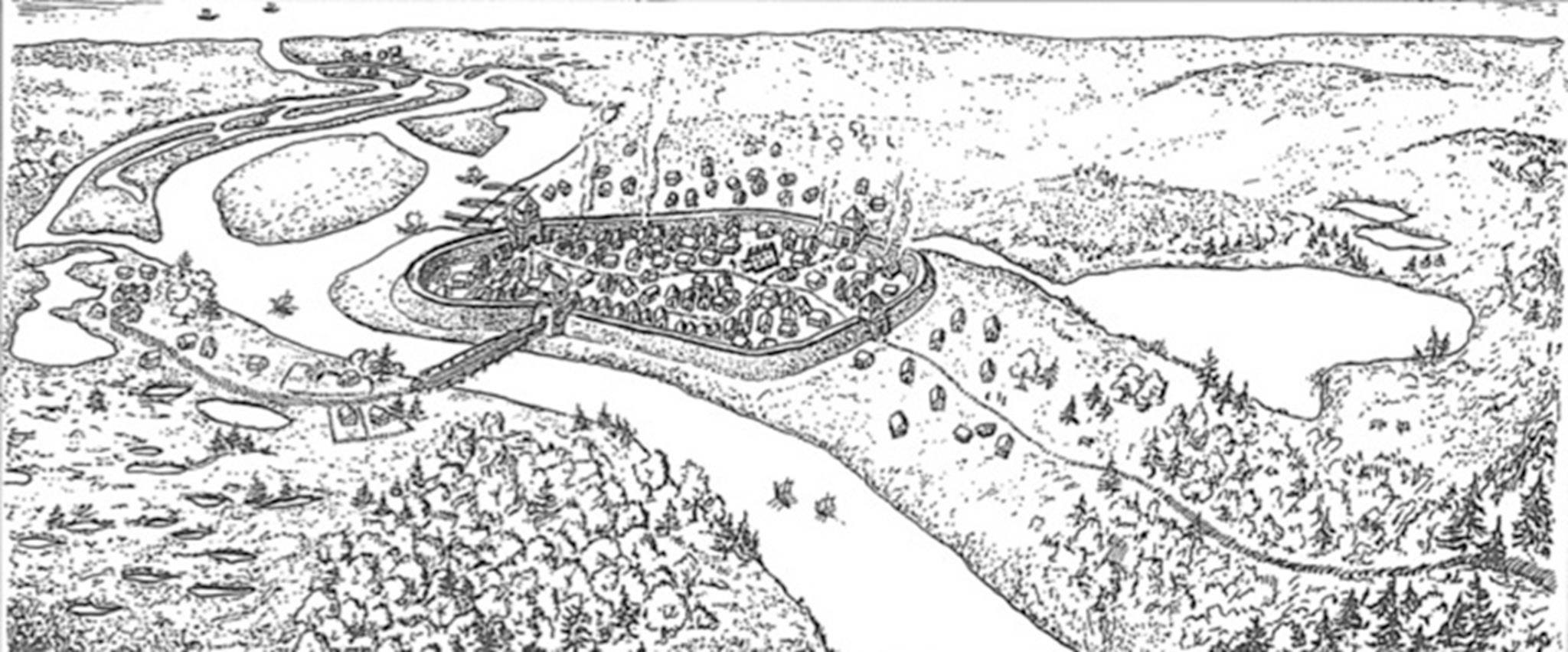
In the 9th century a stronghold was built about 4 km from the coast, down the river Parsęta. Its traces can be found in what is now Budzistowo. A settlement grew up around it.
Salt was exported from here to, among other places, Wielkopolska and Silesia. Local craftsmen specialised in working iron, antler and amber, which they traded with the Vikings.
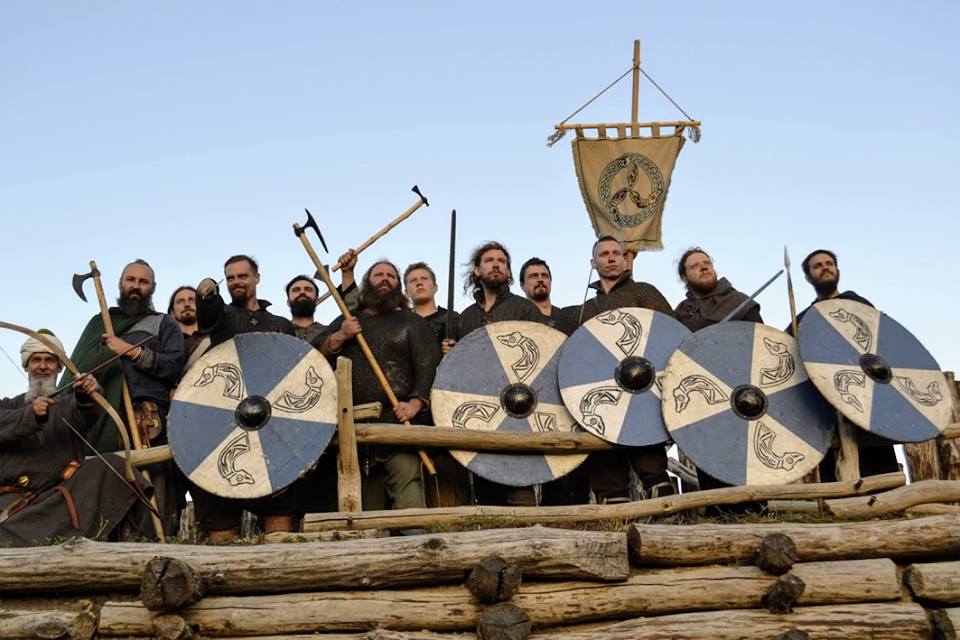
Word of the stronghold’s wealth reached Ostrów Lednicki. Soon the warriors of Mieszko I arrived on the Parsęta. The stronghold was captured and garrisoned by Piast troops. It became one of the stronger centres of Piast power in Western Pomerania.
The Bishopric of Kołobrzeg and its fall
At the Congress of Gniezno in the year 1000, Bolesław I the Brave and Emperor Otto III founded the archbishopric of Gniezno. The bishoprics of Kraków and Wrocław were placed under it, and a bishopric was also established in Kołobrzeg.
Its first bishop was Reinbern. The diocese was named Salsae Cholobergiensis aecclesiae episcopus – “the church of the Kołobrzeg salt”.
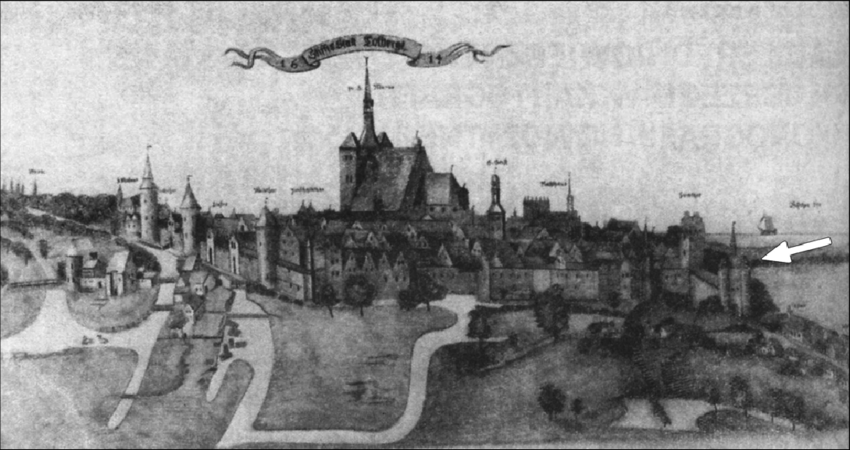
Kołobrzeg became the seat of the bishopric, gaining a rank equal to towns such as Kraków, Wrocław or Poznań. This did not last long, however. Bishop Reinbern destroyed temples and idols, which provoked the resistance of the inhabitants.
A return to paganism forced him to flee, and Kołobrzeg lost its status as the bishop’s seat to Kamień Pomorski.
Piast rule and further conflicts
Slavic Cholberg regained its independence and kept it until the time of Bolesław III Wrymouth. In 1103 the Piasts tried to capture the stronghold, but its powerful defensive fortifications withstood their attack.
Only in 1107 or 1108 did the town surrender to Polish forces, and the whole of Middle Pomerania once again came within the borders of the Piast state. Gallus Anonymus wrote of Kołobrzeg at the time as a “famous city”.
The town’s charter under Lübeck law (1255)
In the 1130s Kołobrzeg came under the overlordship of the German emperors. From 1187 to 1227 Pomerania, Kołobrzeg included, was taken over by the Danes, but was later recovered by the dukes of Western Pomerania.
On 23 May 1255 Duke Warcisław III and Hermann von Gleichen, bishop of Kamień, chartered the new town under Lübeck law. It received numerous privileges – among them five years free of charges, 100 łans of arable land, the right to fish the sea between the mouths of the Rega and the Parsęta, and a forest of its own.
The new town was built closer to the coast. The old stronghold at Budzistowo began to be called Altstat – the Old Town. Remains of medieval churches and monasteries still stand there today, including Bishop Reinbern’s cathedral and the chapel of St Peter.
A relic from that period is the church of St John the Baptist, from 1222.
The Hanseatic League, wealth, and the loss of Polish character
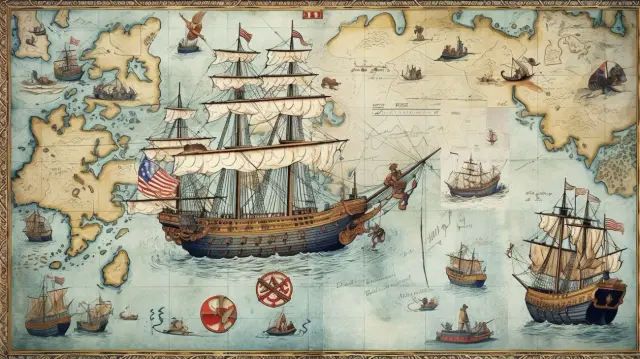
In the Middle Ages settlers began arriving in the town from Germany, mainly from Lübeck and Greifswald. Around the turn of the 13th and 14th centuries Kołobrzeg became a strong Hanseatic town.
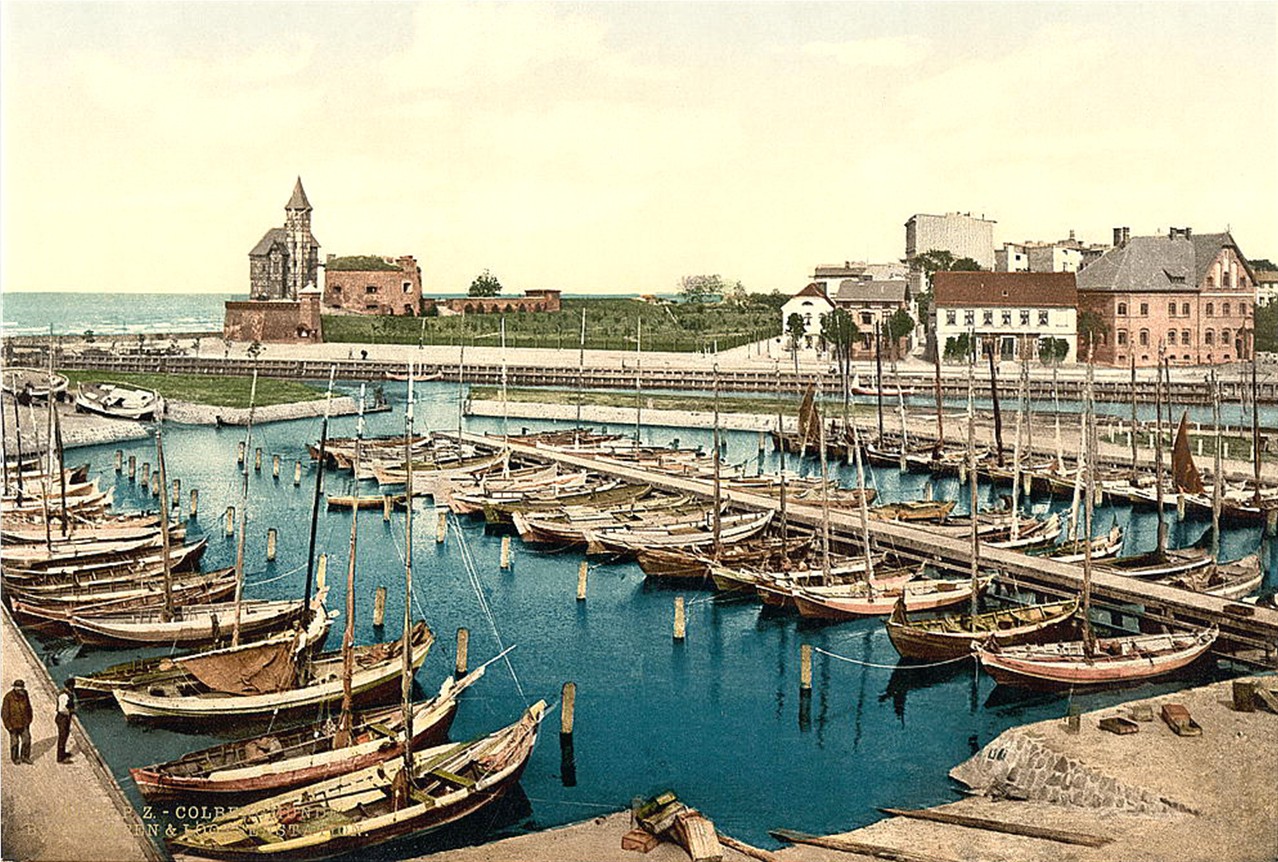
It was surrounded by walls and a moat, and thanks to trade and the port the town quickly grew in strength. Its Slavic character, however, gradually faded. In the 16th century the town authorities barred Polish craftsmen from the guilds.
War, fortress and epidemics in the 17th century
In the 17th century Pomerania became a battleground for the European powers. During the Thirty Years’ War (1618-1648) Kołobrzeg was seized by Swedish troops. They did not leave the town until 1653, handing it over to Brandenburg.
Shortly before that, an epidemic had decimated the inhabitants – more than 3,500 people died. In the second half of the 17th century Kołobrzeg was surrounded by massive earthworks, and even the lighthouses were fortified.
The town became one of the strongest fortresses in the region.
Under Prussian rule and the growth of the spa
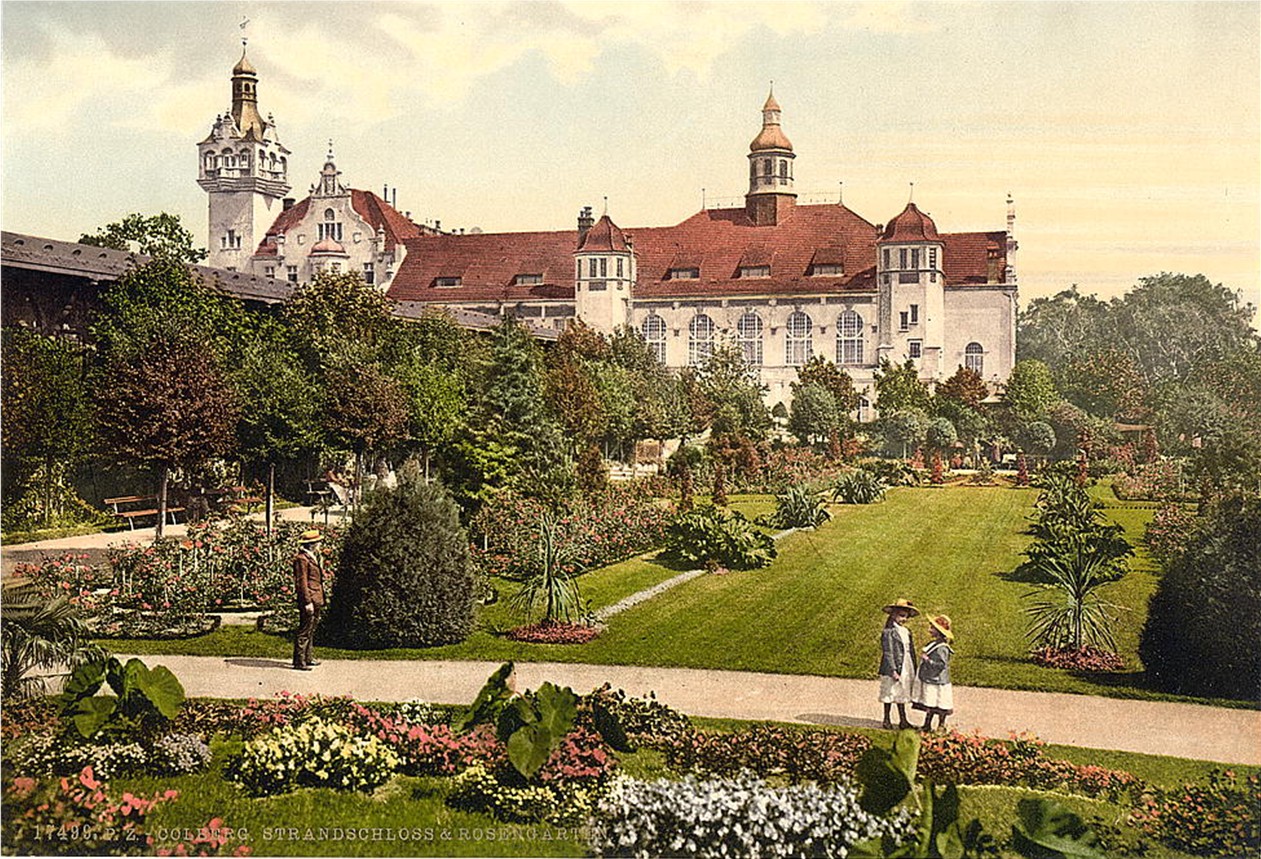
In 1701 Colberg [ Kołobrzeg ] passed into the hands of Prussia, and later Germany – and remained under their rule until 1945. The salt trade, which for centuries had been a pillar of the local economy, began to decline.
In 1830 the first brine bath house was opened here. The water turned out to contain bromine, iodine, sodium and magnesium, which attracted patients from across Europe. Kołobrzeg began to develop as a spa.
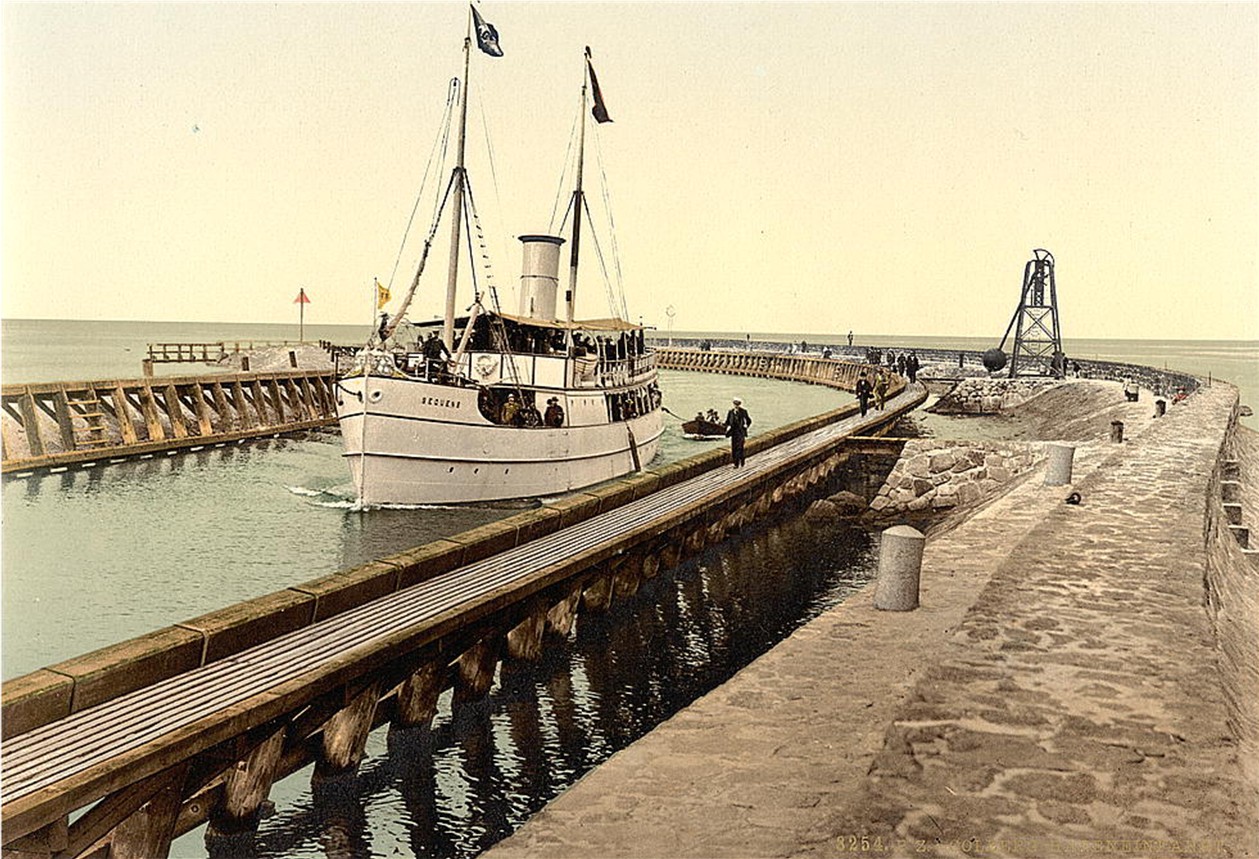
By the end of the 19th century the town had a theatre, a new town hall, a stone pier, gas lighting and rail connections to Szczecin, Gdańsk and Poznań. Kołobrzeg had become a popular resort.
Colberg, Kolberg, Kołobrzeg – the history of one name
The name of Kołobrzeg changed many times over the centuries and was closely tied to the region’s turbulent history. The oldest records date from the year 1000, when the chronicler Thietmar of Merseburg used the Latin form “Salsa Cholbergiensis”, referring to the bishopric founded by Bolesław the Brave. Later medieval documents give the name Colberg, used in German sources from the 12th to the 15th century. Over time, with the advancing Germanisation of Pomerania and the strong influence of the Hanseatic League, the form Kolberg became established – used for the following centuries, especially under Prussian rule. During the Second World War the town operated under the name Festung Kolberg, that is “Fortress Kołobrzeg”. Only in 1945, after Pomerania was incorporated into Poland, was the Slavic name Kołobrzeg restored, and it remains in use today. The historical form Colberg, however, has not disappeared entirely – today it is still used in local initiatives, brands and projects that refer back to the town’s centuries-old heritage.
Destruction in the Second World War and the rebuilding of the town
During the Second World War Kołobrzeg was declared a fortress – Festung Kolberg – and defended by the Germans to the last days. The Battle of Kołobrzeg, fought from 4 to 18 March 1945, was one of the heaviest battles in Pomerania. Polish and Soviet forces took the town building by building, and the key moment was the “Katyusha” rocket bombardment, which decided the outcome. On 18 March Kołobrzeg was captured, and that same day saw the symbolic Poland’s Wedding to the Sea, during which Corporal Franciszek Niewidziajło ran into the Baltic with a white-and-red flag.
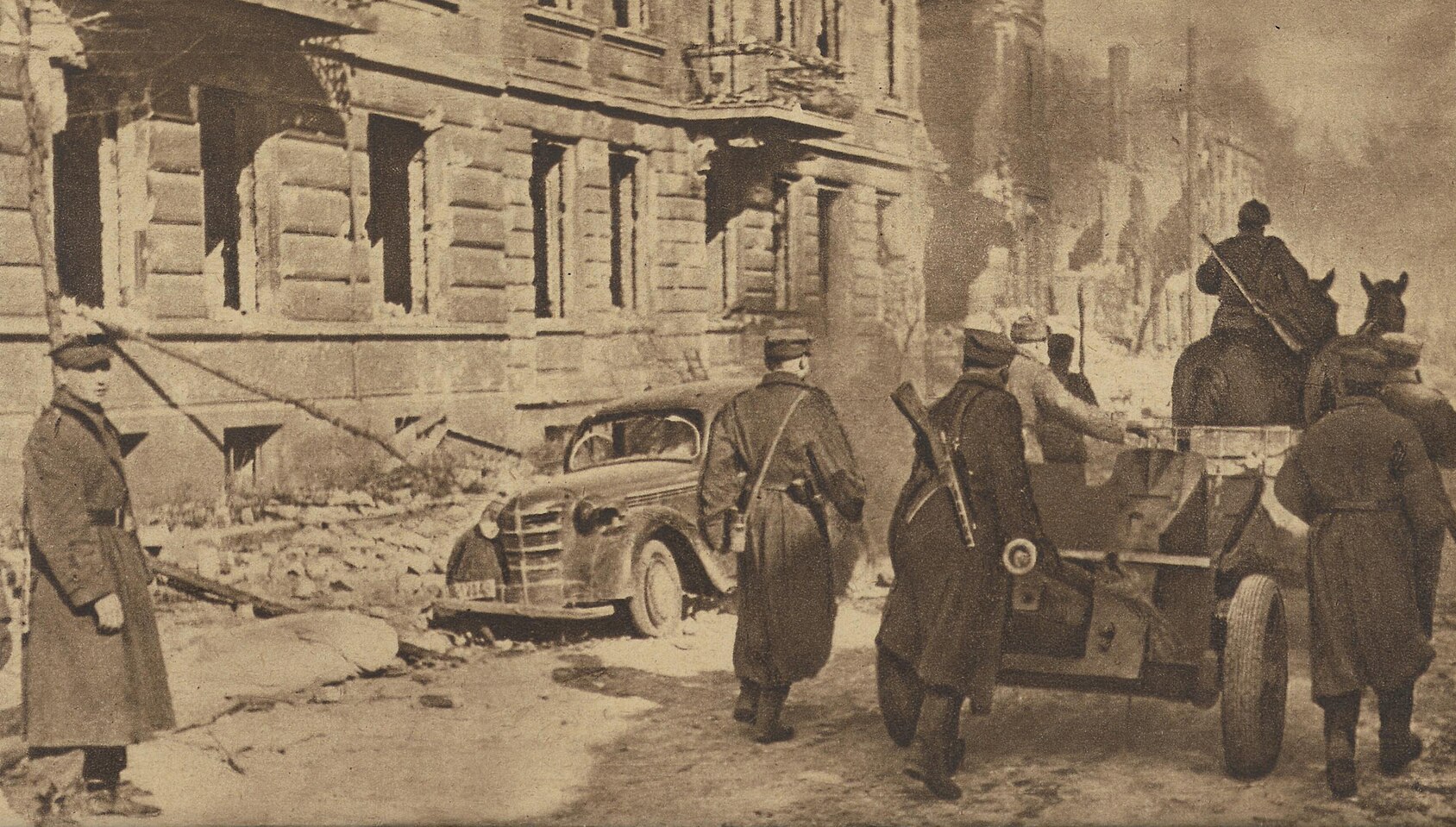
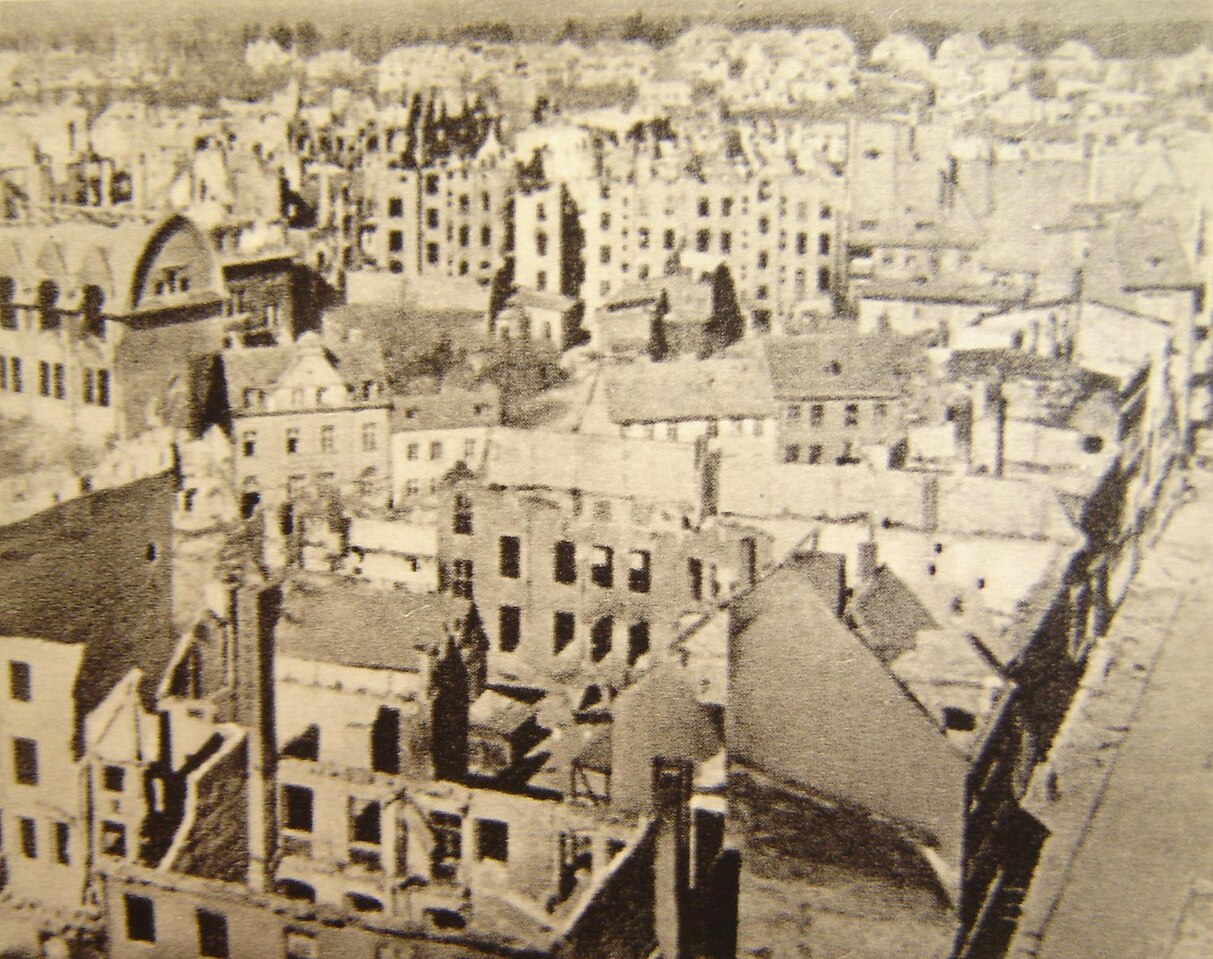
The scale of destruction was enormous – 90-95% of the buildings were left in ruins. Rebuilding the town took many years and gave it its present-day shape. Reconstruction of the old fabric was abandoned in favour of modernist architecture, sanatoria and wide avenues. Under the Polish People’s Republic, Kołobrzeg became a well-known spa town, and it also became known for the Soldiers’ Song Festival, held from 1967. The town’s present-day layout, its character as a resort, and its status as one of the most important places on the Baltic are a direct result of those decisions.
Kołobrzeg today
Today Kołobrzeg is one of the most important resorts on the Baltic, drawing both tourists and investors. It is a town of spas, ports and modern infrastructure, but also a place full of history that is visible at every step. You only need to walk the streets to see how the past intertwines with the present – medieval walls and the Gothic collegiate church stand next to Prussian fortifications, modernist blocks from the Polish People’s Republic era, and modern apartment buildings.
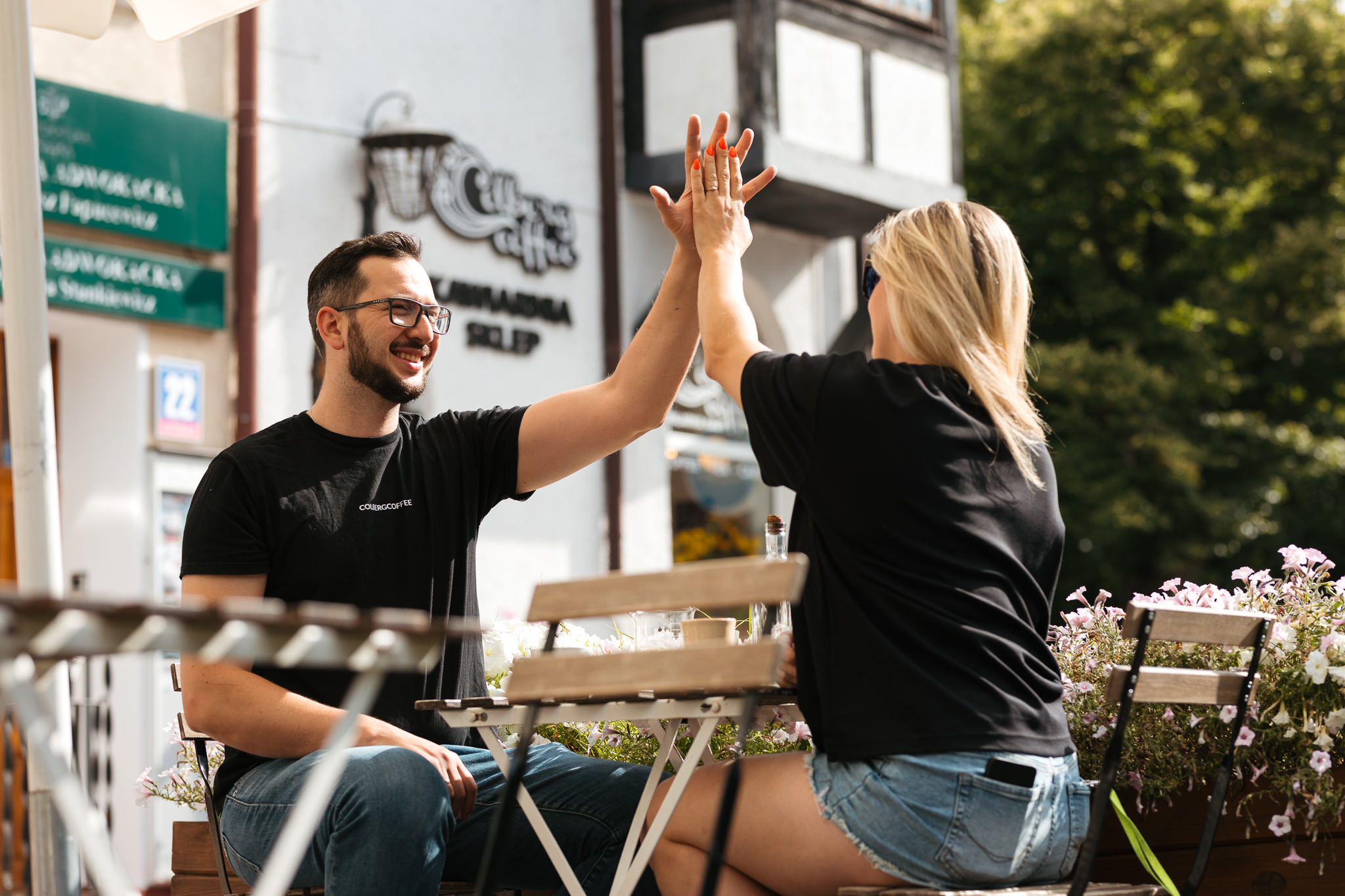
Kołobrzeg is also developing dynamically in culture and dining. More and more interesting places are appearing for lovers of good food and coffee. Modern specialty cafés are opening, such as Colbergcoffee, bringing a whole new coffee-drinking culture to the town. Alongside them come atmospheric restaurants that give Kołobrzeg a fresh culinary character – among them Syrenka, Nawigacja, Lavoo, Neo Bistro Mariacka and Jaremko Soli. Next to these new concepts, there are also iconic places that have built the town’s dining tradition for years, such as Pod Winogronami, Domek Kata and Pergola.
This makes Kołobrzeg a town full of contrasts – it combines historical heritage with modernity, and here tourism meets culture, art and a distinctive culinary atmosphere. The beaches, the marina, cycle paths, numerous cultural events and a growing dining scene make the town today one of the most visited places in Poland.
Frequently asked questions about the history of Colberg / Kołobrzeg
Where does the name Colberg and Kołobrzeg come from?
The town’s name changed over the centuries. The oldest form is the Latin “Salsa Cholbergiensis” from the year 1000. In the Middle Ages the name Colberg was used, and later, under the strong influence of the Hanseatic League and Prussia, the form Kolberg dominated. After 1945, when Pomerania returned to Poland, the name Kołobrzeg was restored.
When was the town of Kołobrzeg founded?
The beginnings of settlement go back to the 7th-8th century, when salt was extracted on Wyspa Solna (Salt Island). The official chartering of the town under Lübeck law took place on 23 May 1255, which is regarded as the formal birth of present-day Kołobrzeg.
What do Poland’s Wedding to the Sea symbolise?
On 18 March 1945, after the capture of Kołobrzeg, a symbolic ceremony took place in which a white-and-red flag was planted in the Baltic. Corporal Franciszek Niewidziajło walked into the water carrying the flag, marking Pomerania’s return to Poland and the recovery of access to the sea.
Why was Kołobrzeg called the fortress Festung Kolberg?
During the Second World War the Germans declared Kołobrzeg the fortress Festung Kolberg. The town had strategic importance because of its port and its location on the Baltic. The Battle of Kołobrzeg in March 1945 was one of the heaviest battles in Pomerania.
Why is Kołobrzeg known as a spa town?
Already in the 19th century rich brine springs and peat mud with medicinal properties were discovered. In 1830 the first brine bath house was opened, and today Kołobrzeg is one of the most important spa towns in Poland, attracting patients from across Europe.
How is Kołobrzeg’s dining scene developing?
Kołobrzeg is becoming an increasingly interesting place for lovers of good food and coffee. Specialty cafés are opening, such as Colbergcoffee, along with new restaurants such as Syrenka, Jaremko Soli, Nawigacja and Lavoo. Alongside them, iconic places that are part of the local tradition continue to operate, including Pod Winogronami, Domek Kata and Pergola.
Colbergcoffee Blog
read more:
Ma Ma Cafe, a café in Świnoujście: a showcase of top quality
How we fitted out Ma Ma Cafe in Świnoujście from A to Z: a Nuova
Oct
Inside the La Marzocco factory in Scarperia: how the machines are built
What happens inside the La Marzocco factory in Scarperia near Florence: build-to-order production, a dedicated
Oct

Autumn at Colbergcoffee: pumpkin spice latte and four new drinks
The autumn menu at Colbergcoffee in Kołobrzeg: pumpkin spice latte made to our own recipe,
Oct
How to recognise good loose-leaf tea
Dry leaf, smell, the colour of the liquor and the brewed leaf tell you almost
Sep

Ugandan Coffee Day in Kołobrzeg: a cup that helps
Ugandan Coffee Day at Colbergcoffee in Kołobrzeg: what is on in the café, who the
Sep

How much matcha a day? Caffeine, limits and who should care
How many servings of matcha a day make sense, what that means in milligrams of
Sep

Ristretto vs espresso vs lungo: ratio and brew time
Ristretto, espresso and lungo from a single dose: dose, ratio, extraction time and grind in
Sep

How to brew coffee in a French press, step by step
How to brew coffee in a French press: ratios, grind size, water temperature and timing,
Sep