





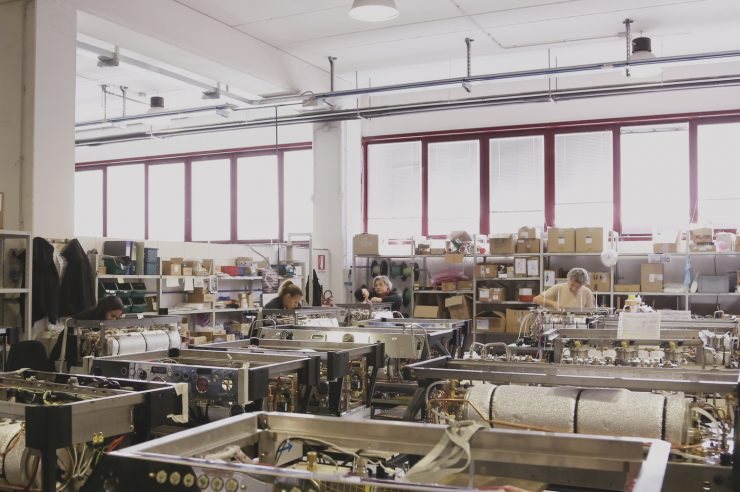
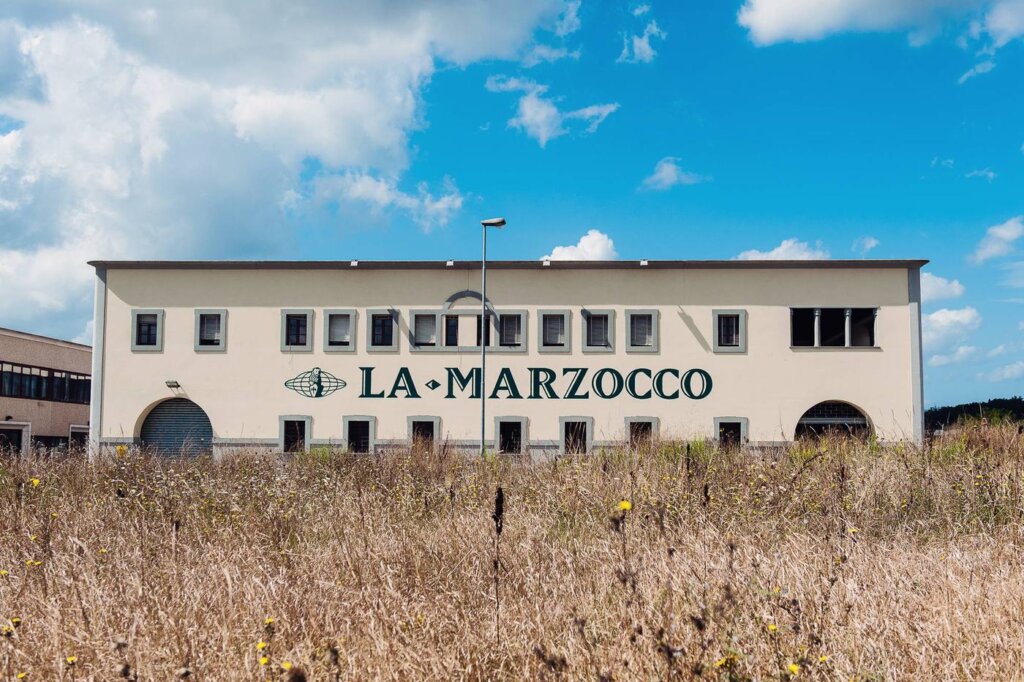
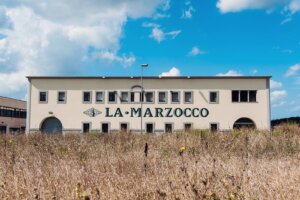
La Marzocco espresso machines are built in Scarperia, about 30 km north of Florence, in the Mugello valley. The company was founded in 1927 by brothers Giuseppe and Bruno Bambi and moved to its current production site in 2009. Here is how production works, why the GS3 has its own station and where the factory gets its power.
From Florence to Scarperia
La Marzocco started out in a small workshop in Florence. In 1960 it moved to a plant in Pian di San Bartolo, just outside the city. That building now houses the Accademia del Caffè Espresso, with laboratories, a themed library and exhibition space. In 2009 production moved to the new factory in Scarperia.
The doors from the old plant were brought along and now stand in the lobby. They carry the Marzocco, the lion holding a shield with the Florentine lily, which gave the brand its name. Next to them, machines from successive decades stand side by side. You can read more about the company’s early days in La Marzocco: the history of an espresso legend.
| Year or figure | What it means |
|---|---|
| 1927 | the Bambi brothers found La Marzocco in Florence |
| 1960 | move to Pian di San Bartolo, today home of the Accademia del Caffè Espresso |
| 2009 | the Scarperia factory opens |
| approx. 30 km | distance from the factory to Florence |
| 1600 | solar panels on the factory roof |
| approx. 20% | lower energy use thanks to insulated boilers |
Every machine built to order
La Marzocco does not build for stock. The factory works on a build-to-order basis. A machine is only assembled once it has been ordered, and at every stage the team knows who it is for.
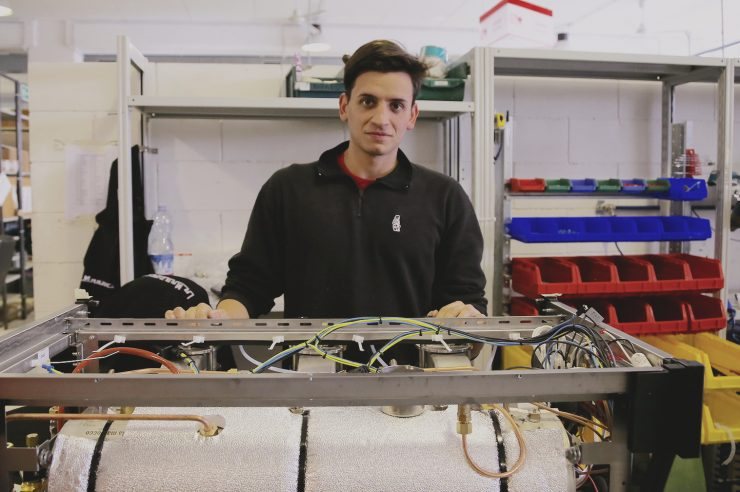
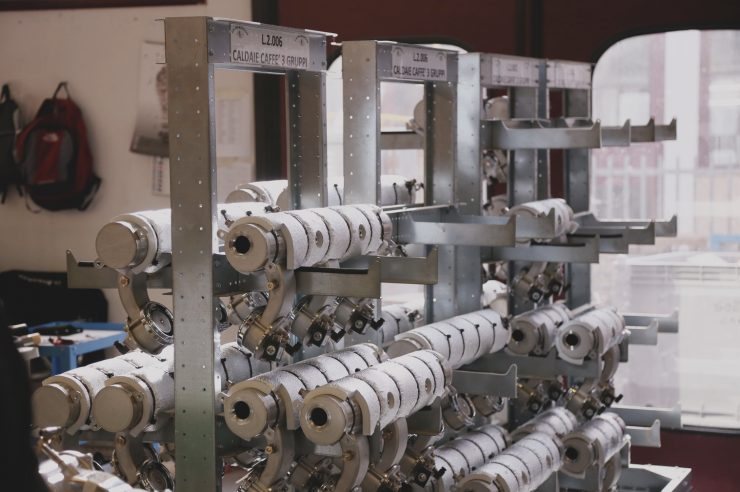
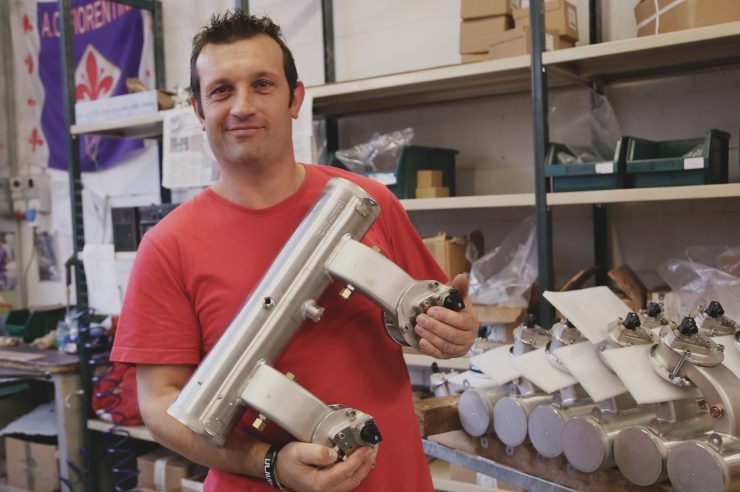
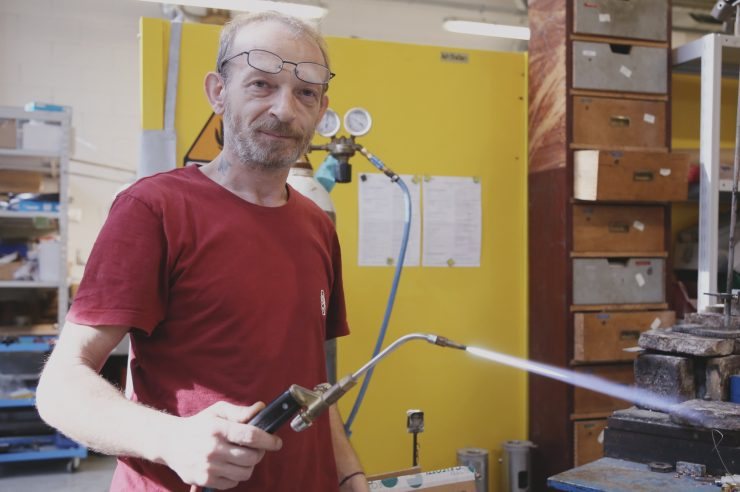
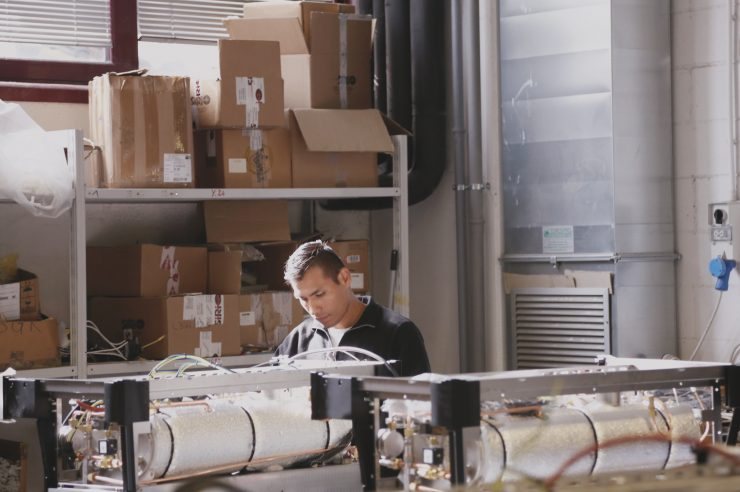
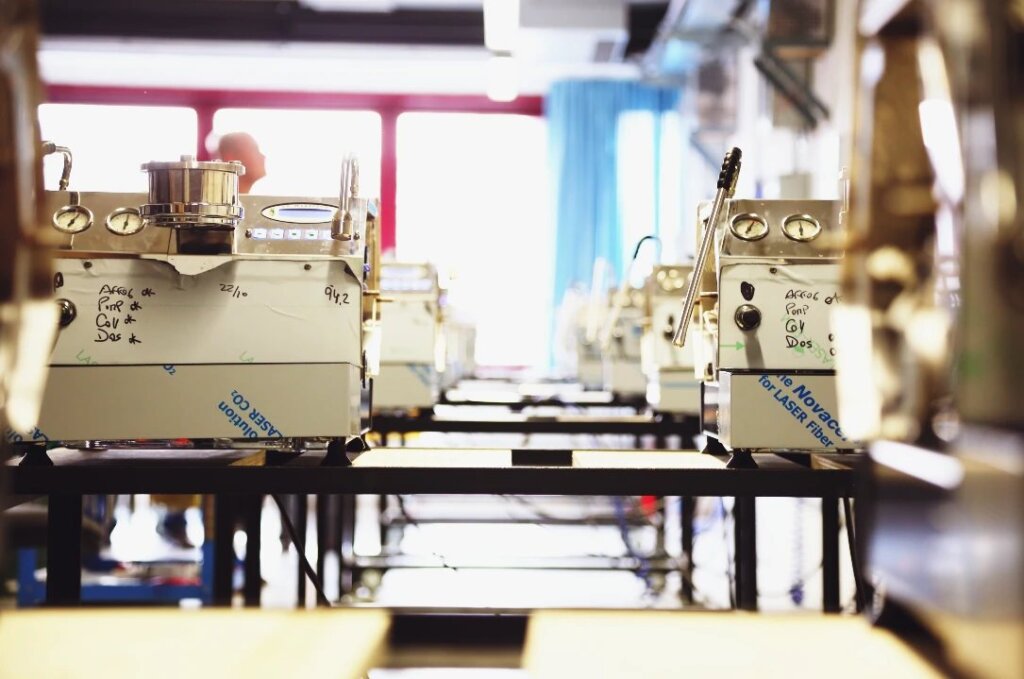
It all starts with the boilers. Assembled brew boilers go through a hydraulic test before moving on. The machine then passes through a series of assembly stations on the factory floor.
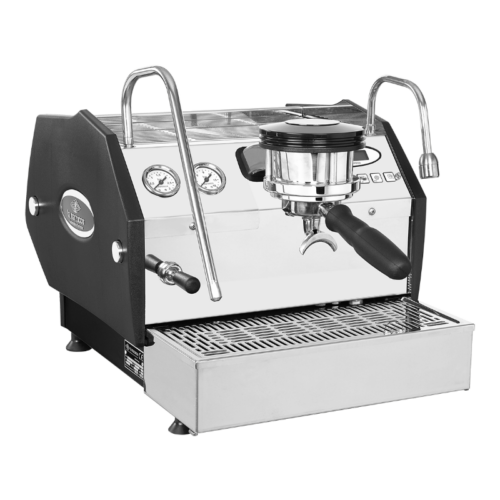
The GS3 is built in one place
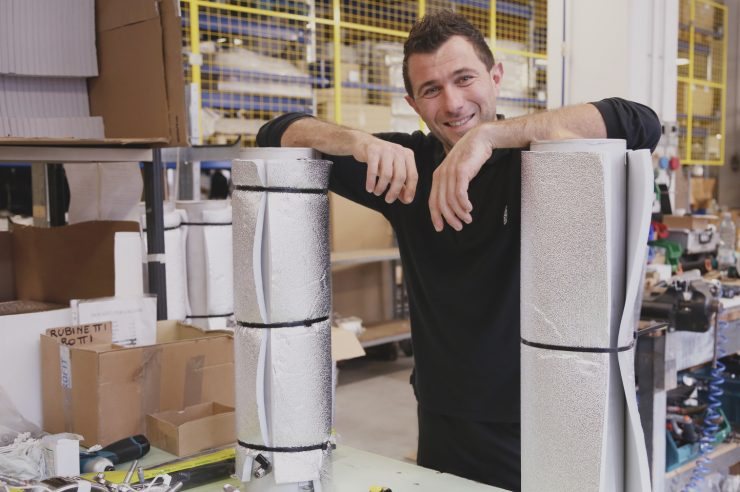
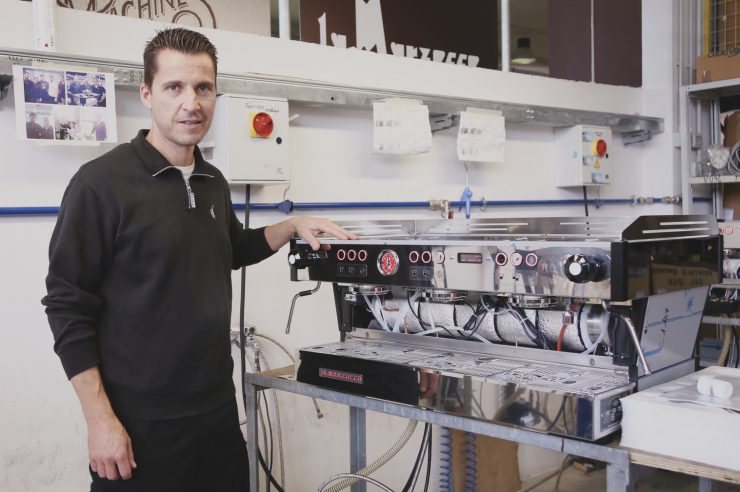
The exception is the GS3. It is the only model that does not move between stations. It is assembled and tested in a single area. It packs a lot of technology into a small body, so it is handled by specialist staff.
Insulated boilers and panels on the roof
La Marzocco wraps its boilers in insulation. The company states that this cuts the machine’s energy use by around 20%. For a café that can mean lower bills, because the machine stays hot all day.
The factory roof carries 1600 solar panels. According to a 2013 report, in summer they delivered around 100 kW, while the plant needed around 40 kW. In winter their output dropped to around 15 kW. The summer surplus partly offset the colder months. The company marks this with an emblem on every box that leaves the factory. Every Strada ships in a wooden crate.
Training, murals and custom builds
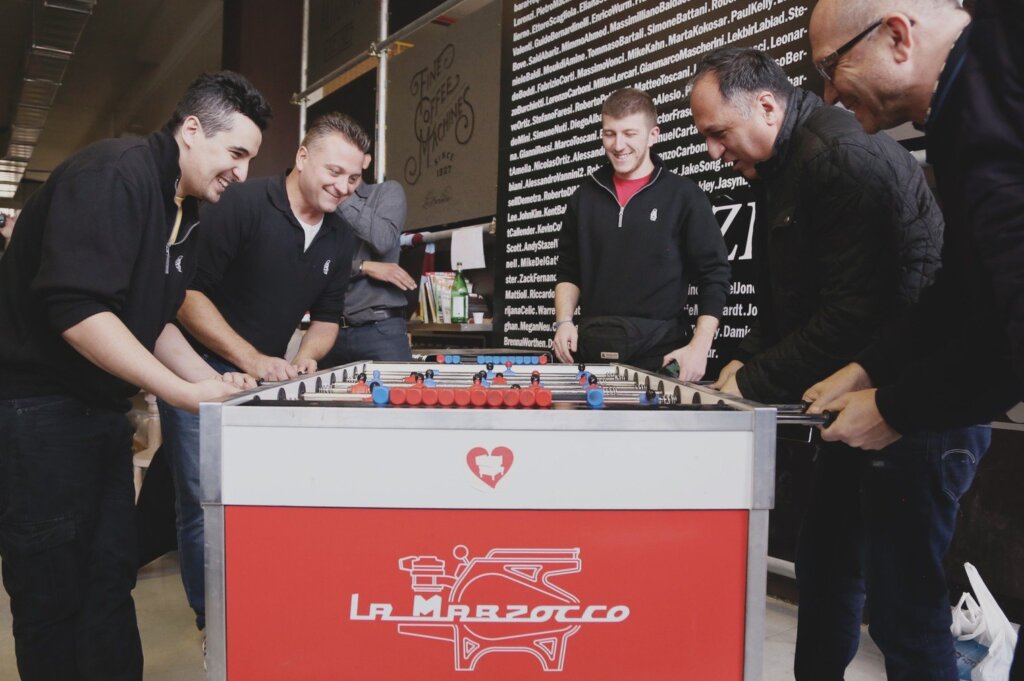
The factory has its own training centre, which runs 2 to 4 day courses for distributors and certified technicians. The walls are decorated with murals by Milan-based artists Marco Di Marco and Bicio Zambelli.
Downstairs in the electronics department hangs the banner from the first Out of The Box, the brand’s event for baristas and the coffee trade. The same department handles one-off custom builds made to individual orders.
About 150 metres from the factory is La Torre Osteria et Bottega. It serves Tuscan classics: pane toscano and finocchiona, a fennel salami.
La Marzocco machines at Colbergcoffee
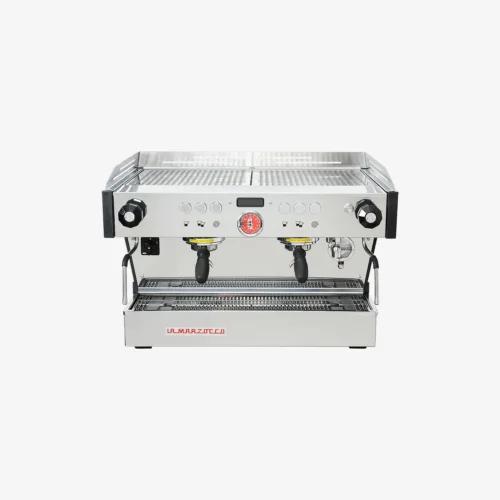
You will find machines from Scarperia in our La Marzocco espresso machines category: from the Linea Mini R and GS3 for home, through the Linea Classic S, Linea PB, GB5 S and GB5 X, to the KB90 and Strada. Choosing a machine for your café? Get in touch and we will help you pick the number of groups and the version that fits your volume.
Factory description based on Alex Bernson’s report “Under the Tuscan Sun” (Sprudge, 2013). The energy figures date from that time. More about the brand: lamarzoccopolska.pl.
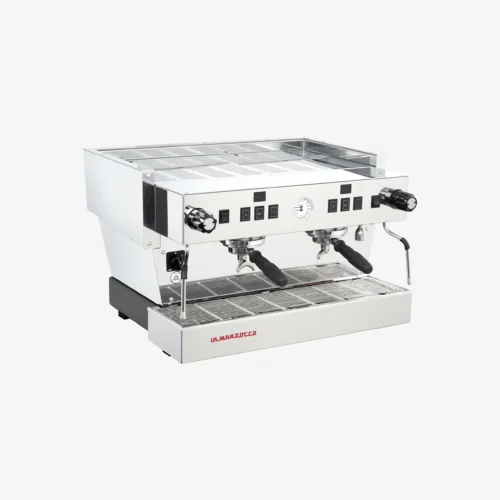
Where are La Marzocco machines made?
At the factory in Scarperia, about 30 km north of Florence. La Marzocco moved production there in 2009.
When was La Marzocco founded?
In 1927 in Florence. The company was founded by brothers Giuseppe and Bruno Bambi.
Where does the name La Marzocco come from?
From the Marzocco, a lion holding a shield with the Florentine lily. It is one of the symbols of Florence.
Does La Marzocco build machines for stock?
No. Every machine is assembled for a specific order and tracked through each stage of production.
How is the GS3 built differently?
The GS3 is the only model that does not pass through the stations on the factory floor. It is assembled and tested in a single area by specialist staff.
How much energy does boiler insulation save?
According to La Marzocco, insulating the boilers cuts the machine’s energy use by around 20%.
Can you visit La Marzocco?
You can visit the Accademia del Caffè Espresso in Pian di San Bartolo near Florence, in the former factory building. Visits are by appointment only.
Przeczytaj też
Inside the La Marzocco factory in Scarperia: how the machines are built
What happens inside the La Marzocco factory in Scarperia near Florence: build-to-order production, a dedicated
Oct

Autumn at Colbergcoffee: pumpkin spice latte and four new drinks
The autumn menu at Colbergcoffee in Kołobrzeg: pumpkin spice latte made to our own recipe,
Oct
How to recognise good loose-leaf tea
Dry leaf, smell, the colour of the liquor and the brewed leaf tell you almost
Sep

Ugandan Coffee Day in Kołobrzeg: a cup that helps
Ugandan Coffee Day at Colbergcoffee in Kołobrzeg: what is on in the café, who the
Sep

How much matcha a day? Caffeine, limits and who should care
How many servings of matcha a day make sense, what that means in milligrams of
Sep
Ristretto vs espresso vs lungo: ratio and brew time
Ristretto, espresso and lungo from a single dose: dose, ratio, extraction time and grind in
Sep

How to brew coffee in a French press, step by step
How to brew coffee in a French press: ratios, grind size, water temperature and timing,
Sep
AeroPress: how to brew coffee step by step (standard and inverted)
How to brew coffee in an AeroPress step by step: dose, water temperature, the standard
Sep
