Matcha is everywhere these days: in drugstores, discount supermarkets, on Allegro (Poland’s biggest online marketplace) and in specialist shops. The same name covers wildly different products, though. They differ in what’s actually in the tin, in quality, and in price per gram, which can vary by a factor of ten or more.
Here’s where you’ll actually find matcha in Poland, what you’ll get at each type of shop, and how to tell whether you’re paying for tea or for a green-tinted sugar hit. No wishful thinking: supermarket matcha has its place, just not for every use.
One note on naming, because shops are a mess about this. Matcha is, by definition, a powder, so “powdered matcha” is a tautology. It’s just called matcha, or matcha tea, and the full name on the label reads “powdered green tea”. “Matcha powder” is also a redundant phrase, but it’s so common by now that nobody blinks at it.
Where to buy matcha: the short answer
If you want a quick steer on where to go, start with this table. The detail on each option is further down.
| Where | What you’ll actually get | Best for |
|---|---|---|
| Biedronka, Lidl, Kaufland (Polish and European discount supermarkets) | Mostly ready-to-drink beverages and instant matcha mixes, less often pure powder in small packs | Milky lattes, baking, a first try |
| Rossmann (a Polish and German drugstore chain) | A wide shelf of matcha-flavoured products: ready-to-drink beverages, powdered latte mixes, tea bags with matcha added. Pure powder turns up too | Ready-to-drink options, lattes |
| Allegro (Poland’s largest online marketplace) | Everything at once, from Japanese first-flush matcha to anonymous powder with no stated origin | Good shopping, if you know what to look for |
| Specialist shops, tea shops and roasteries | Powder with a stated origin, harvest and intended use | Matcha drunk with just water, usu-cha, café use |
One rule cuts through the mess: the less matcha is going to be mixed with milk and sugar, the more you need to know about what you’re buying. For a latte, a decent powder is enough. For matcha drunk with plain water, it isn’t, since the flavour has nowhere to hide.
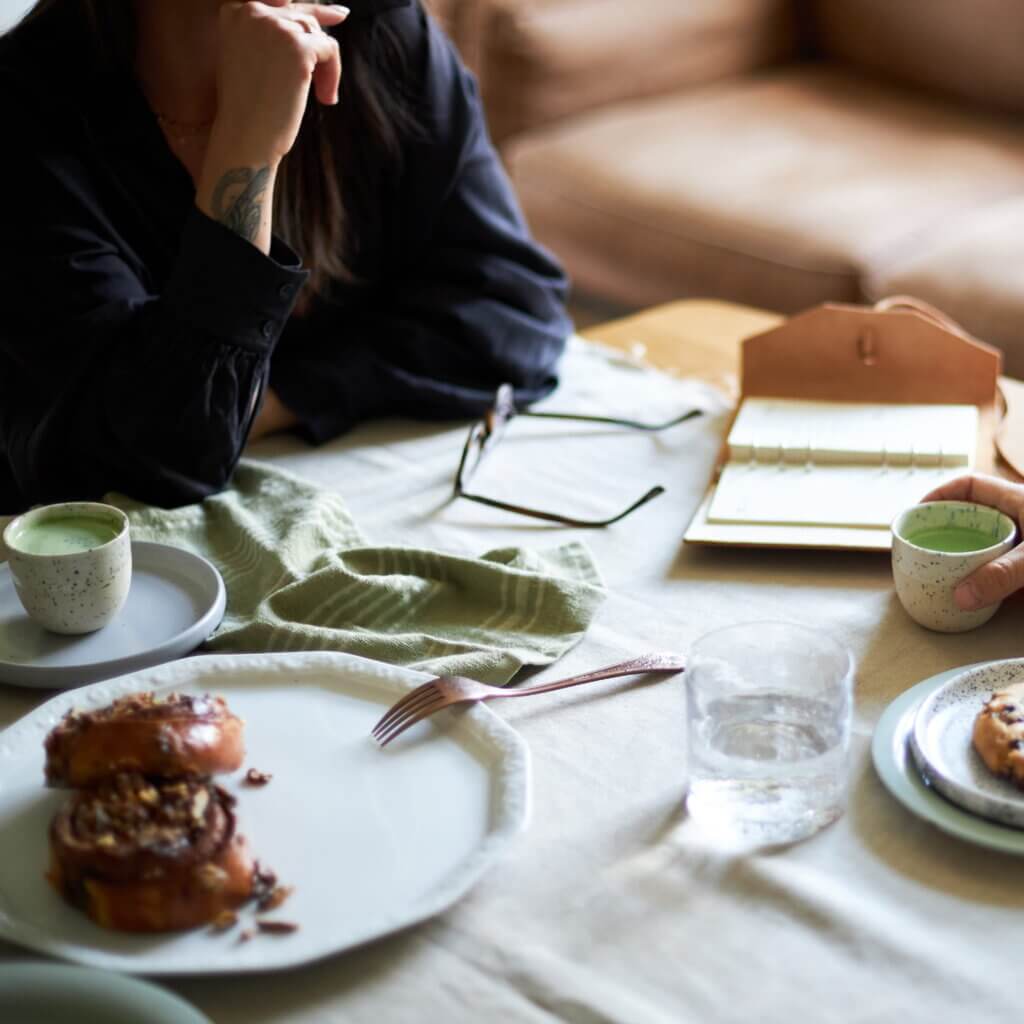
Colour is the first signal. A vivid, saturated green means a fresh powder from shaded leaves.
Why half the “matcha” on the shelf isn’t matcha
The word “matcha” isn’t a protected term the way champagne or a protected regional cheese is. A brand can put it on a drink that contains a fraction of a percent of actual matcha. Formally, nothing’s wrong with that, as long as the label isn’t misleading.
One rule works in your favour, though. EU regulation 1169/2011 sets out the QUID principle: if an ingredient is highlighted in the product name, its percentage usually has to appear on the label. Don’t trust the packaging artwork. Look for a number next to the word matcha.
You can see this on one drugstore’s shelves. At Rossmann, searching “matcha” turns up Oatly oat drink, Big-Active tea bags with matcha and lime, and pure Japan Matcha from Brown House & Tea, sitting right alongside ready-to-drink beverages and instant mixes. The exact range changes, but the proportions stay similar: there are far more matcha-flavoured products than actual matcha.
The same was true at Biedronka (Poland’s biggest discount supermarket chain) in spring 2026. The chain was pushing Alpro Matcha as a new product at the time, a ready-to-drink plant-based drink containing 0.5 percent matcha. It might taste good, but you’re buying a matcha-flavoured product, not tea.
Run a simple test: turn the pack over and read the ingredients. If sugar, milk powder, maltodextrin or water comes first, you’re holding a drink. Real matcha has one item on the ingredients list: powdered green tea.
Matcha at Biedronka
Biedronka started with matcha drinks. Ready-to-drink products and instant mixes came first. Pure powder arrived later, and more often as a short-term promotion than as a permanent listing.
That distinction matters. A discount chain’s range is built around short runs. Something you found last month might not come back. If you find a matcha you like, don’t assume you’ll be able to buy it again in six months.
Biedronka’s products work for a matcha latte with milk, smoothies and baking. Milk and sweetness soften the astringency that usually sets a cheaper powder apart from a pricier one.
They don’t work for usu-cha, matcha whisked with nothing but hot water. In that form you’re drinking pure tea, so every flaw shows.
Matcha at Lidl
Lidl can be the cheapest place to try matcha. In August 2025, the chain sold a 50 g pack of Vifon Vietnamese Lady powdered green tea for 8.99 zł on promotion, under 18 groszy (about 4 euro cents) a gram. For comparison, matcha with a stated Japanese region and first-flush harvest usually starts at around 2 zł a gram in Poland.
The gap isn’t down to the retailer’s margin, it’s down to what’s actually in the pack. The reasons behind that spread are covered in the price-per-gram section below.
Also look for information that’s usually missing from products like this: the prefecture of origin, the harvest, and the milling date. Missing that data doesn’t automatically mean the powder is bad. It means you’re buying blind.
Treat discount-supermarket matcha as a cheap trial. Find out whether you actually like the flavour and plan to drink it regularly. If you do, choose your next pack more deliberately.
Matcha at Rossmann
Rossmann has the widest matcha-flavoured shelf of any chain you’d pass on an everyday errand. Ready-to-drink beverages, powdered-milk instant mixes and matcha-flavoured tea bags dominate.
You’ll also find pure powdered green tea there, Japan Matcha from Brown House & Tea, for example. That’s a product suited to lattes. The drugstore’s range rotates, so check specific items in store. The split between matcha-flavoured products and matcha for brewing stays fairly constant, though.
One important note on matcha tea bags: matcha, by definition, is a powder drunk together with the leaf, as a suspension. From a tea bag, you only drink what manages to dissolve into the water. The rest gets thrown away. A matcha tea bag is green tea with an addition, not matcha.
If you need something quick at work and don’t care about the ritual, an instant mix will do the job. Just don’t compare it to matcha whisked with a chasen (a bamboo whisk). They’re two different drinks sold under one name.
Matcha on Allegro: the widest choice and the biggest risk
On Allegro (Poland’s answer to eBay or Amazon Marketplace) you can buy very good Japanese matcha, but also powder of unstated origin in packaging covered in Japanese characters. The platform doesn’t verify quality. All the checking falls to you.
Check these details in the listing before you click buy:
- Country and region. There should be a stated prefecture, Kyoto (the Uji region), Aichi (Nishio), Fukuoka (Yame), Kagoshima or Shizuoka, for example. “Japan” alone tells you little, “Japanese style” alone is a warning sign.
- Harvest. The first flush, ichibancha in Japanese, falls around late April to early May in central Japan, earlier in the warmer Kagoshima region. Later harvests give a more astringent, cheaper powder.
- Weight and price per gram. Always work it out. A 30 g pack can look cheap next to a 100 g one and turn out far more expensive.
- Best-before date. The further out, the fresher the powder. Matcha loses colour and aroma faster than any other tea.
- Packaging. A tin or a light-proof pouch. A clear glass jar is a bad sign.
A simple rule: if the listing doesn’t state a region or a harvest, only buy it with a latte or a cake in mind.
Specialist shops, tea shops and roasteries
This is the only category where the seller can usually tell you exactly where a given batch came from and when it was milled. You pay more, but you get information.
From a place like this, you can expect:
- a stated prefecture and growing region,
- harvest information,
- a distinction between powder for drinking with water and powder for lattes or baking,
- packaging that protects against light and oxygen,
- sensible stock turnover, powder that hasn’t sat in a warehouse for two years.
Coffee roasteries got into matcha for a simple reason: it’s the same kind of product as specialty coffee. Freshness, origin and how it’s prepared are what matters. If you’re looking for it locally near us, we’ve written a separate piece on where to buy matcha in Kołobrzeg.
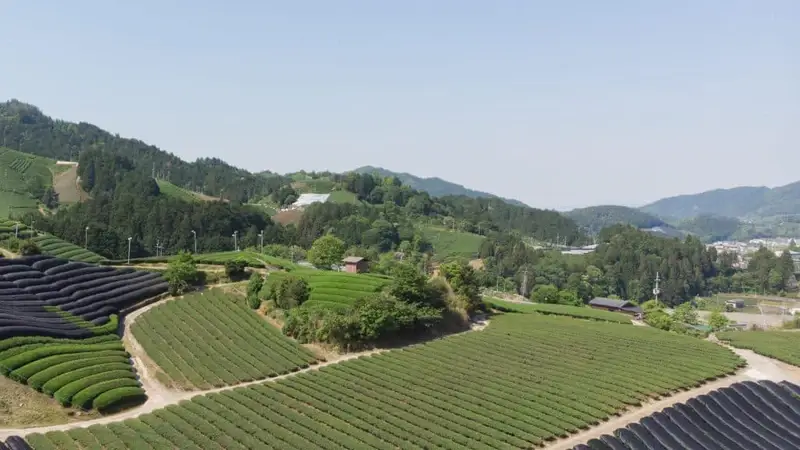
Matcha bushes are shaded for a few weeks before harvest. That’s where the colour and sweetness come from.
Ceremonial or culinary: what the words actually mean
Let’s start with a fact shops don’t advertise: the term “ceremonial” isn’t regulated. There’s no institution in Japan that certifies matcha as ceremonial grade. The split into ceremonial and culinary grade took hold in Western markets as a commercial category meant to help customers navigate the price range.
That doesn’t mean the word is meaningless. Nobody checks it on the producer’s behalf, though. So look at the traits you can actually verify:
- Shading. Bushes are usually covered 20 to 30 days before harvest. Deprived of light, the plant produces more chlorophyll and retains more L-theanine and other amino acids. That’s where the intense green and the more pronounced umami with less astringency come from.
- Harvest. The first flush, from late April to mid-May in central Japan, has the most amino acids. Later harvests have fewer, and usually go into culinary-grade powder.
- Milling. A traditional stone mill produces around 30 to 40 grams of matcha an hour. The slow speed limits the temperature rise, so colour and aroma stay in the powder. That’s the real reason good matcha is expensive.
Matcha is made from tencha: shaded leaf, steamed, dried without rolling, then stripped of stems and coarser veins. Only then does it go to the mill.
Don’t buy the word. Buy the description. A pack that just says “ceremonial grade” with no other information tells you less than one with a stated region and harvest, even if that one doesn’t claim any grade at all.
Price per gram: the one number that makes sense of this market
Matcha comes in all sorts of pack sizes, so comparing prices by eye is pointless. Divide the price by the weight. You’ll immediately see which segment you’re in. The ranges below describe the Polish market as of September 2026.
| Price per gram | What it usually gets you | Sensible use |
|---|---|---|
| Under 0.40 zł | The cheapest segment, usually with no stated region or harvest | Baking, smoothies, a first try |
| 0.40-1.10 zł | Culinary-grade powder and milk-drink mixes | Everyday matcha latte |
| 1.10-2.00 zł | Japanese matcha for everyday drinking | A latte with no compromises, café use |
| Over 2.00 zł | First-flush harvest from a stated region, single batches. The top shelf reaches 6 zł a gram and beyond | Matcha with plain water, usu-cha |
One note on the table: more expensive matcha isn’t automatically better for you. If 90 percent of the powder ends up in a cup of oat milk, paying 4 zł a gram is simply throwing money away. The delicate umami you’re paying for disappears under the milk.
Also work out how far a pack will go. A serving of usu-cha is around 2 g, so 100 g gives you roughly 50 drinks. A latte usually takes 2 to 4 g, so a pack runs out faster. You’ll find the exact maths in our post on how many drinks you’ll get from 100 g of matcha.
Six things worth checking on the packaging
This list works anywhere: drugstore, Allegro or specialist shop. The more boxes a product ticks, the less you’re buying blind.
- Ingredients. One item: powdered green tea. Sugar, milk powder or flavouring means you’re holding a drink. If matcha is highlighted in the product name, look for its percentage.
- Country and prefecture. Japan plus a specific region. Chinese matcha isn’t automatically worse, but comparable quality usually costs less than Japanese matcha.
- Harvest. Producers of good matcha are usually happy to state the first flush.
- Weight. You need it to work out the price per gram.
- Packaging. Opaque, sealed, ideally with a proper closure. Light and oxygen degrade matcha faster than time on the shelf does.
- Date. A best-before date is the minimum. A milling or packing date is a sign the producer knows what they’re doing.
Don’t look for health claims on the packaging. We’ve covered what matcha actually does, and what’s just marketing, in our piece on matcha’s health benefits.
How to check matcha once you’ve opened the pack
The label is one thing, the powder is another. Once it’s open, run four quick tests. None of them need any equipment.
- Colour. A vivid, saturated green, like a young leaf. An olive, yellowish or grey-green colour means a later harvest, oxidation, or old powder.
- Texture. Good matcha is as fine as icing sugar. A sandy, gritty texture points to a coarser grind.
- Smell. Fresh powder smells sweet and vegetal. A smell of hay, cardboard or dust points to oxidation, long storage, or lower-grade raw material.
- Taste with plain water. Whisk 2 g into about 70 ml of water at 70 to 80°C. It should taste faintly sweet, with clear umami and a short, pleasant bitterness at the end. A sharp, scratchy astringency means either a weaker powder or water that’s too hot. More delicate matcha can taste better at 60 to 70°C, so if your first try came out astringent, lower the temperature before you write the product off.
That last test is the most important one. It’s the only one that puts the product to the test where it has nowhere to hide. If a matcha passes it, it’ll hold up in a latte too.
Once opened, keep the powder sealed, in the fridge, away from light. Try to use it within a month. Let a pack taken from the fridge warm up to room temperature first. Open it only afterwards. Otherwise, moisture will condense on the cold powder, which damages matcha faster than almost anything else.
What else to buy alongside matcha
You don’t need a full set of kit to start. You need one thing, and it’s probably not what most people think of first.
- A chasen, the bamboo whisk. It’s the only piece of equipment that genuinely changes the flavour. It breaks up clumps, spreads the powder and aerates the brew, so the matcha turns smooth and creamy instead of powdery. You can make it with a milk frother too, but you have less control, the bubbles come out bigger, and a small serving is easy to splash.
- A sieve. Costs next to nothing, and sifting the powder before whisking solves most clumping problems.
- A chawan, the wide tea bowl. More comfortable than a mug, since the whisk has room to work. Useful, but not essential.
- A scale. If you want consistency, weigh the powder instead of guessing. The difference between 1.5 g and 2.5 g in the same amount of water is clearly noticeable.
If you’re choosing matcha for a café rather than for home, read our separate piece on which matcha to choose for a café. It covers the criteria that matter when you’re working at volume.
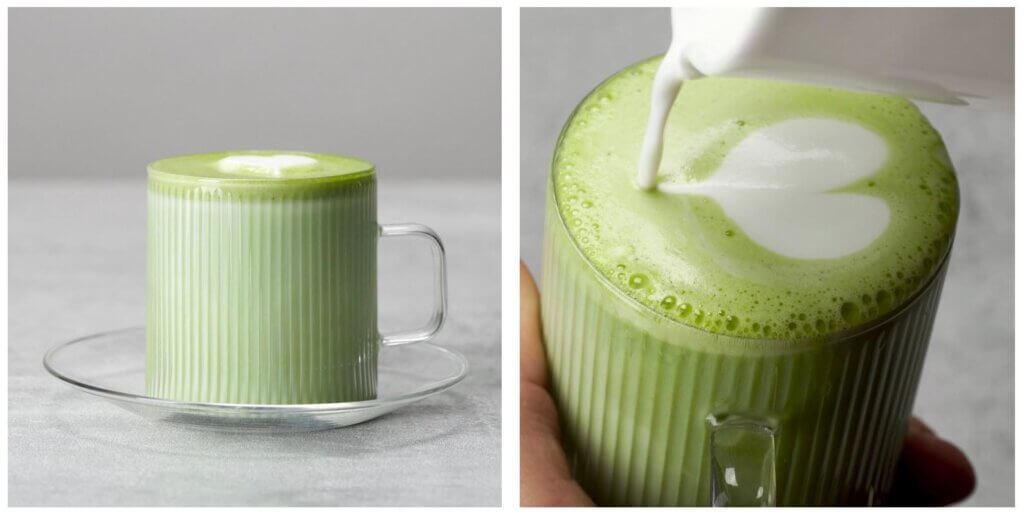
A good second-flush powder is enough for a latte. Ceremonial matcha only starts to make sense once you drop the milk.
Matcha at Colbergcoffee
We sell matcha for the same reason we roast coffee: with this product, origin and freshness show up in the cup. We carry two lines. They differ in use, not in prestige.
Ceremonial matcha comes from the first flush in the Uji region of Kyoto prefecture. The bushes are shaded for several weeks before harvest. It’s a powder meant for drinking with plain water: smooth, with clear umami and no scratchy astringency. Available in 50 g and 100 g packs.
Essential matcha comes from the first and second flushes. It has a vivid green colour and a stronger, more pronounced flavour with a bitter edge that cuts through milk well. It’s the choice for lattes, smoothies and baking. Available in 100 g and 250 g packs for cafés.
Add a bamboo chasen to that. Without one, even the best powder stays lumpy. You’ll find the whole range in our Matcha Bros category.
If you’re considering a roasted, gentler alternative, read our comparison of the two teas in matcha or hojicha.
Summary: how to choose without wasting money
Start by working out how you’ll actually drink your matcha. That one question rules out most of what’s on offer.
If you always drink it with milk, choose a powder in the 0.40 to 1.10 zł per gram range. Don’t pay extra for the word “ceremonial”. If you drink matcha daily and want a genuinely good latte, go for the 1.10 to 2 zł range. For drinking with plain water, look for a first flush from a stated region. A gram of that will cost you over 2 zł.
If you’re just trying it out, buy the cheapest pack you can find at a discount supermarket. Find out whether you even like the flavour. That’s honestly the best 10 zł (about 2 euros) you can spend at this stage.
Wherever you buy it, sift the powder, use water at 70 to 80°C, and whisk it with a chasen. Three things, no extra cost, and they improve the flavour more than moving up a whole price bracket would.
Frequently asked questions about buying matcha
Can you buy matcha at Biedronka?
Yes, but read the label. Discount supermarkets mostly stock matcha-flavoured products: ready-to-drink beverages and instant mixes, where matcha makes up a fraction of the ingredients. Alpro Matcha, promoted at Biedronka in spring 2026, is one example, at 0.5 percent matcha. Pure powdered green tea does turn up too, usually in short promotions. Check the ingredients: real matcha has one item on the list, powdered green tea.
Does Lidl sell matcha?
Lidl periodically adds powdered green tea to its promotional range. In August 2025 it sold 50 g of Vifon Vietnamese Lady matcha for 8.99 zł, under 18 groszy a gram. It’s a powder with no stated prefecture or harvest, so it works well in a latte or baking, less well as matcha drunk with plain water.
Does Rossmann sell matcha?
Rossmann has a wide range of matcha-flavoured products: ready-to-drink beverages, powdered-milk instant mixes and tea bags. Pure matcha for brewing turns up too, Japan Matcha from Brown House & Tea, for example. Keep in mind that a matcha tea bag isn’t the same as matcha, since matcha is drunk together with the powder as a suspension, while a tea bag only gives you what dissolves into the water.
How much should good matcha cost?
Work out the price per gram, since pack sizes vary. Under 0.40 zł a gram buys the cheapest segment, good for baking. From 0.40 to 1.10 zł a gram is culinary-grade powder for milk drinks. From 1.10 to 2 zł a gram is Japanese matcha for everyday drinking. Above 2 zł a gram you’re into first-flush harvests from a stated region, with the top shelf reaching 6 zł a gram and beyond.
What’s the difference between ceremonial and culinary matcha?
The term “ceremonial” isn’t regulated, there’s no institution in Japan that certifies it. It took hold in Western markets as a commercial category. The real, measurable differences lie elsewhere: how long the bushes were shaded before harvest, usually 20 to 30 days, whether the powder comes from the first flush, and how it was milled. Instead of looking for the word, look for a stated region and harvest.
How can you tell if matcha is fresh?
By colour and smell. Fresh powder has a vivid, saturated green colour and smells sweet and vegetal. An olive, yellowish or grey-green colour and a smell of hay or cardboard point to oxidation, long storage or lower-grade raw material. Once opened, keep matcha sealed in the fridge, away from light, and use it within a month. Before opening, let the pack warm up to room temperature so moisture doesn’t condense on the powder.
