

An espresso machine can make excellent espresso, but only if it is cleaned regularly. Coffee residue, oils and deposits very quickly affect not only the taste of the espresso but also how the whole machine works.
Many problems with bitter coffee, uneven flow or machine breakdowns come down to not cleaning the group head and the milk system regularly. In the specialty world, a clean machine is treated as the absolute foundation of good coffee.
Why is regular cleaning of an espresso machine so important?
During brewing, coffee oils and particles of ground coffee build up in the group head. Over time they start to affect the taste of the espresso and the operation of the whole brewing system.
Most often the first sign of a neglected machine is coffee that tastes worse. Espresso becomes more bitter, heavier and “dirty” on the palate. The sweetness and clarity that matter so much in specialty coffee disappear very quickly.
In commercial espresso machines, not cleaning regularly with Cafiza also often leads to clogged solenoid valves. The machine starts working less consistently, the flow becomes uneven, and the group head itself can start to “spit” during operation.
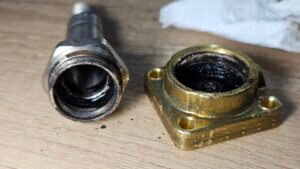
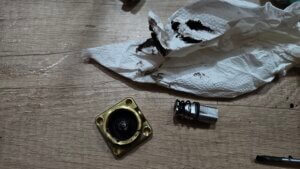
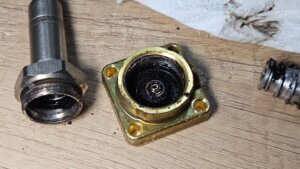
Backflushing: the most important espresso machine clean
The most important cleaning process for an espresso machine is backflushing: cleaning the group head using a blind basket and a detergent such as Cafiza.
This is the process that removes the oils and deposits inside the group head and the solenoid valves. Simply rinsing the group head with water is usually not enough, especially in machines used heavily every day.
In many commercial machines this has to be done regularly, because that is where coffee deposits build up fastest. In specialty cafés a full backflush with detergent is very often done every day at the end of service.
How to backflush by hand if the machine has no cleaning programme
Not every espresso machine has an automatic group cleaning programme, so on many models the whole process has to be done by hand. For this you need a blind basket, a portafilter and a group head cleaning detergent, most often Cafiza.
First we put the blind basket into the portafilter and add a small amount of powder. Then we lock the portafilter into the group head as if brewing espresso. We run the extraction for about 5-10 seconds, then switch it off and wait a few seconds. It is worth repeating this cycle several times.
During this process the detergent dissolves the coffee oils and deposits inside the group head and the solenoid valve. When cleaning is finished, rinse the blind basket thoroughly and run several of the same cycles with water only, to remove detergent residue from the system.
It is regular backflushing that keeps the flow stable and the espresso tasting clean.
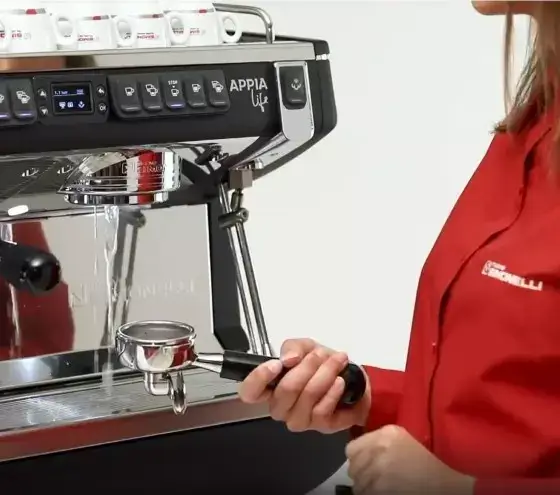
Cleaning portafilters, baskets and the group head
A lot of deposits also build up directly in portafilters and baskets. Coffee oils go rancid very quickly, which then strongly affects the taste of the espresso.
That is why portafilters and baskets are regularly soaked in hot water with Cafiza. This removes old deposits and restores the cleanliness of the whole brewing system.
Remember that even very good specialty coffee will not taste good if the basket or portafilter is coated in old coffee oils.
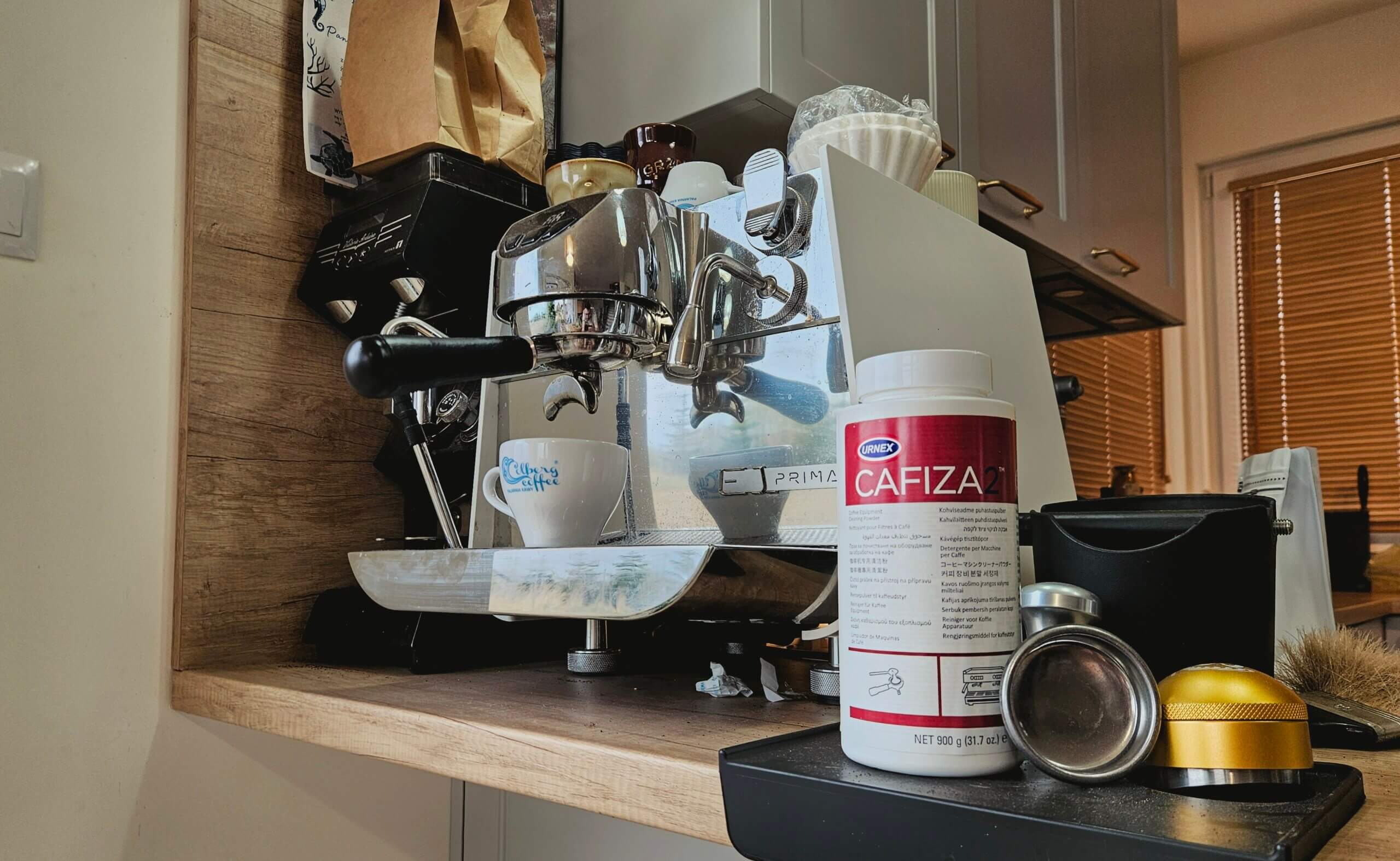
Brushes and accessories for cleaning the outside of the group head
Chemical cleaning alone does not take care of everything. Coffee particles and oily deposits collect very quickly around the group head, on the gasket and by the shower screen. That is why it is worth regularly using a group head brush, which lets you clean spots you do not see at first glance.
Ideally, do this several times a day during service, especially in a café where the machine runs practically non-stop. With a brush you can clean the rim of the group head, the area around the gasket and the place where the portafilter locks in. As a result the portafilter sits better in the group head, and old bits of ground coffee do not end up in the next drinks.
Barista cloths, brushes with a shaped handle and small cleaners for hard-to-reach places are also useful. These are simple accessories, but in practice they have a big effect on hygiene and on consistent espresso flavour.
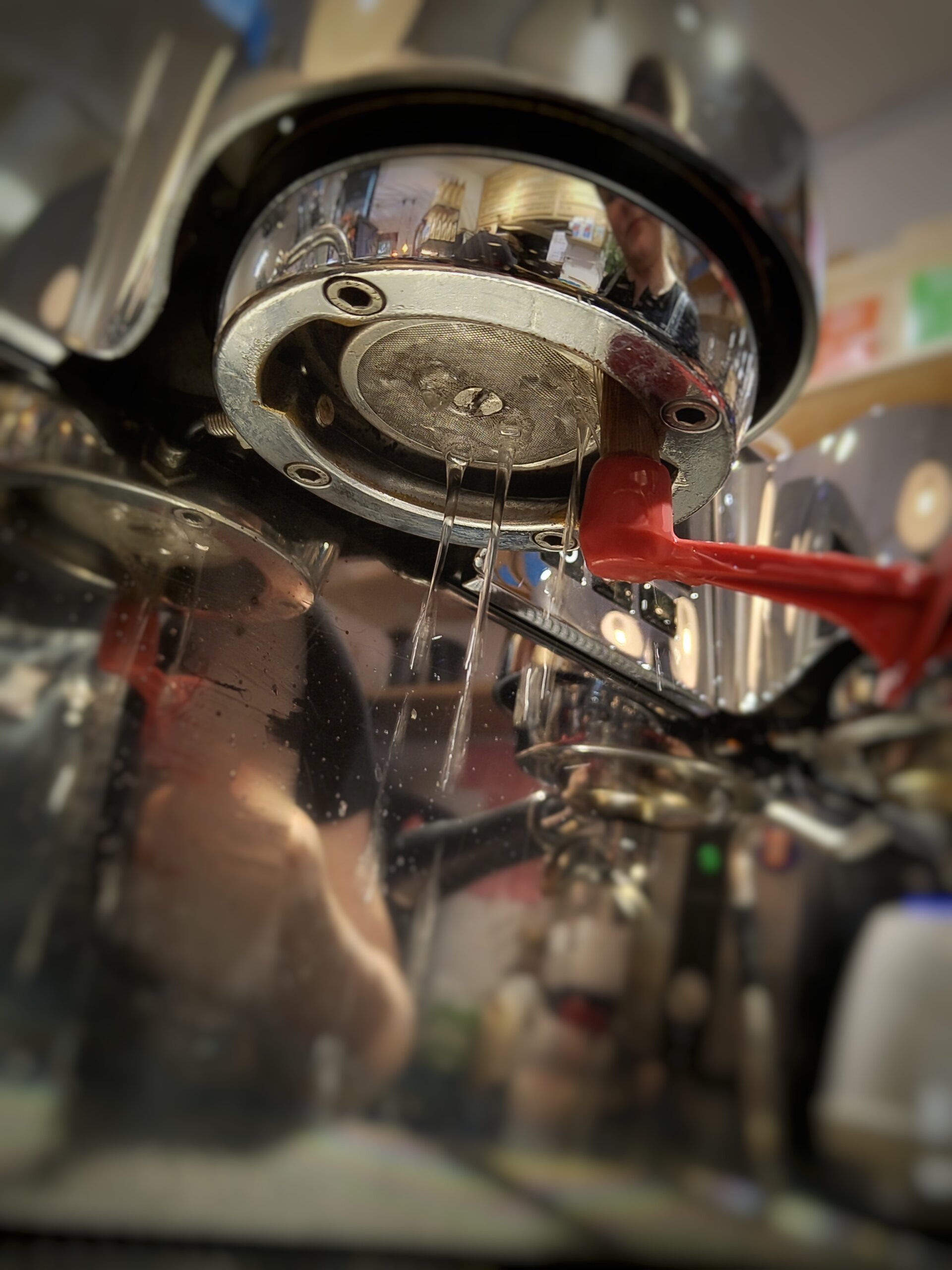
Why does the steam wand need regular cleaning?
The second very important element is the milk system and the steam wand. After each time you steam milk, protein and fat residue is left on the wand and dries very quickly.
For regular cleaning, products such as Rinza are used. They dissolve milk deposits and help keep the whole system clean.
Not cleaning the steam wand regularly affects not only the taste of the milk but can also restrict steam flow and make the whole machine work worse.
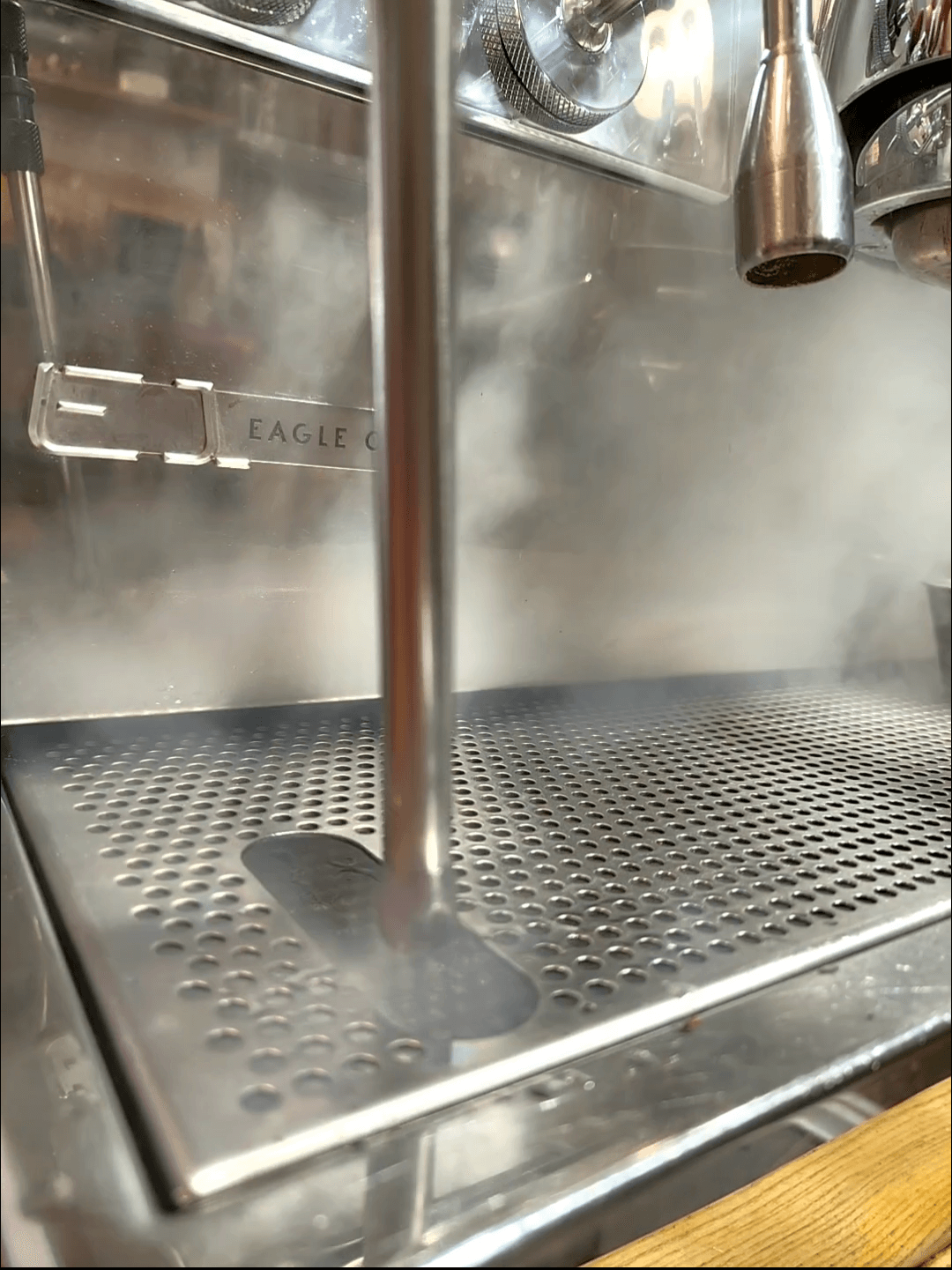
How often should you clean a commercial espresso machine?
In professional cafés, basic cleaning goes on practically throughout the working day.
Most often it looks like this:
- flushing the group heads after every coffee,
- cleaning the wand after every milk,
- a daily backflush with Cafiza,
- regular soaking of portafilters and baskets,
- regular cleaning of the milk system with Rinza.
Regularity is what matters most. Even a very good machine will not make good espresso if the brewing system is dirty.
Does a clean machine really affect the taste of coffee?
Definitely. Deposits and old oils can completely mask the sweetness of espresso and give the coffee a heavy, bitter and “dirty” character.
Very often the problem with the coffee lies not with the beans or the grinder but with a neglected machine. Regular cleaning is one of the most important parts of every barista’s work and has a real effect on the quality of the espresso.
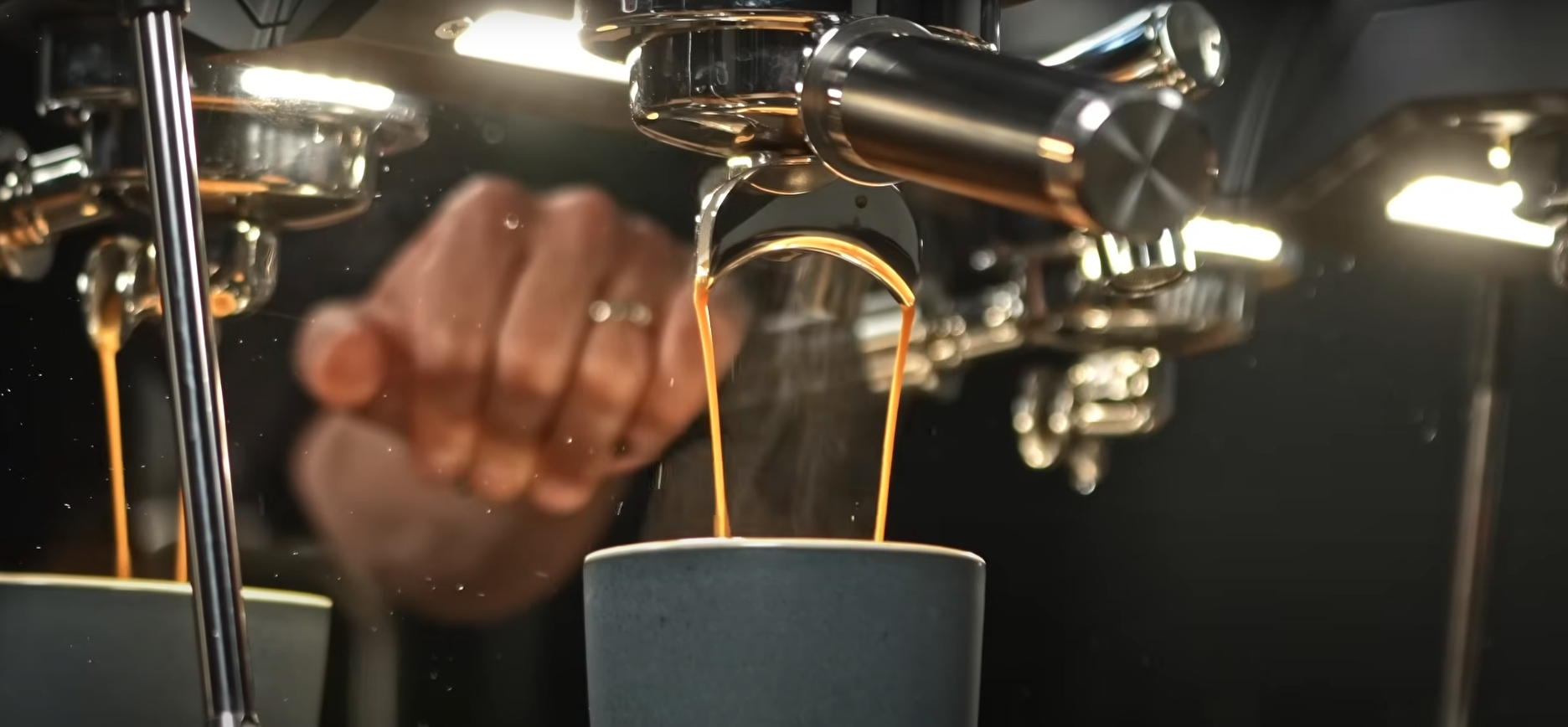
Cleaning an espresso machine: summary
Regular cleaning of an espresso machine affects both the taste of the coffee and the lifespan of the whole machine. Backflushing with Cafiza, cleaning the portafilters and regular use of Rinza on the milk system keep the machine in good condition and help you avoid many technical problems.
In the specialty world, a clean machine is simply the foundation of good coffee.
FAQ: cleaning an espresso machine
What is backflushing?
It is the process of cleaning the group head using a blind basket and a detergent such as Cafiza.
How often should you backflush?
In cafés and restaurants it is most often done every day at the end of service.
What happens if the machine is not cleaned regularly?
Espresso becomes more bitter, and deposits can clog the solenoid valves and cause flow problems.
What is Cafiza used for?
Cafiza removes coffee oils and deposits from the group head, portafilters and baskets.
What is Rinza used for?
Rinza is used to clean milk deposits from the steam wand and the milk system.
