

You start the pump and after just a dozen or so seconds the scale shows 36 g of espresso from 18 g of coffee? If the shot flows fast from the start and turns pale early, the water is probably meeting too little resistance or uneven resistance. The result is usually watery coffee, little body and a sour, underripe taste.
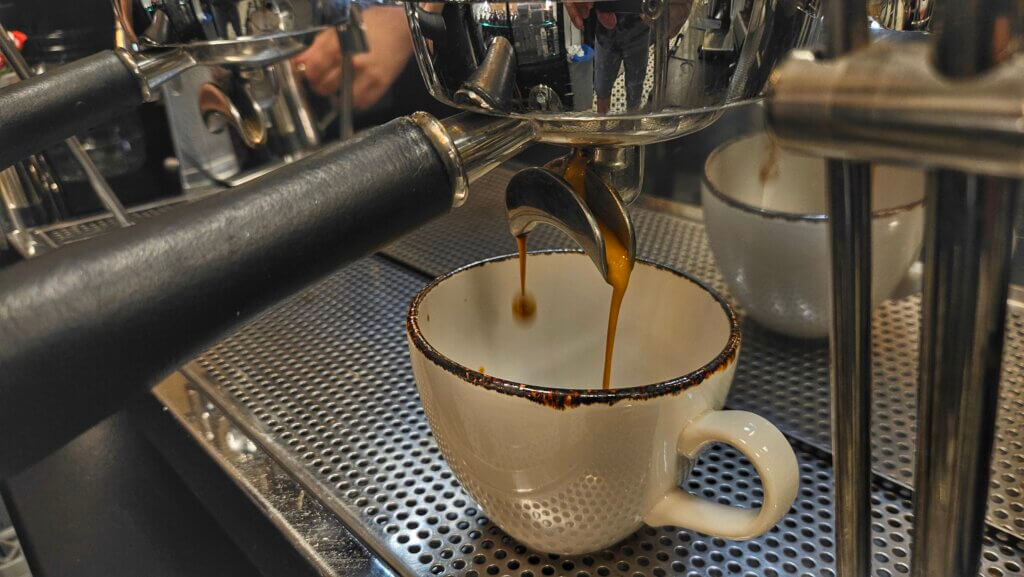
To begin with, weigh the coffee before extraction and the finished shot. A 1:2 ratio is a good starting point: 18 g of ground coffee and about 36 g of espresso. Do not treat time as the only guide, but if you reach that amount after just a dozen or so seconds, check the causes below. It is also worth reading our guide on how brew time affects taste and extraction.
1. The coffee is ground too coarse
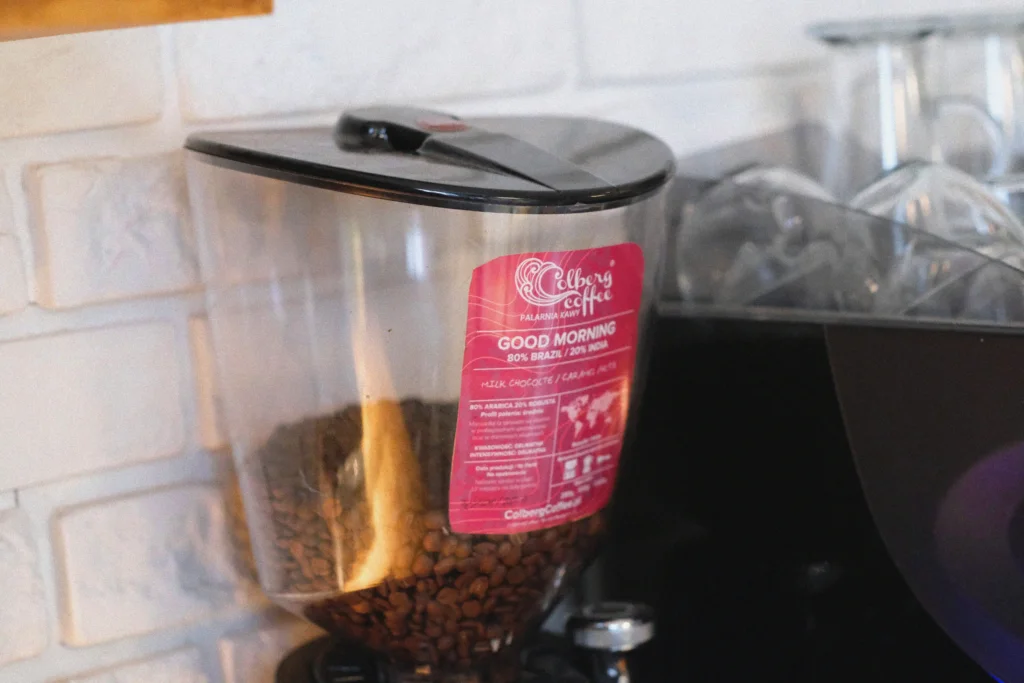
This is the most common reason for espresso running too fast. With a coarser grind there is more space between the particles, so the puck offers the water less resistance. At the same time, the smaller contact area between coffee and water makes it harder to get the right extraction in such a short time.
Set the grinder a little finer, but make small adjustments. After each change, pull a shot with the same dose and check the time and the weight of the shot. If you change the grind, the amount of coffee and the tamping pressure all at once, it will be hard to tell what actually helped.
After changing the setting, grind and discard a small amount of the coffee sitting between the burrs and the grinder’s outlet. Otherwise the first extraction may be made partly from the old grind and will not show the real effect of the adjustment. A few grams is usually enough, but the exact amount depends on the retention of the particular grinder.
If you are only just learning to dial in the grind, start with our guide: how to grind coffee for every brewing method.
Also remember that worn burrs can produce an uneven grind. In that case, simply setting the grinder finer does not always solve the problem.
2. There is too little coffee in the basket
The amount of coffee directly affects the resistance offered to the water. Even a difference of one gram can noticeably change the speed of extraction. If you put too little coffee into a large basket, the puck will be shallow and the water will pass through it faster.
Match the dose to the basket’s capacity. If the manufacturer rates it at about 18 g, start with a value within the recommended range. A dose of 14-15 g in a large basket can create a puck that is too shallow and reduce resistance, although the right amount also depends on the specific coffee and on the headspace between the puck and the shower screen. It is best to weigh every dose, because dosing by eye makes repeatable espresso hard to achieve.
Do not try to solve every problem by adding more coffee, though. First settle on a fixed dose, then adjust the flow mainly with the grind size.
3. The coffee is unevenly distributed in the basket (channelling)
You can have the right grind and the right dose, and the espresso can still run too fast. The cause is often uneven distribution of the coffee in the basket.
Water always looks for the path of least resistance. If the coffee is looser on one side of the basket or there are compacted clumps left in the grind, channels can form. Some of the water will bypass most of the coffee puck and flow through a few easier spots. This is what we call channelling.
The coffee right next to the channels can be over-extracted, while too little water passes through the denser parts of the puck. That is why an espresso affected by channelling can be sour, bitter and hollow all at once.
Before tamping, spread the coffee evenly. You can use thin WDT needles, especially if the grinder produces clumps. The surface of the coffee should be level and its density as uniform as possible across the whole basket.
4. The tamp is uneven or damages the coffee puck
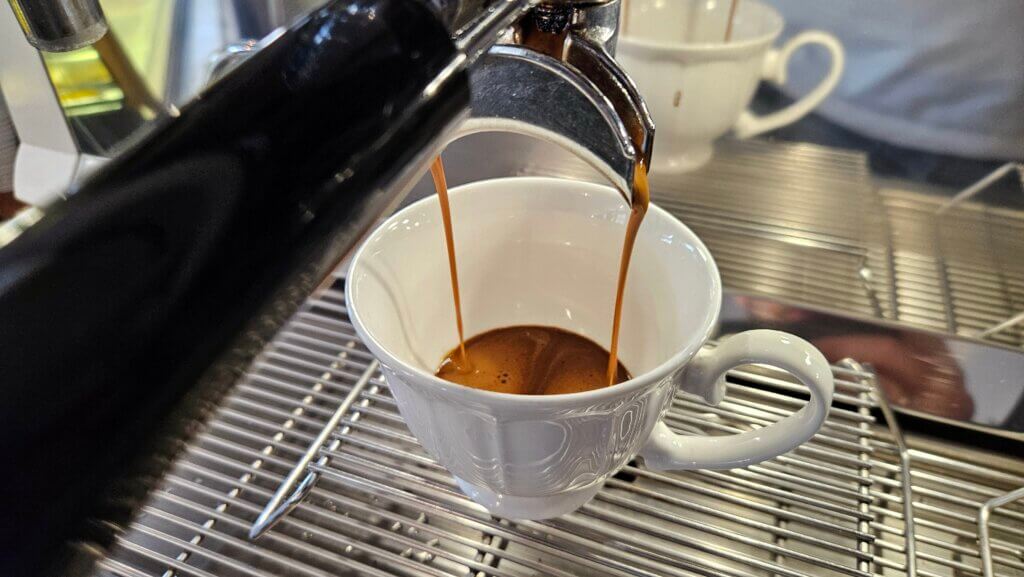
Contrary to a common belief, the answer is not pressing the tamper harder and harder. Once the larger voids have been removed, adding more pressure has little effect on flow rate.
It is much more important to tamp level. If the surface of the puck is tilted, water will pass more easily through its shallower side. Press the coffee once, steadily and level.
Also do not knock the tamper against the side of the portafilter after the first tamp. That tap can pull the coffee away from the wall of the basket and create a channel along its edge. Tamping again does not always repair the damage.
5. The coffee is stale or was ground too early
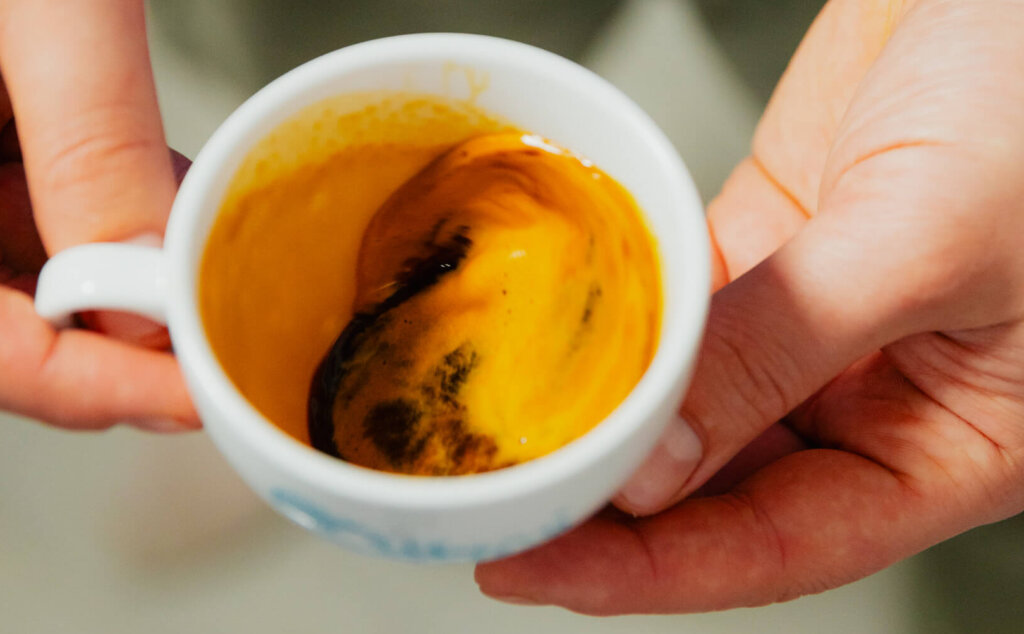
Once ground, coffee loses aroma and releases carbon dioxide much faster. This also changes how it behaves during extraction. Freshly ground coffee contains more CO2, which on contact with water increases the resistance of the puck and slows the flow. Stale coffee offers the water less resistance, and the espresso runs faster, is paler and has less persistent crema.
So grind coffee just before making espresso and check the roast date, not only the best-before date. This does not mean the beans should go into the grinder straight after roasting: coffee needs time to degas, which we write about in the post freshly roasted coffee: should you drink it straight after roasting.
What matters most, though, is using fresh beans and storing them in a tightly closed bag. We explain how to do this properly in our guide can you freeze coffee and how to store it properly.
Espresso running too fast? Check the causes in this order
If your espresso runs too fast, start by grinding finer while keeping the same dose and brew ratio. Then check distribution and a level tamp. Change only one parameter at a time: that way you will quickly find the cause and dial in an espresso that is sweet, dense and well balanced. Base the diagnosis on the weight of the shot and the time, not just on how the stream looks.
It is also worth keeping the basket and the shower screen clean. Blocked holes can distribute water unevenly, and old coffee oils clearly spoil the taste of espresso. We describe how to take care of this in how to clean an espresso machine.
FAQ: espresso running too fast
How many seconds should an espresso shot take?
For a 1:2 ratio, for example 18 g of coffee and 36 g of espresso, the starting point is about 25-30 seconds counted from starting the pump. This is a guide value, not a goal in itself. Taste remains what matters most, and time is mainly a tool for comparing one extraction with the next.
How do you slow down an espresso shot?
Set the grinder finer without changing the dose or the target shot weight. Change only one parameter at a time, and after each adjustment grind and discard a small amount of the coffee left in the grinder’s chamber. Otherwise the first extraction after the change will still be made from the old grind.
Will tamping harder slow down the espresso?
Not significantly. Tamping is there to remove voids and level the surface of the puck. Once that has happened, adding more pressure hardly changes the flow. It is much more important for the tamp to be even and level, because a tilted puck makes it easier for water to pass through the shallower side.
Why is my espresso watery even though the time looks right?
Channelling is usually to blame. The water finds channels in the puck and part of the coffee is under-extracted, even though the total time looks correct. The signs are spurting from a bottomless portafilter, a stream appearing from one side only and the stream turning pale quickly.
When should you start timing an espresso shot?
The simplest is to count from the moment you start the pump, including pre-infusion. Consistency is the key: if you start timing at a different moment each time, comparing one extraction with the next no longer makes sense.
