
Brew time is one of the most important parameters and it really does decide what you taste in the cup. Even with excellent beans and a well-chosen grind, a difference of a few seconds or a few dozen seconds can turn a clean, sweet brew into a bitter or hollow one. In specialty coffee, time is not an accident: it is a tool for controlling extraction. In this article I will show how brew time relates to the taste of coffee and how to control it deliberately in manual brewing methods.
How brew time affects extraction
When you brew coffee, extraction takes place: flavour compounds dissolve out of the grounds. They do not all extract at the same moment. At the start, acids and the compounds responsible for freshness and lightness go into the brew. In the middle phase sweetness and balance appear. At the end, bitter compounds and heavier notes start to dominate.
Brew time directly decides which of these elements will dominate. A shorter time means lower extraction: the coffee can be bright and lightly acidic, but also underdeveloped. A longer time increases extraction: you get more body and bitterness, but it is easy to go past the point where the taste becomes heavy and unpleasant.
That is why specialty coffee is not about “the longer, the better” but about hitting the moment when the brew is most balanced.
Too short versus too long: how to tell the difference
A brew time that is too short is most often the result of too coarse a grind or water flowing through too fast. The coffee will be raw, watery and often unpleasantly sour. It lacks sweetness and depth, and the taste disappears from your mouth quickly. In practice this means under-extraction: you did not manage to draw the best out of the coffee.
A brew time that is too long, on the other hand, leads to over-extraction. The coffee becomes bitter, heavy and sometimes even harsh. The clarity goes and the taste becomes overwhelming. Even a good specialty coffee can then taste flat and aggressive.
The best result always lies between these extremes. That is why controlling brew time is one of the basics of every barista’s work, and of anyone who wants to brew coffee deliberately at home.
The ideal brew time for manual brewing methods
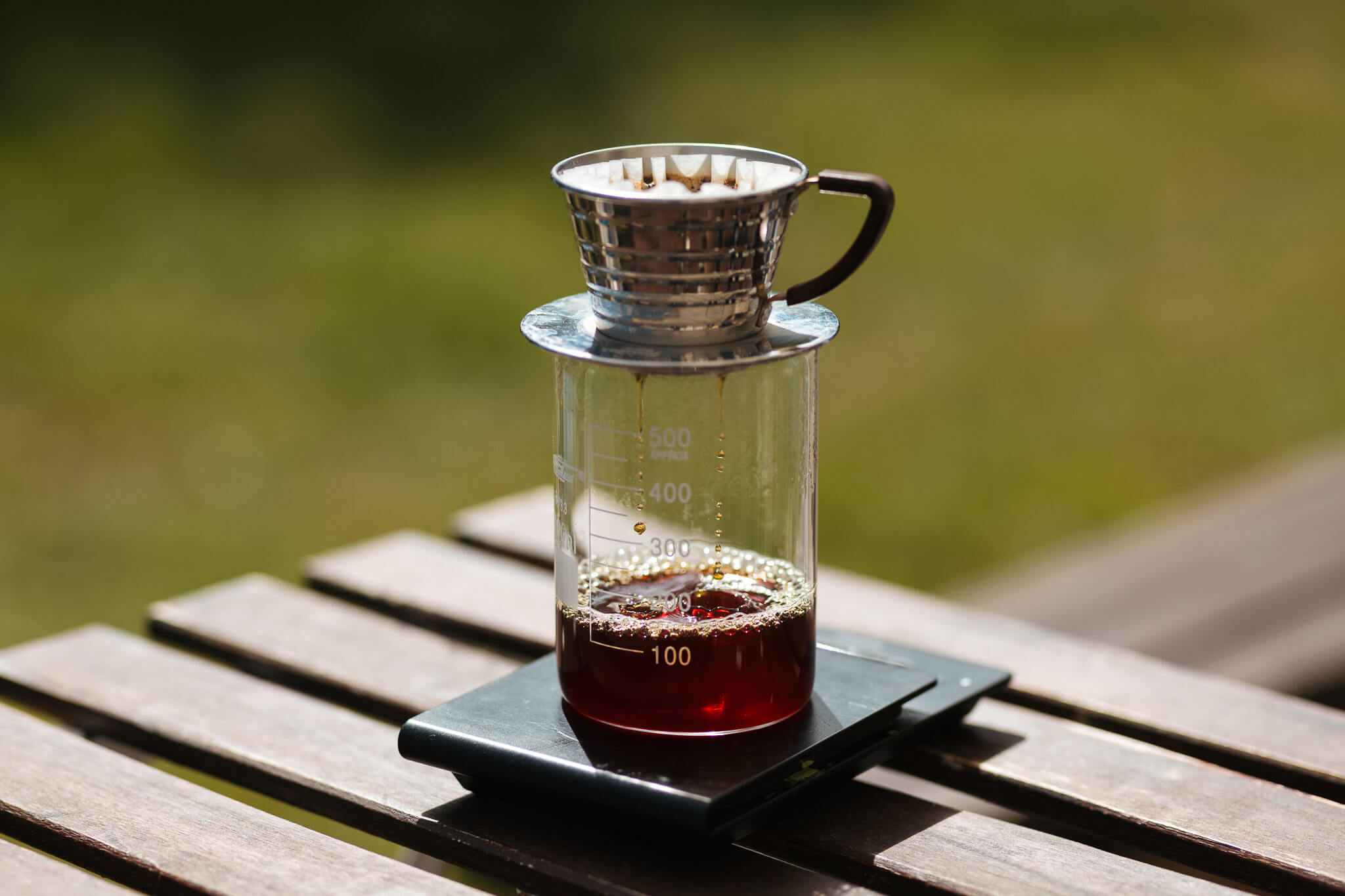
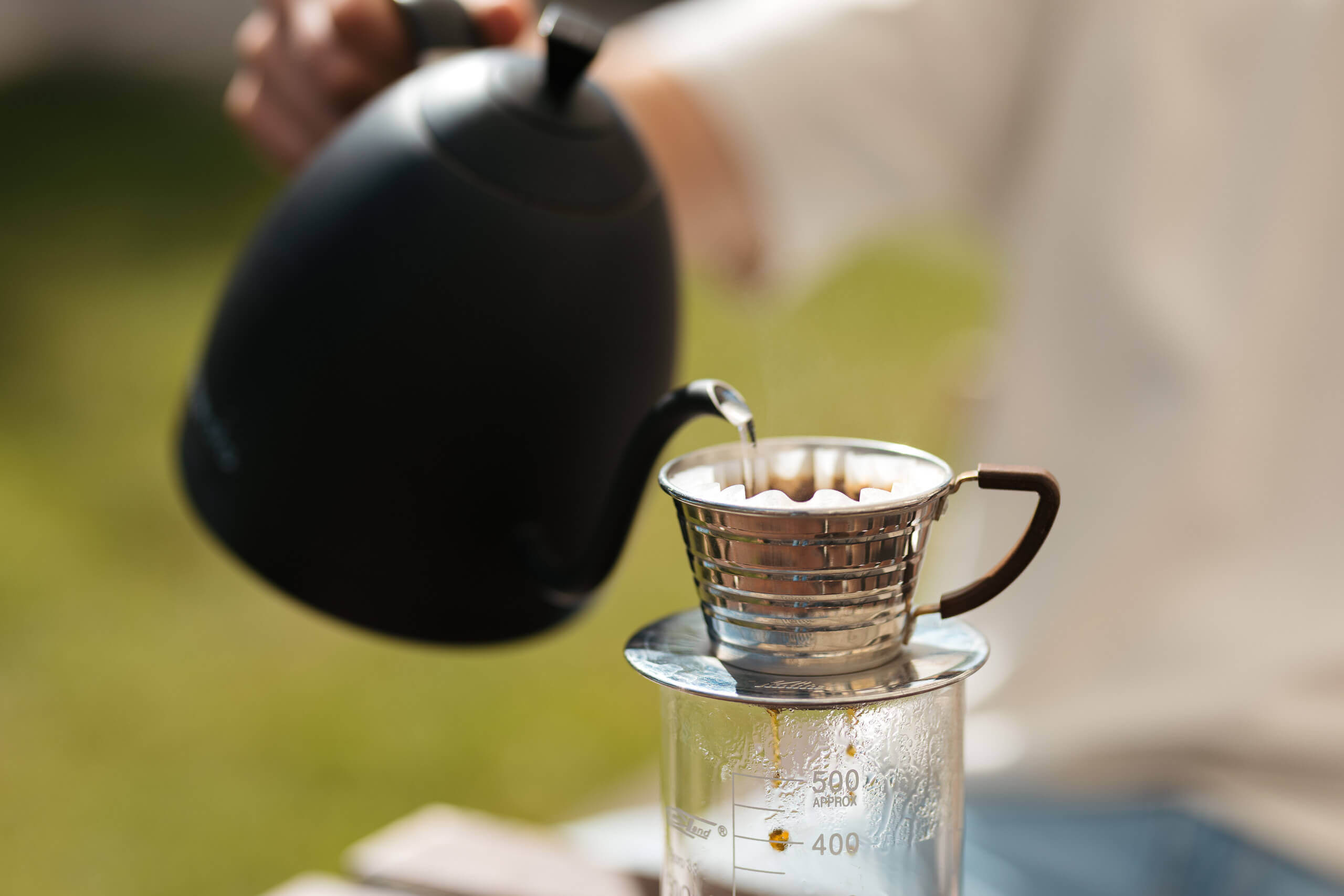
Every brewing method has a time range that is considered optimal. For a V60-style dripper it is usually around 2:00-3:00 minutes. A Chemex usually needs a bit more, often 3:30-4:30, because of the thicker filters and larger volume. The AeroPress is quicker: here we often land at 1:30-2:30, depending on the recipe.
These ranges are not random. They come from how quickly the water flows through the coffee and how long it is in contact with the ground particles. That contact is what decides the level of extraction.
Remember, though, that brew time does not work in isolation from other parameters. If you change the grind, the time changes automatically. If you change the coffee-to-water ratio, the result will be different too. That is why in specialty coffee time is always analysed in the context of the whole process, not as a single value.
How to control brew time and improve the taste of your coffee
The simplest way to control time is to use a scale with a timer. You can see exactly how long the whole process takes and repeat good results. It is the foundation if you want to take your brewing up a level.
If the coffee comes out too sour and light, it is usually worth extending the brew time, for example by grinding finer. If it is bitter and heavy, shortening the time (grinding coarser) often restores the balance.
The approach is what matters: change one parameter and observe the effect. That is how you learn your coffee and your equipment. Specialty coffee is not about sticking rigidly to one recipe but about deliberately adapting the process to a specific coffee.
Brew time is one of the simplest and at the same time most powerful tools you have. Once you start to understand it, coffee stops being a matter of chance and becomes a repeatable, deliberate experience.
FAQ: brew time and its effect on taste
How does brew time affect the taste of coffee?
Brew time decides the level of extraction, meaning the amount of flavour compounds drawn out of the coffee. A shorter time gives a lighter, more acidic brew, while a longer time increases bitterness and fullness. The key is the balance between these extremes.
What happens if I brew coffee for too short a time?
Too short a brew time leads to under-extraction. The coffee will be watery, thin and often unpleasantly sour, without clear sweetness or depth.
How can you tell coffee has brewed for too long?
Too long a brew time causes over-extraction. The coffee becomes bitter and heavy and can have an astringent aftertaste. It also loses clarity and a pleasant texture.
What is the best brew time for a V60?
The usual range is about 2 to 3 minutes. It is a starting point that gives a well-balanced cup, but it is worth adjusting it to the specific coffee and grind size.
Will changing the brew time improve the taste of my coffee?
Yes, but always together with other parameters such as grind and ratio. Most often, changing the grind size is what changes the brew time, and that is what helps you correct the taste of the brew.
