






Sour espresso is one of the most common complaints we hear from customers. Very often the beans are not to blame: the shot is simply under-extracted, so the water has not pulled enough sweetness and depth out of the coffee. Roast level, the coffee itself and the state of your machine matter too. Here is how to tell what is going on and what to change on an espresso machine or a bean-to-cup machine.
Pleasant acidity and sour coffee are not the same thing
Good acidity tastes like fruit: apple, citrus, redcurrant. It is bright but clean, and balanced by sweetness. You will find it in light-roasted coffees from Kenya or Ethiopia.
Sour coffee is different. The acidity is sharp and takes over the cup, sweetness is hard to find and the aroma feels flat. Sometimes there is also some astringency or a salty edge. That usually means something went wrong during brewing. We explain acidity itself in more detail in Acidity in coffee.
A common cause: under-extracted espresso
Different compounds dissolve from coffee at different rates. When extraction is too low, acidity can dominate the sweetness and bitterness that normally balance it. It is not as simple as “acids first, sugars last”, but in practice a shot that ran too fast or was brewed with water that was too cool usually tastes sour and hollow.
In The Professional Barista’s Handbook, Scott Rao links under-extraction with an underdeveloped taste and low brew temperature with sour espresso. Over-extraction, on the other hand, brings bitterness and astringency. Sour and bitter often point to opposite extraction errors, although with channeling you can get both in the same cup. Bitterness has its own article: Why is coffee bitter?
Why is my espresso sour? 6 things to check
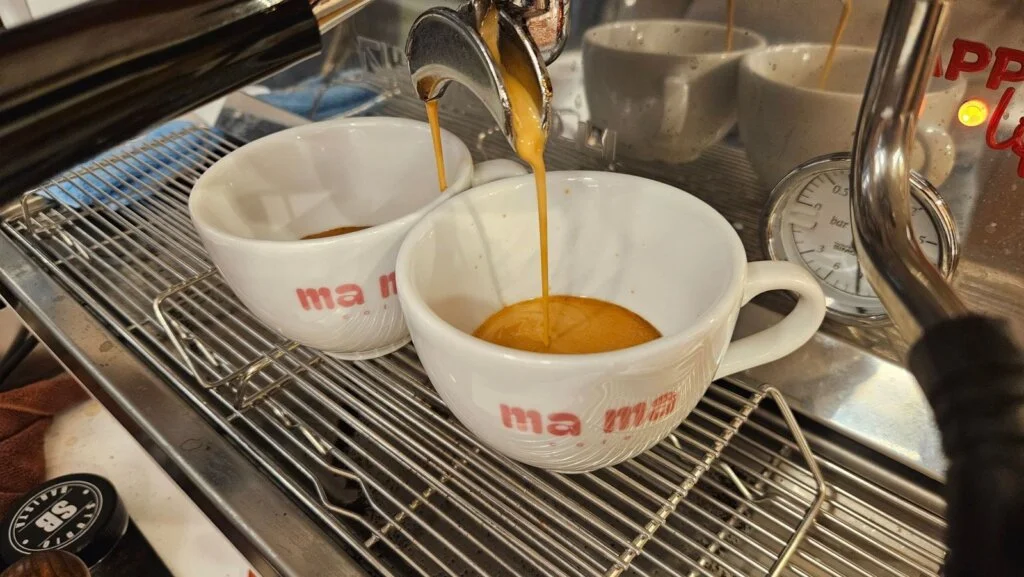
1. Grind too coarse. Coarse particles give the water less resistance, so it runs through too quickly and extraction stays low. If a 1:2 shot is done in 15-20 seconds and tastes sour, grind finer. Make small changes and check time and taste after each one.
2. Shot too short. For a double espresso at 1:2, 25-30 seconds is a good starting point. If the same dose and ratio run much faster, expect more sourness. Common reasons for fast shots are covered in Why is my espresso running too fast?
3. Not enough water for the dose. A 1:1 ristretto usually extracts less than a 1:2 espresso from the same beans and often tastes sourer. If the time looks fine but the shot is still sour, try a longer ratio, for example 40 g out from 18 g in instead of 36 g. More on this in Espresso ratio: what does 1:2 mean?
4. Water too cool. Cooler water dissolves coffee compounds more slowly. Most espresso machines brew with water at around 90-96°C. If yours has a PID, raise it by 1-2°C and taste again. Warm up the machine and the portafilter before the first shot: a cold portafilter steals heat from the water.
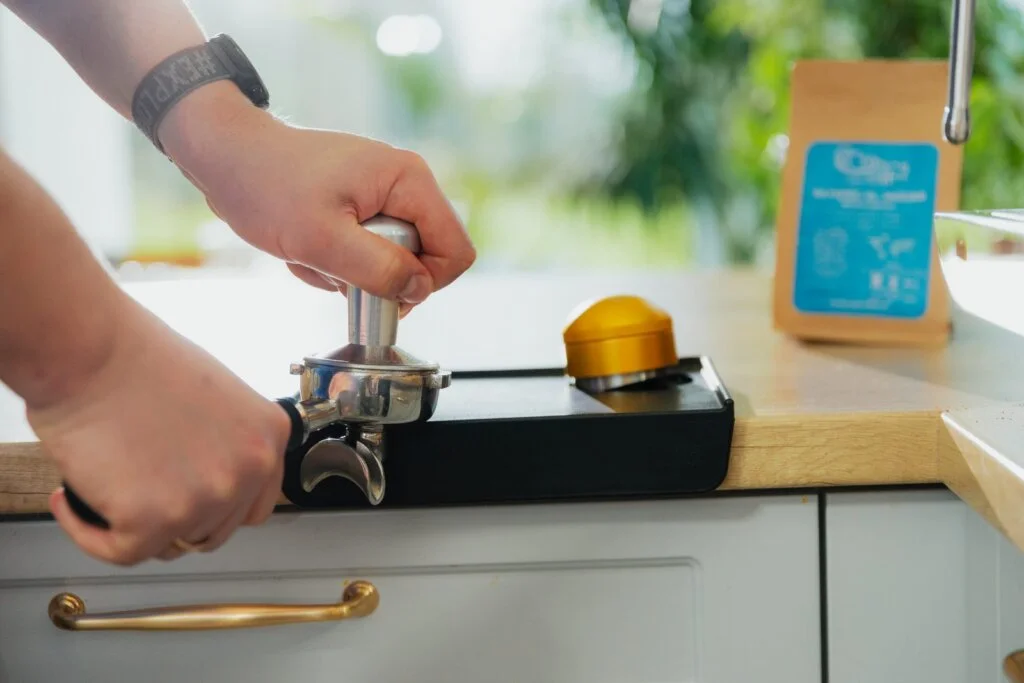
5. Uneven tamping and channeling. If the coffee is unevenly distributed in the basket or tamped at an angle, water finds the easiest path and forms channels. Coffee along those channels over-extracts while the rest under-extracts, so the shot can taste sour, bitter and astringent at once. Distribute the grounds evenly and keep the tamper level.
6. Dose too small for the basket. Too little coffee offers less resistance, so water flows faster and extraction drops. Match the dose to the basket: start with 18 g in an 18 g basket, then check flow and taste. We look at dose in Espresso dose: 18, 20 or 22 g?
When the coffee itself is the reason
Sometimes the machine is dialled in well and the espresso still tastes too sour. Then it may simply be the profile of the coffee or its roast level.
Light roasts for espresso. Light-roasted coffees usually have more pronounced acidity, and the beans are harder and less soluble. They can make excellent espresso, but they need careful dialling in. On a bean-to-cup machine with limited settings, sourness is hard to avoid. We roast our light coffees from Kenya and Ethiopia mainly for pour-over and filter machines.
Origin and processing. Many coffees from Kenya, Ethiopia and high-altitude Central America are known for bright acidity. Among coffees from Brazil, India or Peru it is easier to find milder beans with chocolate and nut notes. Origin alone does not decide the cup, though: variety, altitude, processing and roast all play a part.
Very fresh coffee. Right after roasting, beans hold a lot of CO2, which can make espresso extraction unstable. Give them at least a few days to rest. The ideal time depends on the coffee and the roast. More in Freshly roasted coffee: when should you drink it?
Which coffee is not sour in an espresso machine?
If you just do not enjoy acidity, go for low-acidity coffees with a medium or darker roast. We have a whole low-acidity coffee category. These are the ones we recommend most often for espresso:
| Coffee | Origin | Notes | Best for |
|---|---|---|---|
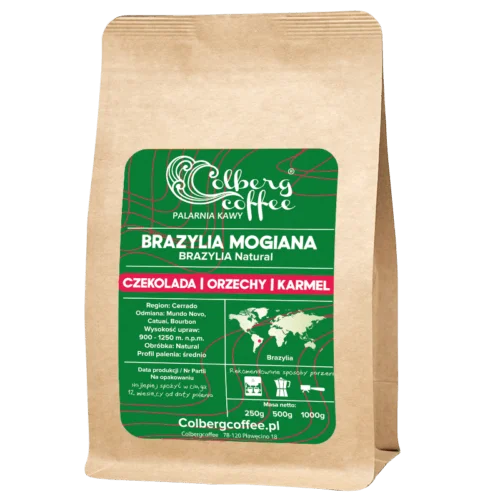
| Brazil Mogiana | Brazil | milk chocolate, roasted nuts, caramel | espresso, cappuccino, bean-to-cup |
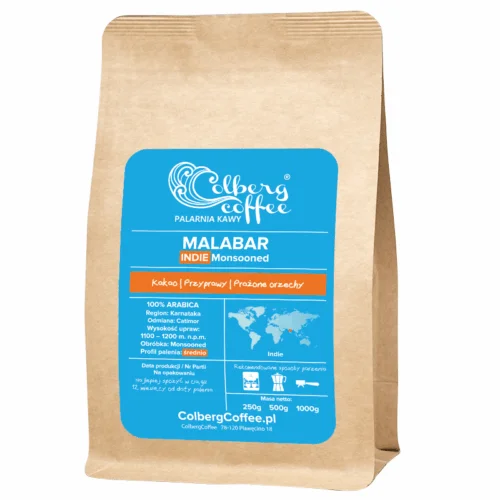
| India Monsooned Malabar | India | cocoa, spices, roasted nuts | espresso, milk drinks |
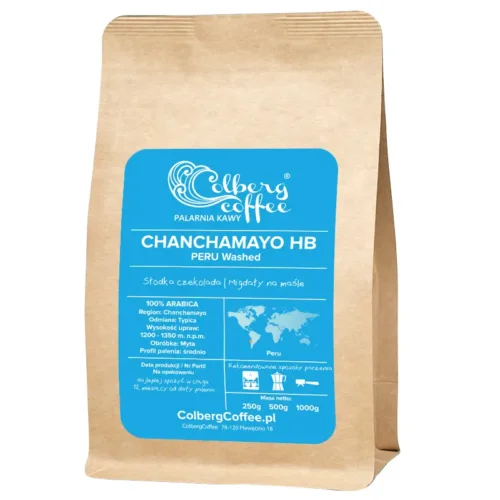
| Peru Chanchamayo | Peru | sweet chocolate, roasted almonds | espresso, moka pot |
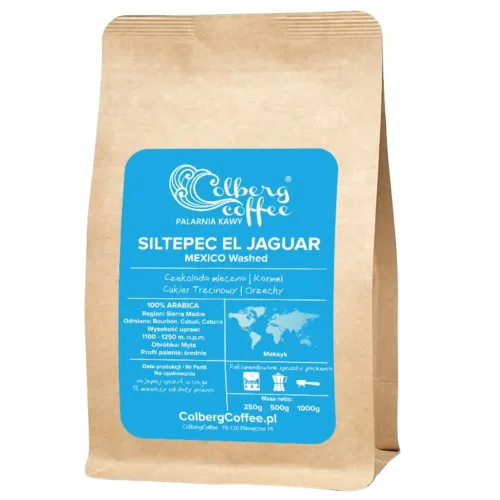
| Mexico El Jaguar | Mexico | milk chocolate, caramel, cane sugar | espresso, bean-to-cup |
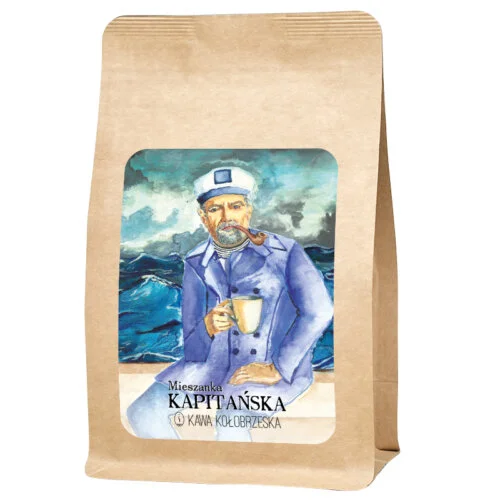
| Captain’s Blend | blend | mild, very low acidity | espresso, milk drinks, office |
India Monsooned Malabar has an unusual story. For around 12-16 weeks the green beans are exposed to humid monsoon air in open warehouses and regularly turned and repacked. They swell, turn pale and develop their typical low-acidity character. The espresso is thick and mellow, with cocoa and spice.
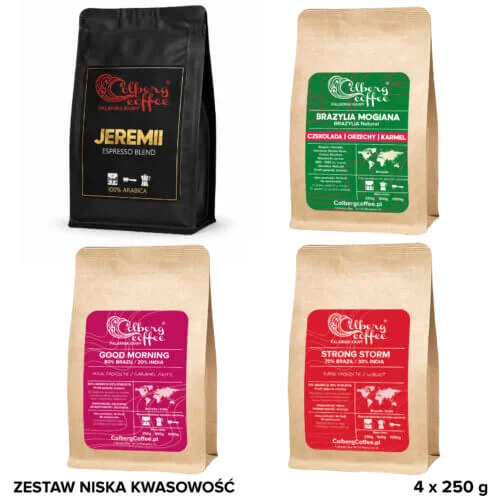
Not sure where to start? Try the low-acidity coffee set, 4 × 250 g, brew each one on your machine and pick a favourite. More ideas in Best low-acid coffee beans.
Sour coffee from a bean-to-cup machine: what to adjust
An automatic machine gives you fewer controls than a traditional espresso machine, but a few settings still help.
- Finer grind. Move the grinder one step finer and brew 2-3 coffees before judging. On many machines you can only change the grind while the grinder is running.
- Higher temperature. If there is a temperature setting, raise it one level and compare.
- Coffee strength. A larger dose gives a stronger cup, but does not always reduce sourness. If the coffee is already strong and sour, grind finer first.
- Long coffee. If a long coffee tastes watery or bitter, brew an espresso and add hot water separately, as for an americano. If the espresso itself is sour, fix the extraction first.
- The right beans. If you do not like acidity, choose medium-roasted, low-acidity coffees for your bean-to-cup machine.
Water and machine condition
Espresso is mostly water, so water chemistry matters a lot. What neutralises acids is mainly the water’s alkalinity, largely its bicarbonate content. Water with very low alkalinity buffers acids poorly, so coffee can taste sourer. Too much alkalinity flattens fruity notes, and very hard water encourages scale in the machine. In the cafés where we install machines, we fit filters that keep water composition stable.
Cleanliness matters too. Coffee residue in the basket and group head disrupts flow and spoils taste, and scale in the water circuit makes temperature less stable. Clean the group, basket and portafilter regularly and descale according to the manufacturer’s instructions. Check the machine before you blame the beans.
How to fix sour espresso, step by step
- Warm up the machine and the portafilter.
- Weigh a dose that matches the basket, for example 18 g in an 18 g basket.
- Aim for a 1:2 ratio, so 36 g of espresso.
- Time the shot. If it runs clearly faster than 25 seconds and tastes sour, grind finer.
- If the time is right but the shot is still sour, extend the ratio to 1:2.2-1:2.5 or raise the temperature by 1-2°C.
- Change one thing at a time and taste after every change.
- If nothing helps, switch to a low-acidity coffee.
Running a café? Our guide How to dial in a coffee grinder in a café will help too.
Why does my espresso taste sour?
Often because it is under-extracted, for example when the grind is too coarse or the water spends too little time with the coffee. Acidity then dominates everything else. Sourness can also come from the natural profile of the beans.
How do I make espresso less sour?
Start with a 1:2 ratio and a time of about 25-30 seconds. If the shot is sour and runs fast, grind finer. Then try a slightly higher temperature, a longer ratio or a low-acidity coffee.
Does sour coffee mean the beans are bad?
No. Sourness can come from machine settings, roast level or the coffee’s natural profile. Even an excellent coffee can taste too sour to someone who prefers low acidity.
Which coffee is not sour for espresso?
Look for medium or darker roasts with chocolate and nut notes and low acidity. Good examples are Brazil Mogiana, India Monsooned Malabar and Captain’s Blend.
Can I use light-roast coffee for espresso?
Yes. Light roasts can make great espresso, but they need careful dialling in and easily turn sour if extraction is off. On bean-to-cup machines it is usually easier to get a mellow cup from medium roasts.
What is the difference between acidity and sourness?
Pleasant acidity tastes fruity and is balanced by the rest of the flavour. In sour coffee the acidity dominates while sweetness and aroma are weak. That can come from under-extraction or from the beans themselves.
Przeczytaj też
Irish coffee: recipe, ratio and how to float the cream
The classic Irish coffee recipe: IBA proportions, how to keep the cream from sinking, which
Oct

Espresso macchiato: what it is and how to make one
An espresso macchiato is espresso with a little milk foam. Here is how it differs
Oct
Cortado: what it is, the ratio and how to make one
A cortado is espresso with a little warm milk. Here is the usual ratio, how
Oct
Burr grinders: flat or conical burrs?
How a burr grinder differs from a blade grinder, and what flat and conical burrs
Oct
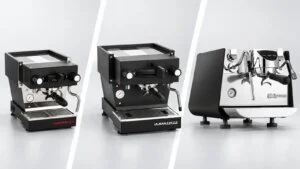
La Marzocco Linea Mini, Linea Micra or Eagle One Prima? Choosing a home espresso machine
Three single-group home espresso machines compared: La Marzocco Linea Micra, Linea Mini R and Victoria
Oct
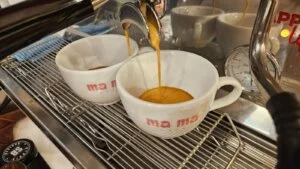
Sour espresso: why it happens and how to fix it
Why does espresso taste sour? Under-extraction, grind, temperature, water and the beans themselves. What to
Oct
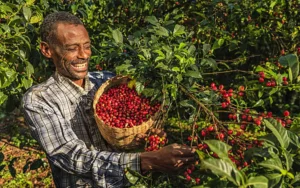
New coffees at the roastery: Kenya Inoi Kaguyu and Ethiopia Kurume Natural
Two new specialty coffees from Africa: fruity Kenya Inoi Kaguyu and floral Ethiopia Kurume Natural.
Oct

Coffee as a Christmas gift: which one to choose? 2026 guide
Coffee as a Christmas gift: how to match it to the person and their brewing
Oct
