





18, 20 or 22 g of coffee for espresso? The dose you choose affects how much espresso you get, how deep the bed of ground coffee sits in the basket and how water flows through it.
That does not mean more coffee automatically gives a stronger or better espresso. The result in the cup also depends on the ratio of coffee to beverage, grind size, flow time, water temperature, basket design and the way the shot is prepared.
What does research say about espresso dose?
The Specialty Coffee Association does not name one mandatory dose for every espresso.
A study published by the SCA described how baristas actually work. The most common dose range was 18-20 g of coffee. The most frequently used basket held 18 g. The average yield was 36.5 g of espresso, and extraction time usually fell within 25-30 seconds.
| Parameter | Practice described in the SCA material |
|---|---|
| Dose | 18-20 g on average |
| Most frequently used basket | 18 g |
| Average yield | 36.5 g of espresso |
| Extraction time | 25-30 seconds |
| Most common pressure | about 9 bar |
This describes barista practice, not a binding standard.
The SCA does not claim that every espresso should be made with exactly 18 g of coffee. The dose should be matched to the basket, the machine, the grinder, the coffee and the recipe you are aiming for.
When comparing 18, 20 and 22 g, the 18 g dose is closest to the most frequently used basket described in the SCA study. The 18-20 g range sits within average practice, while 22 g needs a larger basket and a recipe set up on its own.
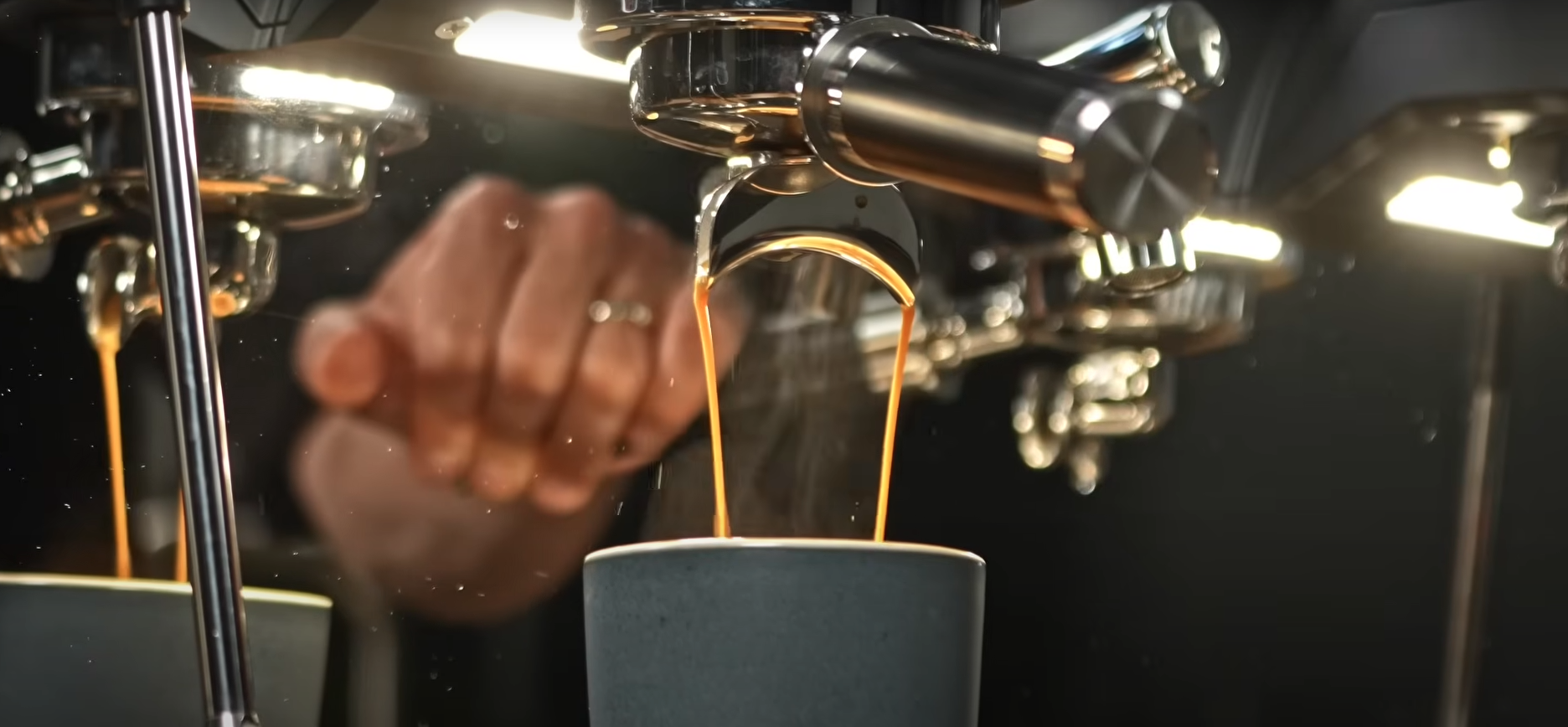
Espresso dose and brew ratio
The number of grams of coffee alone is not enough to judge an espresso. You also have to take the amount of finished beverage into account.
Brew ratio is the mass of dry coffee compared with the mass of espresso in the cup.
Examples:
-
18 g of coffee and 36 g of espresso is a 1:2 ratio,
-
20 g of coffee and 40 g of espresso is a 1:2 ratio,
-
22 g of coffee and 44 g of espresso is a 1:2 ratio.
If we increase the dose and increase the yield in the same proportion, we simply make a larger espresso.
If we increase the dose but keep the same amount of beverage, we change the ratio.
Example:
-
18 g of coffee and 36 g of espresso is 1:2,
-
20 g of coffee and 36 g of espresso is about 1:1.8,
-
22 g of coffee and 36 g of espresso is about 1:1.6.
In the second case there is more coffee for the same mass of beverage. This can raise concentration, but it still does not let you predict the exact taste of the espresso in advance.
18 g of coffee for espresso
18 g is closest to the practice linked to the most frequently used basket described in the SCA material.
A good starting point can be:
-
18 g of coffee,
-
36 g of espresso,
-
a 1:2 ratio,
-
25-30 seconds of extraction.
That does not mean 18 g will automatically give you a clearer, more acidic or lighter espresso. That can happen, but it also depends on the coffee, the grind, the yield, the temperature and the way the shot is prepared.
An 18 g dose can be a good choice when you use a basket of that size and want to work with a recipe close to the average described by the SCA.
20 g of coffee for espresso
20 g falls within the typical 18-20 g range described in the SCA material. It is a practical dose that suits many double baskets.
A good starting point can be:
-
20 g of coffee,
-
40 g of espresso,
-
a 1:2 ratio,
-
25-30 seconds of extraction.
There is, however, no basis for saying that 20 g will always give more sweetness, better balance or more body than 18 g.
If an espresso made with 20 g tastes different, the dose itself may not be the only reason. The depth of the coffee bed in the basket, the resistance to water flow and the grinder setting change as well.
22 g of coffee for espresso
22 g goes beyond the average range described in the SCA material, but on its own it is not a mistake.
A good starting point can be:
-
22 g of coffee,
-
44 g of espresso,
-
a 1:2 ratio,
-
25-30 seconds of extraction.
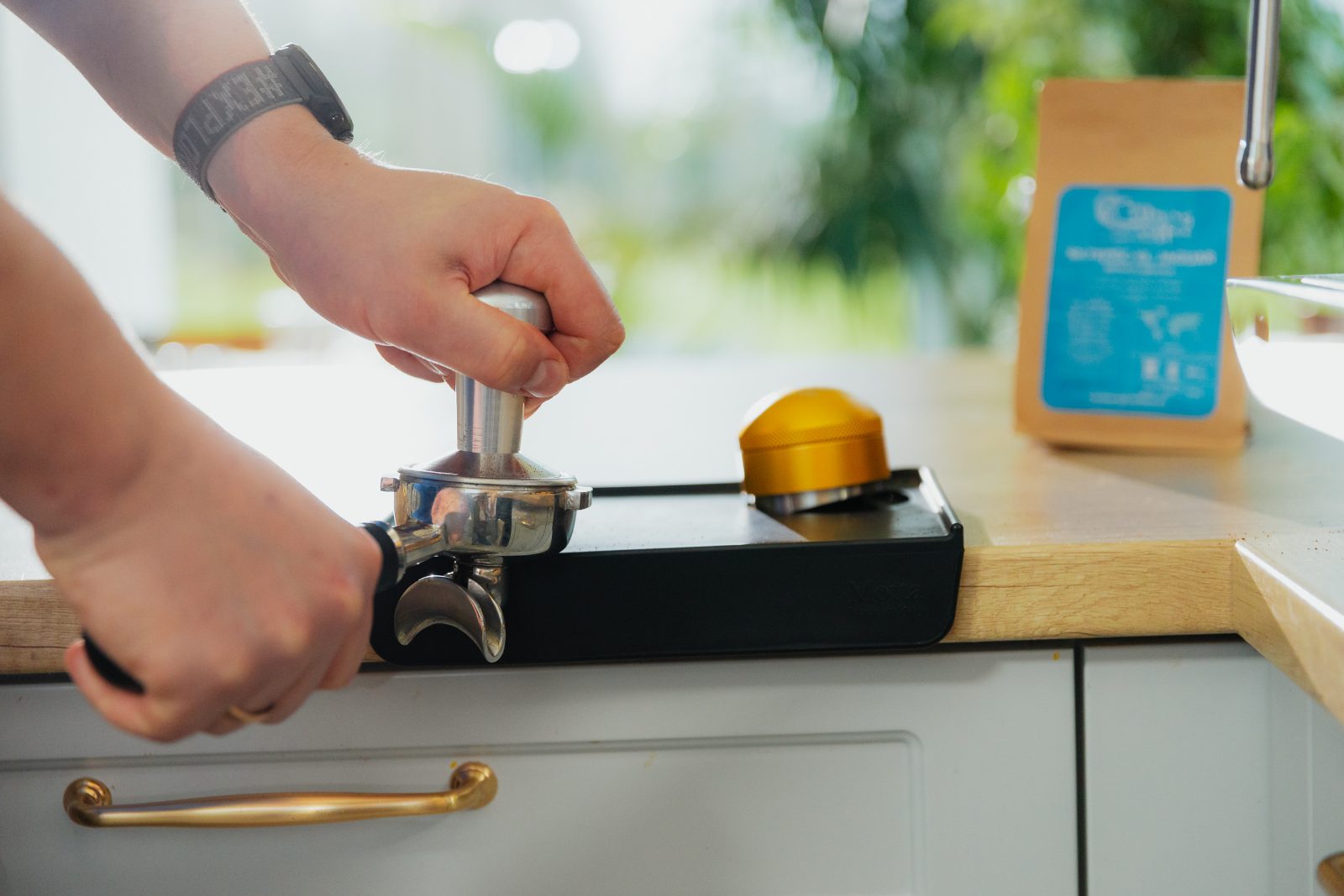
A 22 g dose needs a basket designed for that amount of coffee. You should not simply put 22 g into an 18 g basket.
If we combine 22 g of coffee with 36 g of espresso, the ratio changes to about 1:1.6. Such a shot may be more concentrated, but without measuring it we cannot say it will taste better, be stronger or be better extracted.
TDS in espresso: brew concentration
TDS stands for Total Dissolved Solids. It is the percentage of dissolved substances in the finished beverage.
Put simply, TDS tells us how concentrated an espresso is. It is not, however, the same as the perceived intensity of flavour.
TDS is measured with a refractometer.
For example:
-
an espresso with 8% TDS contains about 8 g of dissolved substances in 100 g of beverage,
-
an espresso with 10% TDS is more concentrated,
-
an espresso with 12% TDS contains an even greater amount of dissolved substances in the same mass of beverage.
A larger dose on its own does not guarantee a higher TDS. The mass of the beverage and the degree of extraction matter too.
If we prepare:
-
18 g of coffee and 36 g of espresso,
-
22 g of coffee and 44 g of espresso,
then in both cases we keep a 1:2 ratio. If TDS and extraction are similar, the espressos can have a similar concentration. They will differ mainly in the size of the serving and in how water flows through the coffee bed.
EY: extraction yield in espresso
EY stands for Extraction Yield. In SCA materials you may also see the abbreviation PE, Percentage Extraction.
EY shows what percentage of the mass of dry coffee has been dissolved and ended up in the beverage.
You can use a simplified formula:
EY (%) = beverage mass x TDS (%) / dry coffee mass
Example:
-
dose: 18 g,
-
beverage: 36 g,
-
TDS: 10%.
Calculation:
36 x 10 / 18 = 20% EY
This means that about 20% of the mass of dry coffee has been dissolved into the beverage.
TDS and EY describe different things:
-
TDS tells you how concentrated the beverage is,
-
EY tells you how much has been extracted from the coffee.
An espresso can have a high TDS and a low EY. It will then be concentrated but may be underextracted.
An espresso can also have a lower TDS and a higher EY. It will be lighter, but not necessarily lacking in flavour.
That is why higher concentration does not automatically mean better extraction.
Does espresso extraction time depend on the dose?
There is no rule saying that a larger dose automatically needs a longer extraction time.
Do not use a simple conversion like this:
-
18 g = 25 seconds,
-
20 g = 28 seconds,
-
22 g = 31 seconds.
The SCA describes 25-30 seconds as average practice for a typical espresso. It is neither a mandatory norm nor a time that has to increase along with the dose.
As a starting point you can use:
| Dose | Espresso at a 1:2 ratio | Starting time |
|---|---|---|
| 18 g | 36 g | 25-30 seconds |
| 20 g | 40 g | 25-30 seconds |
| 22 g | 44 g | 25-30 seconds |
After changing the dose, you need to dial in the grind again. More coffee can change the depth of the coffee bed in the basket and the water flow, but the actual effect depends on the whole recipe.
If the espresso runs too fast, grind finer. If it runs too slowly, grind slightly coarser.
We treat time as a control tool, not a goal in itself. The final judgement is based on taste and, where possible, on measuring TDS and EY.
How to compare 18, 20 and 22 g espresso doses
If we want to test the effect of the dose alone, we have to limit the number of variables.
Keep the following the same:
-
the same coffee,
-
the same machine,
-
the same water,
-
the same temperature,
-
the same 1:2 ratio,
-
the right basket for each dose,
-
a similar flow time,
-
the same distribution and tamping method.
Then write down:
-
the dose,
-
the yield,
-
the extraction time,
-
TDS,
-
EY,
-
your taste assessment.
Only then can we check whether a particular coffee works better at 18, 20 or 22 g.
We should not assume that changing the dose alone will change the espresso in a predictable way.
The right coffee dose for espresso
SCA materials show that typical barista practice falls within 18-20 g of coffee. The most frequently used basket was 18 g, the average yield was 36.5 g and extraction time was 25-30 seconds.
That does not mean 18 g is the only correct dose, or that the SCA considers it the best-tasting one.
What matters most in espresso is not only the grams of coffee, but also:
-
the ratio of coffee to beverage,
-
TDS concentration,
-
EY extraction yield,
-
grind size,
-
flow time,
-
temperature,
-
basket design,
-
roast profile.
18 g, 20 g and 22 g can all make a good espresso. None of these doses, however, guarantees a particular body, sweetness, acidity or intensity unless the other parameters are under control.
The best starting point is a recipe matched to the basket and the specific coffee. Start with a 1:2 ratio and 25-30 seconds, then judge the espresso by taste and, if possible, by measuring TDS and EY.
Espresso dose: frequently asked questions
Which espresso dose is most in line with SCA practice?
The SCA does not name one mandatory dose. In the published study the most common range was 18-20 g of coffee, and the most frequently used basket held 18 g.
Is 20 g of coffee better than 18 g, and does 22 g make a stronger espresso?
There is no single best dose. The number of grams alone does not guarantee a particular taste, more body or higher concentration. The dose has to be matched to the basket, the ratio, the grind and the recipe.
How much espresso should you get from 18, 20 and 22 g of coffee?
At a 1:2 ratio, the starting point is about 36 g of espresso from 18 g of coffee, 40 g of espresso from 20 g of coffee and 44 g of espresso from 22 g of coffee.
Does extraction time need to get longer as the dose increases?
No. For 18, 20 and 22 g you can start with 25-30 seconds. After changing the dose, dial in the grind again and judge the espresso by taste.
What is the difference between TDS and EY in espresso?
TDS describes the concentration of the finished beverage, the percentage of dissolved substances in the espresso. EY, Extraction Yield, shows what percentage of the mass of dry coffee has been extracted and ended up in the beverage.

Coffee as a Christmas gift: which one to choose? 2026 guide
Coffee as a Christmas gift: how to match it to the person and their brewing
Oct
What Is the Best Water for Filter Coffee? How It Affects Flavour
See how bicarbonates affect the flavour of filter coffee, how pH differs from alkalinity and
Oct
TDS in coffee: what it means and how to measure it
TDS in coffee shows the concentration of dissolved solids in the brew. Learn how to
Oct

Syrenka restaurant in Kołobrzeg: Polish home cooking
Syrenka restaurant in Kołobrzeg: address, opening hours, what to eat and what lunch costs. Plus
Oct
Swiss Water vs Mountain Water: comparing our two decaf coffees
Mexico El Tucan Decaf (Mountain Water) and Colombia Excelso Medellin Decaf (Swiss Water): how the
Oct
Espresso ratio: what does a 1:2 ratio mean?
What is the espresso ratio? We explain what a 1:2 ratio means, how to calculate
Oct
Espresso dose: how 18, 20 and 22 g change taste and extraction
18, 20 or 22 g of coffee for espresso? See what the SCA says, what
Oct

Ma Ma Cafe, a café in Świnoujście: a showcase of top quality
How we fitted out Ma Ma Cafe in Świnoujście from A to Z: a Nuova
Oct
[Sources]
-
Specialty Coffee Association, “Defining the Ever-Changing Espresso”: https://sca.coffee/sca-news/25-magazine/issue-3/defining-ever-changing-espresso-25-magazine-issue-3-zyx36
-
Specialty Coffee Association, “Coffee Decoded: The Science of Dialing-In”: https://sca.coffee/sca-news/coffee-decoded-14-dialling-in
-
Specialty Coffee Association, “SCA Standards”: https://sca.coffee/research/coffee-standards
-
Cameron et al., “Systematically Improving Espresso: Insights from Mathematical Modeling and Experiment”: https://www.sciencedirect.com/science/article/pii/S2590238519304102
