







The ratio in coffee describes the relationship between the mass of dry coffee and the mass of the finished drink. For espresso, the most common ratio is 1:2. This means that 1 g of ground coffee gives roughly 2 g of espresso.
If we use 18 g of coffee and get 36 g of espresso in the cup, we have brewed at a 1:2 ratio. The ratio helps keep a recipe in order, but on its own it does not tell you whether the coffee will be sweet, sour, intense or well extracted.
How to read a 1:2 espresso ratio
The first number is the mass of dry coffee. The second number is the mass of the finished drink.
Examples:
- 18 g of coffee and 36 g of espresso is a 1:2 ratio,
- 20 g of coffee and 40 g of espresso is a 1:2 ratio,
- 22 g of coffee and 44 g of espresso is a 1:2 ratio.
In each case we make a different amount of espresso, but keep the same proportion.
It is best to weigh both the dose and the finished shot. Measuring by volume is less accurate, because the amount of crema can vary depending on the coffee and the time since roasting.
What does the SCA say about the espresso ratio?
In a study of barista practice published by the Specialty Coffee Association, the average espresso was made at a ratio of about 1:2. The average dose was 18-20 g, the yield about 36.5 g, and the extraction time most often fell within 25-30 seconds. 25 Magazine: Issue 3
This does not mean, however, that the SCA treats 1:2 as the only correct recipe. It is a description of what baristas do, not a mandatory standard.
The ratio needs to be matched to:
- the type of coffee,
- the roast profile,
- the basket,
- the grinder,
- the espresso machine,
- the flavour you are aiming for.
How different espresso ratios change the shot
The most common espresso ratios are about 1:1.5, 1:2 and 1:2.5. Each of them can give a different result in the cup.
| Ratio | Example with an 18 g dose | Characteristics |
|---|---|---|
| 1:1.5 | 27 g of espresso | more concentrated espresso, smaller serving |
| 1:2 | 36 g of espresso | versatile starting point |
| 1:2.5 | 45 g of espresso | larger serving, usually lower concentration |
A lower ratio, for example 1:1.5, means less liquid from the same amount of coffee. The espresso can be more concentrated and denser, but it will not automatically be sweeter or better extracted.
A 1:2 ratio is a practical starting point for many coffees. It keeps a balance between the amount of liquid, concentration and extraction yield.
A higher ratio, for example 1:2.5, means more liquid in the cup. The espresso can be less concentrated and more delicate. With some coffees this approach brings out subtle flavour notes better, but too long a yield can also lead to bitterness and dryness.
Does the espresso ratio affect extraction?
Yes, but not on its own.
Changing the ratio changes the amount of water that passes through a given amount of coffee. A higher ratio can allow more compounds to dissolve, but it does not automatically mean better flavour or a higher EY.
Extraction is also affected by:
- grind size,
- flow time,
- water temperature,
- pressure,
- how evenly the coffee bed is prepared,
- the roast profile,
- the type of coffee.
That is why two coffees brewed at a 1:2 ratio can taste completely different and have a different extraction yield.
How to choose the right espresso ratio
It is best to start with a simple, repeatable recipe.
Example for an 18 g basket:
- dose: 18 g,
- yield: 36 g,
- ratio: 1:2,
- time: about 25-30 seconds as a starting point.
Then we taste the espresso.
If the shot is too concentrated, heavy or too intense, you can try increasing the yield, for example to 40-45 g. This moves the ratio towards 1:2.2 or 1:2.5.
If the espresso is too light or lacks concentration, you can shorten the yield, for example to 27-32 g. The ratio will then be closer to 1:1.5-1:1.8.
It is worth changing the ratio only after the grind has been dialled in. Do not change all the parameters at once, because it will be hard to tell what affected the flavour.
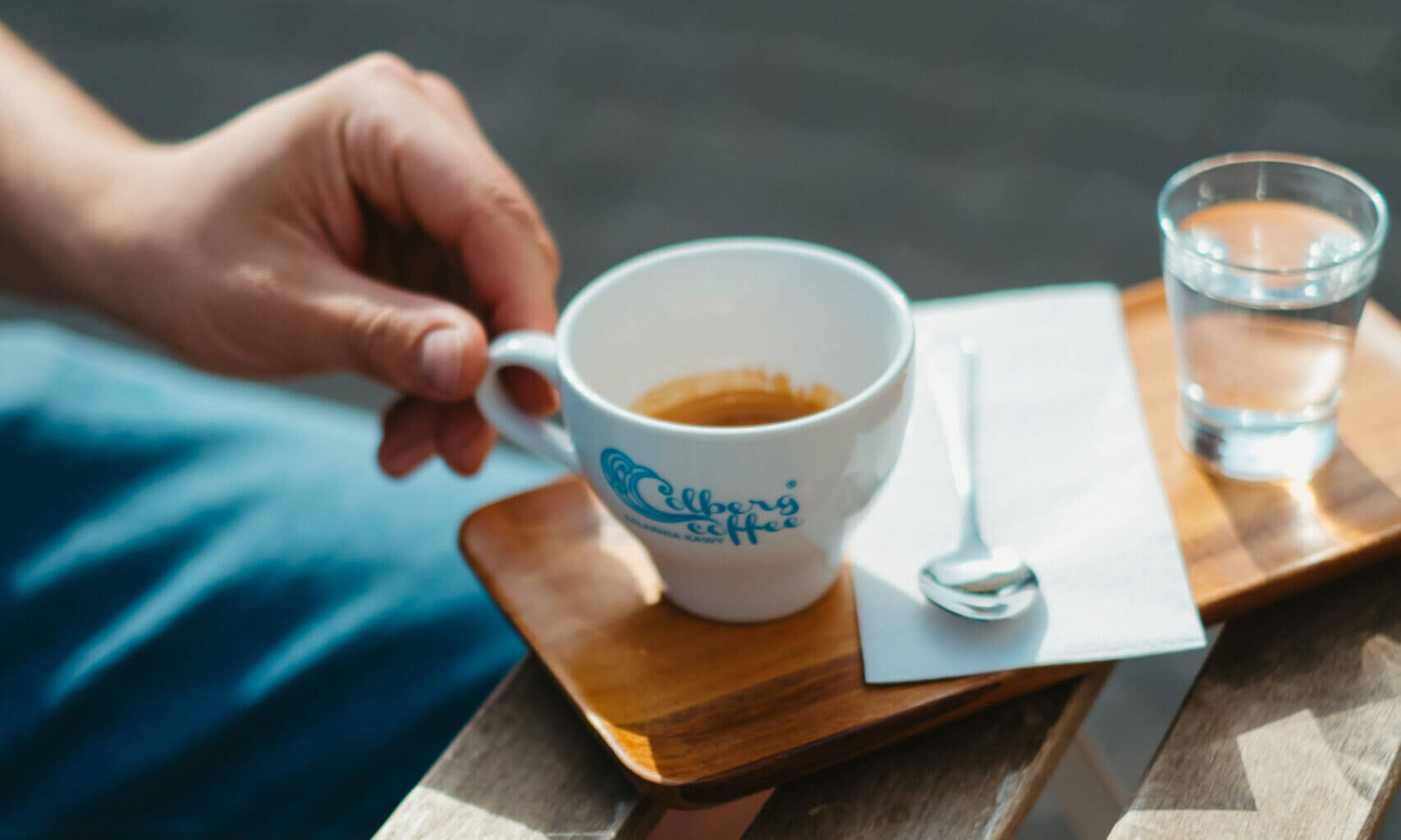
How important is the espresso ratio?
The ratio is the relationship between the mass of dry coffee and the mass of the finished drink. In espresso, a 1:2 ratio means that 18 g of coffee gives about 36 g of espresso.
The SCA describes 1:2 as average barista practice, but does not present it as the only correct ratio. The ratio has to be matched to the specific coffee, basket and the flavour you are after.
The best starting point is:
- a fixed dose,
- a weighed yield,
- a 1:2 ratio,
- a time of about 25-30 seconds,
- tasting the result in the cup.
Only then is it worth deciding whether a given coffee works better at 1:1.5, 1:2 or 1:2.5.
Espresso ratio: frequently asked questions
What is the espresso ratio?
The ratio is the relationship between the mass of dry coffee and the mass of the finished espresso. It lets you record a recipe precisely and repeat it with each new shot.
What does a 1:2 ratio mean?
A 1:2 ratio means that 1 g of ground coffee gives 2 g of espresso. For example, 18 g of coffee gives 36 g of espresso, and 20 g of coffee gives 40 g.
Is a 1:2 ratio mandatory?
No. A 1:2 ratio is a popular and practical starting point. The SCA described it as the average practice of the baristas it surveyed, but does not present this ratio as mandatory for every espresso.
How do you calculate the espresso yield from the ratio?
Multiply the coffee dose by the second number in the ratio. At 1:2, 18 g of coffee gives 36 g of espresso, 20 g gives about 40 g, and 22 g gives about 44 g.
Does the ratio determine coffee strength and extraction?
Not directly. The ratio describes the proportion of coffee to drink. Concentration is measured by TDS, while EY shows what percentage of the coffee’s compounds has been extracted. The result also depends on grind, time, temperature and preparation.

Coffee as a Christmas gift: which one to choose? 2026 guide
Coffee as a Christmas gift: how to match it to the person and their brewing
Oct
What Is the Best Water for Filter Coffee? How It Affects Flavour
See how bicarbonates affect the flavour of filter coffee, how pH differs from alkalinity and
Oct

TDS in coffee: what it means and how to measure it
TDS in coffee shows the concentration of dissolved solids in the brew. Learn how to
Oct

Syrenka restaurant in Kołobrzeg: Polish home cooking
Syrenka restaurant in Kołobrzeg: address, opening hours, what to eat and what lunch costs. Plus
Oct

Swiss Water vs Mountain Water: comparing our two decaf coffees
Mexico El Tucan Decaf (Mountain Water) and Colombia Excelso Medellin Decaf (Swiss Water): how the
Oct
Espresso ratio: what does a 1:2 ratio mean?
What is the espresso ratio? We explain what a 1:2 ratio means, how to calculate
Oct
Espresso dose: how 18, 20 and 22 g change taste and extraction
18, 20 or 22 g of coffee for espresso? See what the SCA says, what
Oct

Ma Ma Cafe, a café in Świnoujście: a showcase of top quality
How we fitted out Ma Ma Cafe in Świnoujście from A to Z: a Nuova
Oct
