

A badly dialled-in grinder is the most common reason espresso runs too fast, too slow, or doesn’t run at all. Contrary to what you’d think, it’s not always the machine’s fault. Here’s a simple, step-by-step guide to dialling in a grinder in a café, so you get a repeatable, spot-on shot.
Why dialling in a grinder matters so much
The grinder decides how long water stays in contact with the coffee, and which flavour compounds it pulls out. Too coarse, and the coffee runs too fast, watery and sour. Too fine, and it runs too slow or not at all, and tastes bitter, flat and over-extracted.
On top of that, conditions in a café change daily, humidity, temperature, how fresh the beans are, so the grinder sometimes needs correcting several times a day.
How to spot a bad grind in a café
No coffee coming out of the machine
This usually means the coffee is ground too fine. The water can’t force its way through a puck that dense.
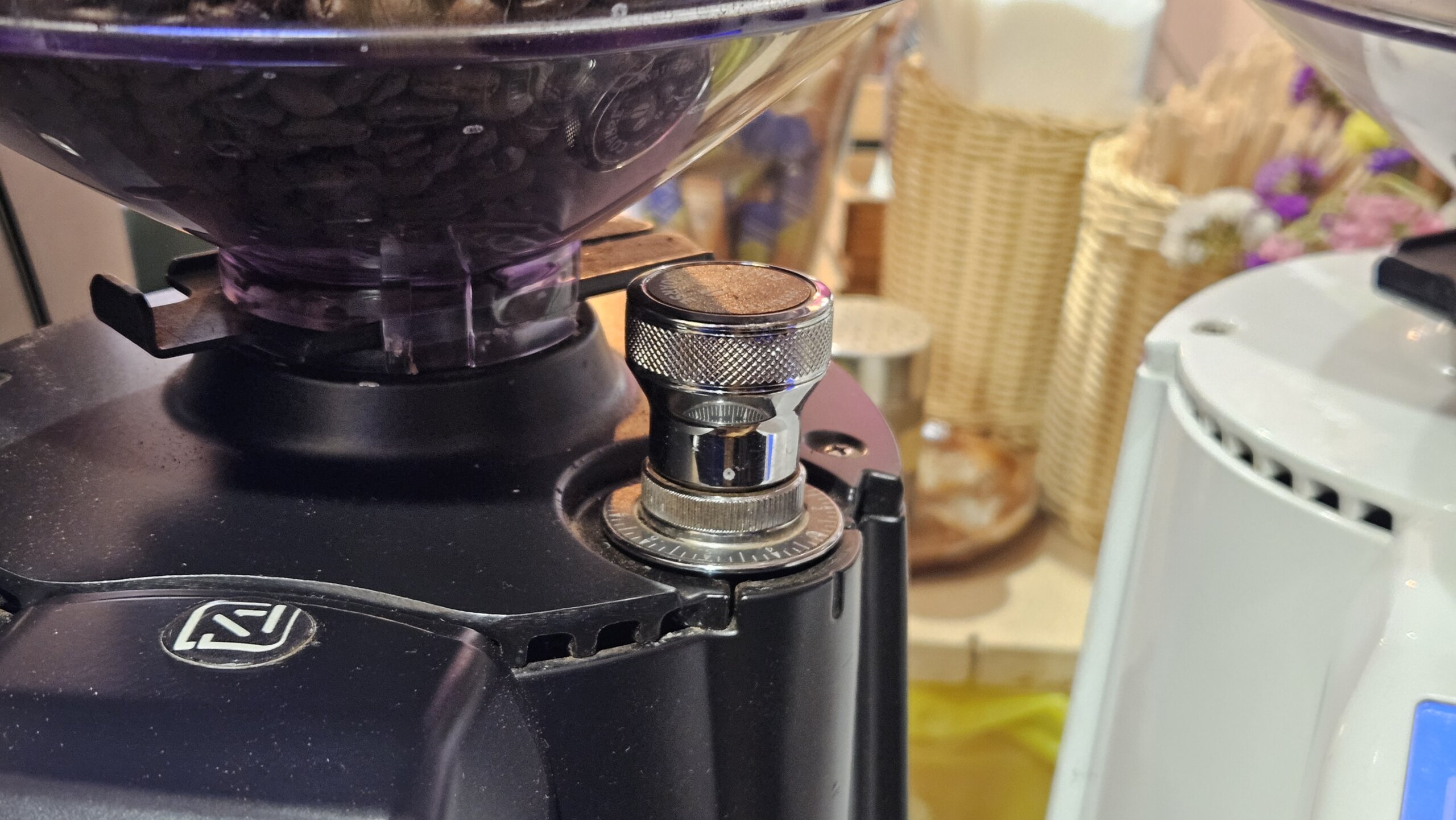
Fix: move the grinder two steps towards “Coarse / Grosso”, grind out one dose to clear the old grind from the chamber, then brew fresh.
Coffee runs too slow (over 26-27 seconds)
This is also probably too fine a grind. Loosen the setting by half a step to a full step and test again.
Coffee runs too fast (under 22 seconds)
This means the grind is too coarse. Move the grinder towards “Fine”, by half a step to a full step is best, and check the extraction time.
How to dial in a coffee grinder in a café, step by step
- Check your current extraction time. Brew espresso to your set recipe (18 g of coffee in the basket, 36 g in the cup, for example). Time it. If it falls within 22-27 seconds, you’re good.
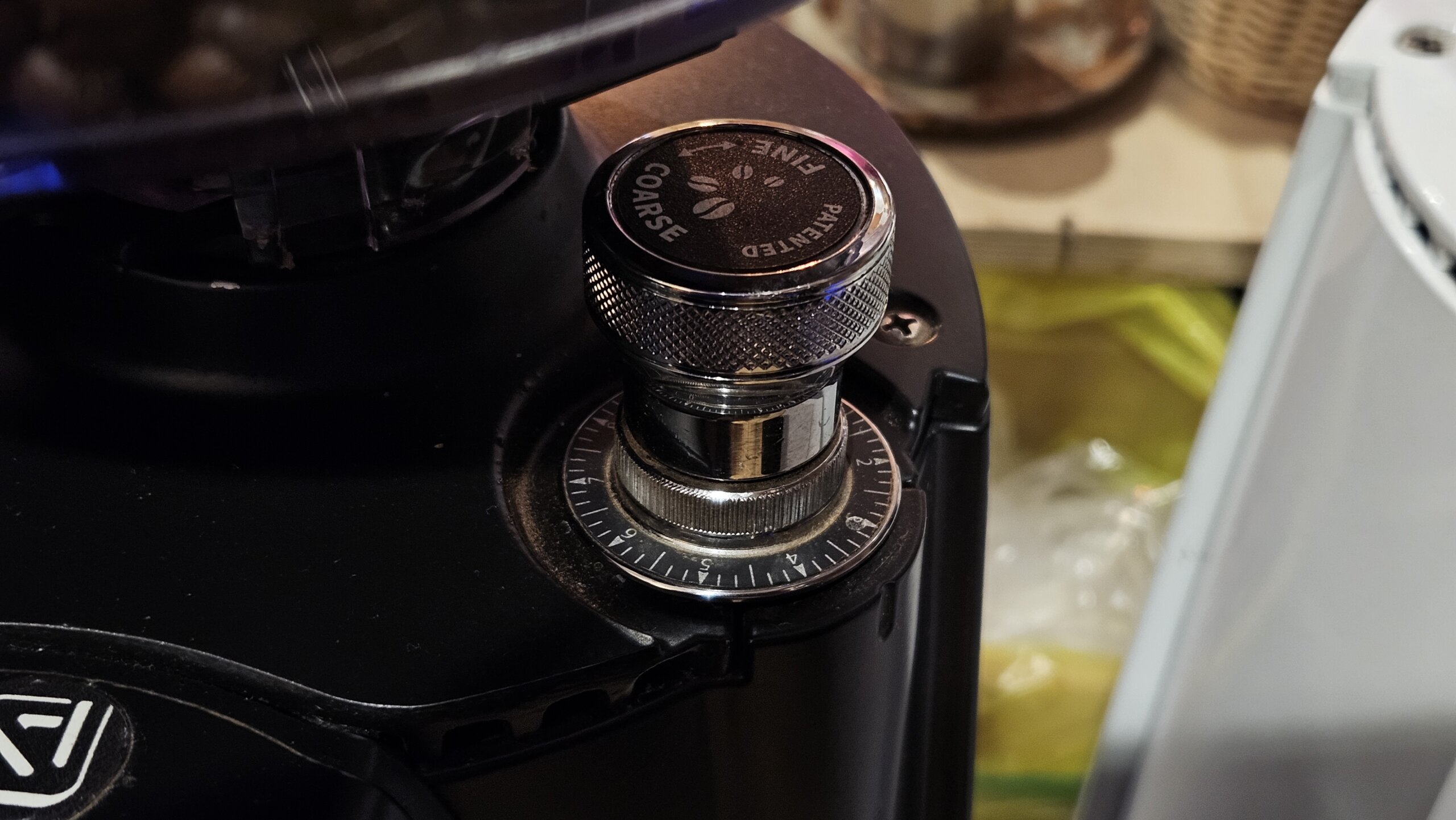
- Correct in small steps. On Victoria Arduino, Nuova Simonelli and Eureka grinders, turn the silver or side dial towards “Fine” or “Coarse”. On a Fiorenzato, release the ring around the hopper.
- Grind out the first dose. After every change, grind a dose and don’t use it for testing, there’s still coffee at the old grind size sitting in the grinder.
- Weigh the dose. Make sure there’s exactly as much coffee in the basket as your recipe calls for, usually 18 g for a double. Too little or too much coffee also affects the brew time.
- Test and repeat. Check the extraction time and the taste. If needed, keep correcting by another half step until you get the result you want.
Read also: Which espresso machine should you choose for a patisserie?
What about single espresso settings?
Grind size is set for a double espresso. For a single, you only adjust the dose: less coffee if the time runs long, more if it runs short.
The most common grinder problems in a café
We’ve written about this at length in a separate piece on common coffee grinder faults.
- The grinder jams. Usually worn burrs or a faulty starting capacitor.
- No coffee comes out of the grinder. The outlet screw may have worked loose, so coffee falls inside instead of into the doser, or the grind is too fine and has clumped in the outlet.
- The grinder overheats. Too much coffee dust is blocking ventilation, it needs regular cleaning.
- Espresso runs at different times despite identical settings. Worn burrs cutting unevenly.
- You press the button and the grinder doesn’t start. If the timer’s running, the grinder is jammed. If the timer isn’t running, the button’s faulty and needs replacing.
Equipment that makes the job easier
In everyday café work, it’s not just the barista’s skill that counts, it’s also what they’re working with.
Well-chosen equipment can cut espresso prep time, reduce mistakes and keep things consistent, even with several different people working the machine through the day.
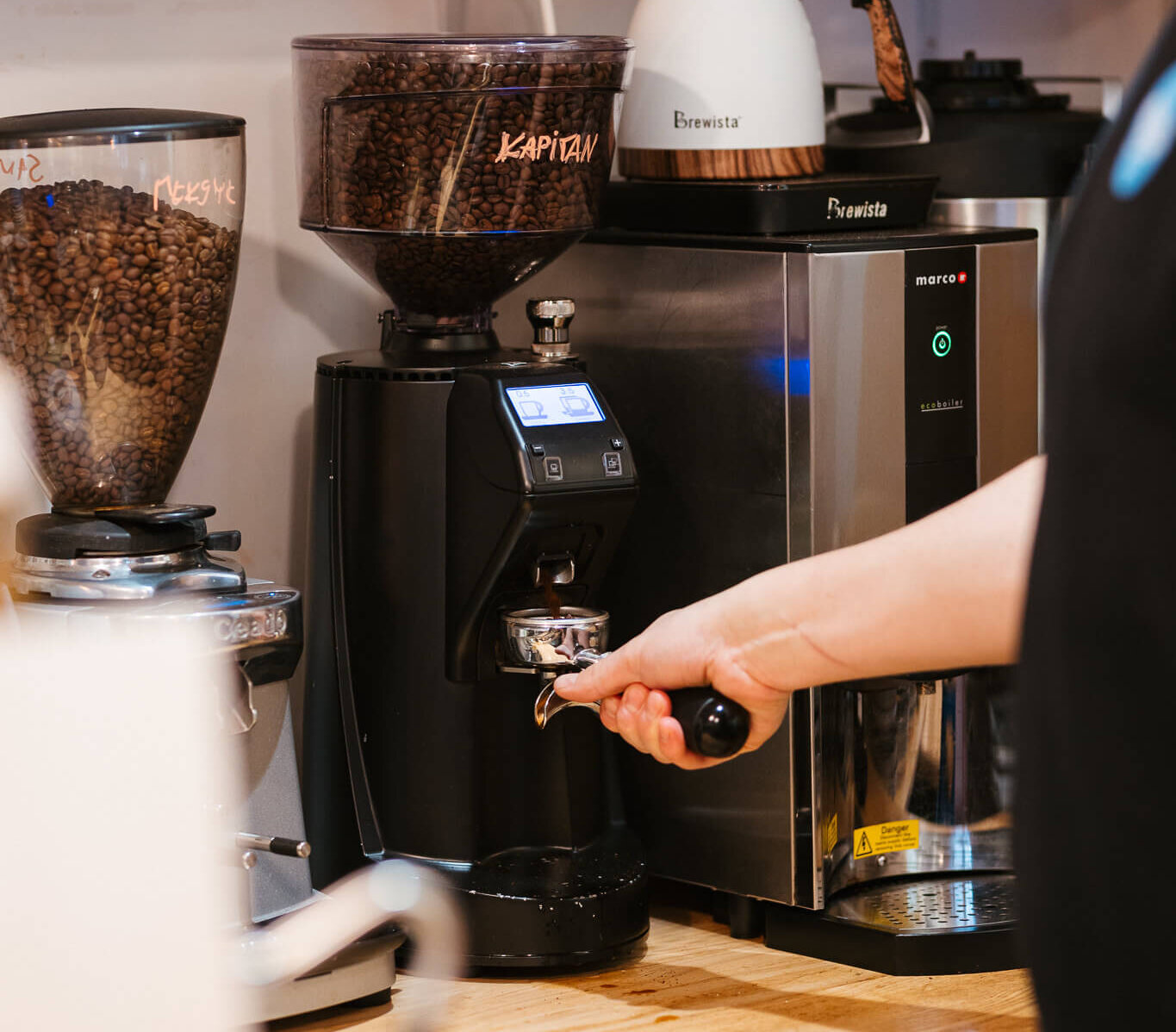
It’s worth investing in grinders with micrometric adjustment, which let you correct the grind size very precisely, in fractions of a step. Models like the Eureka or the Victoria Arduino Mythos give you full control over grind size and stay consistent even under heavy use.
Espresso machines with a built-in shot timer make it easier to keep track too. One glance at the display tells you whether the shot’s running at the right time. The Victoria Arduino Eagle One or the Nuova Simonelli Appia Life XT are good examples, both work well in cafés where speed and consistency matter.
Integrated systems are showing up more and more on the market too. The Aurelia Nova system is one example, where the grinder and the machine work together as one connected setup. The machine works out the right grind setting itself, reacting to ambient conditions and changes in the beans. That’s a big help: the barista can focus on serving guests and the look of the drink, instead of constantly turning a dial.
We’ve written more about technology like this in a separate post on our blog, worth a look if you want the details.
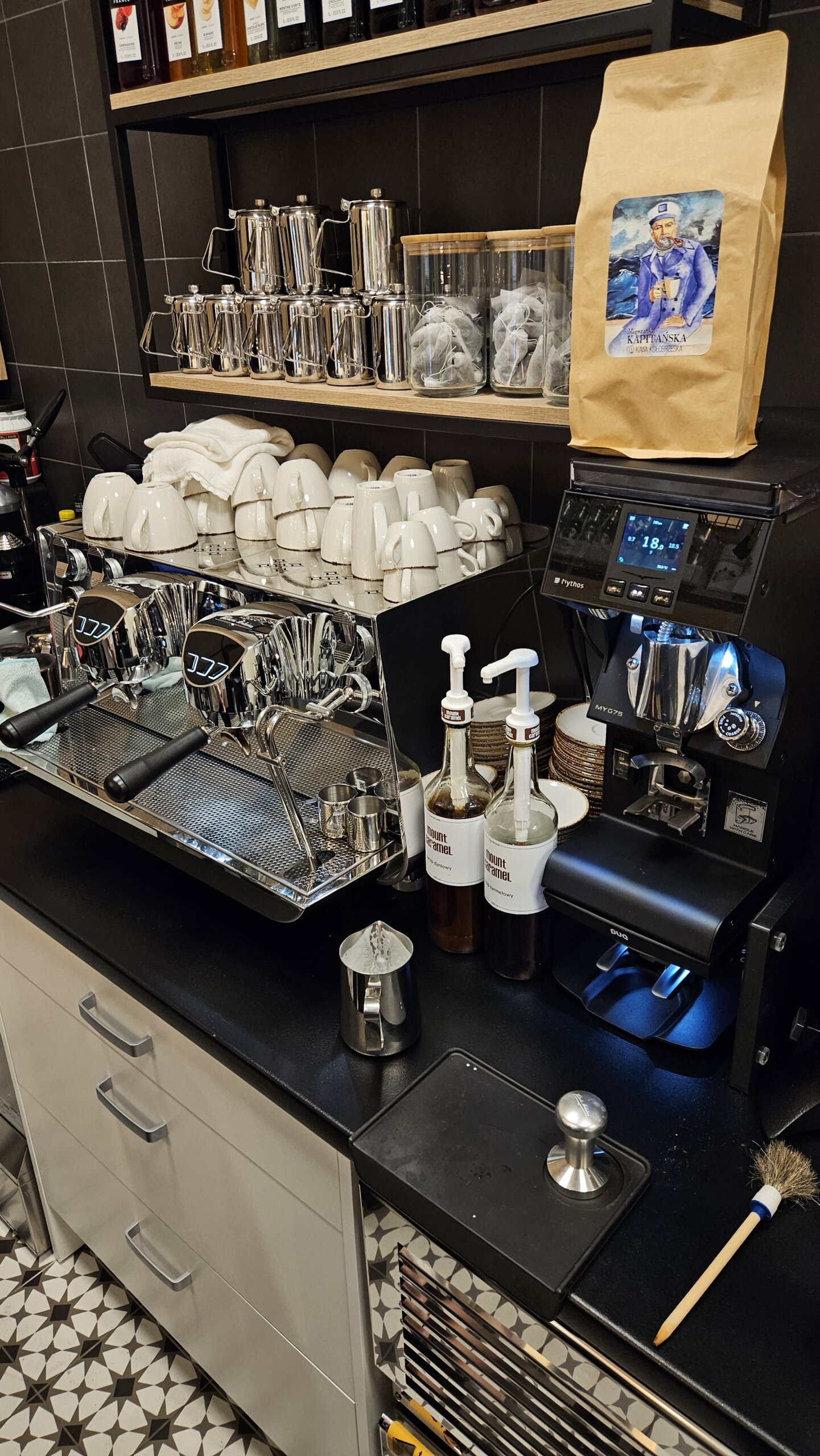
Summary: how to dial in a grinder so espresso always comes out right
A well-dialled grinder is the foundation of every good espresso. A few simple rules cover it: keep an eye on your brew time, change the grind in small steps, always grind out a dose after every adjustment, and clean the machine regularly.
The grinder is the heart of your café, and how precisely it runs decides whether guests come back for another cup. Spend a bit of time getting the settings right, and your coffee will taste just as good on a Monday morning as on a Saturday afternoon. Then every customer will feel that espresso in your venue isn’t down to chance, it’s a ritual you’ve thought through.
