The best low-acid whole bean coffee, and how do you find it? Acidity in coffee isn’t for everyone. Some people love it: citrus, wild berries, a bright, juicy cup. For others it just gets in the way. If you prefer your coffee smooth and mellow, with notes of cocoa or nuts, this ranking is for you. We’ve picked six coffees from our own roastery that stand out for their low acidity and work equally well black or with milk.
Here’s the short version: six low-acid whole bean coffees from our roastery. Below the table we go through each one in turn.
| Coffee | Origin and blend | Roast level | Flavour profile |
|---|---|---|---|
| Captain’s Blend | South America and Asia | medium to dark | cocoa, thick crema, gentle bitterness |
| Jeremii Blend | 100% arabica: Brazil, Honduras, Ethiopia | dark | florals, chocolate, nuts |
| Sweet Breeze | 100% arabica: Brazil, Colombia | dark | chocolate, nuts, biscuits |
| Mexico El Jaguar | 100% arabica: Mexico, Sierra Madre | medium | cocoa, caramel, tropical fruit |
| India Monsooned Malabar | 100% arabica: India, Karnataka | medium | cocoa, spice, roasted nuts |
| Peru Chanchamayo | 100% arabica: Peru, Chanchamayo | medium | sweet chocolate, roasted almonds |
1. Captain’s Blend: the low-acid captain
-
Origin: Brazil + India (arabica with a touch of robusta)
-
Flavour profile: thick crema, cocoa, gentle bitterness, zero acidity
-
Roast level: medium to dark
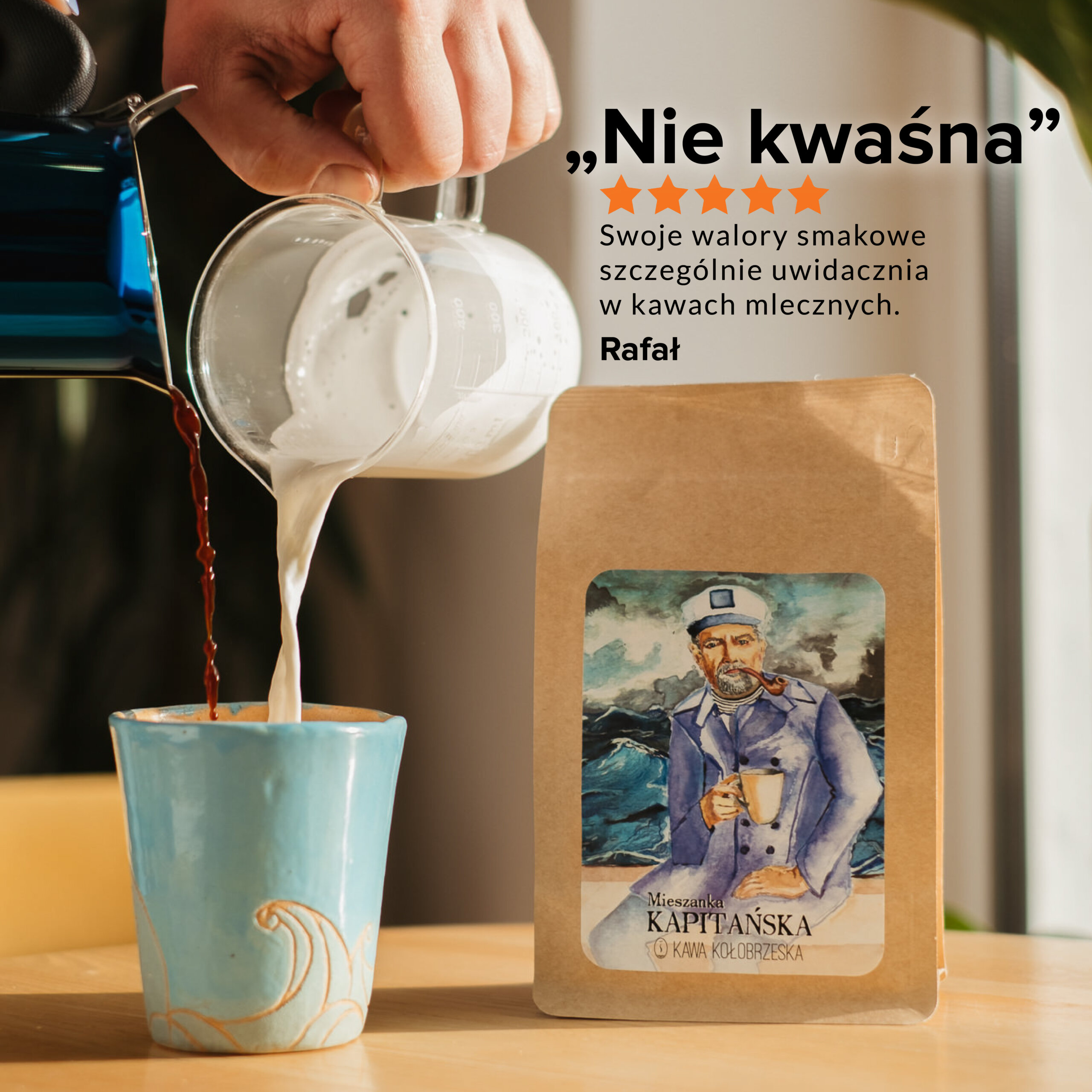
This is an absolute bestseller among our low-acid whole bean coffees. In a bean-to-cup machine it gives consistent results: a thick, lasting crema and a flavour that never surprises you with sharp acidity. For espresso it’s ideal, and in a cappuccino or latte it builds a full chocolate-and-nut base. Plenty of cafés treat it as the safe choice for everyone, since it works both for espresso purists and for people who prefer milk drinks.
Add Captain’s Blend to your basket.
2. Jeremii Blend: intensity with a genuinely unique aroma
-
Origin: South America + Asia
-
Flavour profile: dark chocolate, cocoa, a light floral finish
-
Roast level: medium-dark
This coffee is a strong espresso at its best. There’s bitterness, but the good kind: dark chocolate, a touch of spice, real depth. Zero acid, plus a pleasant body that keeps the cup from feeling flat. It comes through beautifully in milk drinks too, in a cappuccino it feels like a chocolate dessert. If you like your espresso with some character, Jeremii Blend is a safe bet.
Add Jeremii Blend to your basket.

3. Sweet Breeze: a Brazil-Colombia harmony
-
Origin: Brazil (natural) + Colombia (washed)
-
Flavour profile: caramel, walnut, dark chocolate
-
Roast level: dark
Despite the name, Sweet Breeze is actually a fairly full-bodied coffee. The Brazilian arabica brings sweetness and a nutty note, while the Colombian component smooths the profile out. Acidity is practically undetectable, replaced instead by a pleasant bitterness and a strong aroma. It suits anyone who wants a bold, dessert-like cup without any fruity surprises. Intense as espresso, and it also does well in a moka pot or French press.
Add Sweet Breeze to your basket.
4. Mexico El Jaguar: cocoa with caramel and sweet fruit
-
Origin: Chiapas, Mexico
-
Flavour profile: cocoa, caramel, delicate tropical fruit
-
Roast level: medium
Mexican coffees from the Chiapas region have long been prized for a well-balanced cup. El Jaguar delivers a very pleasant profile: caramel sweetness, cocoa notes and a subtle fruitiness in the background. There’s no aggressive acidity here, just a soft freshness that adds a bit of lift. As espresso it comes out smooth and sweet, and in filter brews you can pick up light fruity accents. A good choice if you like a touch of variety but still want to steer clear of acidity.
Add Mexico El Jaguar to your basket.
5. India Monsooned Malabar: exotic and acid-free
-
Origin: southern India (Malabar Coast)
-
Process: monsooning, beans are exposed to humid monsoon winds for several months
-
Flavour profile: spice, dark chocolate, earthy notes
-
Roast level: medium-dark
This one is genuinely one of a kind. The monsooning process strips the beans of almost all their acidity, leaving a heavy, dense coffee with a spiced aroma and a long finish. The flavour leans towards dark chocolate with a hint of warm spice. It won’t suit everyone, since it’s intense and quite heavy, but for fans of strong, acid-free coffee it’s an absolute hit.
Add India Monsooned Malabar to your basket.
Watching what our customers kept ordering and coming back for throughout 2025, one more low-acid coffee has earned a place on this list.
6. Peru Chanchamayo: chocolatey mellowness from the Andes
-
Origin: central Peru, the Chanchamayo valley
-
Process: washed, sun-dried
-
Flavour profile: chocolate, roasted almonds, nuts
-
Roast level: medium
This is a great option if you want low acidity without heading towards a heavy or smoky cup. Peru SHB Chanchamayo combines a pleasant sweetness with clear notes of chocolate and roasted nuts, giving a full, smooth and well-balanced brew. Acidity is low and stays in the background, which makes it an easy coffee to drink every day. It suits anyone who likes a classic, comfortable cup: nothing sharp, just elegant sweetness and a calm finish.
Add Peru Chanchamayo to your basket.
Why are some coffees acidic and others aren’t?
-
Growing region: coffees from Africa (Ethiopia, Kenya) tend to be more acidic, with citrus and berry notes. Coffees from Brazil, Mexico or India are naturally lower in acidity, dominated instead by nuts, chocolate and caramel.
-
Processing: the natural method (drying whole coffee cherries) gives more sweetness and less acid, while washed processing tends to highlight acidity.
-
Roast level: the darker the roast, the less acidity ends up in the cup. That’s why most of the coffees on this list are roasted medium-dark.
Not sour, not bitter: hitting the sweet spot
The most common mistake when running from acidity is swinging too far the other way. Very dark roasting does tone down the acids, but it takes sweetness down with it and pushes bitterness up. A well-roasted dark coffee can still keep its sweetness, but at very dark roast levels, bitterness, smokiness and burnt notes tend to take over. So don’t judge a coffee by “dark roast” alone. Check whether the description mentions chocolate, caramel and nuts, rather than bitterness on its own.
The second cause of bitterness isn’t the bean at all, it’s the brewing. Grinding too fine, too long a contact time with water and too high a temperature all push extraction too far, and the brew can turn harsh. Bitterness and harshness can also come from uneven water flow through the coffee. If a cup tastes both sour and bitter at once, check your grind and your tamping evenness first, before you change the bean.
Third is the blend itself. Robusta usually adds bitterness and weight to the profile, but its effect on perceived acidity depends on the specific bean, how much of it is in the blend, and the roast. Five of the six coffees in this ranking are 100% arabica.
How to brew low-acid whole bean coffee
-
Espresso machine: ideal for blends like Captain’s Blend or Jeremii Blend. Twenty-three seconds is the bare minimum brew time.
-
Moka pot: brings out chocolate and nutty notes beautifully, Sweet Breeze is a good example. Grind too coarse and it turns acidic.
-
French press: a strong brew with full body, a good option for the Mexican or Indian Monsooned coffee.
-
Skip pour-over and light roasts if you want zero acidity. Stick to espresso and pressure-based methods, since even a sweet coffee can show delicate fruity notes in a pour-over. If you do brew one this way, go for a medium roast.
So what is the best low-acid whole bean coffee?
The best low-acid whole bean coffee is one that combines smoothness, a chocolate-and-nut profile and zero citrus surprises. Captain’s Blend is the everyday classic. Jeremii Blend is for anyone who wants power. Sweet Breeze is a dessert-like dark coffee. Mexico El Jaguar is balanced with a fruity edge. India Monsooned Malabar is something exotic, heavy and completely acid-free.
Every one of them proves that coffee doesn’t need acidity to be interesting.
Best low-acid whole bean coffee: the essentials
Which low-acid whole bean coffee works best in a bean-to-cup machine?
Espresso blends built around Brazil and India work best in a bean-to-cup machine, our Captain’s Blend is a good example. They give a thick crema, low acidity and a stable flavour at factory settings.
Does low acidity always mean dark roast?
Not always. A darker roast lowers acidity, but origin and processing do plenty of the work too. Natural Brazilian coffee and Monsooned Malabar stay low in acid even at a medium roast.
Which origin countries are the least acidic?
Most often Brazil, Mexico and India, with profiles built around chocolate, nuts and caramel. East African coffees tend to be lighter and fruitier, so they’re usually more acidic.
How should I set my grinder so the coffee doesn’t taste sour?
Grind finer. Coffee ground too coarse under-extracts and tastes sour. For an espresso machine, aim for a 1:2 ratio in 25-30 seconds; on a bean-to-cup machine, tighten the grind by one or two clicks and raise the temperature by a degree.
Does milk mask acidity in the cup?
Yes, milk smooths the cup out and boosts sweetness. For zero acid in a latte or cappuccino, choose blends built on Brazil with a bit of India, they keep a chocolatey base under the milk.
What is Monsooned Malabar, and why is it so low in acidity?
It’s beans from southern India, aged in humid monsoon air. The monsooning process strips out acidity almost entirely and gives a heavier body with spice and dark chocolate notes.
