
Choosing the best espresso machine for a specialty café is often a bigger challenge than finding the perfect beans. Every barista knows that the taste and consistency in the cup depend on how stable the equipment is. We tested four leading models: some that dominate cafés worldwide, others brand new to the market. A good espresso machine makes a real difference, and gives you one less thing to worry about when running a café business in Poland.
Why a solid espresso machine is the foundation of a specialty café
If you run a specialty café, you already know great beans are only half the job. If you’re planning to open one, you’ll find that out soon enough. The other half is equipment. Temperature stability, pressure, ergonomics, it all sounds a bit like marketing talk, but it genuinely makes a difference. When your boiler set holds its heat and the steam wand doesn’t scald your hand, the work is faster and more enjoyable. After a few hours serving customers, you’ll also appreciate small things like automatic group flushing. Keep all this in mind, because a “bargain” from a classified ad tends to bite you later. Usually sooner rather than later.
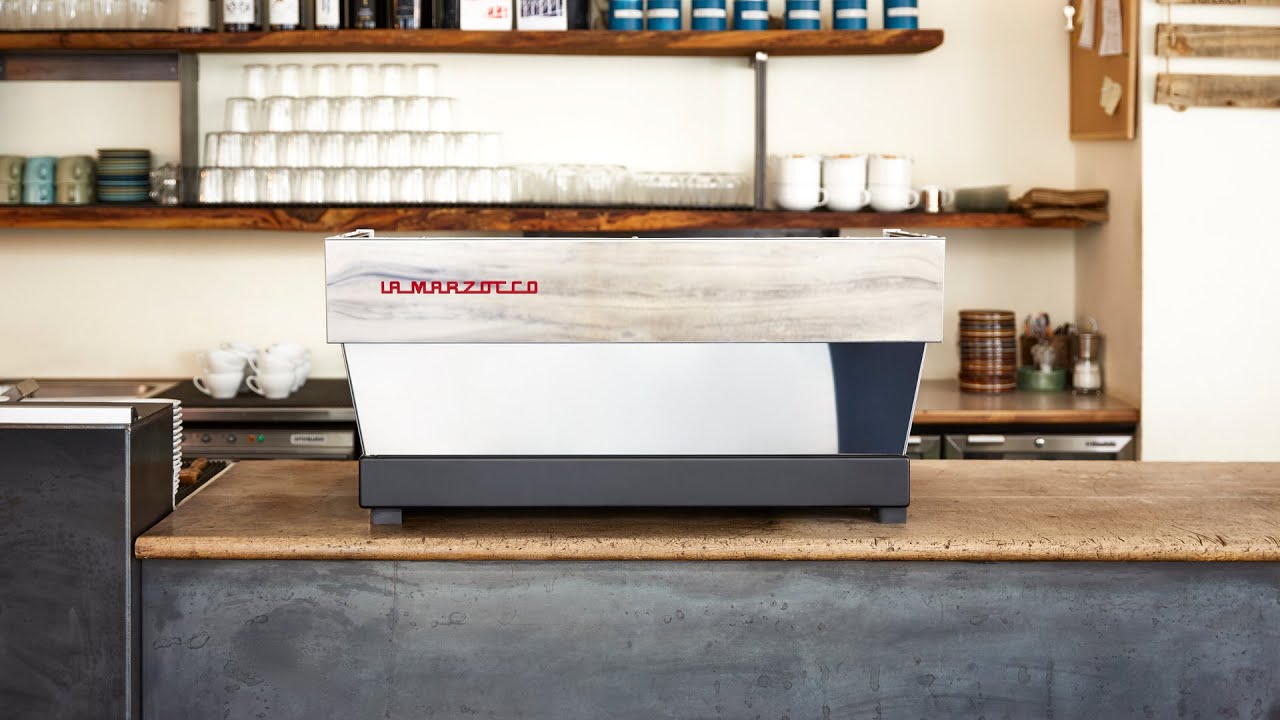
La Marzocco Linea Classic AV: an icon among baristas and specialty cafés worldwide
There’s hardly a barista who hasn’t heard of the La Marzocco Linea Classic. Even if the name doesn’t ring a bell straight away, one look at the machine and you’ll picture a proper café using professional kit. The Linea Classic is an old-school but reliable workhorse that runs in hundreds of cafés and has a story worth knowing. It has a double boiler, so you can pull espresso and steam milk at the same time without any risk of temperature swings. The steam wands can be angled in different directions, so every barista finds a comfortable position. There’s also a glass water level gauge, a cup warmer and, importantly, two steam wands, which speeds up service during the morning rush. Saturated groups, meaning a brew group connected directly to the boiler, give it excellent thermal stability. Some people call it a “machine without a soul” because it looks so plain, but to me that’s exactly its charm: simple, predictable and built to last. La Marzocco machines are a legend that hold their value, and a sought-after buy on the second-hand market too.
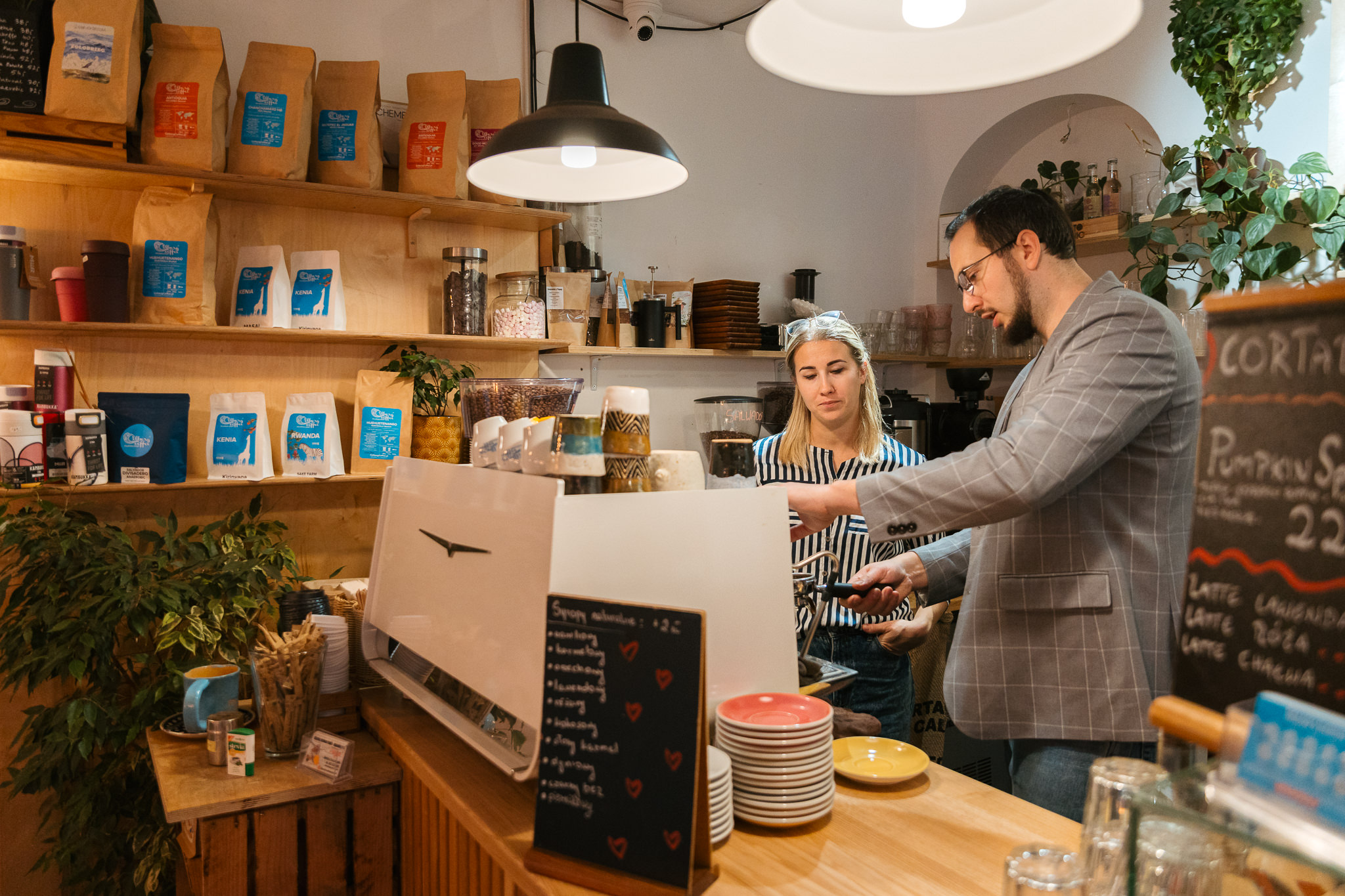
Victoria Arduino Eagle One Multi Boiler: an Italian machine built by baristas for baristas
This is where we step into the 21st century. Victoria Arduino designed the Eagle One with baristas, and the planet, in mind. Its new NEO engine heats only as much water as you actually need, cutting heat and power losses. The TERS energy recovery system reuses waste water to preheat fresh water, cutting energy use by up to 8%. On the Victoria Arduino Eagle One you also get an electronic PID temperature control system and the option to set three independent temperatures for the steam boiler, the coffee boiler and the group, known as T3 Technology. The Soft Infusion System introduces water into the coffee slowly before it reaches full 9-bar pressure, which minimises channelling. There’s automatic group flushing once the portafilter comes out, a steam wand that stays cool to the touch, an ergonomic lever and a mobile app for remote monitoring. Impressive stuff. The only downside is the price, though lower electricity bills might make up for it. At our own café in Kołobrzeg we’ve had a two-group version of this machine for two years now, and on a busy day we pull up to 500 coffees on it.
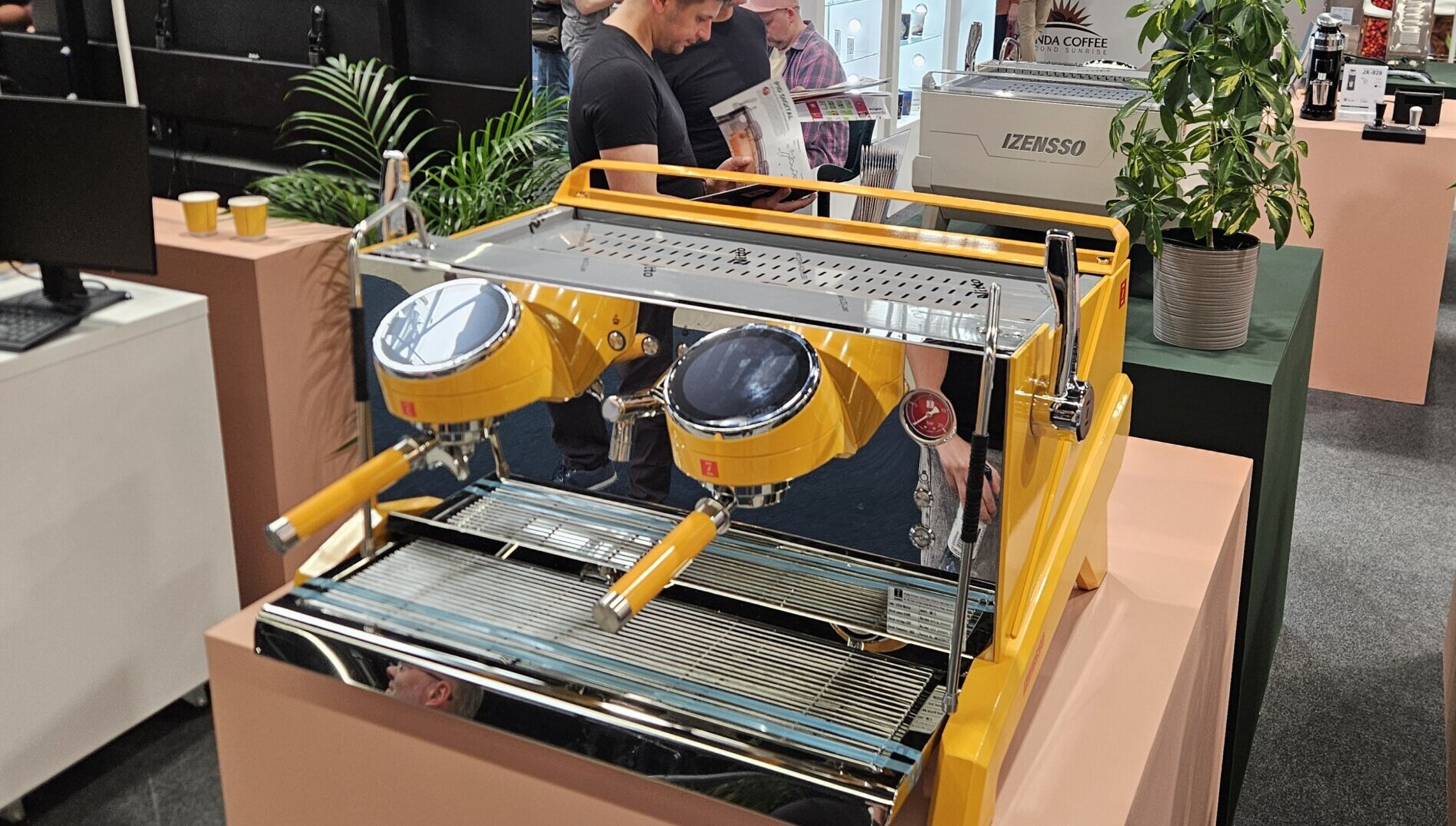
Izensso Raptor Multi Boiler: a Chinese machine that wins on price
The Izensso Raptor is a relatively new arrival from China that made some noise at the EXPO COFFEE EUROPE trade fair. The Raptor 2GR uses a T3 Multi-Boiler heating system: a separate 11-litre steam boiler and two independent 1.5-litre water boilers, each with its own temperature control. On top of that, an Italian rotary pump holds a steady 9 bars, with digital PID control keeping watch over everything. At the front there are two 4-inch touchscreens where you set extraction time, temperature and pre-infusion for each group separately. The machine has an energy-saving mode, service notifications and one-button cleaning programmes. On safety, sensors guard against overheating, running dry and excess pressure. The Izensso Raptor also has a proper steam wand and a tea programme with five temperatures and six extraction levels. Sounds like it does everything, doesn’t it? You might worry about servicing it in Poland, but don’t, we carry parts for it and can repair it if anything goes wrong.
Nuova Simonelli Aurelia Wave: ergonomics meets technology
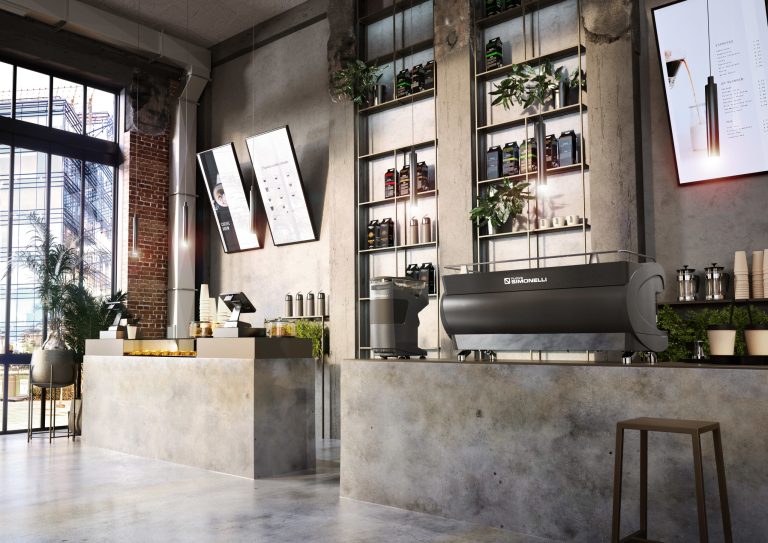
The Nuova Simonelli Aurelia Wave is something of a legend for a lot of people. It doesn’t always get the credit it deserves, but café chains that want to keep breakdowns to a minimum tend to choose the Aurelia Wave for exactly that reason. The new Wave series builds on older ideas: the T3 version has three or four copper boilers, letting you set an independent temperature for each group. Pulse-Jet lets you programme extraction profiles and control them remotely from a touchscreen panel. You can use volumetric dosing or go fully manual, and there’s an LCD display showing pre-infusion settings, boiler pressure and energy-saving modes. It has automatic cleaning, auto-purge when the portafilter comes out, and ergonomic push-pull steam levers with cool-touch wands. The Smart Water system measures TDS and pH in real time and warns you when the water isn’t right. On top of that, the ergonomic build is lower, rounded, and automatically cleans the group head once the portafilter is removed. It’s still a serious investment, but if you’re serving crowds and value your baristas’ comfort, it’s worth considering.
What does specialty actually mean today?
The definition of specialty coffee keeps evolving. The 2004 scoring form was replaced in 2024 by the Coffee Value Assessment, and the score is now just one of four separate assessments rather than the whole definition. You’ll find the details in our article Specialty coffee: what it means now that 80 points is no longer enough.
How do you choose the right machine?
It depends on the size of your venue, how you like to work and your budget. The Linea Classic AV is a proven classic: it doesn’t rinse water through after each shot, but it’s like an old Mercedes, built to outlast everything. The Eagle One tempts you with its modern engine and lower power use, which can pay for itself after a few years. The Raptor packs an impressive set of features at a reasonable price, though bear in mind it’s fairly heavy and large. The Aurelia Wave combines ergonomics and technology, and shines in busy cafés where speed and barista comfort matter most. And always check that spare parts and an authorised service centre are available in Poland. That sounds obvious, but it’s easy to forget. All four of these machines have parts and servicing available here.
My verdict: what would I actually choose for a specialty café?
For a first machine, I’d probably go for the La Marzocco Linea Classic AV, and that’s exactly what I did. After a year, though, I switched to the Victoria Arduino Eagle One. It only took a short spell working on that machine to win me over with how much it does for a barista, and since I am one myself, that settled it.
Get in touch and I’ll help you choose the right machine. Just leave your details and I’ll be in contact.
Espresso machines for a specialty café: frequently asked questions
Which espresso machine is the best starting point for a specialty café?
If you’re starting out on a limited budget, the La Marzocco Linea AV or the base version of the Nuova Simonelli Aurelia Wave are safe choices. Both are reliable and have servicing available in Poland, which matters a great deal when you’re just getting started.
What’s the difference between a multi-boiler machine and a classic one?
A multi-boiler machine has several independent boilers, for example separate ones for coffee, steam and each group. That lets you set different temperatures and gives you more stable performance even during a rush. On a classic setup, a single boiler has to handle everything, which tends to be less precise.
Why is a specialty café espresso machine so expensive?
Because it’s not just about looks, it’s the technology. Temperature stability, PID control, energy-efficient motors, ergonomic design and automatic cleaning systems all add to the cost. The investment tends to pay for itself quickly, though, since the coffee comes out consistent and customers keep coming back.
Is it worth paying more for an energy-efficient model like the Eagle One?
Yes, especially in a larger café. Electricity bills really do add up, and features like the TERS system or the NEO engine genuinely cut energy use. Over a few years the savings can cover a good part of the investment.
How do you look after an espresso machine so it lasts for years?
Backflush daily, clean the groups and steam wands every day, and do a proper chemical clean once a week. Regular servicing every few months is essential too: gasket replacement, descaling, pressure checks. Neglecting the hygiene of your equipment is the fastest route to a breakdown.
Which specialty machine should you choose for a large café?
Somewhere doing hundreds of coffees a day needs ergonomics and ease of use above all. The Nuova Simonelli Aurelia Wave or a larger version of the La Marzocco Linea AV both work well here. These machines are built for heavy traffic and intensive daily use.
