For twenty years the answer to “what is specialty coffee” was: coffee that scored at least 80 out of 100 points on the SCA form. Short, convenient, and online shops still describe it that way today. The problem is that the form this number came from has been officially withdrawn.
In 2024 the Specialty Coffee Association adopted new assessment standards, and they replace the 2004 cupping protocol. This is not cosmetic. The very way of thinking about what makes a coffee valuable has changed. Below I explain what exactly happened, whether the number 80 still means anything, and how it looks from the perspective of a roastery that buys green coffee and has to assess it first.

Where 80 points came from
The number did not come out of nowhere. It came from a specific sheet: the SCA Cupping Protocol and Form from 2004. The cupper scored ten categories, including aroma, flavour, aftertaste, acidity, body and balance, on a scale from 6 to 10 in steps of 0.25. The total came to around 100, and defects were deducted from it.
The 80 threshold marked a trading line. Above it: specialty coffee, sold with the farm name, altitude and processing method. Below it: commodity coffee, priced on the exchange as a raw material. The line worked because it was simple and everyone in the chain understood it, from the farmer to the roastery.
It had a flaw, though, that people had talked about for years. The 2004 sheet was designed with washed coffee as the reference. Natural, honey and anaerobic coffees, which is exactly what became the most interesting part of the market over the last decade, were scored for deviating from a reference they never tried to match.
What exactly changed in 2024
The SCA adopted three new standards: SCA-102 (cupping mechanics, meaning how to prepare and serve a sample), SCA-103 (descriptive assessment) and SCA-104 (affective assessment). The documents state plainly that they replace the 2004 cupping protocol and form.
The whole system is called the Coffee Value Assessment, CVA for short. The name matters, because it does not talk about assessing quality but about assessing value. That is not the same thing, and the whole change rests on that difference.
The most important shift is separating two questions that the old sheet mixed into one number: what is in this coffee and do I like it. The first is a description, the second a judgement. Before, the same number answered both.
Four assessments instead of one number
The CVA consists of four independent assessments. Each answers a different question and each can come out differently.
| Assessment | What it looks at | What it gives you in practice |
|---|---|---|
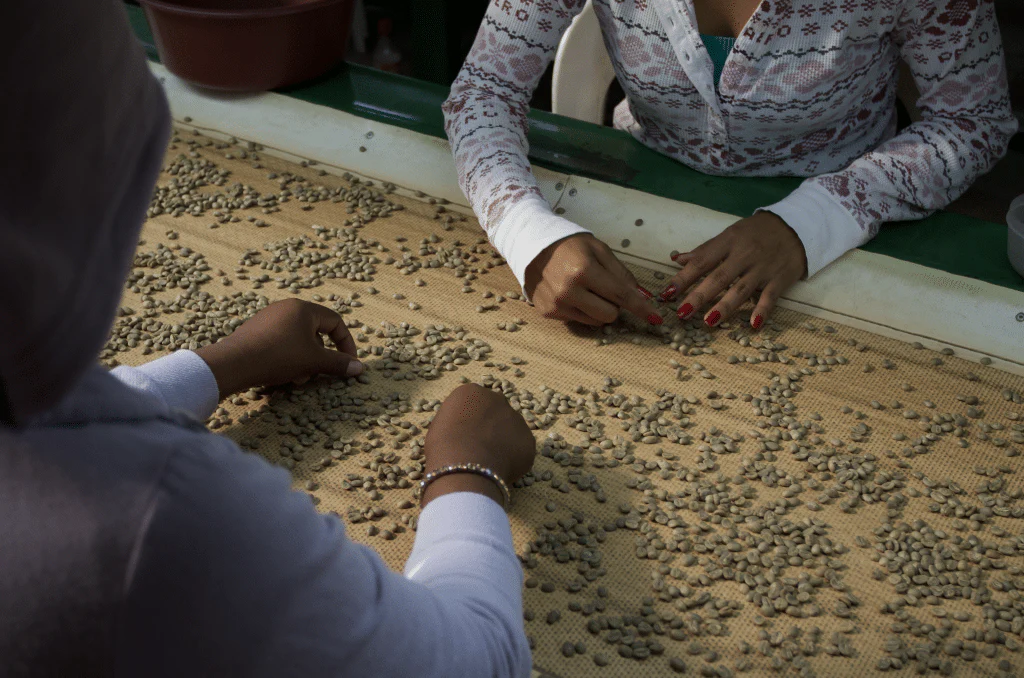
| Physical | Bean defects, moisture, size, colour | Whether the lot is fit for roasting |
| Descriptive | Aroma, flavour, texture, aftertaste on an intensity scale | A description without judgement: what is in the coffee |
| Affective | Impression of quality on a preference scale | A judgement: do I like it; this is where the score comes from |
| Extrinsic | Origin, processing, certifications, traceability | Context and value from outside the cup |
The key is separating the descriptive assessment from the affective one. The descriptive assessment says the coffee has high-intensity citrus acidity and medium sweetness. It does not say whether that is good. Only the affective assessment says whether someone likes it, and it deliberately allows for disagreement: cuppers from different markets can give the same profile different scores, because they have different preferences and different customers.
This is the quiet revolution of the system. The old sheet assumed one universal taste. The new one accepts that a coffee people love in Oslo does not have to be loved in Seoul, and it does not try to average that out.
Have points disappeared? No, they have been demoted
A simplification is already going around online that “specialty is not about points”. That goes too far. The score still exists: it comes from the affective assessment, the SCA even runs its own calculator for it, and green coffee is still traded with a number in the specification.
What has changed is the weight of that number. Before, the score was the definition of specialty. Today it is one of four assessments, and the most subjective of the four. A coffee can get a high affective score and at the same time have a problem visible in the physical assessment, or have no traceability at all in the extrinsic assessment.
The practical takeaway for the buyer is this: a number without the rest of the context tells you less today than it did in 2010. “86 points” on a label, with no information on who scored it, with which version of the form and for which market, is a marketing slogan, not a parameter.
The debate over the 80-point threshold
A second discussion is running in parallel, older than the CVA. It is about whether the 80 line is simply too low today.
The argument goes like this: over twenty years, quality on farms has genuinely improved, and scores have gone up with it. A coffee that would have scored 82 points in 2005 still scores 82 today, only now it is one of very many. So some roasteries have informally moved their own threshold to 84 and above, and coffees in the 80 to 83 range have dropped out of view, even though formally they are still specialty.
The counter-argument is just as strong. The difference between 83 and 84 points falls within the normal measurement error between cuppers. Raising the threshold would cut off from the specialty market farmers who have done an enormous amount of work but do not have the climate for 85 points. Since the pandemic there has actually been a move in the other direction: contracts for 84+ coffees have fallen, and those for coffees in the 80 to 83 range have grown.
There is no resolution here and there probably will not be for a long time. It is worth knowing mainly so that you do not treat the threshold like a law of physics.
What this means when you buy coffee
For someone standing in front of a shelf or an online shop, the change comes down to one thing: stop looking for a number, start looking for information.
A coffee described as “specialty, 84 points” and nothing else gives you less than a coffee described as “Colombia Huila, Caturra, 1,750 m a.s.l., washed, 2025 harvest, roasted 12 August”. The second lets you predict what will be in the cup and lets you come back for the same thing in six months. The first lets you do nothing.
Roast date, not a best-before date. Coffee makes sense for a few weeks after roasting, not for a year after packing. We roast twice a week, so the beans that go into the bag were roasted a few days earlier.
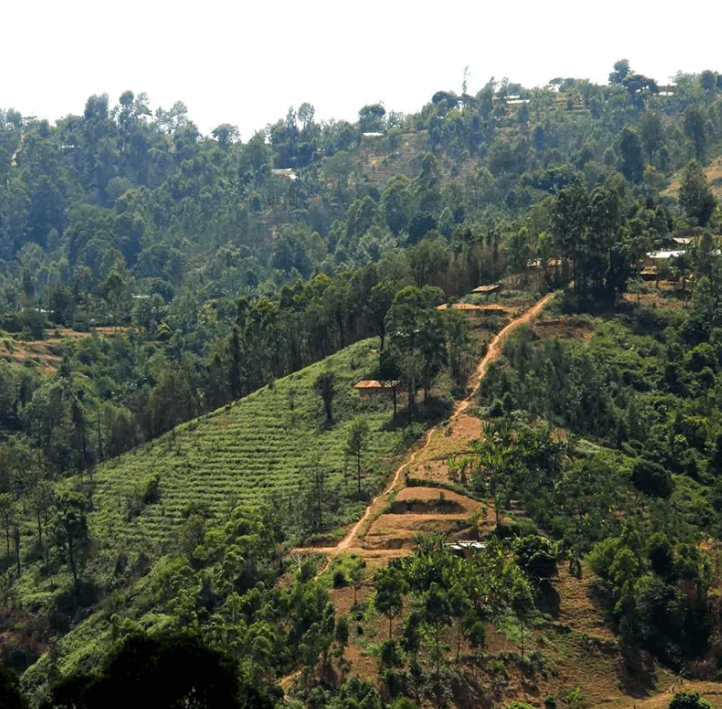
Origin from a specific place. Not “South America” but the country, region and ideally the farm or cooperative. This is exactly the extrinsic assessment from the CVA.
Variety and process. A washed Caturra and a natural Geisha are two different flavour worlds, and both can have the same 85 points.
A flavour description that reads like a description, not an advert. “Notes of blackcurrant, pronounced acidity, medium body” is information. “An exceptional, velvety premium coffee” is nothing.
You will find our coffees from this shelf in the specialty coffee category. For each one we give the origin, variety, process and roast date, because these are things you can actually check.
Specialty in practice: more posts
This post is about how coffee is assessed. We have split the rest of the topic into separate posts:
For beginners:
How to get started with specialty coffee
What good coffee is and what specialty tastes like
Does the cup change how coffee tastes?
About specialty cafés:
Equipping a specialty café
Cleanliness in a café as a working standard
Pea milk in specialty cafés
Equipment:
The best espresso machine for a specialty café
La Marzocco Linea Classic S in a specialty café
FAQ: specialty coffee and the CVA
What is specialty coffee?
In short: high-quality coffee from a specific, known place, assessed according to SCA standards and sold with full information on origin, variety and process. For years it was defined by a threshold of 80 points out of 100. Since 2024 the SCA assesses coffee in four independent dimensions, and the score is only one of them.
Is specialty coffee still 80 points?
The score still exists and green coffee is still traded with a number in the specification. What has changed is its weight: the 2004 cupping form that produced this score was replaced in 2024 by the SCA-102, SCA-103 and SCA-104 standards. The score is no longer the definition of specialty; it has become one of four assessments.
What is the CVA, or Coffee Value Assessment?
It is the coffee assessment system adopted by the SCA, made up of four parts: physical assessment (defects, moisture, bean size), descriptive (what is in the coffee), affective (whether you like it) and extrinsic (origin, processing, certifications). The name refers to assessing value, not quality, and that distinction is deliberate.
How does descriptive assessment differ from affective assessment?
Descriptive assessment records what is in the coffee without judging it: high-intensity citrus acidity, medium sweetness. Affective assessment answers whether someone likes it, and the score comes from this part. The new system deliberately allows cuppers from different markets to give the same profile different scores.
Can supermarket coffee be specialty?
Usually not, though not because of the brand itself. Supermarket coffees are most often blends with no stated origin, variety or roast date, and they often carry a long best-before date instead of a roast date. Without this information the extrinsic assessment, which is part of the CVA, cannot be carried out at all.
How do you recognise good specialty coffee in a shop?
By four things on the bag: a roast date instead of a best-before date, a specific origin (country, region, farm or cooperative), the variety and processing method, and a flavour description that reads like a description, not an advert. A score on its own, without this context, is a marketing slogan, not a parameter.
