










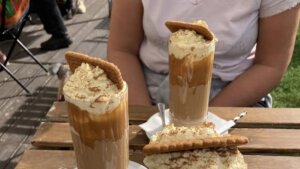
Viennese coffee, as it is served in Poland, is usually strong black coffee with a cap of whipped cream, often sweetened and dusted with cocoa or grated chocolate. It is best drunk without stirring, through the cool layer of cream. Its closest Viennese equivalent is the Einspänner.
We will show you how to make Viennese coffee step by step and how to whip cream so it doesn’t collapse. We also compare traditional Viennese coffees and explain how Viennese coffee differs from Wiener Melange.

What is Viennese coffee
In Polish cafés, Viennese coffee (kawa po wiedeńsku) is usually a double espresso or strong moka pot coffee topped with a thick layer of whipped cream. On top you will find cocoa, grated chocolate or cinnamon. It is served in a glass or a tall cup.
Viennese coffee has two layers at different temperatures. Hot, slightly bitter coffee flows through cold, sweet cream. Stir it and the contrast of temperature and texture disappears. What remains is ordinary coffee with cream.
A traditional Viennese menu has no single drink that matches the Polish version exactly. Cafés there have more than a dozen names for different combinations of coffee, milk and cream. The closest to our version is the Einspänner: strong black coffee in a glass with whipped cream.
Viennese coffee: step-by-step recipe
Ingredients for one serving: a double espresso (about 36-50 g of beverage) or 100 ml of strong moka pot coffee, 50 ml of 30% or 36% whipping cream, 1 teaspoon of icing sugar, cocoa or dark chocolate for dusting. Sugar for the coffee is optional. A larger amount of cream is easier to whip, so for two servings use 100 ml.
1. Chill the cream. It should be fridge-cold, ideally 4-6°C. It is worth chilling the bowl and whisk too. Warm cream is harder to whip, and the foam collapses faster.
2. Whip the cream with the icing sugar to soft peaks. It should hold its shape but stay smooth and glossy. With a mixer this usually takes about 2-3 minutes. Watch the texture, though, not the clock. Over-whipped cream turns grainy and starts to become butter.
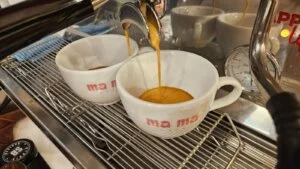
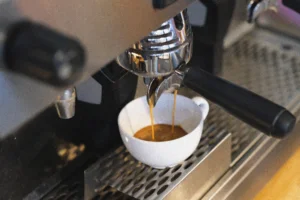
3. Brew the coffee. Make a double espresso or strong coffee in a moka pot. Warm the glass or cup with hot water beforehand. If you sweeten your coffee, dissolve the sugar now so you won’t disturb the layers later.
4. Add the cream. Gently spoon it onto the coffee to form a thick cap. Well-whipped cream should stay on the surface.
5. Dust with cocoa through a sieve or grate a little dark chocolate on top. Serve straight away, ideally with a glass of water, as in Viennese cafés.
Spray cream is convenient, but its foam can lose volume faster. Whipping the cream yourself gives you more control over taste, texture and the amount of sugar.
Viennese coffee, Einspänner and Wiener Melange: the differences
Viennese coffee and Wiener Melange are two different drinks. Melange is made with milk and milk foam, not whipped cream. Below is a comparison of the most popular coffees on a Viennese menu.
| Coffee | Ingredients | Served in |
|---|---|---|
| Viennese coffee (Polish version) | double espresso or strong coffee, whipped cream, cocoa | a glass or tall cup |
| Einspänner | strong black coffee (double Mokka), plenty of whipped cream | a glass with a handle |
| Wiener Melange | Mokka or espresso, hot milk, milk foam | a cup, similar to a cappuccino |
| Franziskaner | coffee with hot milk and whipped cream instead of milk foam | a cup |
| Kapuziner | small black coffee with a dash of cream | a small cup |
In Viennese cafés, “Mokka” means strong black coffee, today usually espresso. It doesn’t refer to a bean variety or to a chocolate mocha. The name Kapuziner refers to the colour of the Capuchin friars’ habits. The name cappuccino comes from the same order, and the Viennese Kapuziner is considered its historical predecessor. We cover the differences between cappuccino and milkier coffees in our article on latte vs cappuccino.

How to whip cream for coffee so it doesn’t collapse
Fat. For classic whipped cream, choose 30% or 36% cream. More fat makes it easier to get a thick, stable foam. Regular 18% or 22% cream is not suitable for whipping like this.
Temperature. In cold cream, the fat is partly solid. During whipping, its droplets join up around air bubbles and stabilise the foam. In warm conditions, the fat softens and the foam collapses faster.
Icing sugar instead of granulated. It dissolves faster and leaves no noticeable crystals. Add it once the cream starts to thicken.
How far to whip. For Viennese coffee, the cream should be thick but soft. For Irish coffee, whip it much more lightly so it can be poured over the back of a spoon.
Where Viennese coffee came from
Viennese coffee is linked to the legend of Jerzy Franciszek Kulczycki (Kolschitzky). After the relief of Vienna in 1683, he is said to have received sacks of coffee left behind by the Ottoman army. According to the story, he opened one of the first cafés in Vienna and began serving coffee with milk and sugar.
Historians treat this story with caution. The first documented permit to sell coffee in Vienna was granted on 17 January 1685 to the Armenian Johannes Diodato. Kulczycki is still an important figure in Vienna’s coffee tradition, though. One of the city’s streets bears his name to this day.
In 2011, Viennese coffee house culture was added to Austria’s national register of intangible cultural heritage, kept by the Austrian Commission for UNESCO. The tradition includes a glass of water served with every coffee, lingering for a long time over a single cup, and newspapers available for guests.
The name “Einspänner” comes from a one-horse carriage. According to tradition, coachmen drank strong coffee with cream, holding the glass in one hand and the reins in the other. The thick layer of cream was supposed to slow down cooling. The details of this story are not well documented, though.
Which coffee for Viennese coffee
Whipped cream is sweet and rich, so it is worth pairing it with a bold coffee. We especially recommend medium or darker roasts with low acidity and notes of chocolate, nuts or caramel. Light, fruity roasts can also be used, but they give a completely different flavour contrast.
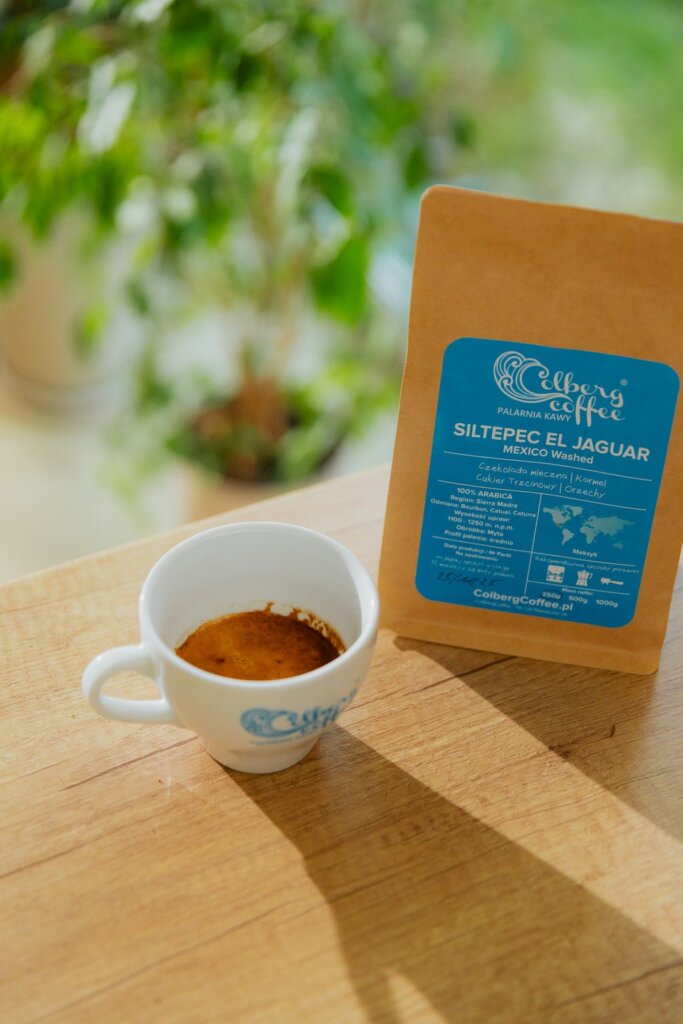
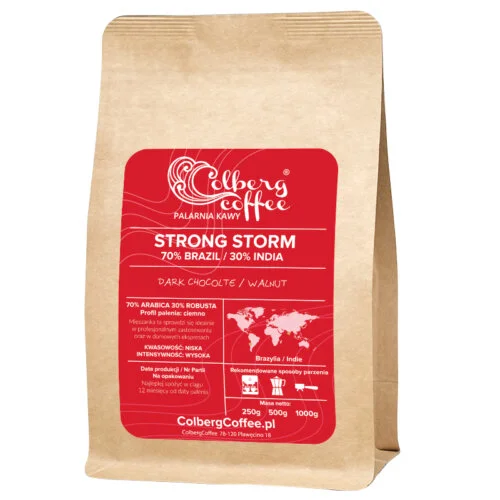
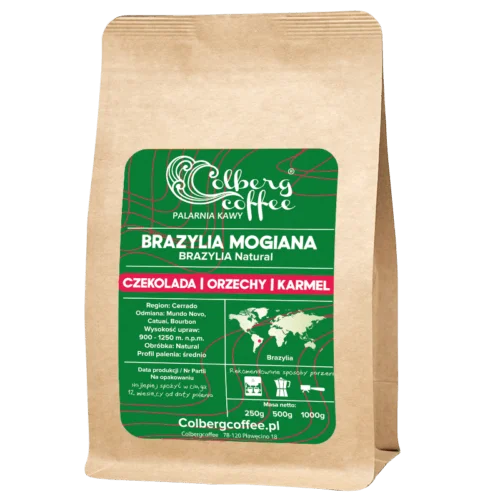
From our roastery we recommend the Strong Storm blend with its intense, chocolatey profile, and Brazil Mogiana. Both work well in an espresso machine and a moka pot.
How many calories are in Viennese coffee
A double espresso has only a few kilocalories. Almost all the calories in Viennese coffee come from the cream and sugar. 30% cream alone has about 290 kcal per 100 g.
A serving made with our recipe, with 50 ml of 30% cream and a teaspoon of icing sugar, has about 165-170 kcal. With 36% cream it is about 190-200 kcal. A smaller cap made with about 30 g of 30% cream gives about 110-120 kcal.
Common mistakes
Stirring the coffee. Viennese coffee has two layers. Stir it and the contrast between hot coffee and cold cream disappears.
Coffee that is too weak. Under a lot of whipped cream, a weak brew loses its character. That is why we recommend a double espresso or strong moka pot coffee for our recipe.
Warm cream. At room temperature, cream may not whip at all. Chill it in the fridge first, ideally to 4-6°C.
Over-whipped cream. Whipping for too long gives a grainy mass that doesn’t melt pleasantly in the mouth. Switch off the mixer once the cream holds soft peaks.
Confusing it with Wiener Melange. If you feel like coffee with milk, make a Melange or a cappuccino. We explain how to froth milk at home in our guide on how to froth milk without a machine.
What is Viennese coffee?
It is strong black coffee, usually a double espresso, topped with a cap of whipped cream and dusted with cocoa or chocolate. It is best drunk without stirring.
How is Viennese coffee different from Wiener Melange?
Viennese coffee has a layer of whipped cream. Wiener Melange is made with steamed milk and milk foam, similar to a cappuccino.
How do you drink Viennese coffee?
Ideally without stirring. Hot coffee flows through cold, sweet cream, and that contrast is what matters most. If you take sugar, dissolve it in the coffee before adding the cream.
Which cream for Viennese coffee?
Well-chilled 30% or 36% whipping cream. 36% cream usually forms a firm foam more easily. Regular 18% or 22% cream is not suitable for classic whipped cream.
Can you make Viennese coffee without an espresso machine?
Yes. About 100 ml of strong moka pot coffee or a very strong French press brew is enough.
How many calories are in Viennese coffee?
A serving made with our recipe, with 50 ml of 30% cream and a teaspoon of icing sugar, has about 165-170 kcal. A smaller cap with about 30 g of cream comes to about 110-120 kcal.
What is Viennese coffee called in Vienna?
The closest traditional equivalent is the Einspänner: strong black coffee in a glass with a generous layer of whipped cream. In Viennese cafés, that is the name to look for.
Who invented Viennese coffee?
Nobody knows who invented Viennese coffee in its current form. Legend links the beginnings of Vienna’s coffee tradition to Jerzy Franciszek Kulczycki after the relief of Vienna in 1683. However, the first documented permit to sell coffee in Vienna was granted to Johannes Diodato in 1685.
Przeczytaj też
Viennese coffee: recipe, Einspänner and Wiener Melange
Viennese coffee step by step: which cream to use, how to whip it so it
Nov
Coffee with lemon (espresso romano): recipe and facts
Coffee with lemon step by step: espresso romano with lemon peel, iced versions, mazagran and
Nov

Bulletproof coffee: recipe, calories and what research says
Bulletproof coffee: a recipe with exact amounts, calories, butter vs ghee, MCT oil and how
Nov

Frappe: how to make Greek iced coffee
Greek frappe step by step: ratios, sketos, metrios and glykos, shaking technique and mistakes that
Nov

How to make filter coffee: ratio, grind size and temperature
How to make filter coffee: how much coffee per litre of water, how to grind,
Oct

Coffee on an empty stomach: is it bad for you? What the research says
Is coffee on an empty stomach bad for you? What research says about stomach acid,
Oct
Affogato: what it is and how to make one
An affogato is an Italian dessert: a scoop of vanilla ice cream drowned in hot
Oct
Victoria Arduino distributor in Poland: Colbergcoffee
Colbergcoffee is a Victoria Arduino espresso machine distributor in Poland. We sell, install and service
Oct
