

Frothed milk is the base of a cappuccino or a latte macchiato
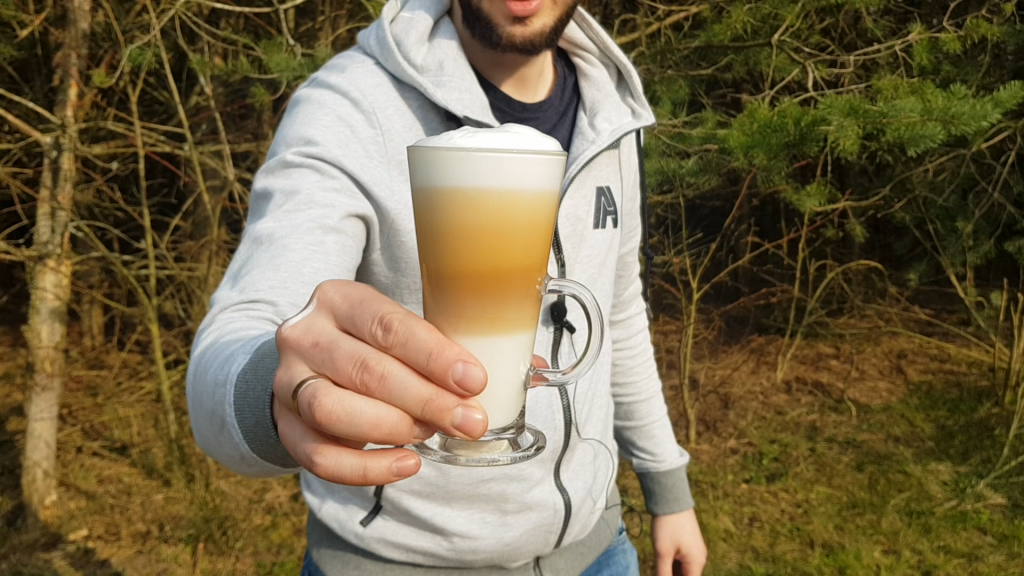
Making a cappuccino or a latte macchiato at home is a small dream come true for anyone who loves coffee with milk. You cannot always get out to a café, and sometimes there simply isn’t one nearby, so the drinks you know from the bar have to happen in your own kitchen. But what if you have no bean-to-cup machine to heat the milk, froth it and brew the coffee for you? Then you do it yourself and become the barista at home. Let’s get started.
Which milk should you choose for frothing?
Any milk will froth, so start with the one you actually enjoy drinking, dairy or plant-based. The plant-based drink that tastes best with coffee, to my palate, is oat, but test for yourself. The hardest one to froth is rice, because it has the lowest protein content, and protein is what makes milk foam in the first place. This is also the moment to kill off a myth that keeps coming back in milk-frothing guides: that fat content decides how well milk froths. It does not.
Fat content in milk
Fat does matter, but for a different reason: it carries flavour. A coffee built on fuller-fat milk feels rounder in the mouth, and the milk covers more of the coffee. So if you want a latte where the milk plays first violin, reach for whole milk. If you want the coffee to come through clearly, go leaner.
Heat the milk to around 65 °C
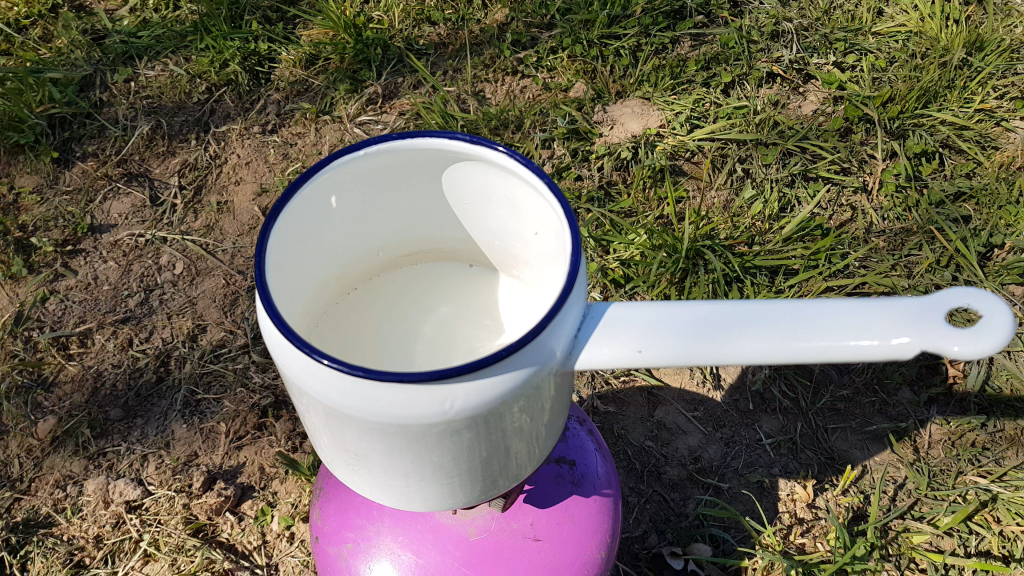
Whichever milk you pick, it has to be warmed before it will froth. A pan on the hob works, so does the microwave. Important: get it to between 60 °C and 70 °C. That is where milk tastes best, because the sugars in it are at their happiest and give up the most sweetness. Without a thermometer, the sign is the milk starting to feel hot against your hand. Heat it further and it turns bitter and scalded, which is exactly what you want to avoid. The small effort of measuring pays off, and there is a bonus: a cappuccino made on milk at that temperature is ready to drink straight away.
We will froth the milk in a French press
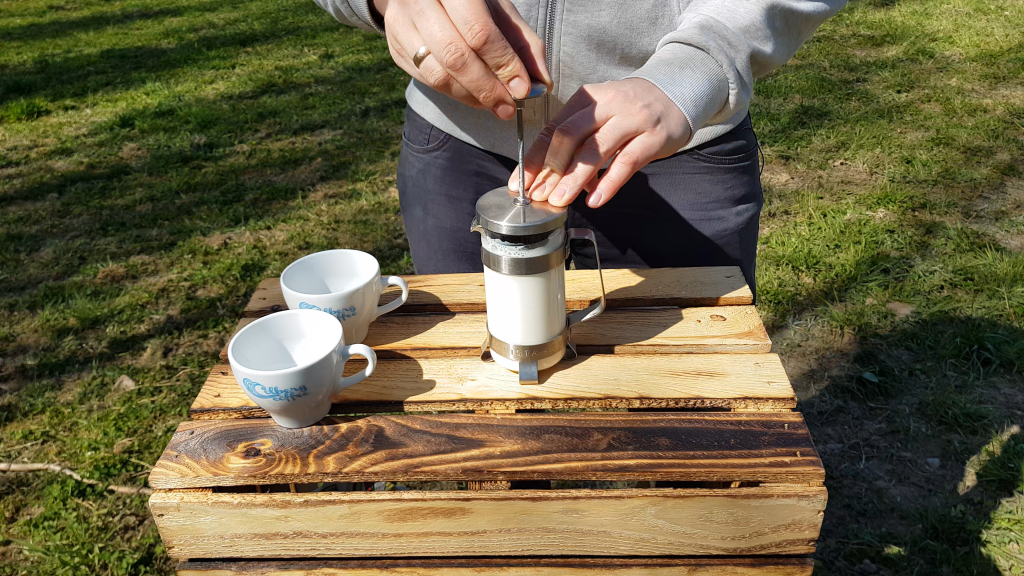
It is a simple tool, and plenty of kitchens already have one because it does several jobs: some people steep herbs in it, some brew coffee or tea, and some of us froth milk. Most presses are a glass beaker and a plunger with a mesh filter. A French press from the supermarket at 30 zł will do the job as well as a 150 zł one from a specialist shop (prices in Polish złoty). The more expensive press usually means better materials and build, which shows in how long it lasts.

Now let’s froth the milk
- Heat the milk to 65 °C.
- Warm the French press through with boiling water, then pour the water out.
- Pour the milk into the press.
- Put the plunger in and push it down to the bottom.
- Start moving the plunger gently up and down through the whole body of milk.
- Shorten the stroke as you go and work near the surface of the foam to break up the larger bubbles. You are after one even texture, something close to yoghurt.
- The whole thing should take 30 to 40 seconds.
- Pour the frothed milk into a glass, top it up with hot coffee and enjoy a proper milk coffee at home.
And which coffee works best in a drink built on frothed milk?
Medium and dark roasts. A medium roast sits more gently against the milk, a dark roast comes through with more intensity. Arabica and Robusta blends do well here, and so do coffees from Central and South America, again in blends.
Brew it in a moka pot (we have written about that here) or in an AeroPress. You can also make it Polish style, ground coffee steeped straight in the glass and strain it through a sieve.
Our coffee picks for frothed milk
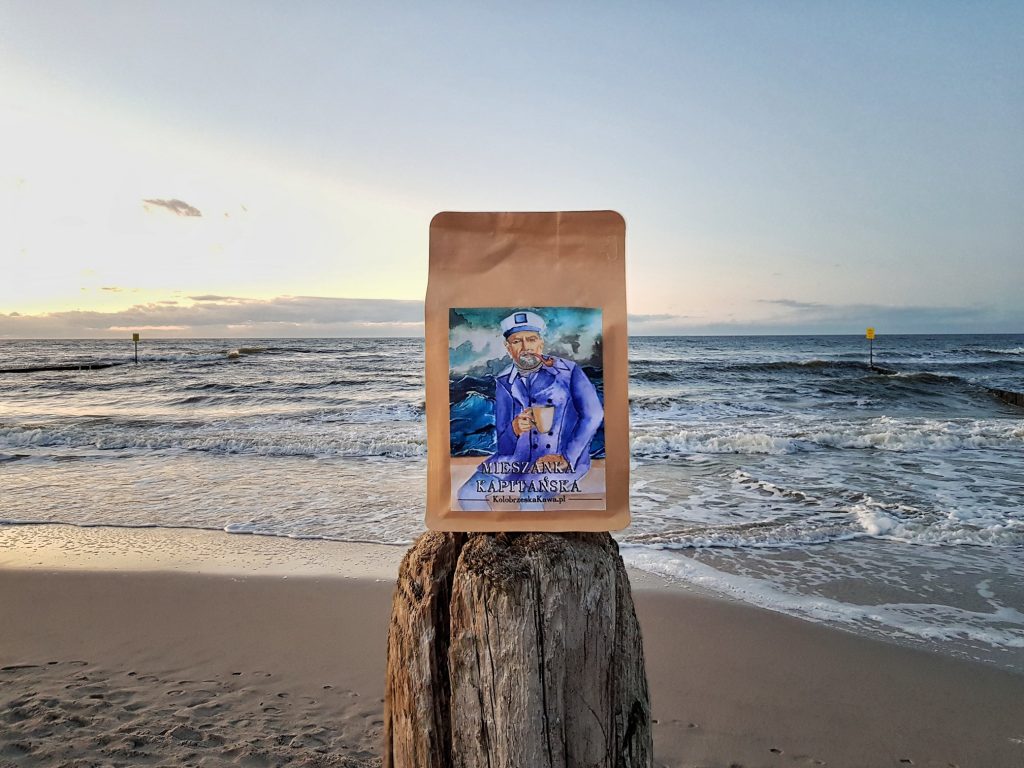
For milk drinks our roastery recommends three blends. Captain’s Blend is a tasty classic that tastes like melted semi-sweet chocolate with nuts once the milk goes in. Brazilian Adventure is gentler with milk and closer to milk chocolate. And Jeremii Blend is the unusual one, with the most going on in the cup. We roast for your enjoyment, so give them a try.

Now you know how to froth milk at home without a machine, so get on with it. Make yourself a good coffee, or warm milk with foam for the kids.
