










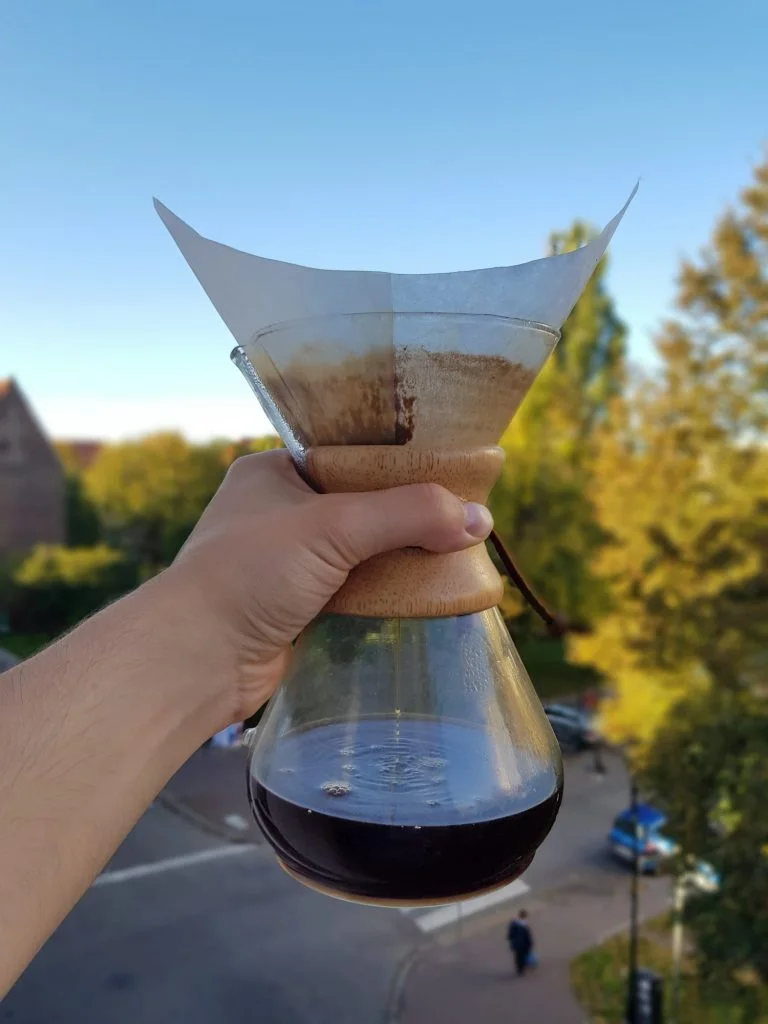
A Chemex is an hourglass-shaped glass carafe used to brew pour-over coffee through a thick paper filter. The result is a clean, light, clear cup that some people compare to tea. It’s a great choice for making coffee for two or three people, especially if you enjoy light roasts with fruity and floral notes. This Chemex brew guide shows you how to get the best out of it.
Below you’ll find a Chemex recipe with measurements in grams, instructions for folding the filter, grind settings, water temperature and tips for improving the flavour. I’ll also explain where the Chemex came from and how it compares with the V60.
The history of the Chemex
The Chemex was invented in 1941 by Peter Schlumbohm, a German-born chemist working in the United States. He drew inspiration from laboratory equipment, particularly funnels and flasks. The design has remained virtually unchanged for more than 80 years. It features a glass carafe, a wooden collar tied with a leather cord and a pouring spout with an air channel.
The Chemex became part of the collection at New York’s Museum of Modern Art as an example of functional design. It has also appeared in films and television series. Many people recognise its distinctive shape long before they brew their first cup with one.
When it comes to flavour, two things matter more than the history. The Chemex combines a dripper and a carafe, so you don’t need a separate server. It also uses a noticeably thicker filter than many other drippers. That paper plays a major role in shaping the character of the coffee.
What does Chemex coffee taste like?
The thick filter traps a large proportion of fine coffee particles and oils. This gives the coffee a light body, excellent clarity and a clean finish. In a well-brewed cup, delicate fruity and floral notes are easy to pick out.
Brewing with a Chemex often takes longer than with a V60. The thick paper creates more resistance, although grind size, coffee dose and pouring technique also affect the flow. That’s why we usually grind a little coarser for a Chemex. If you enjoy the full-bodied coffee from a moka pot or French press, a Chemex brew might seem delicate. But if you appreciate clarity and subtle flavours, you’ll probably enjoy it.
| Feature | Chemex | Hario V60 |
|---|---|---|
| Filter | Thick, folded paper | Thin, cone-shaped paper |
| Grind size | Medium-coarse | Medium |
| Brew time | Around 4:00-4:30 | Around 2:30-3:30 |
| Body | Light, very clean | Light to medium |
| Best for | 2-4 cups at a time | 1-2 cups |
| Separate server | Not needed | Needed |
For a recipe using another popular pour-over method, see our guide to brewing coffee with the Hario V60 dripper.
Chemex coffee-to-water ratio
Start with 60-65 g of coffee per litre of water. It’s a good starting point that you can adjust to suit your taste. With a 6-cup Chemex, you can make:
- 30 g of coffee and 500 g of water for two people.
- 40 g of coffee and 650 g of water for three people.
If you’re using less than 20 g of coffee, a large Chemex can be awkward to brew with. The coffee bed is shallow, and water may flow through too quickly. For a single cup, a V60 or a smaller Chemex is usually easier to use.
Chemex brew guide: step-by-step recipe
We’ll use 30 g of coffee beans and 500 g of water. This is a good recipe for two servings.
- Boil the water. For light-roasted coffee, start with a water temperature of 92-95°C.
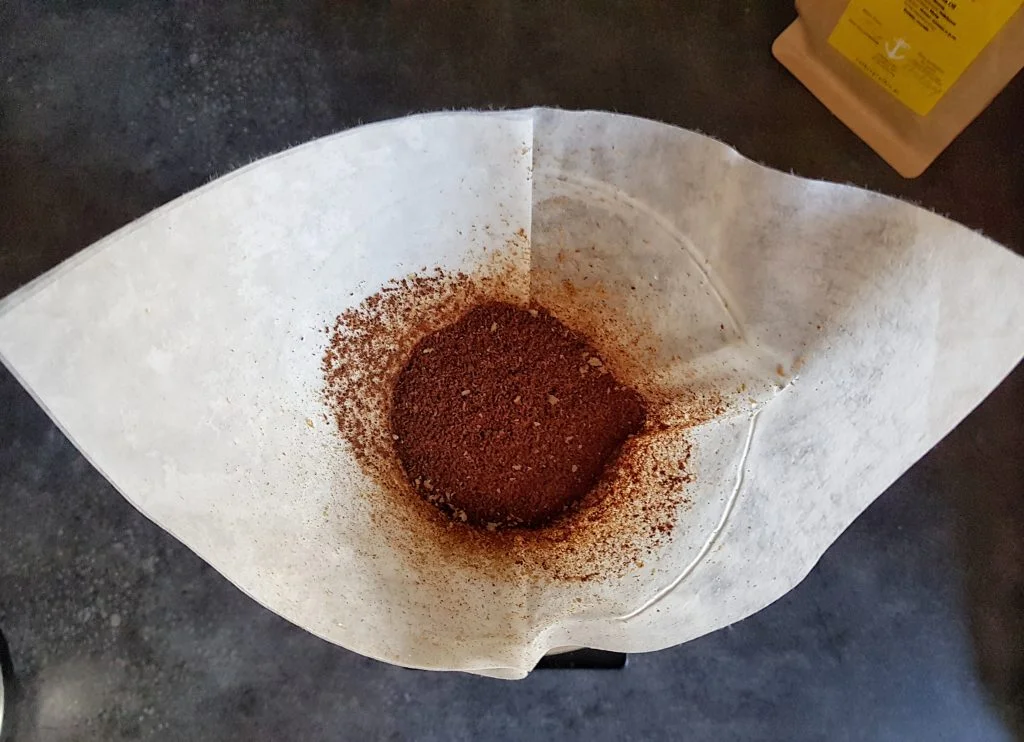
- Fold the filter and place it in the carafe with the three layers of paper facing the pouring spout. A single layer could stick to the glass and block the channel that allows air to escape.
- Rinse the filter thoroughly with hot water. This removes any potential papery taste and warms the glass. Pour the rinse water out through the spout without removing the filter.
- Grind 30 g of coffee to a medium-coarse setting, usually noticeably coarser than for a V60.
- Add the ground coffee to the filter and gently level the surface.
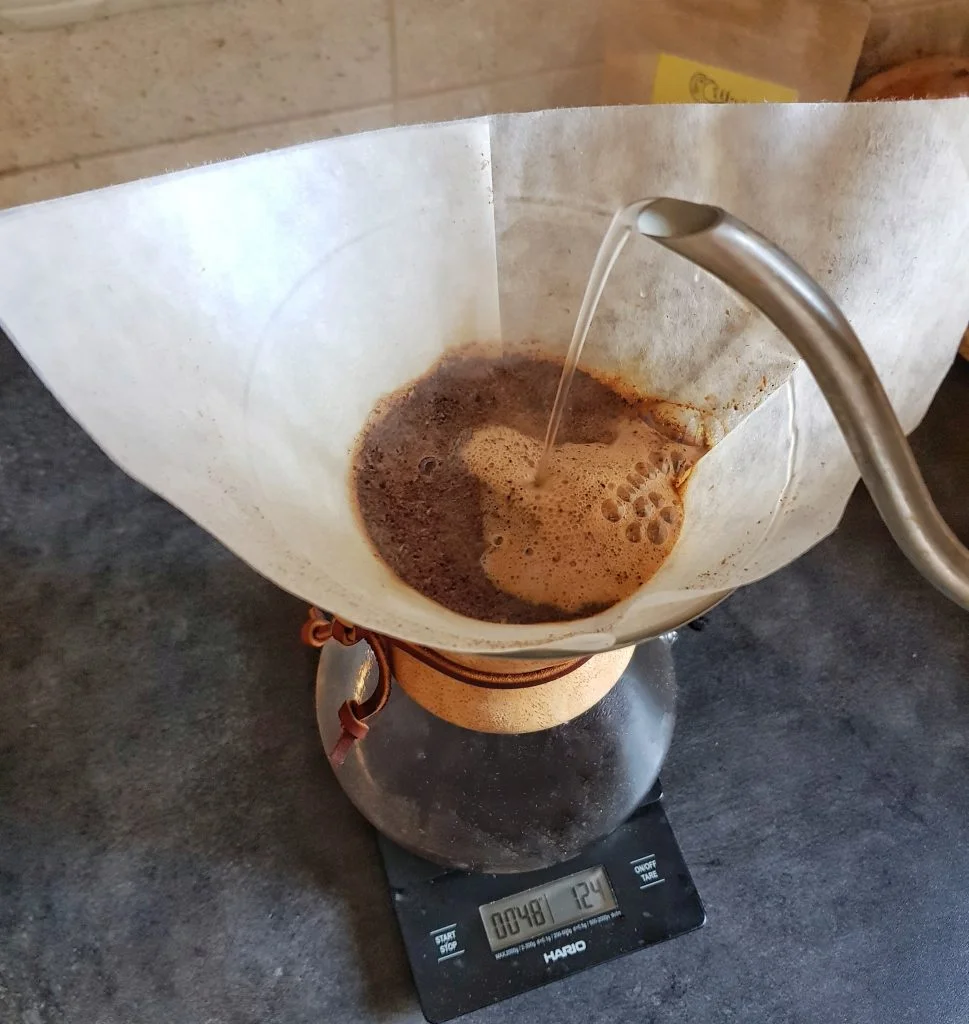
- Start with a bloom. Pour in around 60 g of water, making sure all the coffee gets wet. Wait 30-45 seconds. During this time, the coffee releases carbon dioxide left over from roasting.
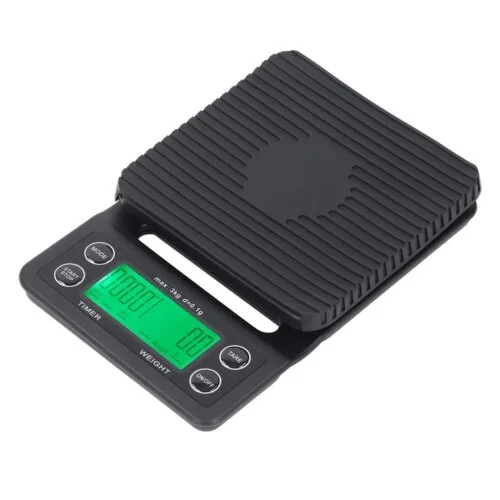
- Add the remaining water in stages, pouring slowly in circular movements closer to the centre of the filter. Continue until the scale reads 500 g. Keep the water level a few centimetres below the rim of the filter.
- Wait for the water to drain through the coffee. Aim for a total brew time of around 4:00-4:30. This is only a starting point, as the timing depends on grind size, the beans and how you pour.
- Remove the filter and used coffee grounds. Gently swirl the carafe to mix the coffee, then pour it into cups.
Chemex brew guide: grind size and flavour adjustments
For a Chemex, start with a medium-coarse grind, roughly the size of coarse salt. Keep an eye on brew time, but let taste be your main guide. If your coffee is unpleasantly sour and lacks sweetness, try grinding finer. If bitterness and astringency dominate, go a little coarser.
| Problem | Brew time | What to change |
|---|---|---|
| Sour, watery | Under 3:30 | Grind finer |
| Bitter, astringent | Over 5:00 | Grind coarser |
| Water sits in the filter and barely drains | Very long | Check whether the filter is blocking the air channel near the spout, and grind coarser |
| Tastes good but too weak | 4:00-4:30 | Add 2-3 g of coffee |
A burr grinder is the best choice for Chemex brewing. Blade grinders produce uneven particles and plenty of fine powder, which can slow the flow of water through the filter. We cover grinder settings in our guide to grinding coffee for different brewing methods. You’ll also find the basics of pour-over brewing in our article on pour-over coffee and how to brew it.
Chemex coffee filters
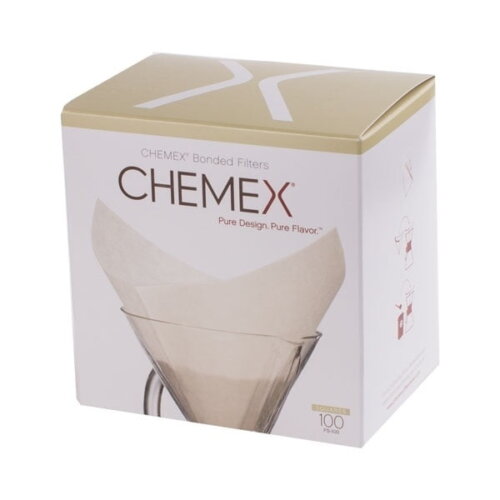
It’s best to use original Chemex filters designed for your model. Regular cone-shaped filters are usually thinner and may not sit properly inside the carafe. The 6, 8 and 10-cup Chemex models all use the same large filters, available in square or round versions. The 3-cup model requires separate, smaller filters.
White Chemex filters are processed using oxygen, while natural filters retain the paper’s original colour. Natural filters may be more likely to leave a papery taste, so it’s worth rinsing them especially thoroughly with hot water. Rinse white filters before brewing too. You can find the available options in our coffee filters category.
What coffee is best for a Chemex?
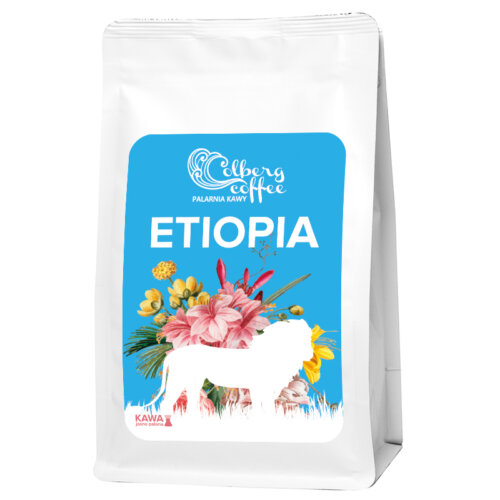
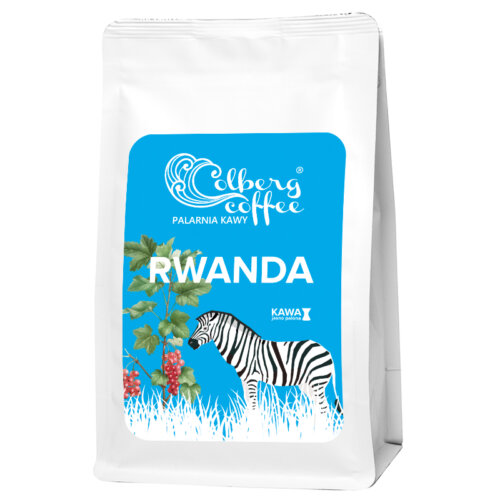
The Chemex is excellent for bringing out the character of light-roasted specialty coffees, whether washed or naturally processed. Beans from Ethiopia, Kenya, Rwanda and Burundi are all worth trying. In a clear, clean brew, you may notice citrus, red fruit and floral notes. You can find suitable beans in our coffee for Chemex category.
Medium-roasted coffee from South America also works well in a Chemex. It’s a good choice if you enjoy chocolate and nutty flavours. The brew will usually have a lighter body than espresso or coffee from a moka pot. I generally don’t recommend dark-roasted blends for this method because bitterness and roasted notes can dominate the flavour.
Brewing with a Chemex doesn’t require complicated settings. What matters most is the quality of the beans, the right grind size and coffee freshness. For the best results, grind your coffee just before brewing.
How to clean a Chemex
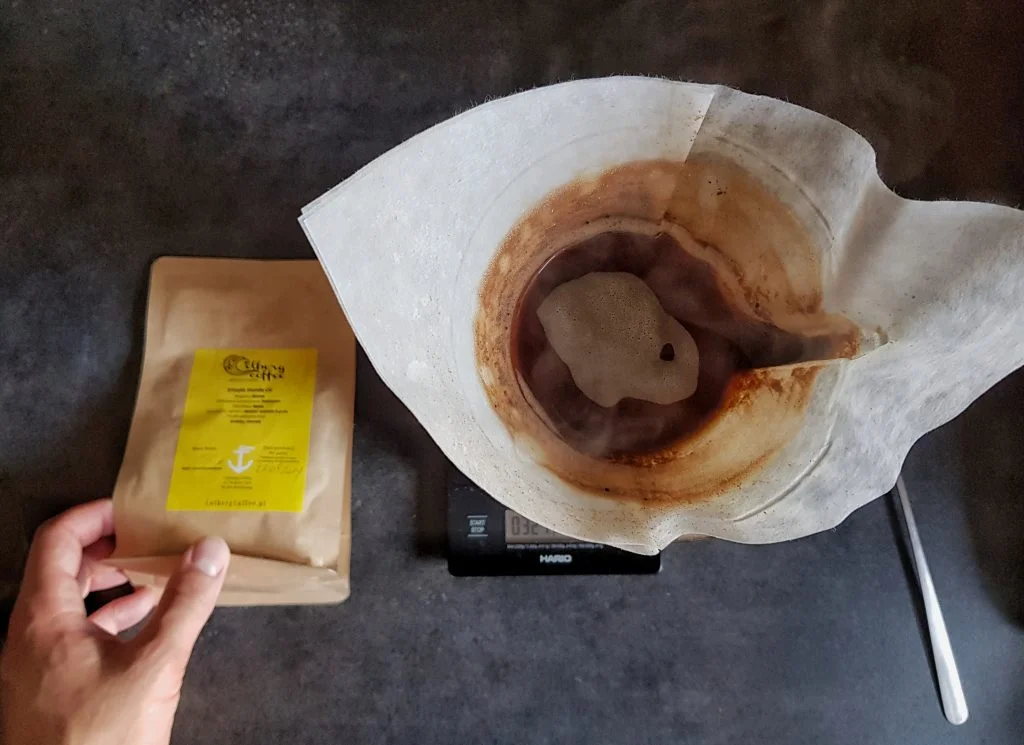
Rinse the carafe with hot water after every brew. Give it a more thorough clean regularly, as coffee oils build up on the glass. Over time, these deposits can give your coffee an unpleasant, rancid taste. A long-handled brush is useful for cleaning the narrow section.
You can wash a classic Chemex in the dishwasher after removing the wooden collar and leather cord. Don’t put the wooden parts in the dishwasher or leave them soaking in water.

Frequently asked questions about Chemex coffee
How much coffee should I use in a Chemex?
Start with 60-65 g of coffee per litre of water. For two people, use 30 g of coffee and 500 g of water. For three people, use 40 g of coffee and 650 g of water. It’s best to weigh the water, as a kitchen measuring jug is less accurate. Using a scale also makes it easier to repeat a recipe that works well.
How coarse should I grind coffee for a Chemex?
Use a medium-coarse grind, usually coarser than for a V60. The particles should resemble coarse salt. With 30 g of coffee and 500 g of water, start by aiming for a brew time of around 4:00-4:30. If brewing takes much longer, try grinding coarser. Remember that the filter and your pouring technique also affect water flow.
Which way should I place the Chemex filter?
Place the filter with the three layers of paper facing the pouring spout. This makes it less likely to stick to and block the air channel. If a single layer blocks that channel, the coffee may drain much more slowly.
What water temperature should I use for a Chemex?
For light-roasted coffee, start at 92-95°C. With a medium roast, you can try a slightly lower temperature. If you don’t have a thermometer, boil the water and wait roughly half a minute. The exact temperature after that time will depend on your kettle and the amount of water.
Can I use regular coffee filters in a Chemex?
You can try, but the result will be different. Regular filters are often thinner and may not sit as well inside the carafe. There’s also a risk of blocking the air channel. It’s best to choose original Chemex filters that match the size of your carafe.
What’s the difference between Chemex coffee and V60 coffee?
Chemex coffee is usually lighter and clearer because of the thicker filter. Brewing often takes longer, so a coarser grind is generally used. The Chemex is convenient when making several cups at once, while the V60 also works well for just one or two cups.
What coffee tastes best in a Chemex?
A good place to start is with light-roasted specialty coffee, for example from Ethiopia, Kenya or Rwanda. The thick paper filter makes it easier to appreciate the coffee’s fruity and floral notes. Medium-roasted beans work well too. Dark-roasted blends can produce a brew dominated by bitterness, so a lighter roast is usually the better starting point.
Przeczytaj też

Caffè latte: what it is, ratios and recipe
Caffè latte step by step: espresso to milk ratios, steaming milk on an espresso machine
Nov

Viennese coffee: recipe, Einspänner and Wiener Melange
Viennese coffee step by step: which cream to use, how to whip it so it
Nov
Coffee with lemon (espresso romano): recipe and facts
Coffee with lemon step by step: espresso romano with lemon peel, iced versions, mazagran and
Nov

Bulletproof coffee: recipe, calories and what research says
Bulletproof coffee: a recipe with exact amounts, calories, butter vs ghee, MCT oil and how
Nov
Frappe: how to make Greek iced coffee
Greek frappe step by step: ratios, sketos, metrios and glykos, shaking technique and mistakes that
Nov
How to make filter coffee: ratio, grind size and temperature
How to make filter coffee: how much coffee per litre of water, how to grind,
Oct
Coffee on an empty stomach: is it bad for you? What the research says
Is coffee on an empty stomach bad for you? What research says about stomach acid,
Oct

Affogato: what it is and how to make one
An affogato is an Italian dessert: a scoop of vanilla ice cream drowned in hot
Oct

This site is protected by reCAPTCHA. The Google Privacy Policy and Terms of Service apply.