









Caffè latte is espresso with a large amount of steamed milk and a thin layer of microfoam. It is usually served in a 250-300 ml cup or a glass, although portion sizes vary between cafés. It is one of the milder classic milk coffees. You can taste the coffee, but the milk dominates.
Here you’ll find our ratios and a step-by-step recipe for latte on an espresso machine, plus a version without one. We also explain how caffè latte differs from cappuccino and flat white, which milk to choose, and how much caffeine and how many calories one serving has.
What is caffè latte
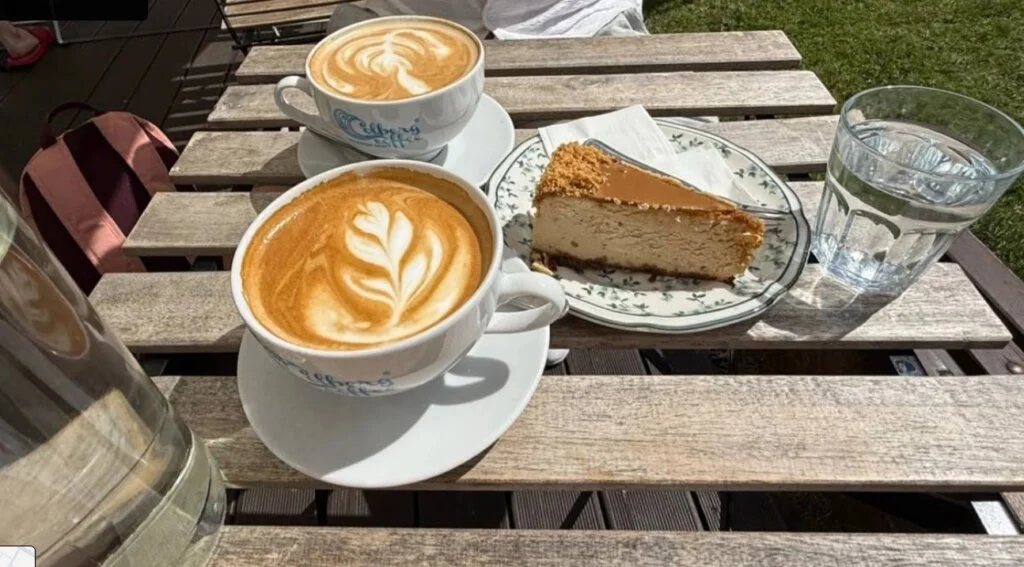
The name is Italian and means “coffee with milk”. In the modern café version, the base is espresso, into which smoothly steamed, glossy milk is poured. The two combine into a uniform drink with no distinct layers. It is different in a latte macchiato, where the espresso is added to the milk at the end.
Ordering coffee in Italy? Remember that “latte” on its own means milk there, so you may get a glass of milk instead of coffee. It’s better to order a “caffè latte” or “caffellatte”.
A good latte is creamy and gently sweet thanks to the milk. Milk softens the acidity and bitterness of the espresso, but it shouldn’t drown out its flavour completely. If the coffee gets lost in the drink, use less milk or change your espresso recipe.
Caffè latte ratios
Caffè latte has no single fixed recipe. Ratios and serving sizes vary between cafés. Here is our starting point:
| Ingredient | Amount |
|---|---|
| Espresso | double: 18 g coffee, 36-40 g beverage |
| Milk | 180-220 ml cold milk, depending on the cup |
| Milk temperature | 60-65°C |
| Microfoam | thin, roughly 0.5 cm |
| Cup | 250-300 ml |
Latte too milky? Use less milk or choose a smaller cup. If you want a stronger taste in a big mug, you can add a third shot of espresso. Just remember that this also increases the caffeine.
Caffè latte, cappuccino and flat white: the differences
All three are made with espresso and steamed milk. They differ in serving size, amount of foam and how strongly you taste the coffee.
| Coffee | Volume | Foam | Taste |
|---|---|---|---|
| Caffè latte | often around 250-350 ml | thin, about 0.5 cm | usually mild and milky |
| Cappuccino | traditionally around 150-180 ml | distinct, about 1-1.5 cm | coffee usually more noticeable than in a latte |
| Flat white | often around 150-180 ml | very thin | clear coffee flavour, as there is a lot of it relative to milk |
Read more about the differences in our articles on latte vs cappuccino and how to make a flat white.
How to make caffè latte on an espresso machine
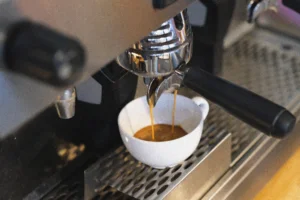
1. Brew a double espresso straight into a warmed cup. Start with 18 g of coffee and 36-40 g of beverage in about 25-30 seconds, then adjust the recipe to taste.
2. Pour cold milk into the jug, filling it to about 1/3-1/2 of its capacity. For 180-220 ml of milk, a 500-600 ml jug is convenient.
3. Start with aeration. Hold the steam wand tip just below the surface until you hear a gentle hiss. Stop aerating before the milk reaches about 38°C, when the jug is only just starting to feel slightly warm. A latte needs only a little air, because the foam layer should be thin.
4. Get the milk spinning. Lower the wand deeper so the milk rotates without bubbling. Stop steaming at 60-65°C. A thermometer is the most accurate way to check.
5. Polish the texture. Gently tap the jug on the counter and swirl it until the milk is smooth, glossy and free of visible bubbles.
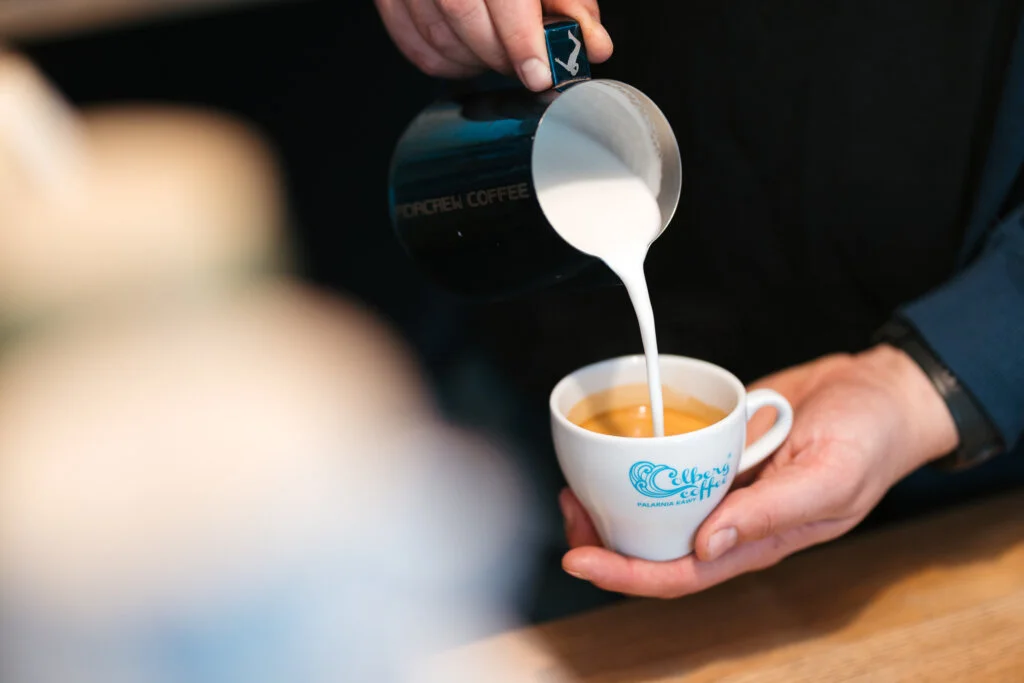
6. Pour the milk into the espresso straight away. Start a few centimetres above the centre of the cup so the milk goes under the crema. Towards the end, bring the spout close to the surface. White foam will appear on it. That’s the start of latte art.
A common mistake when steaming at home is aerating for too long. Instead of fine microfoam you get a stiff cap that sits on top of the coffee and won’t combine with it. Read more about the technique in our guide on how to steam milk on an espresso machine.
Caffè latte without an espresso machine
No espresso machine? You can still make a drink very similar to caffè latte. Just remember that coffee from a moka pot or AeroPress is not espresso.
Coffee. Instead of espresso, make about 60 ml of strong coffee in a moka pot or a concentrated AeroPress brew.
Milk. Heat it to about 60-65°C and froth it in a French press. A dozen or a few dozen plunges are enough. You can also use a handheld frother. If you use a jar, froth the cold milk in it first and only then heat it in an open container. Never shake a sealed jar of hot milk. Other methods are covered in our guide on how to froth milk without a machine.
Combining. Gently tap the container on the counter to get rid of large bubbles. Then pour the milk into the coffee, not the other way round.
Which milk for latte
Whole cow’s milk (3.2%) is the easiest to work with. Fat gives it creaminess, protein helps hold the foam, and lactose provides gentle sweetness. Semi-skimmed (2%) milk also foams well but makes a less creamy drink.
Among plant-based drinks, barista oat milk works well. Soy can also create stable foam, but some products curdle in hot, more acidic coffee. Regular almond and rice drinks often foam less well, so it’s worth choosing versions made for coffee. Read more in our article on how plant-based milk changes the taste of coffee.
Which coffee for caffè latte
A latte contains a lot of milk, so the espresso should have a bold flavour. For a classic latte with chocolate and nut notes, medium or darker roasts are the most common choice. Very light, floral coffees can be less noticeable in a lot of milk. That doesn’t mean they can’t make a tasty latte.
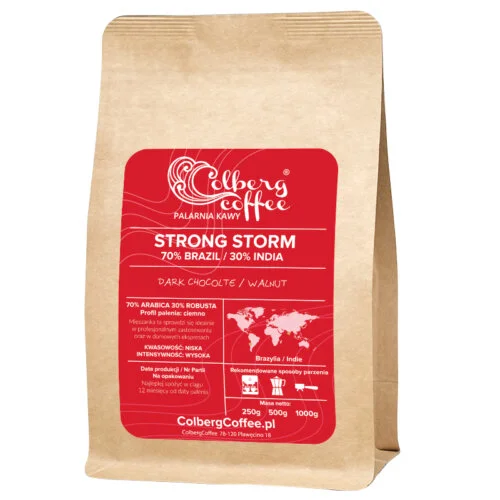
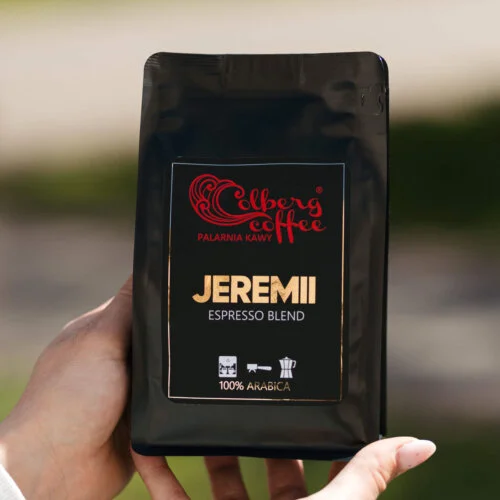
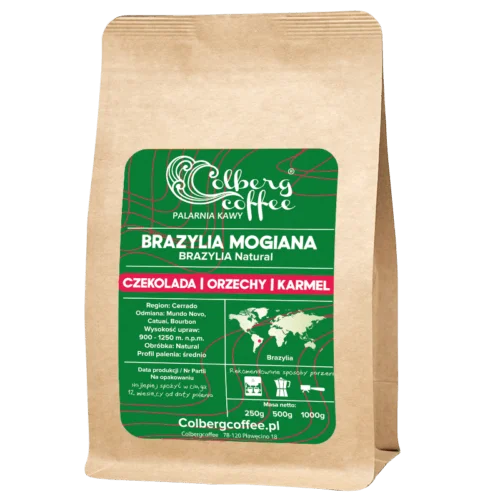
From our roastery we recommend Strong Storm, the Jeremii Blend and Brazil Mogiana for latte.
How much caffeine and how many calories in caffè latte
Caffeine. Milk softens the taste of espresso but doesn’t reduce the caffeine. A single espresso contains roughly 60-80 mg of caffeine, and a latte made with a double espresso often around 120-160 mg. These are approximate values. The actual amount depends on the beans, dose and brewing. Read more in our article on how much caffeine espresso has.
Calories. Almost all the calories in a latte come from the milk. 3.2% milk has about 60 kcal per 100 ml, so a latte with 200 ml of it provides about 120-125 kcal. With 2% milk it’s about 100 kcal. A teaspoon of sugar adds another 16 kcal or so, and a serving of syrup can add several dozen.
Flavoured and iced latte
Latte makes a great base for seasonal drinks. Just add a spoonful of syrup to the espresso, then pour in the milk. Vanilla, caramel and hazelnut are the classics. In autumn, pumpkin spice latte is popular. You’ll find more ideas among our coffee syrups.
In summer, try an iced latte. All you need is espresso, cold milk and ice. No steaming.
What is caffè latte?
It is espresso with a large amount of steamed milk and a thin layer of microfoam. The ingredients combine into a creamy drink with a mild taste.
How much espresso and milk is in a latte?
Our starting point is a double espresso made with 18 g of coffee, giving 36-40 g of beverage, and 180-220 ml of milk steamed to 60-65°C. Adjust the amount of milk to a 250-300 ml cup.
What is the difference between a latte and a cappuccino?
A latte usually has more milk and thinner foam, so with a similar amount of espresso it tastes milder. A traditional cappuccino is around 150-180 ml with a more distinct layer of microfoam.
What is the difference between caffè latte and latte macchiato?
In caffè latte, steamed milk is poured into the espresso, creating a uniform drink. In latte macchiato, the espresso is added at the end to a glass of milk, which can create the characteristic layers.
Can you make a latte without an espresso machine?
Yes. You can make a drink very similar to a latte. Use strong coffee from a moka pot or AeroPress instead of espresso, and froth the milk in a French press or with a handheld frother.
How much caffeine is in a latte?
As much as the espresso used. A latte made with a double espresso often contains around 120-160 mg of caffeine. The exact amount depends on the beans and recipe. Milk doesn’t reduce the caffeine.
How many calories are in a caffè latte?
A latte with 200 ml of 3.2% milk has about 120-125 kcal, and with 2% milk about 100 kcal. Sugar and syrups add more calories.
Which coffee is best for latte?
Medium and darker roasts with notes of chocolate, nuts and caramel suit a classic latte well. Very light, floral coffees can be less noticeable in a lot of milk, but you can still make a tasty latte with them.
Przeczytaj też
Caffè latte: what it is, ratios and recipe
Caffè latte step by step: espresso to milk ratios, steaming milk on an espresso machine
Nov
Viennese coffee: recipe, Einspänner and Wiener Melange
Viennese coffee step by step: which cream to use, how to whip it so it
Nov
Coffee with lemon (espresso romano): recipe and facts
Coffee with lemon step by step: espresso romano with lemon peel, iced versions, mazagran and
Nov

Bulletproof coffee: recipe, calories and what research says
Bulletproof coffee: a recipe with exact amounts, calories, butter vs ghee, MCT oil and how
Nov
Frappe: how to make Greek iced coffee
Greek frappe step by step: ratios, sketos, metrios and glykos, shaking technique and mistakes that
Nov

How to make filter coffee: ratio, grind size and temperature
How to make filter coffee: how much coffee per litre of water, how to grind,
Oct
Coffee on an empty stomach: is it bad for you? What the research says
Is coffee on an empty stomach bad for you? What research says about stomach acid,
Oct
Affogato: what it is and how to make one
An affogato is an Italian dessert: a scoop of vanilla ice cream drowned in hot
Oct
