

What is a flat white, and how do you make one?
A flat white is what most baristas recommend when you want less milk than a latte but something more velvety than a straight espresso. It combines the intensity of espresso with the softness of lightly steamed milk. So what actually makes a flat white, and how do you make one? Here is everything you need to know. This coffee has become a favourite around the world for its distinctive flavour and how simple it is to make. A flat white is more than just a drink: it brings together simplicity and refinement in one cup.
Where does the flat white come from?
Unlike many coffee classics, the flat white did not come from Italy. It is either an Australian or a New Zealand invention: the two countries still argue about who came up with it first. The story goes that the first flat white was a happy accident, made by a barista whose cappuccino foam turned out too thin. He served it to the customer under the joking name “flat white”, literally a flat, white coffee. Today it is a hit in cafés worldwide, Poland included, and plenty of baristas love it for how simple it is and how much room it leaves for creativity.
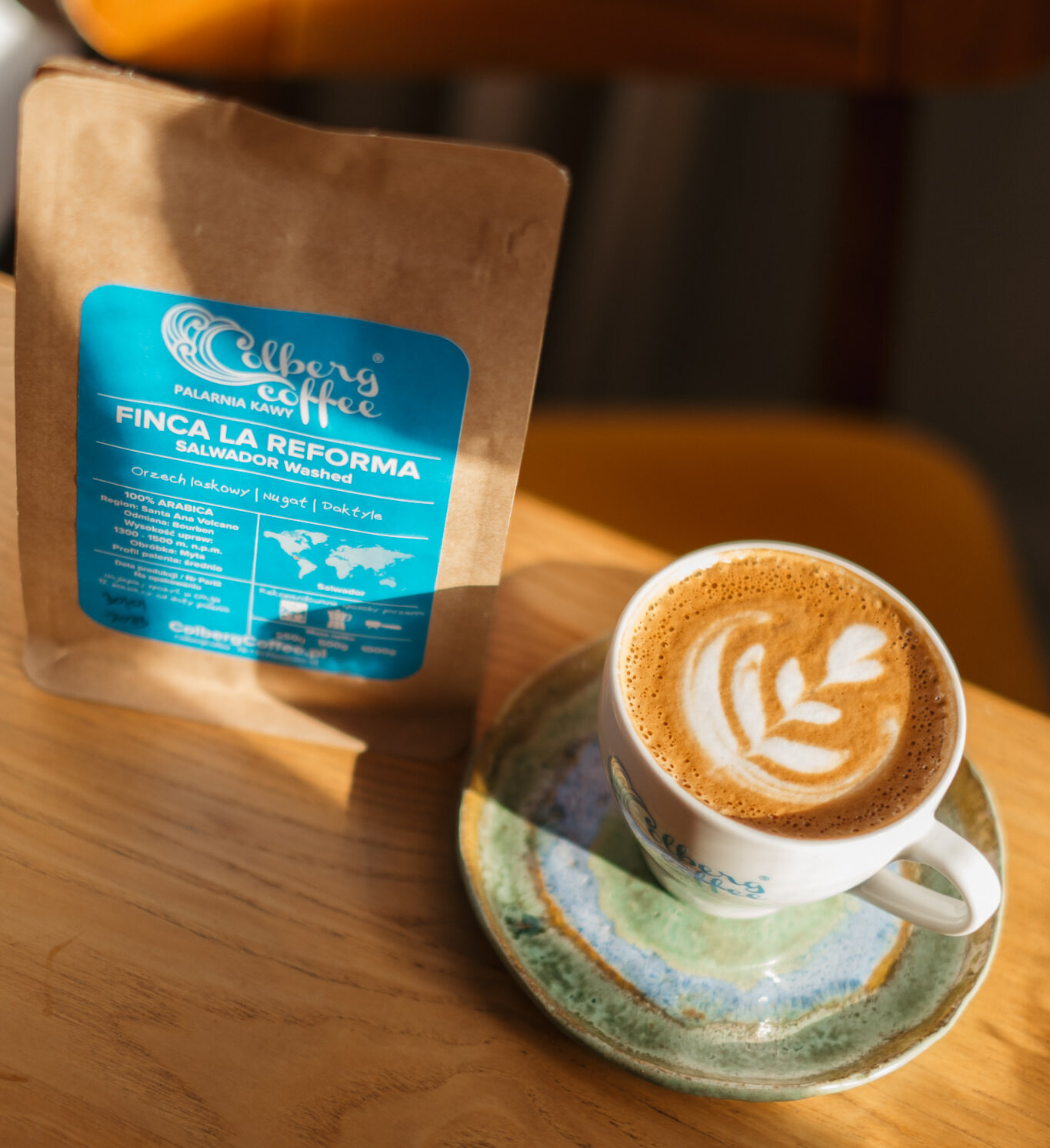
A flat white is often compared to a latte, but it is really the intensity of the espresso together with the right amount of lightly steamed milk that has won it such a following among coffee lovers.
What kind of coffee is a flat white?
A flat white stands out for a few reasons:
-
Double espresso: a strong base that gives the coffee its bold flavour. Compared with a caffe latte, a flat white has a higher proportion of coffee to milk, which makes the espresso stand out more.
-
Lightly steamed milk: there is no thick foam here, just a velvety texture that works perfectly with the coffee’s aroma.
-
Ratio: more coffee, less milk. That is why a flat white tastes stronger than a latte, and it shows off the tasting notes of the beans so well.
-
Size: served in a 150-200 ml cup, so it is a compact coffee that never feels like too much.
A flat white is ideal if you love milk coffees but want more intensity and depth of flavour.
How to make a flat white at home
Making a flat white at home is not difficult. Here is what you need:
Ingredients:
-
Espresso: a double shot (60 ml). Use an espresso machine or a moka pot to get an intense base. The double shot is what gives a flat white its characteristic flavour.
-
Milk: 120 ml of whole milk (or a plant-based drink that steams well). Choose milk with a higher protein content for the right foam texture.
Method:
-
Warm the cup: this keeps the coffee hot for longer.
-
Pull the espresso: use freshly roasted beans if you can. A double shot gives the intensity this drink needs.

-
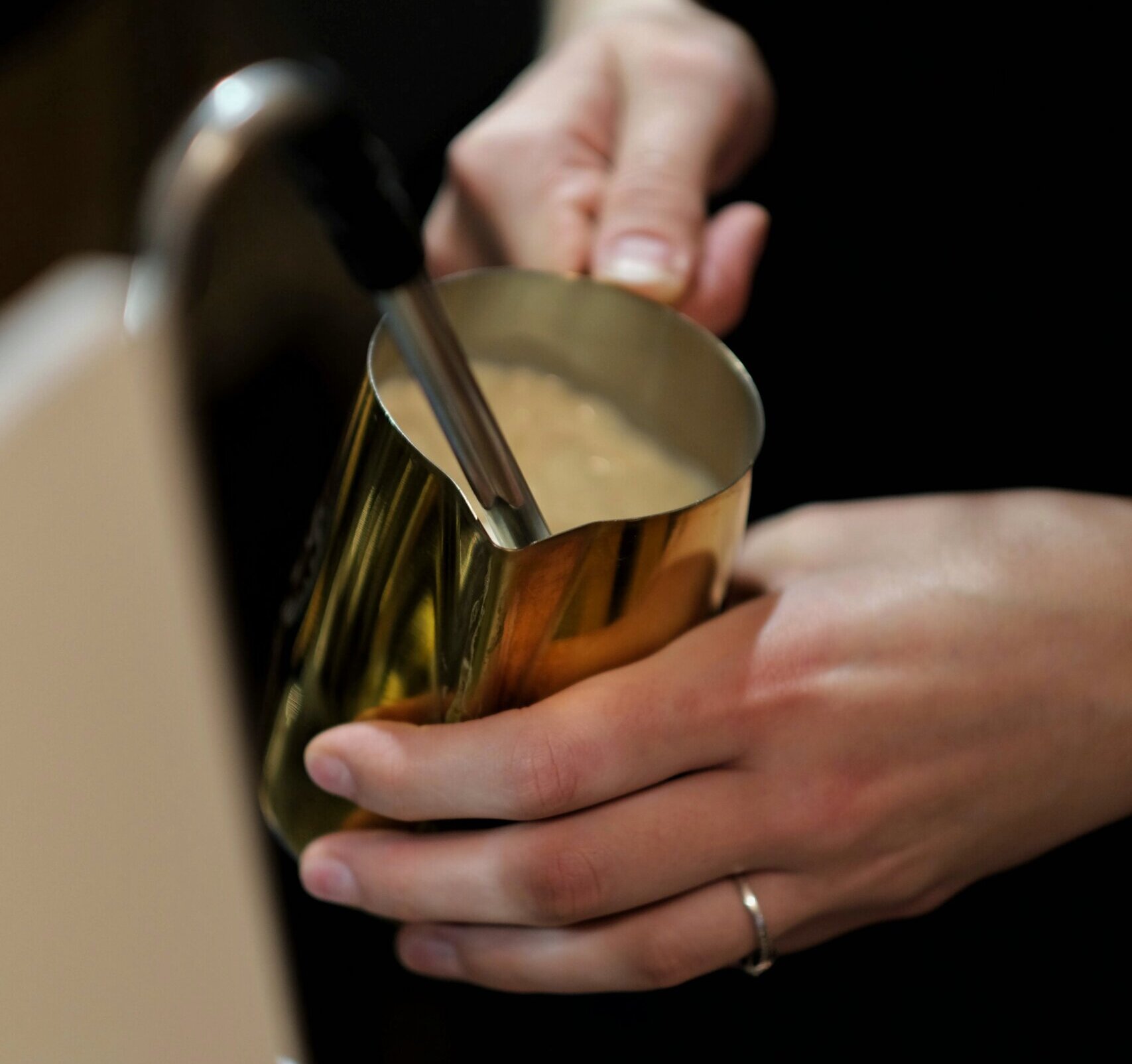
Steam the milk: heat it to 60-65°C and aerate it gently to get a fine microfoam. Do not steam it into the thick foam you would use for a cappuccino, a flat white is all about that velvety texture.

-
Combine: pour the milk into the espresso, starting from the centre of the cup, to keep the surface smooth. If you have the technique, try your hand at latte art.

-
Serve: a flat white tastes best straight away, while the milk and coffee are freshly combined.




What is the difference between a flat white and a latte?
A flat white and a latte can look similar, but the differences are in the details. A latte uses much more milk, which gives it a softer, more milky character. It is usually built on a single espresso shot that sits gently under a large amount of milk, which is what gives a latte its sweet, creamy profile. A typical latte runs 250-300 ml, though it is sometimes served in even larger cups or mugs.

A flat white, by contrast, uses less milk and a double espresso as its base. That makes it more intense and more coffee-forward, with a better balance between coffee and milk. It is usually served at 150-200 ml, which keeps the flavour concentrated. It is a drink that really shows off good beans, which is why serious coffee drinkers rate it so highly.
Flat white facts
- Plant-based alternatives: you can make a flat white with an oat or almond drink, but it needs to steam well. Not every plant-based drink gives the right result.
- Beans: Choose a coffee with a balanced flavour profile, chocolate, caramel or nutty notes work well. The beans are what really decide how your flat white tastes.
- Latte art: it is not essential, but plenty of baristas use a flat white for making latte art on the surface of the coffee. It is a nice way to add something extra to every cup.
Try a flat white today!
A flat white always makes an impression: simple, intense and delicate all at once. It takes a bit of practice, but the flavour is worth every minute you put into making it. Use your favourite beans, or try something new to find the coffee that suits your taste.
If you are after good beans for a flat white, take a look at our range. We have coffees that suit this drink perfectly. See for yourself, and enjoy a great cup every day. Make a flat white at home and find out why it has won people over everywhere.
FAQ: Flat white
What is a flat white?
Espresso with velvety steamed milk: little foam, lots of creaminess. Usually a double espresso plus around 120-180 ml of milk. Smaller and stronger than a latte, smoother than a cappuccino.
How much caffeine does a flat white have?
It depends on how many shots and which beans. With a double espresso, that is usually around 120-160 mg of caffeine in total. A single shot gives roughly 60-80 mg, a triple around 180-230 mg.
How many calories does a flat white have?
As a rough guide: around 120-190 kcal with 3.2% milk, 100-160 kcal with semi-skimmed, similar with lactose-free milk, and 90-170 kcal with an oat or soya drink. A bigger cup means more calories.
How many espresso shots are in a standard flat white, and what milk should you use?
The standard is a double espresso. Whole milk gives the most creaminess and sweetness, semi-skimmed is lighter. Going plant-based? Oat or soya barista milk steams best.
200 mg of caffeine: how much coffee is that, and how does a flat white compare?
200 mg is roughly 2.5-3 single espressos, or one flat white on a double shot plus a short black later on. If your flat white is made with a double espresso, you will usually stay within a 200 mg daily limit with room to spare.
Flat white vs energy drinks: how much caffeine is in a Red Bull?
A classic 250 ml Red Bull has around 80 mg of caffeine. A flat white made with a double espresso has around 120-160 mg by comparison, so one flat white usually has more caffeine than one 250 ml can.
