










A cortado is espresso with a small amount of warm milk, usually served in a small glass. It has more milk than an espresso macchiato but far less than a latte or cappuccino, so the coffee still does the talking. Here is what a cortado is, the usual ratio, how it differs from a macchiato and a flat white, and how to make one at home.
What is a cortado?
The name comes from the Spanish verb „cortar”, to cut. Cortado literally means „cut”: the milk cuts the espresso, softening its perceived intensity, bitterness and acidity without covering up the coffee. In Spain, café cortado is a staple alongside café solo (espresso) and café con leche.
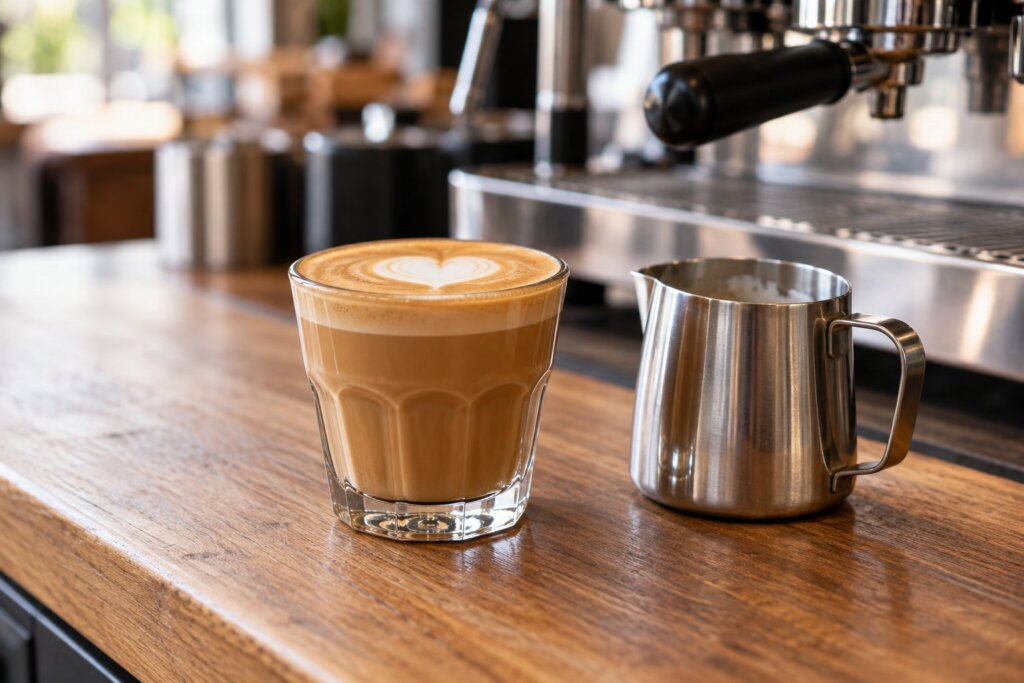
A cortado is espresso plus a little warm milk, often in roughly equal parts, with very little foam. A traditional Spanish cortado is around 60 ml, while larger specialty café versions are around 90-120 ml. It suits anyone who finds straight espresso too intense but a cappuccino too milky.
Cortado ratio and how it compares with other milk drinks
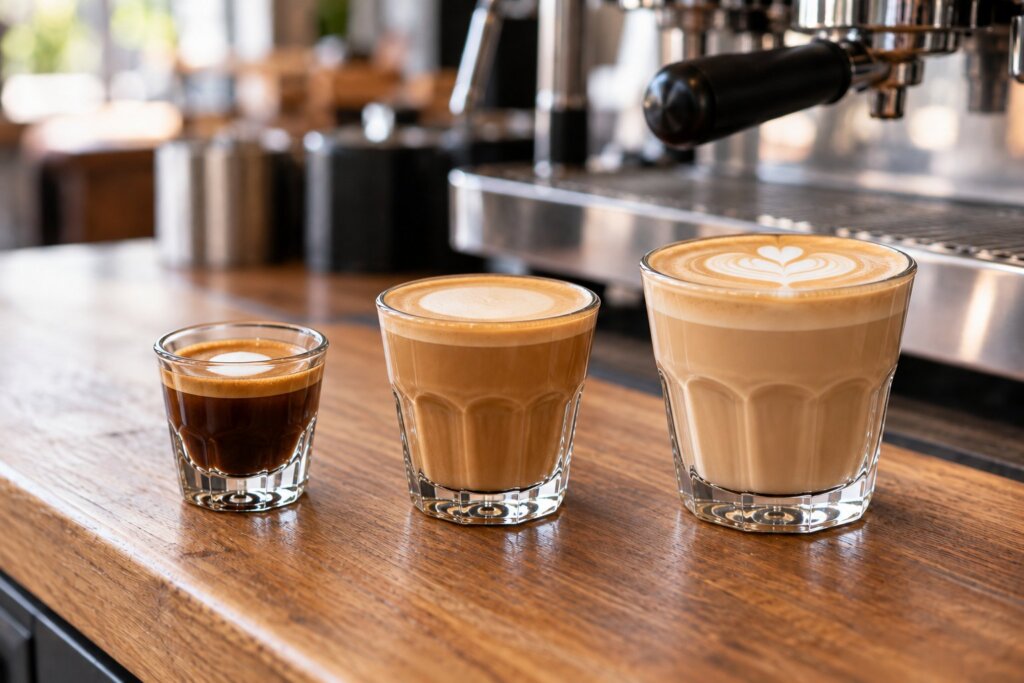
The starting point is about 1:1, a similar volume of espresso and milk. In specialty cafés you will often get a cortado made with a double espresso and around 40-60 ml of milk, which gives a drink of about 80-120 ml. Some cafés go up to 1:2, twice as much milk as espresso. The milk should be warm rather than hot, with only a thin layer of microfoam.
| Drink | Espresso | Milk | Foam | Drink volume |
|---|---|---|---|---|
| Espresso macchiato | single or double | a little steamed milk | a small dollop of foam | approx. 30-70 ml |
| Cortado | single or double | about the same as the espresso | minimal | approx. 60 ml traditionally, 90-120 ml in specialty cafés |
| Piccolo | ristretto or espresso | approx. 60-90 ml | thin microfoam | approx. 90-120 ml |
| Flat white | double espresso or ristretto | tops up the drink | thin microfoam | approx. 150-180 ml |
| Cappuccino | single or double | depends on the recipe | a distinct, creamy layer | approx. 150-180 ml |
| Caffe latte | single or double | lots of milk | thin to medium layer | approx. 200-350 ml |
These are typical café volumes. Every café has its own recipes, so a cortado can vary from one place to the next.
Cortado vs macchiato, flat white and latte
Cortado vs macchiato. An espresso macchiato is espresso „stained” with a little steamed milk, usually a small dollop of foam. It tastes almost like straight espresso. A cortado has noticeably more milk, mostly liquid, with just a thin layer of microfoam on top. For the difference between a latte macchiato and a caffe latte, see Latte macchiato vs caffe latte.
Cortado vs flat white. Both have a thin layer of microfoam. A flat white is usually bigger, with more milk relative to the espresso, so the coffee flavour is less intense. A cortado is smaller and more coffee-forward.
Cortado vs latte and cappuccino. Both contain more milk than a cortado. A latte is usually much larger, and a traditional cappuccino is around 150-180 ml. We compare the two in Latte vs cappuccino. A cortado has the least milk of the three, so the espresso comes through most clearly.
How to make a cortado on an espresso machine
- Pull a double espresso, for example 18 g of coffee to 36-40 g of espresso in 25-30 seconds.
- Pour enough cold milk into a small pitcher to keep the steam tip properly submerged. In a 400 ml pitcher, start with about 130-200 ml, depending on your steam wand. You will only use part of it.
- Steam briefly with very little air. You want smooth, silky milk, not a tall foam. Stop at about 55-60°C. A thermometer is the most accurate way to check.
- Tap the pitcher on the counter and swirl the milk until it is glossy and even.
- Pour about 40-60 ml of milk into the espresso in a small glass, for example one of 120-150 ml.
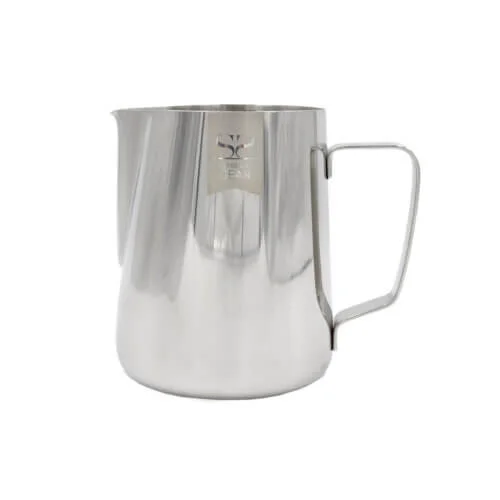
For more on texturing milk, read How to steam milk on an espresso machine. A small pitcher helps, for example the Classic Pitcher 400 ml. Match the amount of milk to your pitcher and steam wand. In a pitcher that is too big, a small amount of milk is hard to texture.
Cortado without an espresso machine
A true cortado starts with espresso, but you can make a good stand-in at home. Brew strong coffee in a moka pot, heat the milk to about 60°C and froth it with a handheld frother or in a French press. Then combine coffee and milk at roughly 1:1.
It will taste a little different from a café cortado, as moka pot coffee is usually less concentrated than espresso. A standard moka pot also does not produce a lasting crema, although some models make a light foam. It is still a good small milk coffee where you can taste the beans.
Cortado and its cousins: cortadito, bombón and Gibraltar
- Cortadito: a sweet Cuban version, popular in Miami too. It is based on strong café cubano-style coffee. Sugar is often whipped with the first drops of coffee into a sweet foam called espumita, then warm milk is added.
- Café bombón: a sweet coffee popular in eastern Spain, especially the Valencia region. It is a separate drink rather than a type of cortado: espresso combined with sweetened condensed milk, served in a clear glass that shows the two layers.
- Gibraltar: a drink from San Francisco’s specialty cafés, very close to a cortado. It takes its name from the Libbey Gibraltar glass it is served in.
Which coffee for a cortado?
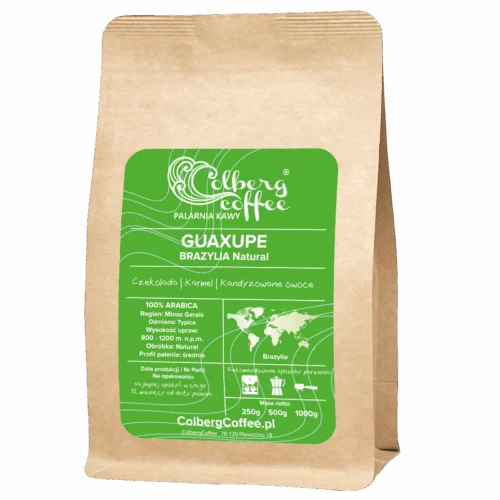
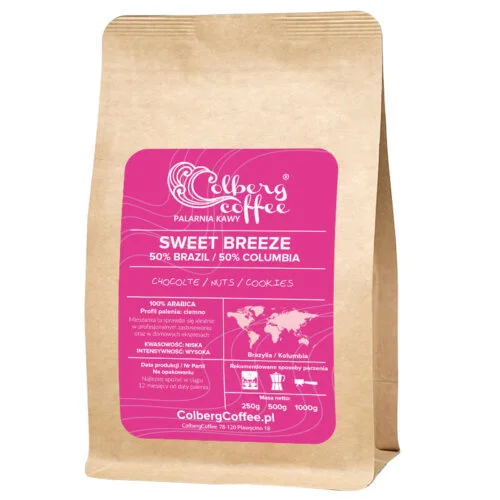
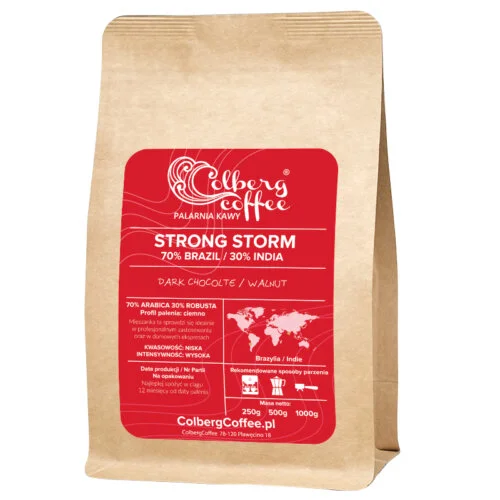
With so little milk, the espresso flavour is very clear. Chocolatey, nutty coffees such as Brazil Santos Guaxupe or Sweet Breeze make a dessert-like cortado. Well-made espresso from these coffees is sweet with gentle acidity. If you prefer a bolder cup, try Strong Storm. For more ideas, browse our coffee for espresso and read about the best coffee for milk drinks.
Lighter roasts can make an interesting cortado too. Milk usually softens perceived acidity, though whether the fruity notes come through depends on the coffee and the ratio. If you use plant-based milk, choose a barista version and see how plant-based milk changes the taste of coffee.
What is a cortado?
A cortado is espresso with a little warm milk, often in a ratio of about 1:1, and a very thin layer of foam. A traditional cortado is around 60 ml, while larger specialty café versions are around 90-120 ml.
What is the cortado ratio?
Usually about 1:1, a similar volume of espresso and milk. Larger specialty versions use a double espresso and about 40-60 ml of milk. Some cafés use a 1:2 ratio.
What is the difference between a cortado and a macchiato?
An espresso macchiato has only a little steamed milk, usually a small dollop of foam. A cortado has much more milk, mostly liquid, so the espresso tastes milder.
What is the difference between a cortado and a flat white?
A flat white is usually about 150-180 ml with more milk. A cortado is smaller, around 60-120 ml depending on the recipe, and more coffee-forward. Both have a thin layer of microfoam.
How much caffeine is in a cortado?
As much as the espresso it is made from. Milk does not change the caffeine content, so a cortado made with a double espresso has the same caffeine as a double espresso.
How do you make a cortado without an espresso machine?
Brew strong coffee in a moka pot, heat the milk to about 60°C, froth it with a handheld frother and combine it with the coffee at about 1:1. It is not a classic espresso-based cortado, but it is a good home alternative.
Przeczytaj też

Espresso macchiato: what it is and how to make one
An espresso macchiato is espresso with a little milk foam. Here is how it differs
Oct

Cortado: what it is, the ratio and how to make one
A cortado is espresso with a little warm milk. Here is the usual ratio, how
Oct
Burr grinders: flat or conical burrs?
How a burr grinder differs from a blade grinder, and what flat and conical burrs
Oct
La Marzocco Linea Mini, Linea Micra or Eagle One Prima? Choosing a home espresso machine
Three single-group home espresso machines compared: La Marzocco Linea Micra, Linea Mini R and Victoria
Oct
Sour espresso: why it happens and how to fix it
Why does espresso taste sour? Under-extraction, grind, temperature, water and the beans themselves. What to
Oct
New coffees at the roastery: Kenya Inoi Kaguyu and Ethiopia Kurume Natural
Two new specialty coffees from Africa: fruity Kenya Inoi Kaguyu and floral Ethiopia Kurume Natural.
Oct

Coffee as a Christmas gift: which one to choose? 2026 guide
Coffee as a Christmas gift: how to match it to the person and their brewing
Oct
What Is the Best Water for Filter Coffee? How It Affects Flavour
See how bicarbonates affect the flavour of filter coffee, how pH differs from alkalinity and
Oct
