











You don’t need an espresso machine with a steam wand to make cappuccino or latte at home. If you’re wondering how to froth milk without a machine, you can use a French press, a jar, a handheld milk frother or a whisk. A French press is one of the best home methods for making thick foam with fine bubbles. That’s where we’ll start.
Below you’ll find a comparison of different methods, the right milk temperature, tips for dairy and plant-based milk, and step-by-step instructions for frothing milk in a French press. I’ll also suggest which coffee works best as a base. All without spending thousands on equipment.

How to froth milk without a machine: method comparison
All these methods work by introducing air into the milk to create bubbles. You can do this with cold or heated milk. The main differences are bubble size, foam thickness and how long the foam holds its structure.
| Method | Foam | Best for | Notes |
|---|---|---|---|
| French press | Thick, fine, smooth | Cappuccino, latte, simple latte art | Best results without an espresso machine |
| Battery-powered handheld frother | Medium foam, collapses quickly | Latte, coffee with milk | Difficult to achieve a smooth texture |
| Jar with a screw-top lid | Light, with larger bubbles | Quick coffee with milk | Fill the jar no more than halfway |
| Whisk | Light, uneven | When you have no other option | Most effort, weakest results |
| Electric milk frother with heating | Thick, consistent | Cappuccino, latte | Convenient, but requires a separate appliance |
If you have a traditional espresso machine, its steam wand can produce the most uniform, velvety microfoam. We explain the technique in our guide to steaming milk with an espresso machine.
Which milk is best for frothing?
You can froth both dairy milk and plant-based alternatives. Proteins are mainly responsible for creating and maintaining foam because they surround and stabilise air bubbles. That’s why drinks with little protein, such as regular rice milk, often produce weaker foam. However, the exact ingredients of each product also make a difference.
Proteins aren’t the only factor. Fat also affects how foam forms, its texture and how long it lasts. It changes the flavour of your coffee too. Higher-fat milk gives a richer, creamier texture but can soften the intensity of espresso more noticeably. Lower-fat milk allows the coffee flavour to come through more clearly. For homemade cappuccino, milk with 3.2% fat is a good starting point.
For plant-based milk, the easiest option is to choose a product labelled “barista”. These drinks often contain ingredients that improve foam stability and reduce curdling when added to coffee. Personally, I prefer oat milk. You can read more about how these ingredients affect flavour in our article on plant-based milk and coffee flavour. You’ll find selected products in our plant-based drinks category.
What temperature should milk be for frothing?
Milk is best heated to around 55-65°C. At this temperature, it usually has a pleasant sweetness and works well in milk-based coffees. Above approximately 70°C, there’s a greater risk of a cooked-milk flavour and a deterioration in foam texture. This doesn’t mean milk always loses its sweetness the moment it passes that temperature.
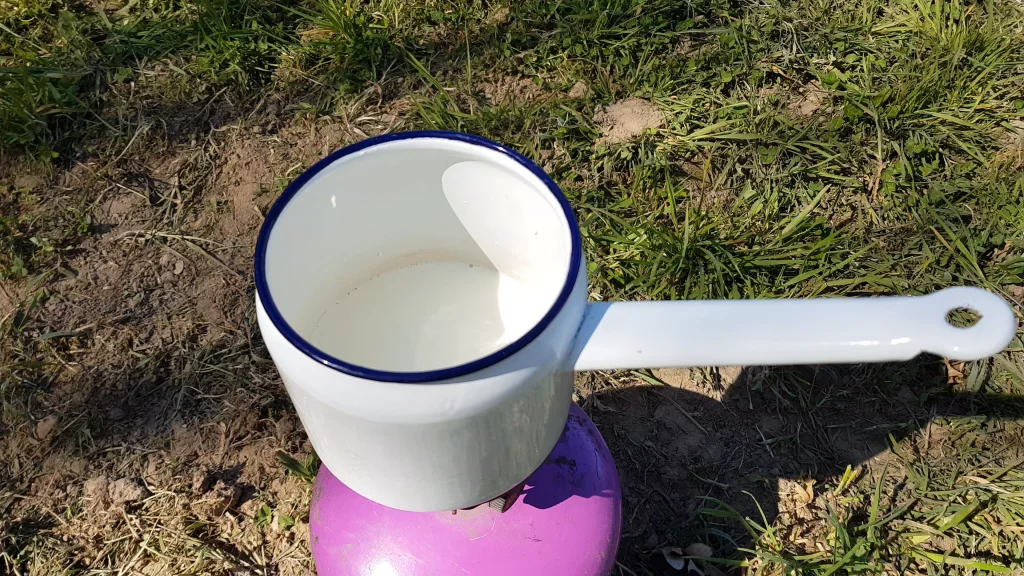
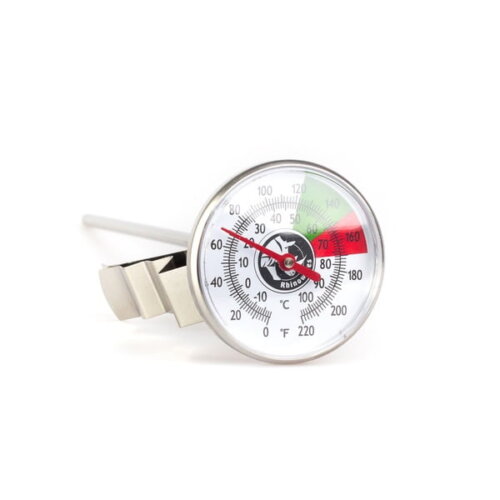
You can heat milk in a saucepan or microwave. The most accurate way to check the temperature is with a thermometer. Without one, watch the milk as it heats. It should be hot but not boiling. If it starts steaming heavily and moving around the edges, stop heating. Checking the temperature with your hand is less accurate and carries a risk of burns.
You can froth milk a second time, but the results are usually worse, especially if it was overheated the first time. The foam may be less stable, and the flavour less pleasant. That’s why it’s best to start with a fresh portion of cold milk from the fridge for every coffee.
How to froth milk without a machine using a French press
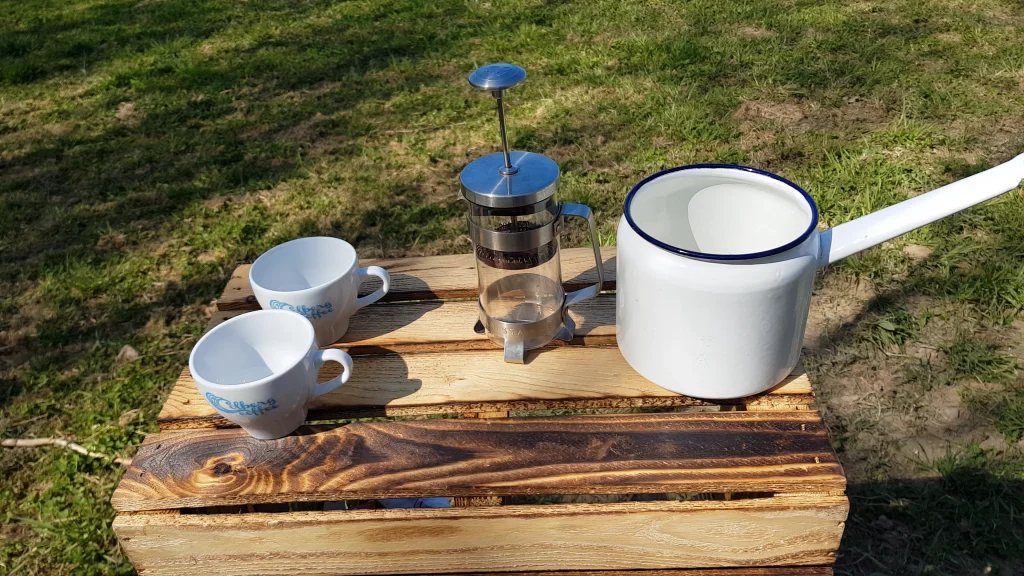
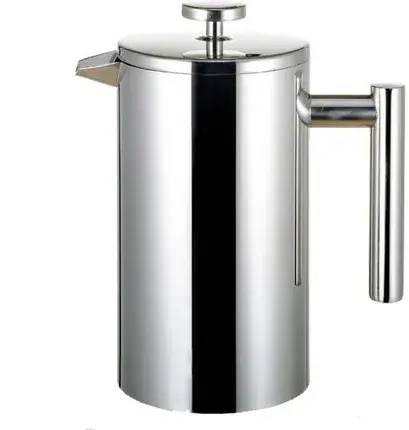
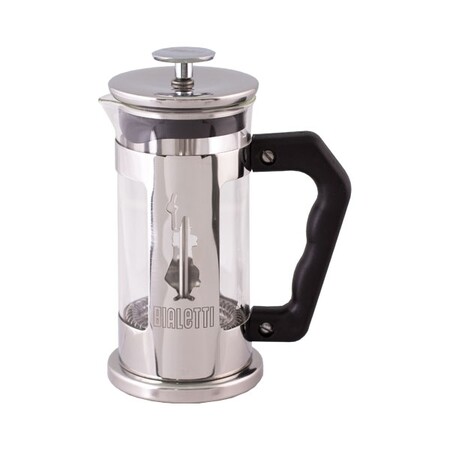
A French press is a jug with a plunger and metal mesh filter, normally used for brewing coffee or tea. Both an inexpensive supermarket model and a more expensive one from a specialist coffee shop can froth milk. More expensive models may have a better-fitting filter and more durable materials. This mainly affects convenience and durability, but doesn’t guarantee better foam.
- Heat the milk to 55-65°C.
- Warm the French press with hot water, then pour it away. This prevents the cold glass from cooling the milk too quickly.
- Pour in the milk, filling no more than one-third of the jug. Leave room for the foam to expand. With vigorous frothing, the milk can increase to around twice its original volume.
- Insert the plunger and lower the mesh filter until it’s just above the bottom of the jug.
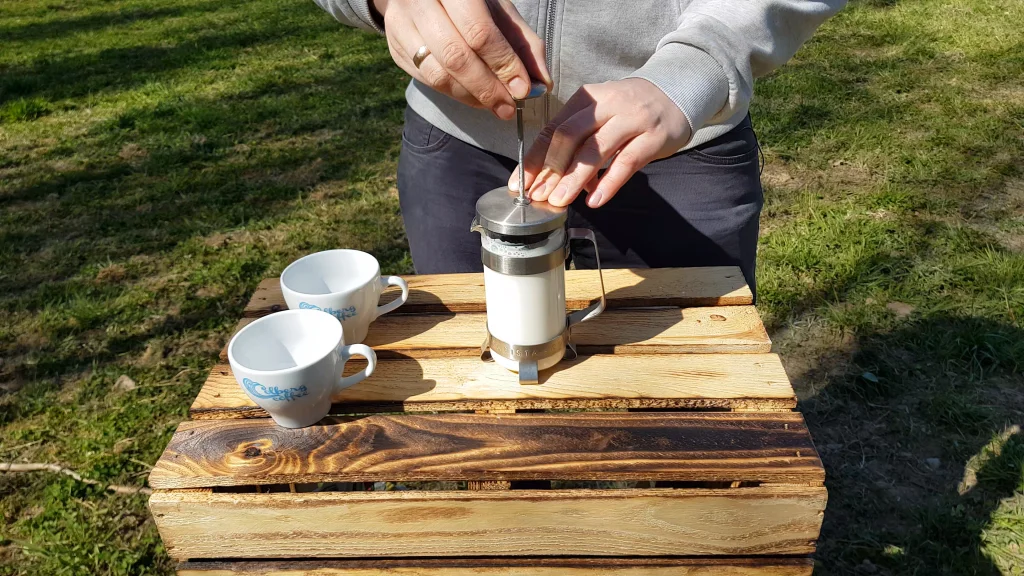
- Raise the filter and start pumping. Position the filter just below the milk’s surface and move the plunger up and down with quick, short strokes. Don’t lift the filter completely out of the milk, as this can create large bubbles.
- Once the foam expands, shorten your strokes. Keep the filter submerged just below the surface and use smaller movements to break up larger bubbles. The whole process takes around 20-40 seconds, depending on the amount of milk and how quickly you move the plunger.
- Remove the plunger, gently tap the jug on the worktop and swirl the milk. The surface should become as smooth and glossy as possible, with a texture similar to drinking yoghurt.
- Pour the milk into your coffee immediately. Don’t wait for the foam to start separating from the liquid milk.
Frothing milk with a jar, handheld frother or whisk
Jar. Fill a jar no more than halfway with cold milk, screw on the lid and shake vigorously for 30-60 seconds. Then remove the lid and carefully heat the milk in the microwave for several seconds. The heat can help stabilise the foam. Only use a microwave-safe jar. Never heat it with a metal lid attached. Avoid overheating the milk or glass.
Battery-powered handheld frother. Place the frother head just below the surface of the heated milk. Hold the container at a slight angle and switch it on. As the foam begins to expand, move the frother deeper to mix the milk. This method often produces larger bubbles, and the foam separates more quickly than well-prepared French press foam.
Whisk. This is the simplest method, but it takes the most effort. Pour heated milk into a narrow container and whisk vigorously until foam forms. It’s a useful backup method. For everyday frothing, a French press is more convenient.
What coffee works best with frothed milk?
For cappuccino and latte, it’s best to prepare a strong, concentrated coffee base. Without an espresso machine, coffee from a moka pot or a strong AeroPress brew works well. You’ll find instructions in our guide to brewing coffee with a moka pot. Regular pour-over coffee or French press coffee is usually less concentrated, so its flavour may be difficult to notice when you add a lot of milk.
Medium and dark-roasted coffees work particularly well with milk. Good options include beans from Brazil, Peru or Colombia, or blends of arabica and robusta. Medium roasts often have notes of milk chocolate and nuts. Darker roasting and the addition of robusta can make the coffee flavour stand out more strongly through the milk. You’ll find specific recommendations in our article on the best coffees for milk-based drinks and in our coffee for home category.

Making cappuccino, latte and latte art at home
Cappuccino and latte differ mainly in their espresso-to-milk ratios and the amount and texture of foam. Cappuccino usually contains less milk and has a more noticeable layer of foam. Latte contains more milk, and its foam layer is generally thinner. We explain the details in our guide to the difference between latte and cappuccino.
Milk frothed in a French press can also work for simple latte art patterns, such as a heart. The key is fine, well-mixed foam. Getting the same result as with a steam wand is more difficult, though. We show the whole process in our guide to making latte art at home.
French press milk frothing video
In the video, I show how to heat the milk, froth it in a French press and combine the finished foam with coffee.


Frequently asked questions about frothing milk without a machine
What’s the easiest way to froth milk without an espresso machine?
Use a French press. Heat the milk to 55-65°C and pour it into a preheated jug, filling no more than one-third of its height. Pump the plunger for around 20-40 seconds. Finally, gently tap the jug on the worktop and swirl the milk to smooth out the foam.
What temperature should I heat milk to for frothing?
A good starting point is 55-65°C. At this temperature, milk usually has a pleasant sweetness and works well for cappuccino or latte. Above around 70°C, a cooked-milk flavour may develop, and the foam texture can deteriorate. However, this isn’t a strict limit for every type of milk.
Does higher-fat milk froth better?
Not necessarily. Proteins are mainly responsible for creating foam, but fat also affects its volume, texture and stability. Higher-fat milk produces a richer, creamier texture and can soften the coffee flavour more noticeably. For homemade cappuccino, milk with 3.2% fat is a good starting point.
Can you froth plant-based milk?
Yes. The easiest options to start with are oat or soy drinks labelled “barista”. Regular rice milk often froths less effectively because it contains little protein. Many plant-based drinks should be heated carefully, often to around 55-65°C. The ideal temperature depends on the product’s ingredients. The acidity of your coffee can also affect whether the drink curdles.
Can you froth milk in a jar?
Yes. Fill a jar no more than halfway with cold milk, screw on the lid and shake for 30-60 seconds. Then remove the lid and carefully heat the milk in the microwave for several seconds. Only use microwave-safe glass and monitor the temperature. The foam will usually be fluffier, with larger bubbles than well-prepared French press foam.
Why isn’t my milk frothing?
Possible causes include overheating the milk, low protein content or an incorrect frothing technique. Reheating and frothing milk a second time can also produce poorer results. With a French press, filling the jug too high can be a problem. Start with a fresh portion of cold milk, heat it to 55-65°C and fill no more than one-third of the jug.
What coffee should I use with frothed milk if I don’t have an espresso machine?
A strong brew from a moka pot or AeroPress works best. Medium and dark-roasted coffees from Brazil, Peru and Colombia are good choices, as are blends of arabica and robusta. Regular pour-over coffee is less concentrated, so its flavour may be too delicate when combined with a large amount of milk.
Przeczytaj też

Caffè latte: what it is, ratios and recipe
Caffè latte step by step: espresso to milk ratios, steaming milk on an espresso machine
Nov

Viennese coffee: recipe, Einspänner and Wiener Melange
Viennese coffee step by step: which cream to use, how to whip it so it
Nov
Coffee with lemon (espresso romano): recipe and facts
Coffee with lemon step by step: espresso romano with lemon peel, iced versions, mazagran and
Nov

Bulletproof coffee: recipe, calories and what research says
Bulletproof coffee: a recipe with exact amounts, calories, butter vs ghee, MCT oil and how
Nov

Frappe: how to make Greek iced coffee
Greek frappe step by step: ratios, sketos, metrios and glykos, shaking technique and mistakes that
Nov

How to make filter coffee: ratio, grind size and temperature
How to make filter coffee: how much coffee per litre of water, how to grind,
Oct

Coffee on an empty stomach: is it bad for you? What the research says
Is coffee on an empty stomach bad for you? What research says about stomach acid,
Oct
Affogato: what it is and how to make one
An affogato is an Italian dessert: a scoop of vanilla ice cream drowned in hot
Oct

This site is protected by reCAPTCHA. The Google Privacy Policy and Terms of Service apply.