A specialty café is, above all, a well-designed system of work. The right machines and the right tools shape not just the taste of the coffee, but the speed of service, the barista’s comfort and the venue’s profitability. If you’re planning to open a café, or want to tidy up your current setup, this guide covers what equipment actually matters, without the extras that don’t earn their keep.
The foundation: equipment you can’t work without
Every café starts with a solid technical base. Three things matter most: the espresso machine, the grinder and the water.
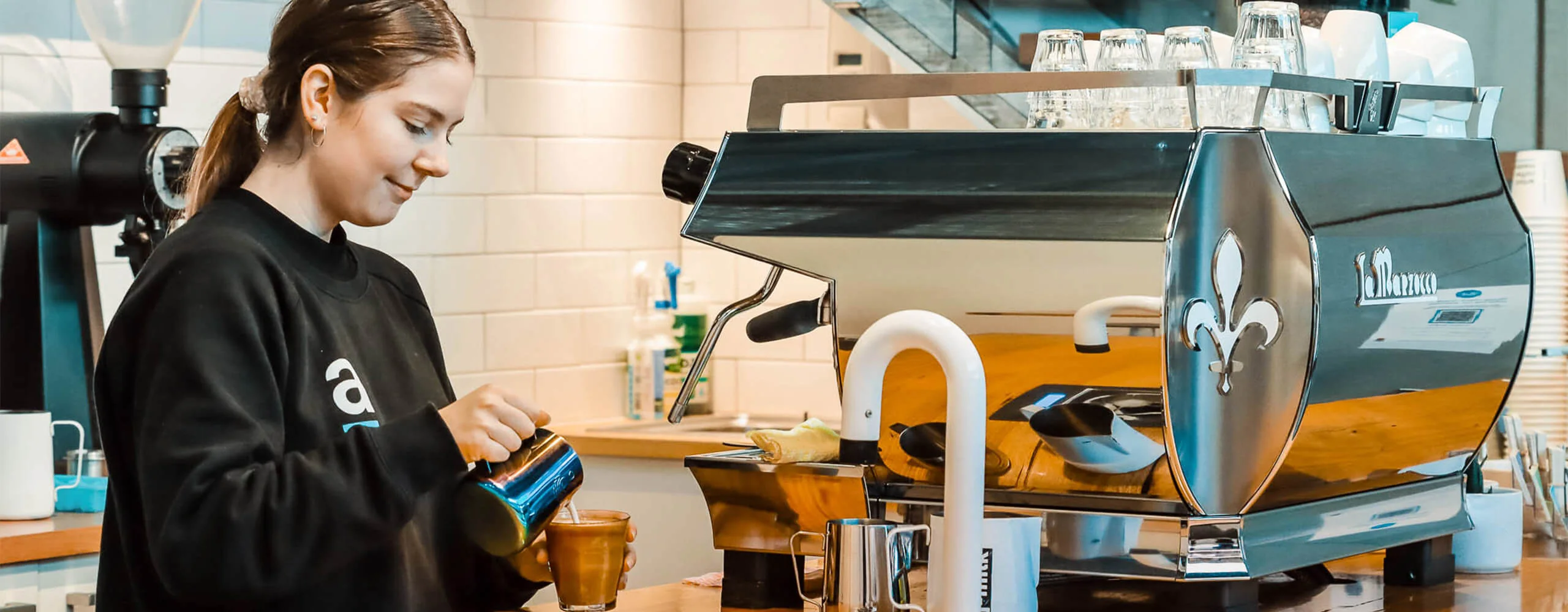
The espresso machine should match the venue’s expected footfall; in most cafés that means at least two groups. The grinder matters just as much, since it delivers a stable, repeatable grind. In practice, many cafés run more than one grinder: one dedicated to espresso, another for different profiles or origins.
Water quality matters just as much. The right filtration affects both the taste of the coffee and the lifespan of the machine. It’s invisible to the customer, but it carries real operational weight.
Without a well-chosen foundation, even the best tools won’t get you to specialty-level quality.
The barista’s tools
Making good espresso comes down to repeatability, and that comes from the right tools and a well-set process.
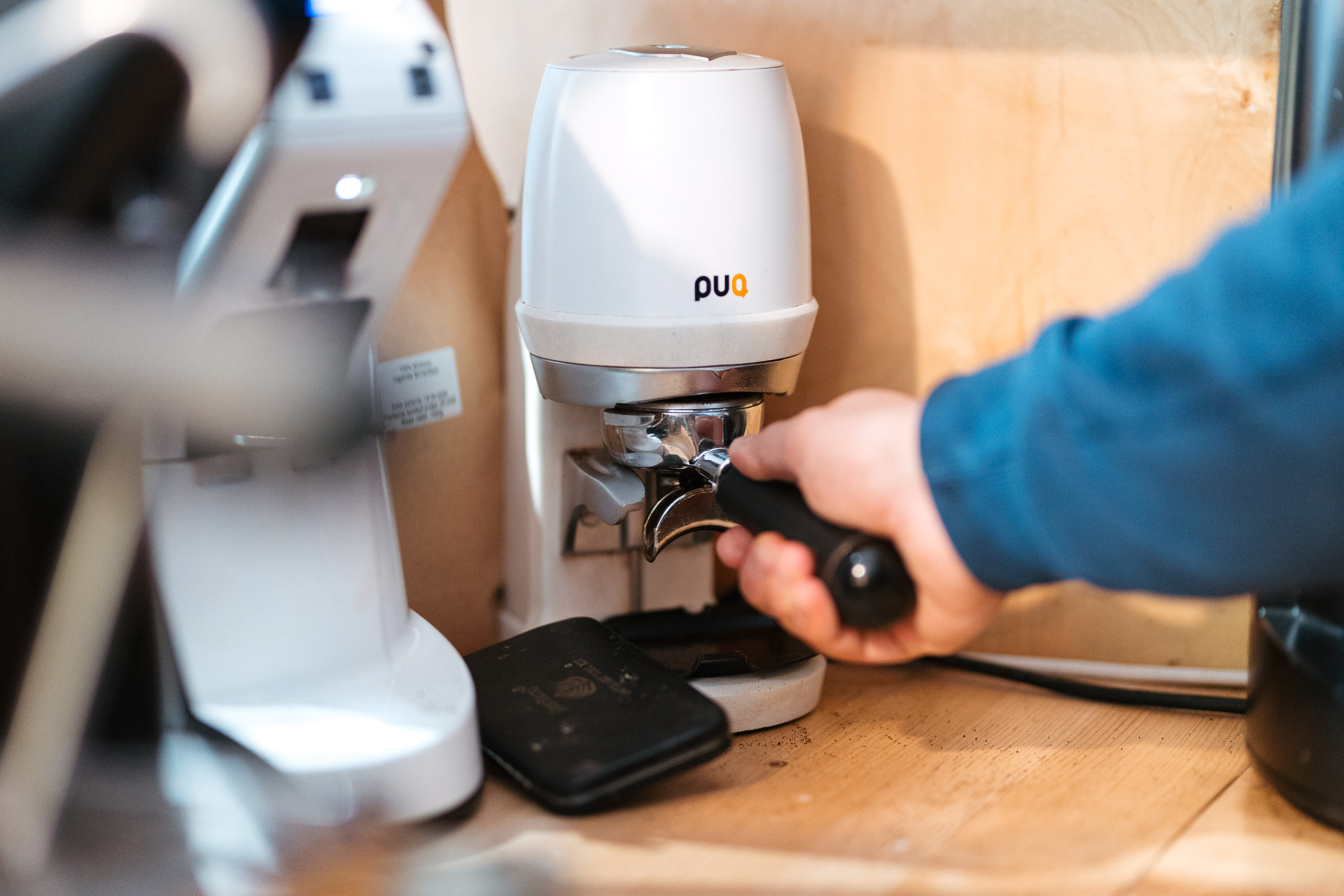
Daily work calls for a tamper that fits the portafilter and a stable surface for tamping. In practice, that means a tamping mat or a tamping station, which improves ergonomics and cuts down on mistakes.
A key piece of kit in modern cafés is the automatic tamper (such as a PUQpress). It makes the pressure far more consistent and speeds up the team’s work. In busier venues, it removes the differences between baristas and cuts down on wrist strain, which has a real effect on both quality and comfort.
A barista scale remains essential. Controlling the dose and the shot time is standard practice; without it, there’s no such thing as a stable espresso.
The essential barista kit: a checklist
Here’s a short list of tools that, in practice, belong in every specialty café:
- hand tamper and automatic tamper (PUQpress)
- barista mat or tamping station
- barista scale with a timer
- knock box for spent grounds
- milk jugs in various sizes
- gooseneck kettle for pour-over
- drippers or a Chemex, plus filters
- group head brushes
- separate cloths for the portafilter, steam wand and counter
That set covers the vast majority of a café’s real operational needs.
Kit for filter methods
Today’s specialty café very often builds part of its menu around alternative brewing methods too. It’s an area where precision and control of the variables matter even more than with espresso.
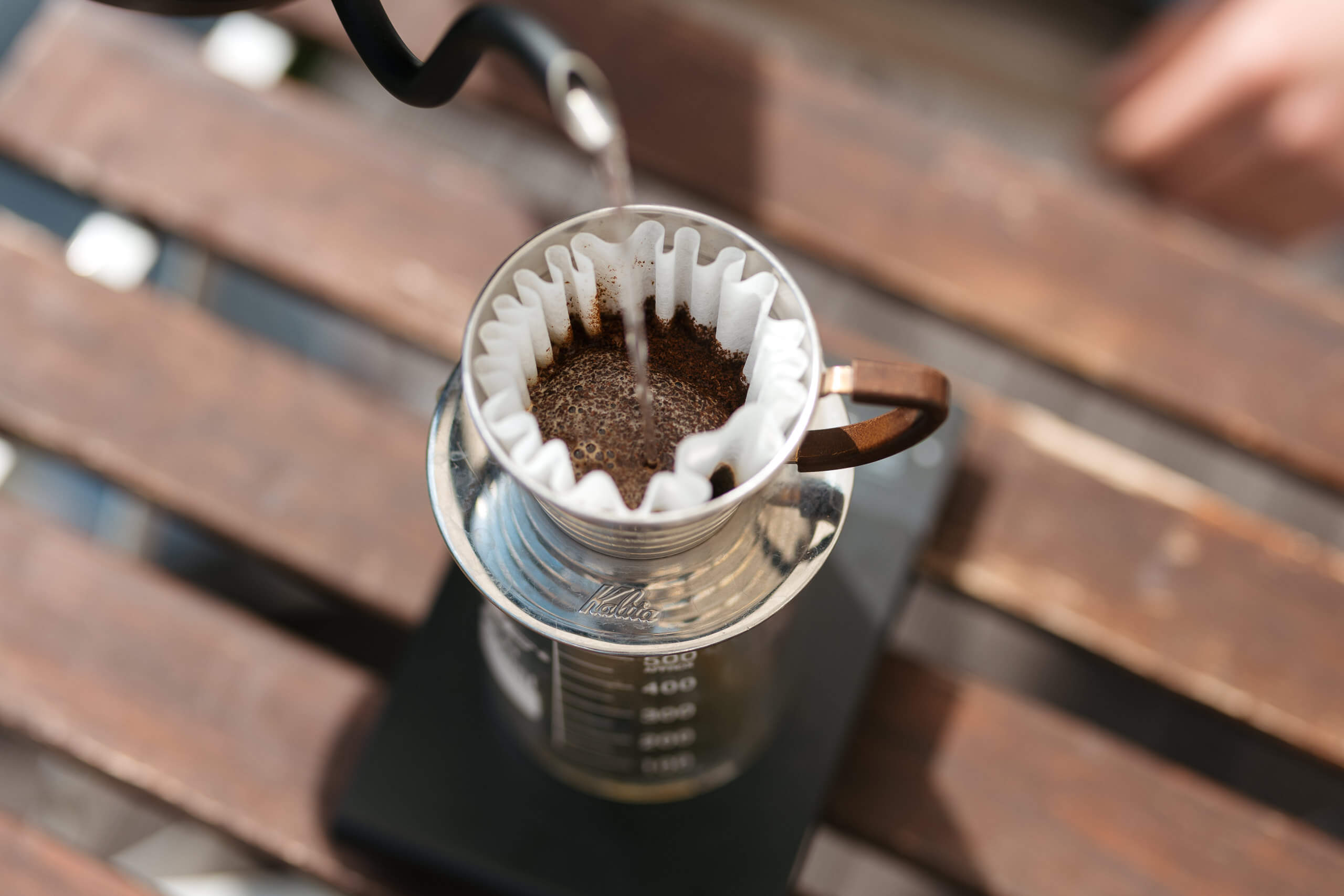
The basics are the right brewers, such as drippers or a Chemex, along with matching filters. A gooseneck kettle is essential, ideally with adjustable temperature, which gives full control over the brewing process.
The scale matters just as much here. For filter coffee, it doesn’t just control the dose: it also governs the pour rate and the total brew time.
A well-equipped filter station doesn’t just widen the menu, it genuinely lifts how customers see the café.
Organising the bar and keeping it clean
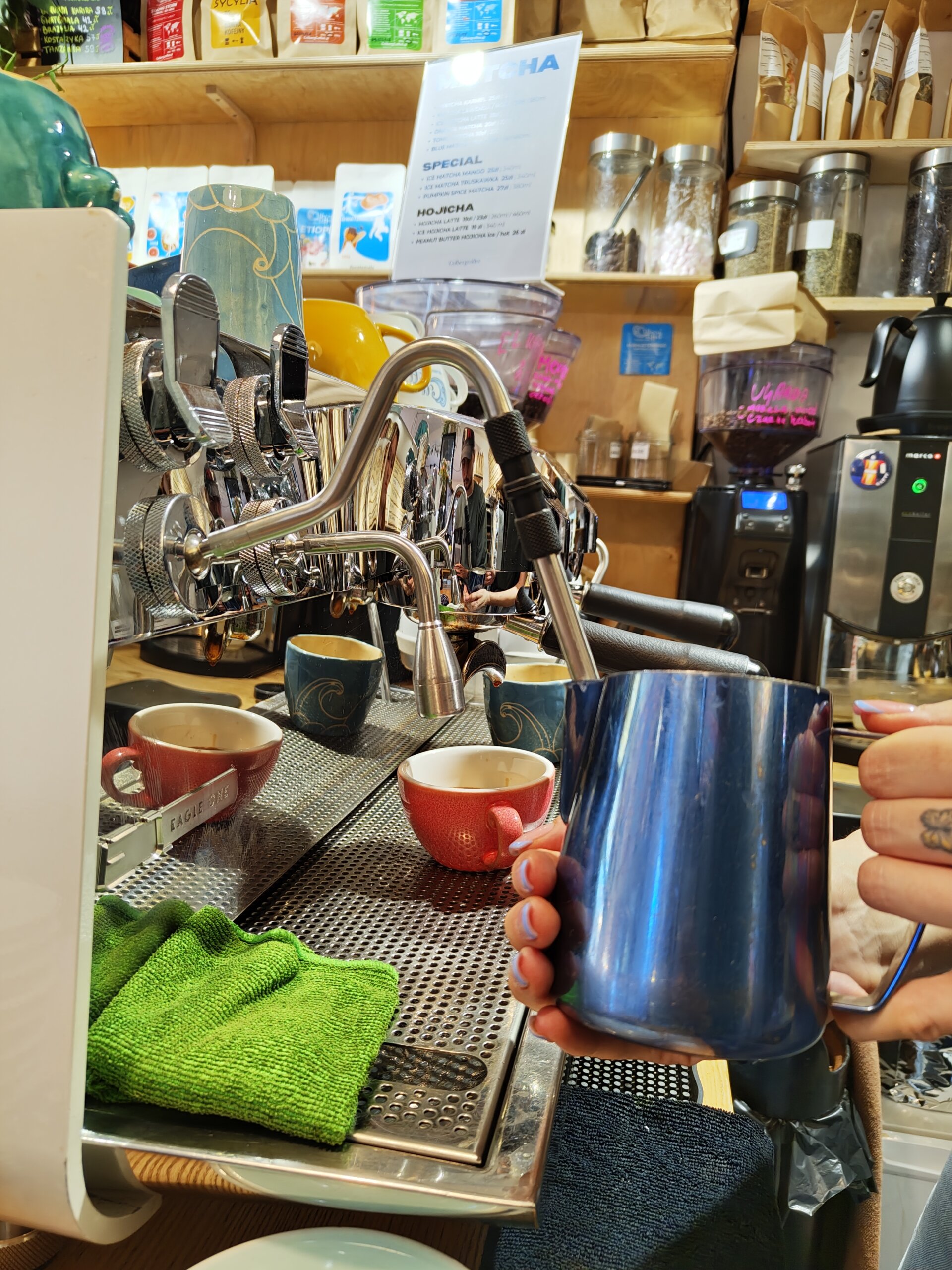
A well-run café is one where everything has its place and the barista never wastes a movement. How the bar is organised has a direct effect on service speed and on the quality of the drinks.
Daily work depends on the basics: the right cloths for different jobs, tools for cleaning the group head and grinder, and maintenance products. Regular cleaning doesn’t just affect the taste of the coffee, it also prevents breakdowns.
The bar’s layout matters just as much: access to milk, where the tools sit, the order tasks get done in. In a well-designed café, the barista’s movement is kept to a minimum and every item has a reason for being where it is.
The key takeaways
A professional specialty café rests on three pillars: solid equipment, the right tools and a well-designed bar layout. Each one shapes the final result in the cup.
Well-chosen equipment doesn’t just improve the coffee. It also lifts the team’s output and cuts down on mistakes. In the long run, it’s exactly this that decides how stable and profitable a venue is.
Help choosing equipment for your café
If you’re planning to open a café, or growing the one you already run, it pays to build on tried and tested solutions. At Colbergcoffee we work with equipment and tools that hold up in daily use, which is why we help clients choose kit suited to their specific business model, not just hand over a product list.
Specialty standards keep changing
How specialty coffee gets scored hasn’t stood still. In 2024 the SCA replaced its 2004 cupping form with the Coffee Value Assessment system, and the 80-point threshold stopped being the definition of specialty. We cover what that changes in practice in Specialty coffee: what it means now that 80 points is no longer enough.
FAQ
What equipment is absolutely essential to open a café?
The basics are an espresso machine, a good grinder and proper water filtration. That’s the foundation behind flavour and consistent work. Without these, even the best barista tools won’t get you to specialty-level quality.
Is an automatic tamper (PUQpress) a real advantage or just an extra?
It’s a real operational advantage. An automatic tamper applies identical pressure on every tamp, speeds up the work and removes the differences between baristas. In practice that means more consistent espresso and a better workflow.
Which barista tools make the biggest difference to coffee quality?
The tamper (manual or automatic), the barista scale and a stable workstation matter most. Controlling the dose and getting a consistent tamp are what decide espresso quality, not the number of gadgets on the bar.
Do specialty cafés need filter methods as well as espresso?
In most cases, yes. Filter methods let you show off the range of flavours in your coffee and set the menu apart. They do demand precision though: the right kettle, scale and control over the brewing variables.
What slows a café’s service down the most?
Poor organisation of the bar, far more often than a lack of equipment. Clutter, wasted movement and no logical layout for tools slow a team down more than any missing piece of kit ever will.
