

For a lot of people, coffee is a daily ritual. It wakes you up, sharpens your focus and simply tastes good. The question that comes up is how much coffee you can drink a day and still keep it safe for your health. Plenty of myths have built up around this, so it’s worth looking at what current research and evidence-based guidance actually say.
How much caffeine a day is safe?
From a scientific standpoint, what matters isn’t the coffee itself, but the caffeine in it. That’s what drives the stimulant effect.
For a healthy adult, around 300-400 mg of caffeine a day is considered a safe dose. That amount shouldn’t cause negative effects for most people.
In practice, that works out to roughly:
3-5 espressos a day
or 2-4 larger filter coffees
These are averages, of course. Sensitivity to caffeine varies a lot from person to person, depending on your body, lifestyle and how used to it you are.
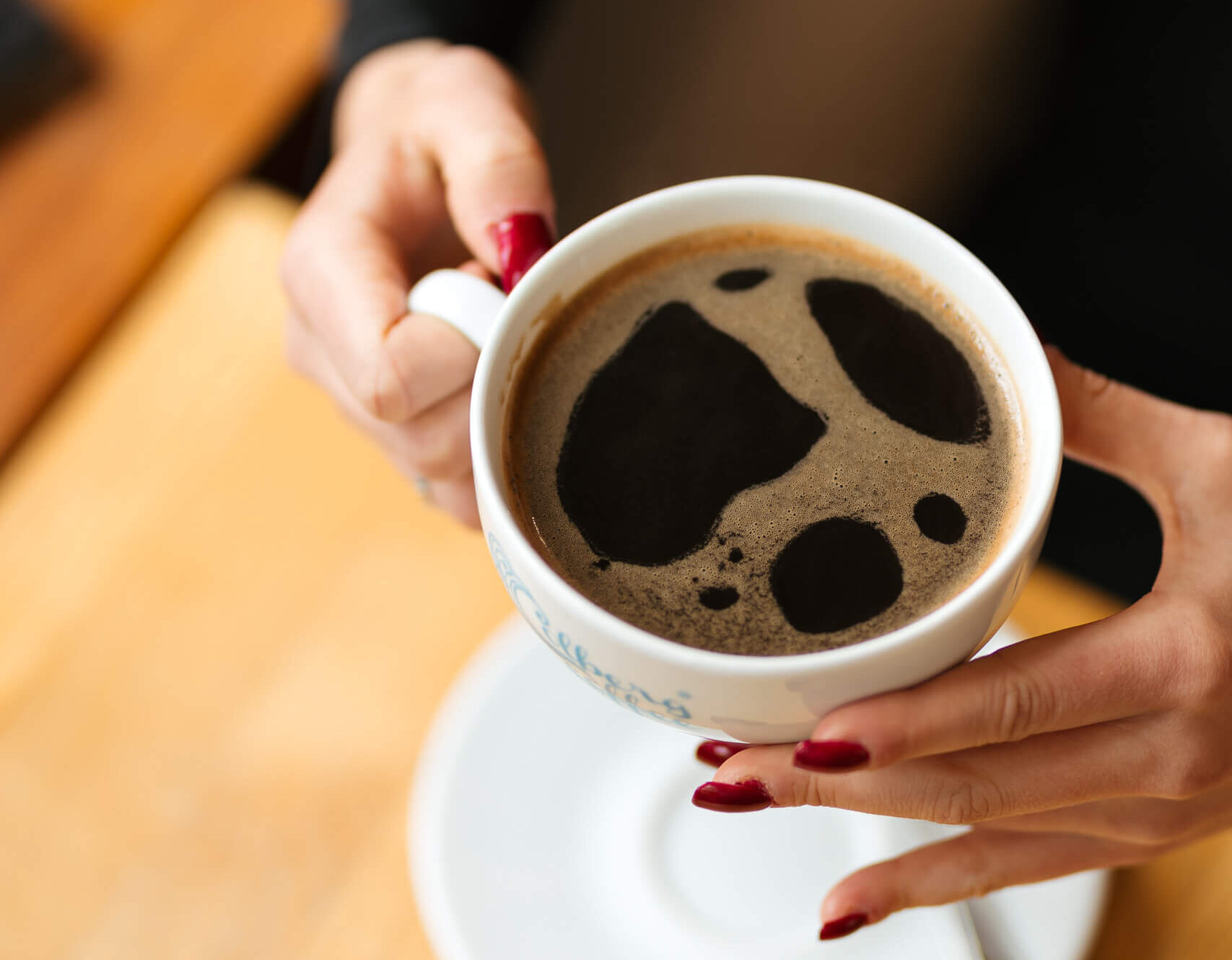
How many cups of coffee can you drink a day?
Once you translate caffeine into actual cups of coffee, the answer gets more practical.
A single espresso usually has around 60-80 mg of caffeine. A large filter coffee, on the other hand, can have as much as 120-200 mg.
So the number of cups depends entirely on what you’re drinking. Four espressos in a day is a very different thing from four large mugs of filter coffee.
In the world of specialty coffee, people increasingly think about this in terms of caffeine, not cups.
When’s the best time for your first and last coffee?
This is one of the most overlooked parts of the whole topic. It’s not just about how much you drink, but when.
Your first coffee is best held off for 60-90 minutes after waking, rather than drunk straight away. Your body’s cortisol is naturally high right after you wake up, so coffee drunk immediately doesn’t work as effectively.
As for your last coffee of the day, it’s worth leaving a gap of at least 6-8 hours before bed. Caffeine stays in your system for a long time and can affect sleep quality even when you don’t notice it directly.
It’s a simple change, and it often makes more difference than cutting back on how much coffee you drink.
What happens if you drink too much coffee?
Too much caffeine can bring on specific symptoms: a faster heart rate, irritability, trouble sleeping or a sense of unease.
What matters here is that caffeine stays active in the body for a fairly long time, sometimes several hours. That’s why an afternoon coffee often ends in worse sleep.
Regularly going over the safe dose doesn’t give you a bigger boost either. If anything, the body starts responding worse.

How much coffee a day is a good choice?
For most people, 2-4 coffees a day is the sweet spot, depending on the brewing method.
That’s the level that lets you get the benefits of caffeine, better focus and more energy, without running into the downsides.
What matters most is listening to your own body. If you feel great after two coffees, that’s your number. If tension starts creeping in after four, that’s a sign to slow down.
Drinking coffee mindfully isn’t about limiting yourself, it’s about finding what actually fits you. That’s exactly the approach specialty coffee takes: quality over quantity.
FAQ
How much coffee can you safely drink a day?
For most healthy adults, around 2-4 coffees a day is safe, which works out to roughly 300-400 mg of caffeine.
How much caffeine a day is too much?
Going over around 400 mg of caffeine a day can bring on unpleasant symptoms, such as irritability, trouble sleeping or a faster heart rate.
When’s the best time for your first coffee?
It’s best to wait around 60-90 minutes after waking up. Coffee works more effectively then, since your natural cortisol levels have started to drop.
Can you drink coffee in the evening?
It’s not recommended. Your last coffee of the day is best had at least 6-8 hours before bed, so it doesn’t affect the quality of your sleep.
Does filter coffee have more caffeine than espresso?
Usually, yes. Filter coffee has a larger volume, so a single cup delivers more caffeine than a single espresso.
