

How climate change affects the taste of coffee, the “taste” that is really aroma
Coffee keeps millions of people company every day. For many of us the morning cup is a ritual, and how it tastes and smells is the whole point. Far fewer people realise how many factors decide the quality of that cup, and one of them is climate. As the climate shifts, coffee farmers, particularly in regions such as Veracruz in Mexico, face a set of new problems. Research by Lorena Piedra Castillo shows that changing weather patterns can move the aromatic profile of a coffee significantly, and that some distinctive aromas are at risk. The study also points to adaptation strategies that could protect the future of specialty coffee.
What the climate has to do with how coffee tastes
A great many things shape the taste of coffee, from the variety and the processing method through to the climate the cherries ripen in. Those conditions affect the plant’s metabolism and therefore the chemical make-up of the fruit. For example:
- Temperature sets the pace of ripening. Higher temperatures speed the fruit along but reduce the quantity of the chemical compounds behind complex aromas.
- Rainfall delivers the nutrients the plant needs. Too little and the plant is water-stressed, too much and disease follows.
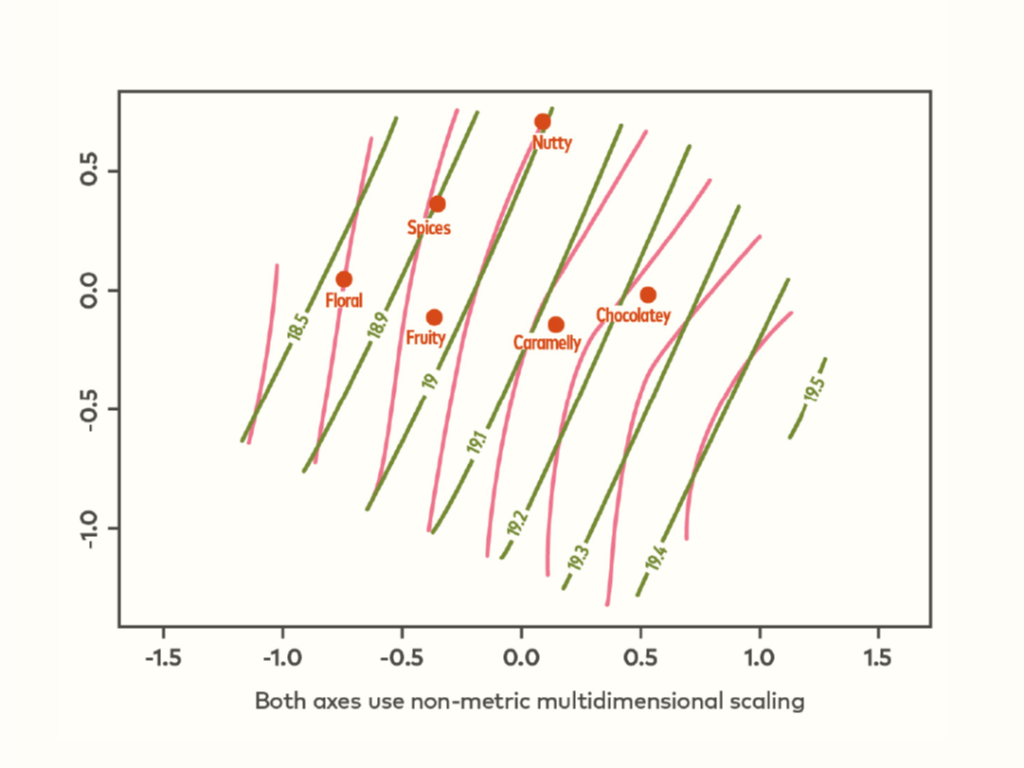
In cooler regions, where the cherries ripen more slowly, coffees often show more complex profiles, with floral and fruity notes coming through. In warmer conditions sweeter aromas dominate, such as chocolate and caramel. Those differences come from the complicated effect climate has on plant metabolism and on which compounds the plant produces.
The Veracruz study, and why it is unusual
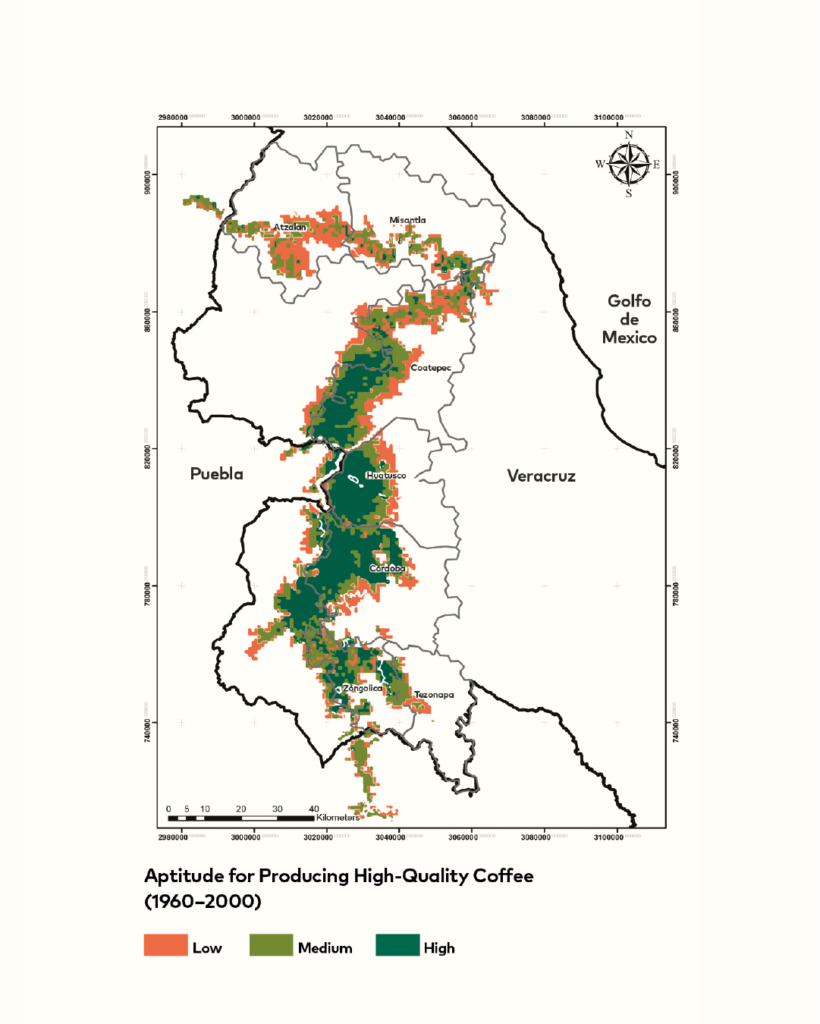
The work carried out in the state of Veracruz by Lorena Piedra Castillo is one of a kind. Rather than focusing only on the drop in coffee production caused by climate change, it looked at how climate affects the taste of the coffee. The researcher used ecological niche modelling, combining climate data with the results of coffee cuppings carried out over several years.
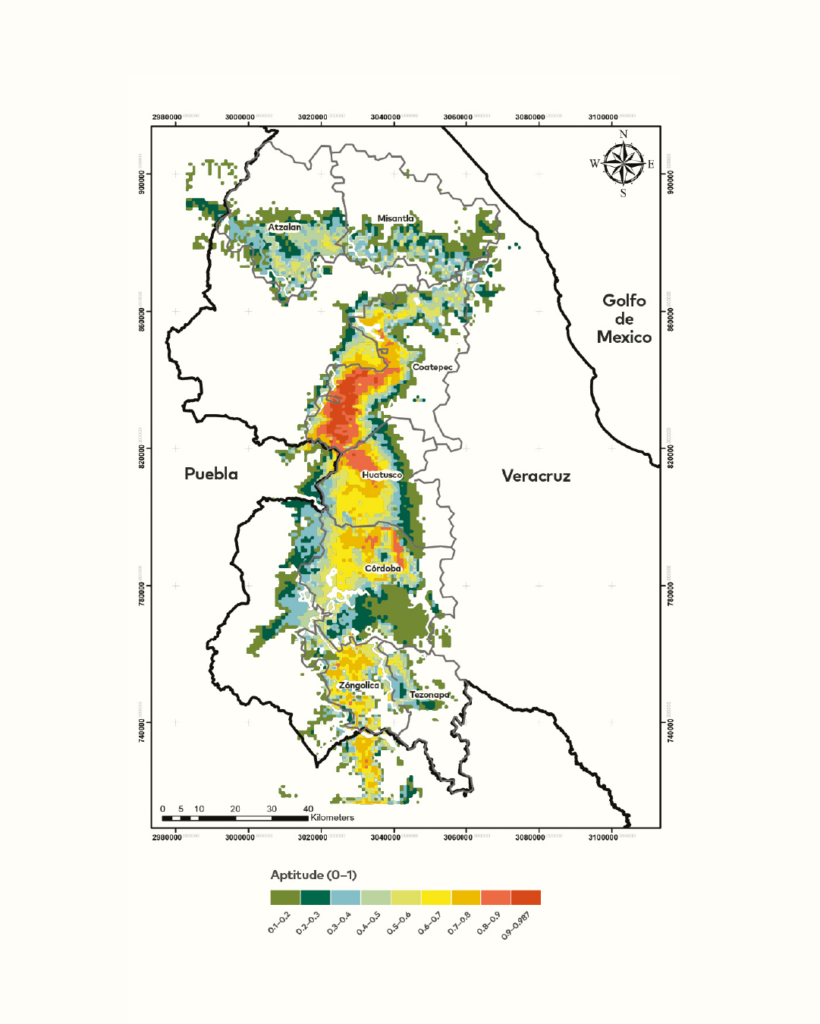
She drew on CAFECOL, a detailed database covering coffee aroma, geographic origin, processing methods and varieties. The analysis ran across 19 climate variables, including mean temperature, rainfall and extreme weather events, to produce maps of the areas best suited to producing high-quality coffee and specific flavour profiles.
It is the first study of its kind to tie climate to coffee flavour profiles in this much detail, and it gives growers something concrete to plan with.
The findings
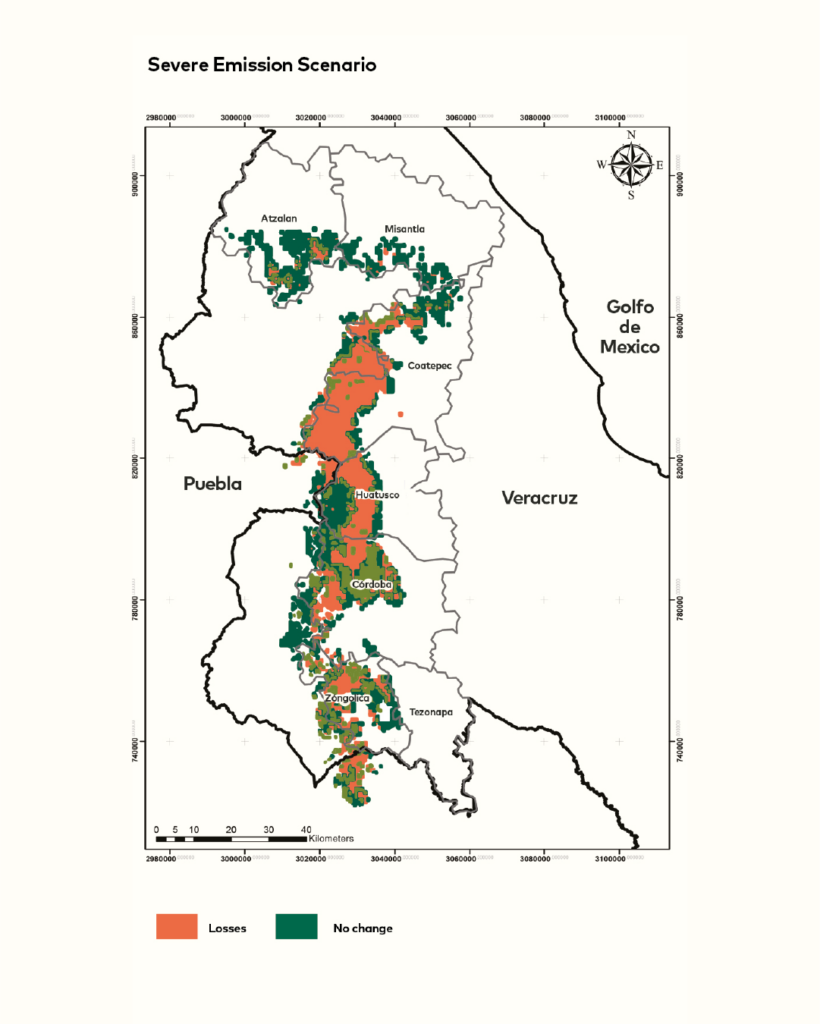
The results show that areas suitable for producing high-quality coffee, meaning a cupping score above 83 points, are seriously at risk:
- Under a moderate climate scenario, 42% of the growing area loses its capacity to produce high-quality coffee.
- Under an extreme scenario that figure rises to 69%, which would mean a drastic fall in the availability of specialty coffee.
Floral profiles suffer most, since they depend on cooler temperatures and generous rainfall. Chocolate aromas, by contrast, can survive in warmer and drier conditions. Interestingly, some profiles, nutty among them, can also occur outside the areas traditionally considered ideal for high-quality coffee.
How growers can adapt
The findings are alarming, but they also carry some hope. There are strategies that can help coffee producers adjust to a changing climate:
- Shade management. Planting shade trees lowers the temperature across the plantation and protects the cherries from overheating.
- Heat-tolerant varieties. Introducing varieties that cope better with higher temperatures and are less vulnerable to water stress.
- New processing methods. Growers can experiment with how they process the coffee to reach the aromatic profiles they want despite harder conditions.
- Working with researchers. Studies like the one from Veracruz supply the data that lets producers plan their planting properly.
Why this matters to all of us
Climate change reaches every part of the coffee supply chain, from growers through processors to the person drinking it. Losing particular coffee aromas is not only a producer’s problem. Without action, we may lose access to the specialty coffees we value for their floral, fruity and chocolate notes.
As drinkers we can have a real effect on what coffee looks like in future, through what we choose to buy:
- Buying coffees with sustainability certifications, which support growers.
- Buying specialty coffee from producers who look after their land and are adapting to climate change.
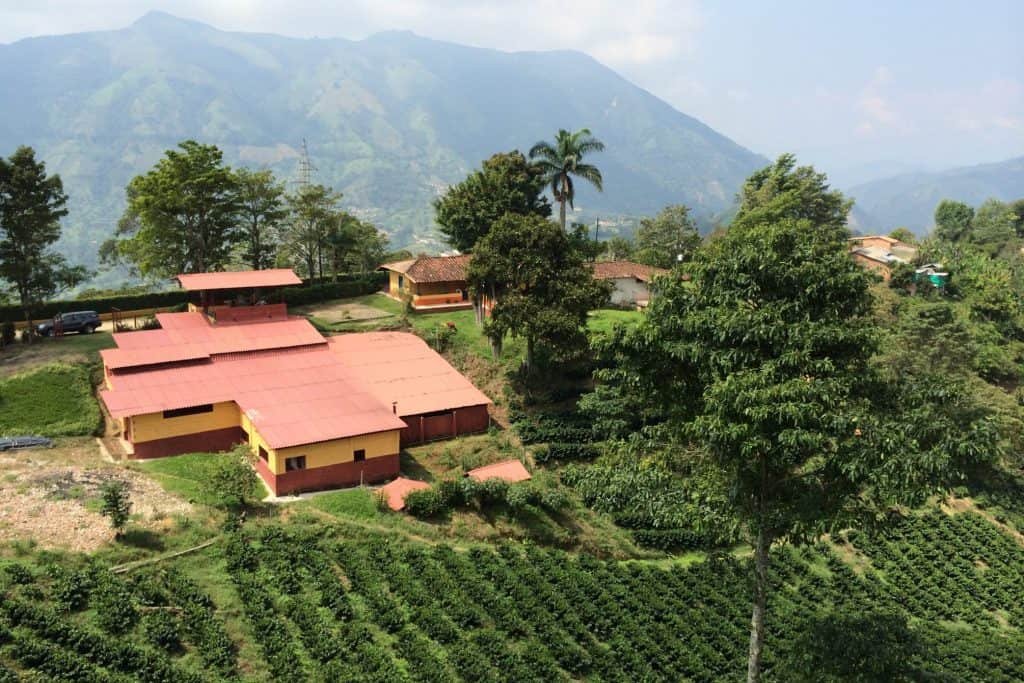
A frightening picture, but not a fixed one
The Veracruz study gives us an unsettling view of the future and a set of workable answers. Adapting to climate change is possible if producers, researchers and drinkers pull in the same direction. Understanding how climate shapes the taste of coffee makes it clearer why supporting sustainable growing practices matters.
Every cup is the result of an enormous amount of work by farmers who now face one of the largest challenges there is: protecting their crops from what the climate is doing. Knowing, and then acting on it, is what will keep the coffee we love in the cup.
Based on the article:
Mapping the Past to Model the Future: Exploring the Potential Effects of Climate Change on Coffee Flavor in Veracruz, Mexico, sca.coffee
References:
[1] Selena Ahmed, Sarah Brinkley, Erin Smith, Ariella Sela, Mitchell Theisen, Cyrena Thibodeau, Teresa Warne, Evan Anderson, Natalie Van Dusen, Peter Giuliano, Kim Elena Ionescu, and Sean B. Cash, “Climate Change and Coffee Quality: Systematic Review on the Effects of Environmental and Management Variation on Secondary Metabolites and Sensory Attributes of Coffea arabica and Coffea canephora,” Frontiers in Plant Science 12 (2021), https://doi.org/10.3389/fpls.2021.708013.
[2] “Delimitación de micro regiones con mayor potencial para producir café de alta calidad y perfiles de taza diferenciados, bajo el reto del cambio climático, en el centro del estado de Veracruz” (master’s thesis, INECOL, 2019), https://bit.ly/piedra-castillo-thesis.
[3] Database generated using the 2004 SCA cupping protocol supplemented with a descriptive check-all-that-apply list based on the early 2000s version of the Coffee Taster’s Flavor Wheel.
[4] The flavor categories used were floral, vegetative, fruity, caramelized, chocolate, nutty, spices, pyrolytic, resinous, fermented, phenolic, and earthy.
[5] Historical conditions (1902-2011) were modeled using data from the Autonomous National University of Mexico’s Unit for Information on Atmospheric and Environmental Sciences (UNIATMOS), https://uniatmos.atmosfera.unam.mx.
[6] Near-future (2039) climate change scenarios used Representative Concentration Pathways (RCPs) 4.5 and 8.5 to predict greenhouse gas emissions and expected impacts on global climate, under assumptions of moderate or minimal changes in human behavior to reduce these emissions, respectively.
[7] To minimize excess variation in our dataset that could make interpreting our results more difficult, we eliminated recently introduced coffee varieties (e.g., Geisha or recently developed hybrids) and novel processing techniques such as “natural” and “honey” with a limited geographic distribution in our study region.
