

Many factors affect the taste and quality of coffee, from the health of the soil and the altitude of the farm to rainfall and the way the beans are processed. One key element that is often overlooked, however, is the variety of the plant the coffee beans come from.
What is a coffee variety (coffee varietal)?
To understand what a coffee variety is, think of another popular fruit: apples. In shops you will find different varieties, such as Reinette or Golden Delicious. They all share a common “appleness” but differ in taste, colour and shape. Coffee is the same: each variety has its own flavour characteristics and aromas that set it apart from the others.
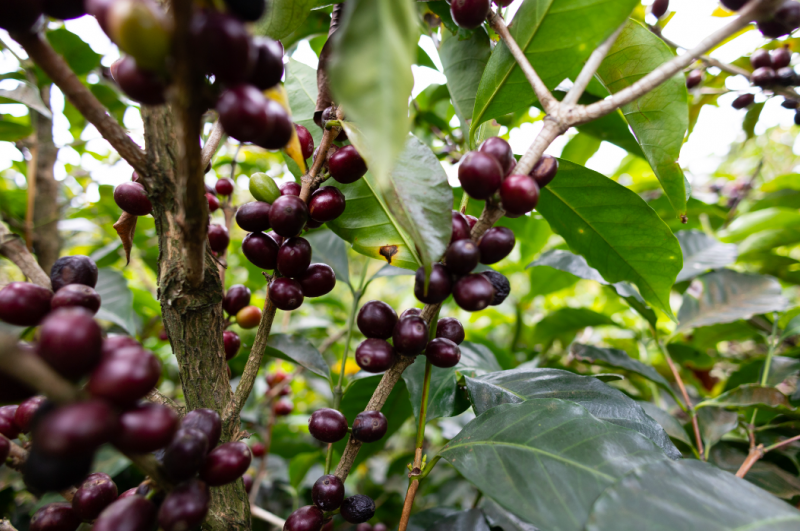
Coffee species are not the same as coffee varieties
Coffea is a genus of evergreen shrubs and trees in the Rubiaceae family, and it includes at least 129 species. The best known are Coffea arabica (Arabica) and Coffea canephora (Robusta). At Colbergcoffee we mainly choose Arabica, because it accounts for around 60% of world coffee production and has a more complex flavour than Robusta, which can be bitter because of its high caffeine and chlorogenic acid content.
Simply saying a coffee is Arabica is not enough, though. It is like saying you have an apple without saying which variety it is. That is why precise information about varieties is key to understanding differences in taste.
Different Arabica varieties and differences in taste
At our roastery we choose many different coffee varieties from all over the world. Coffee reaches us in lots, and every lot of green coffee is unique in its characteristics and taste. Sometimes a lot is a mix of several varieties, sometimes a single one.
Each variety has a huge influence on the final taste of the brew. Just as apples differ in taste and aroma, coffee varieties offer a wide palette of sensations, from chocolate and nutty notes to floral and fruity accents.
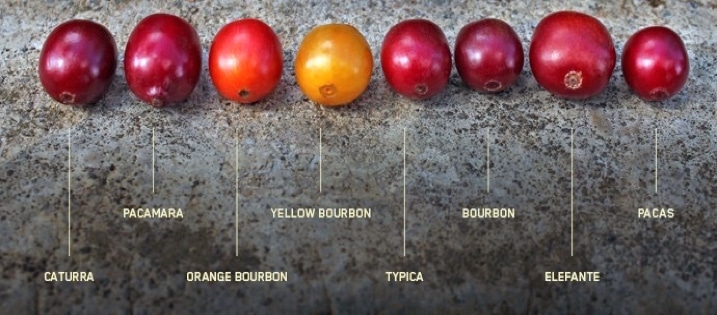
How can you tell which coffee variety you are drinking?
You will find details about the varieties in the product descriptions on our website. If a coffee comes from a single variety, such as Gesha or Yellow Bourbon, it is always stated on the label. Want to try different varieties? Take a look at our single origin coffees.
How many coffee varieties are there?
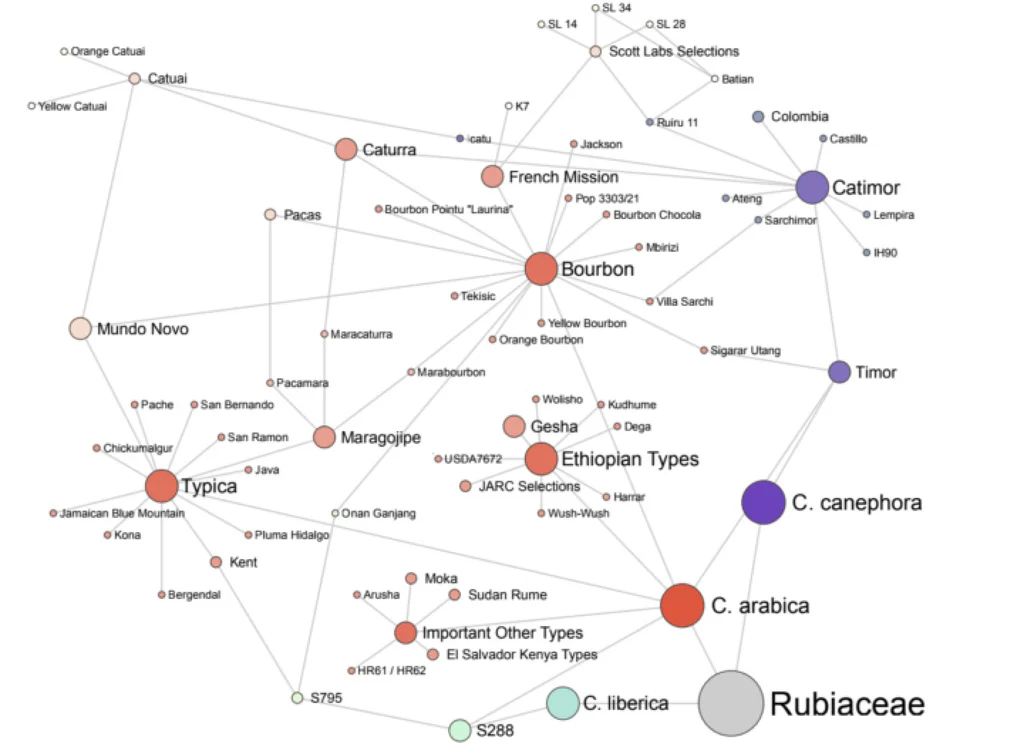
The exact number of coffee varieties remains a mystery, but Ethiopia alone has thousands of heirloom varieties, grown in different regions of the country. Experiments with growing coffee in unusual locations and tasting trials carried out together with producers keep expanding what coffee can offer, which in turn gives coffee lovers more to choose from.
Why innovation matters for coffee varieties
Developing new coffee varieties benefits not only consumers but also producers. New varieties can give higher yields, better disease resistance or easier plant care. Organisations such as World Coffee Research study the properties of varieties, which helps us understand their potential and develop coffee farms around the world.
The most popular coffee varieties
Some coffee varieties have become especially popular with baristas, roasteries and coffee lovers. Below you will find a description of a few of the most important ones.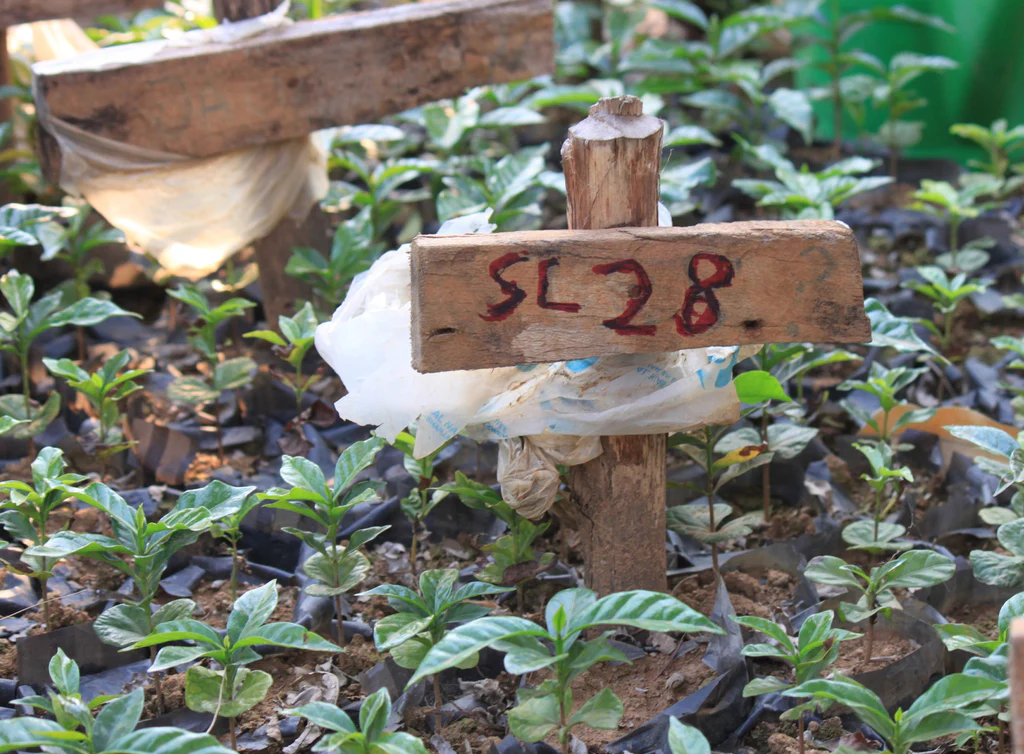
Typica
Typica is one of the original Arabica varieties and has been selectively bred for more than 500 years. It is still grown in countries such as Peru, Mexico, Indonesia and Jamaica.
Flavour profile: A sweet, mild coffee with notes of chocolate, nuts and spices. Gentle acidity balanced by dried fruit and black cherry.
Bourbon
The Bourbon variety owes its name to an island off the coast of Madagascar. Genetically it is one of the most important Arabica varieties and the basis for many others.
Flavour profile: Clear brown sugar sweetness, fruity notes (cherry, peach) and a full body.
Caturra
Caturra is a natural mutation of Bourbon discovered in Brazil. It has smaller plants and higher yields than Bourbon.
Flavour profile: Bright and slightly tart, close to Bourbon but with more pronounced fruity notes.
Gesha
Originating in the forests of Ethiopia, Gesha is one of the most prized coffee varieties. Introduced to Panama in the 1960s, it became a symbol of luxury thanks to its unique flavour.
Flavour profile: Bright and floral, with tea-like notes rarely found in other coffees.
Catuai
Catuai is a cross between Mundo Novo and Caturra, developed in Brazil by the Agronomic Institute (IAC). It is widely grown in Honduras and other Central American countries.
Flavour profile: Sweetness reminiscent of brown sugar, with delicate notes of stewed fruit and nuts.
SL28
One of the most prized varieties in Africa, SL28 was first identified in Kenya. Its trees are known for their longevity: many of them are more than 60 years old.
Flavour profile: Grapefruit-like acidity, complex notes of sun-dried tomato and a syrupy body.
Why is it worth knowing the differences between coffee varieties?
The variety does not tell you everything about a coffee’s taste, but it has a huge influence on its character. Getting to know different varieties will help you choose a coffee that suits your taste perfectly and discover new aromas you have not tried before.
