

Where coffee comes from
Even the origin of the word coffee is uncertain, and there are several competing theories. Two are considered most likely. The first points to Kaffa, a region of Ethiopia, as the source of the name. The second traces it to the Arabic kahwa, a word used for the drink that the whole world now loves. The history of coffee reaches back to antiquity and runs through legend, religious tradition and a number of significant historical events. One of the best known stories has goats discovering coffee, though there is no evidence for it. What is certain is that African peoples, particularly those living in the mountainous parts of Ethiopia, were the first to appreciate what this plant could do.
Ethiopia’s climate allowed coffee trees to grow wild, and they still do. In antiquity, on the Somali Peninsula, better known as the Horn of Africa, coffee was consumed in a number of ways that later developed into ritual ceremonies. At first people ate the red cherries straight off the bush. In time the seeds came into use: crushed in a mortar, mixed with butter and honey, rolled into balls and boiled in salted water with spices. The seeds were not the only useful part. The leaves were brewed into infusions with dried citrus peel, or chewed as a stimulant. The juice of the fruit was also used to make alcohol.
Plenty of invention, in other words, and all of it ancient. But coffee only really took off in the 12th century, when it started to matter in the Arab world.
Coffee arrives in Europe
Nobody knows exactly when coffee crossed out of Africa, but the estimate is somewhere between the 12th and 13th centuries. The cherries left the forests of Abyssinia, travelled across the Red Sea and reached Arabia Felix, today’s Yemen. That is where the first commercial coffee plantations were established. Soon after roasting was discovered, the beans began to be ground, and the drink acquired the name the Black Elixir. Muslim mystics used its stimulating properties to get through long religious ceremonies.
In 1555, under Suleiman the Magnificent, the first kahwe khaneh opened in the Ottoman Empire: rooms in the oriental style where aristocrats, poets and diplomats drank coffee. The Turks, with their rich coffee tradition, spread the habit across the territories the empire controlled. Europeans had no direct access to coffee yet, but they heard about it from travellers, merchants and explorers who had encountered Middle Eastern culture.
The first coffee beans reached European soil at the start of the 17th century. The Venetians were the first to sell it, as a stimulating medicine. Shipments soon started arriving in Venice, Marseille, London, Amsterdam and Hamburg to satisfy the aristocracy. Much as the Chinese did with tea, the Arab world controlled the coffee trade for a long time, guarding both the beans and the methods of cultivation.
The first café in Europe opened shortly after the Battle of Vienna in 1683, and the man behind it was a Pole, Jerzy Franciszek Kulczycki. He did a great deal to popularise coffee on the continent. Thanks to people like him, coffee became part of the daily routine of millions.
From Arab coffee to Italian espresso
At the start of the 18th century, beer from the north and wine from the Mediterranean were still competing for the title of Europe’s most popular drink. Then three new contenders arrived and changed European drinking culture for good: tea, cocoa and coffee. Coffee houses grew in popularity alongside them, and people came as much for the atmosphere as for what was in the cup. Unlike taverns, coffee houses offered a quiet place to talk without alcohol. That drew artists, intellectuals and merchants, who valued both the exchange of ideas and the effect of the coffee.
Towards the end of the 18th century, the traditional Turkish method of pouring boiling water over ground coffee started to give way to new techniques. Western drinkers, increasingly demanding, introduced improvements such as filtering the brew, which made the coffee cleaner and more aromatic. The 19th century brought further innovation: jugs and devices for filtering, and then breakthroughs such as the moka pot, which made good coffee possible at home.
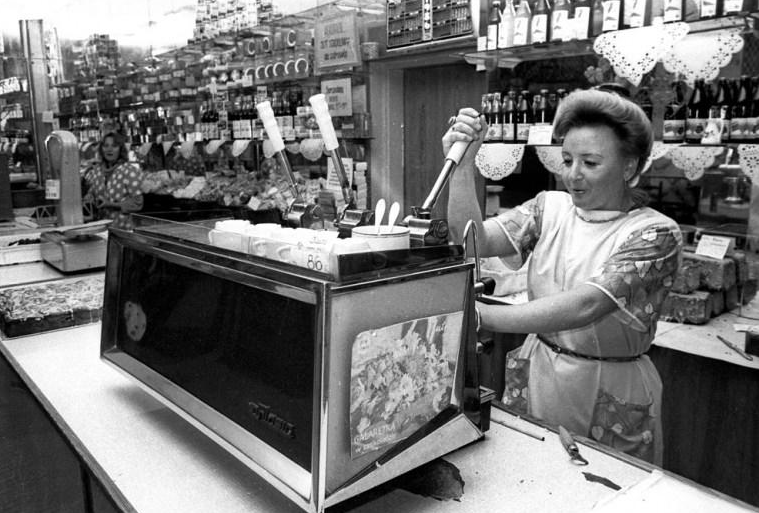
The 20th century turned the coffee world upside down. Espresso machines and pressure brewing produced a drink of an intensity nobody had tasted before. These machines raised the standard of brewing and gave rise to Italian espresso, a byword for getting coffee right. Those innovations are why coffee won over millions of people and became part of daily ritual everywhere.
Which countries are famous for coffee
A lot of countries are famous for coffee, for different reasons. Coffee is a broad word: it covers the trees, the fruit, the beans both green and roasted, and the drink itself. Brazil, Colombia, Ethiopia, India and Peru are known for growing and exporting beans that coffee drinkers everywhere hold in high regard. Origin has an enormous effect on flavour. Coffee from Brazil is known for low acidity and nutty notes, while Ethiopian beans offer peach aromas with a gentle acidity.
Curiously, one of the countries most closely associated with coffee is Italy, which does not have a single coffee plantation on its territory. Italy is famous not for growing coffee but for the culture of drinking it, and for mastery of roasting and blending. Those are the stages that decide the quality of Italian coffee, and the flavour and aroma that result are hard to mistake for anything else. Italy is the global symbol of good espresso, cappuccino and macchiato.
Turkey belongs on the list too. Coffee there has been prepared the same way for centuries: ground beans covered with boiling water, producing a thick, intense drink. It was through Istanbul that coffee reached Poland, bringing a rich tradition and flavours that people still enjoy today.
The history of coffee in Poland
The history of coffee in Poland is short compared with other countries, but it is an interesting one. It began in the 17th century with Jerzy Franciszek Kulczycki, who helped popularise the drink in Europe after the Battle of Vienna. At first coffee did not win many converts in Poland and was regarded as a novelty. It took until the 18th century, when the first coffee houses appeared in Gdańsk, for drinking coffee to become widespread.
Being a port city, Gdańsk received the raw beans by sea, which let a coffee culture develop. At first coffee was served in porcelain cups in the Turkish style, but local variations appeared quickly, such as coffee with thick cream or with chicory.
Neighbouring countries, Germany, Austria and Italy, had a strong influence on how coffee habits developed in Poland. That is why there is now such a range of aromas and methods to choose from, all of which have become part of everyday life.
The recent history of coffee in Poland includes the growth of specialty cafés and roasteries responding to what customers now expect. Thanks to them, coffee has become more than a daily drink: it is a way of paying attention to flavour. One example is Colbergcoffee, a coffee roastery in Kołobrzeg, set up to meet the standards of serious coffee drinkers and to show them what coffee can be.
