

Bitterness is one of the basic tastes, and its presence in coffee is something most people associate with the drink itself. But does coffee have to be bitter? What makes bitterness more or less noticeable, and can it be eliminated altogether, or is it simply part of the coffee experience? Here we look at the facts and myths around bitterness in coffee, and how you can control it to suit your own taste.
Where does coffee’s bitterness come from?
Bitterness in coffee comes from specific chemical compounds, including caffeine and compounds created during the roasting process. Caffeine itself is naturally bitter, but there is relatively little of it in coffee, so it is not the main driver of bitterness. The bigger role is played by melanoidins and phenols, which form through the Maillard reaction and caramelisation during roasting. These reactions are also what build the complex aromas and flavours that give coffee its depth.
The darker the roast, the higher the concentration of these compounds, and the more pronounced the bitterness. Roasting is therefore one of the main factors behind a bitter flavour profile. That said, light roasts can show bitterness too, especially with beans naturally rich in phenolic compounds. Careful control of time and temperature during roasting lets producers manage the intensity of this trait, which matters a great deal for quality coffee roasters.

Myth: bitterness means poor-quality coffee
One of the most common myths is that bitterness signals weak beans. In reality, every coffee, whatever its origin, naturally contains bitter compounds. Even the finest specialty coffee can have noticeable bitterness, though it will be balanced and never overpowering.
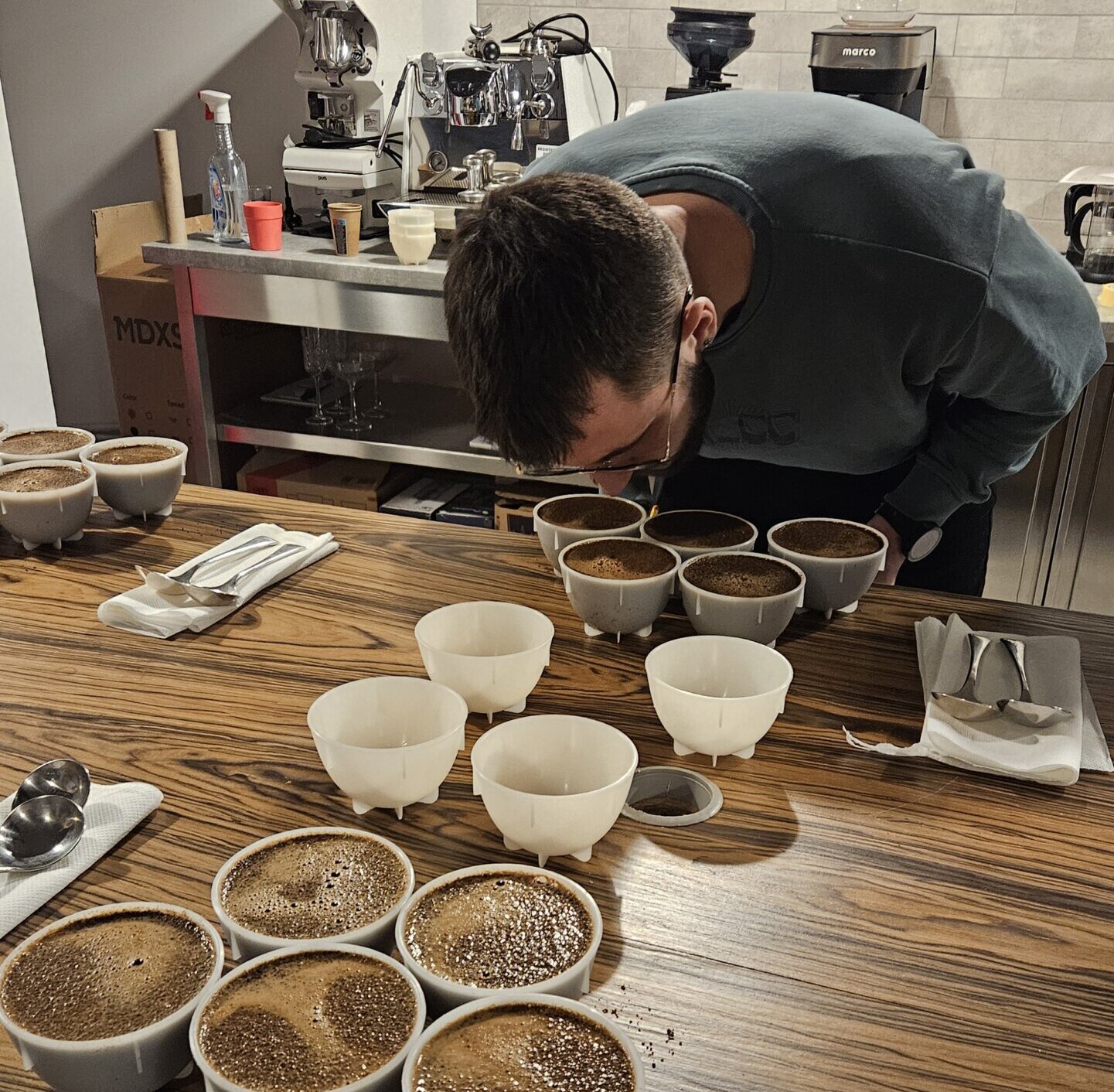
It is not bitterness itself but its proportion against other traits, such as acidity and sweetness, that decides whether a coffee tastes good. In professional cupping, bitterness is one of the elements assessed, and it can actually lift a coffee’s score when it is properly balanced with the other flavours.
Discover the differences between Arabica and Robusta and see how the species affects the flavour profile.
How does brewing affect bitterness?
Brewing parameters matter a great deal for how intense the bitterness turns out. Too much contact time between coffee and water pulls out excess bitterness. Water extracts compounds from coffee in a set order: first the ones behind sweetness and acidity, then the bitter ones. That is why extraction time needs to be controlled precisely. Water temperature plays a role too: higher temperatures pull out more bitter compounds, while too low a temperature can lead to under-extraction and a flat, unbalanced cup.
Grind size matters too, because too fine a grind leads to over-extraction. Finely ground coffee has more surface area in contact with water, which raises the risk of pulling out too much. Even the coffee-to-water ratio can shift the flavour profile: too much coffee for the water makes bitterness dominate, while too little can leave the cup thin and watery.
Read more: Water and coffee: how water affects the taste of coffee
How to reduce bitterness in coffee?
If you prefer a less bitter cup, a few things are worth paying attention to. Go for lighter roasts, which lean towards fruity and floral notes and tone down bitterness. Processing matters too, including the natural method: naturally processed coffees often carry more fruity notes that can offset the coffee’s natural bitterness.
See which light-roast coffee is worth trying and why lighter roasts are worth choosing.
Experimenting with your brew method can help too, particularly with a pour-over dripper or a Chemex, both of which give a gentler flavour profile. With espresso, you can cut bitterness by shortening the extraction time or using a coarser grind. Water quality, including its mineral content, matters a great deal as well: low-mineral water can accentuate bitter notes, while well-balanced water helps keep the flavours in harmony. Adding milk or a plant-based drink can also help soften excess bitterness, giving the coffee a milder character.
Bitterness as part of the balance
Bitterness in coffee is not necessarily a bad thing. Quite the opposite: in the right proportion, it is an important part of the flavour balance, setting off the drink’s other qualities. For many people, it is a touch of bitterness that gives coffee its character and makes it feel bold and satisfying. In cupping terms, well-balanced bitterness can strengthen the overall intensity and extend the finish. The key is understanding what drives this flavour and adjusting your brewing to match your own taste.
Exploring the nuances of bitterness
Bitterness in coffee is a natural part of its flavour, shaped by roasting and extraction. It can be more pronounced in dark-roast or over-extracted coffees, but that does not automatically mean lower quality. By choosing the right beans, controlling your brewing parameters and experimenting with methods, you can strike a good balance between bitterness, acidity and sweetness. It is also worth appreciating the nuances: gentle bitter notes can bring to mind dark chocolate, nuts or spices, adding depth and complexity to the cup. Seen this way, bitterness is not just a flavour element, it is part of the wider experience coffee has to offer.
