

Matcha is not an ordinary tea. It stands for a whole strand of Japanese culture: attention, balance, and the deliberate pause. Preparing it is a ritual that ties together taste, tradition and a few minutes of stillness. Most people now meet matcha as a latte, but it is worth understanding where it comes from and what it is before you pour milk over it. This article covers how to prepare matcha properly at home, what it contains, and, at the end, a step-by-step recipe for a classic matcha latte.
What matcha actually is
Matcha is a powdered green tea from Japan. Unlike conventional teas, which you steep and then discard the leaves, you drink matcha whole, ground leaf and all. That means you take in far more of the nutrients, antioxidants and amino acids the leaf holds.
Tea bushes grown for matcha are shaded for around three weeks before harvest, which raises the levels of chlorophyll and L-theanine. The picked leaves are then steamed, dried and ground very finely between traditional stone mills. The result is an intensely green, silky powder with a deep umami taste and a gentle sweetness.
Matcha in Japan: an art rather than a drink
Matcha has held a particular place in Japan for centuries. It is central to Chanoyu, the tea ceremony, where everything counts: the bowl, the water temperature, the host’s movements and breathing. Drinking matcha there is meditation in motion. In that tradition nothing is added, no milk and no sugar. Matcha is drunk plain, either as usucha, the thinner preparation, or koicha, thick and far more concentrated. Its value lies as much in the experience as in the taste.
Matcha latte: the modern reading of a classic
Classic matcha needs nothing added to it, but the last few years have produced a new version of the drink: the matcha latte. Matcha powder with milk, dairy or plant-based, softens the earthiness of the tea and gives you something velvety and creamy. It is the obvious place to start if you are new to matcha and not yet ready for the intensity of the plain bowl.
One thing to know: for a matcha latte use a culinary grade tea such as “traditional matcha”, or a standard “ceremonial matcha”, keeping in mind that in Japan a high-grade ceremonial matcha is never mixed with milk. It would be a waste of a subtle, complex tea.
What matcha contains
Matcha is not only about taste. It is seriously good for you. It contains:
-
L-theanine, which supports focus and a relaxed state without making you drowsy
-
Natural caffeine, which lifts you gently and holds for a long time
-
Antioxidants (EGCG), protecting cells against ageing and supporting metabolism
-
Vitamins A, C and E plus minerals such as iron, calcium and potassium
-
Chlorophyll, which supports detoxification and cleansing
Together that makes matcha work on several fronts at once: it wakes the body up, settles the mind and supports immunity.
How to make matcha, step by step
For classic matcha, without milk, you need:
Ingredients:
-
2 g matcha, ideally sifted
-
60-80 ml water at no more than 80 °C
Equipment:
-
a tea bowl (chawan)
-
a bamboo scoop (chashaku)
-
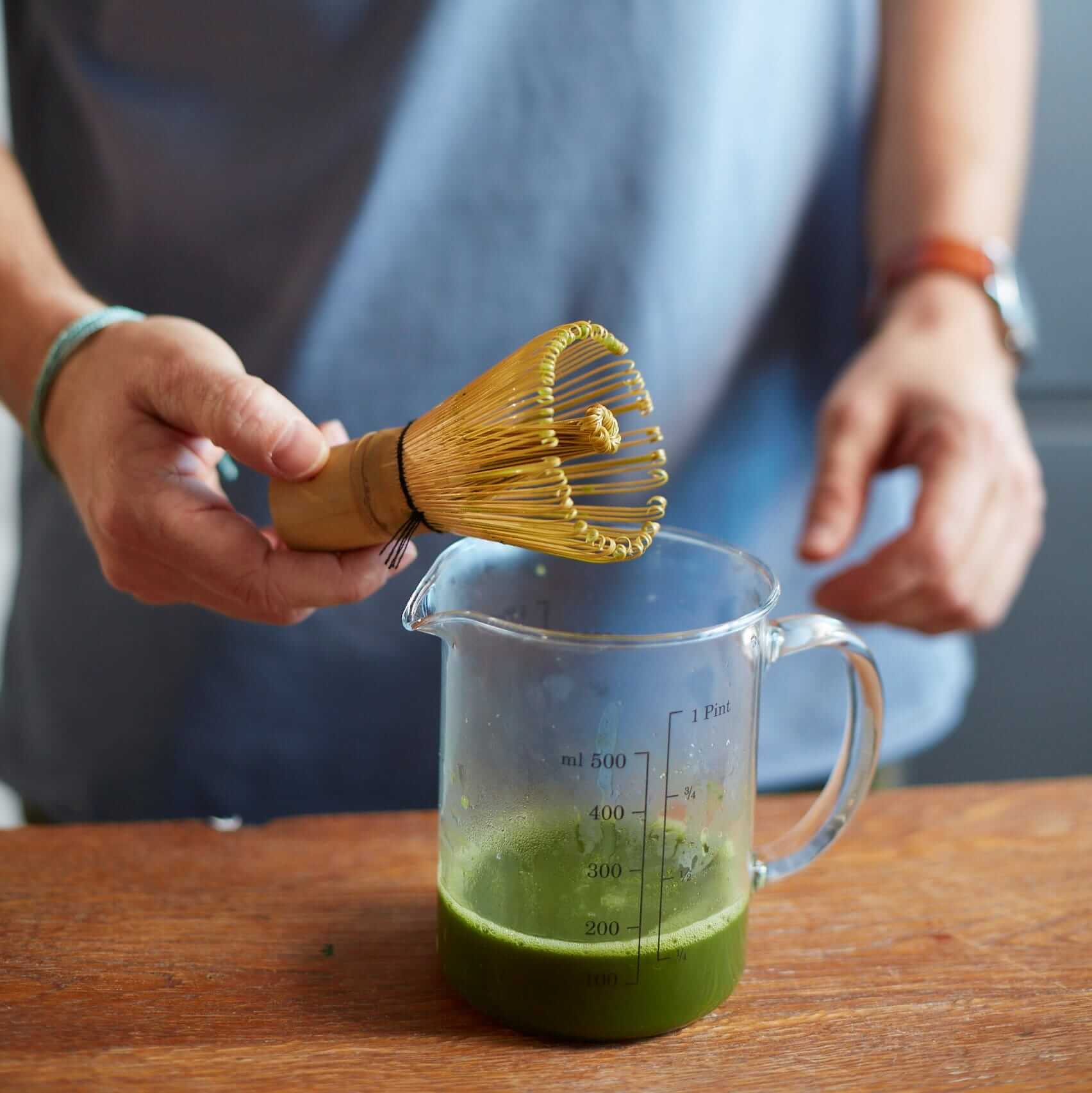
a bamboo whisk (chasen)
Method:
-
Put the matcha into the bowl.
-
Add a small amount of hot water.
-
Whisk briskly with the chasen in an “M” motion for around 15-20 seconds, until a foam forms.
-
Top up with the rest of the water and drink it straight away.
Matcha latte recipe
Ingredients:
-
2 g matcha, ceremonial or standard grade
-
80-100 ml water at no more than 80 °C
-
200 ml milk (dairy at 2-3% fat, or plant-based such as oat or soya)
-
optional: honey, maple syrup, sugar, vanilla
Equipment:
-
a chasen or an electric milk frother
-
a pan or a frother to heat the milk
-
a tall glass
Method:
-
Dissolve 2 g of matcha in 80-100 ml of water at up to 80 °C, whisking with a chasen or blending until you get a green foam.
-
Heat the milk to 60-65 °C and froth it. It should be thick, creamy and light.
-
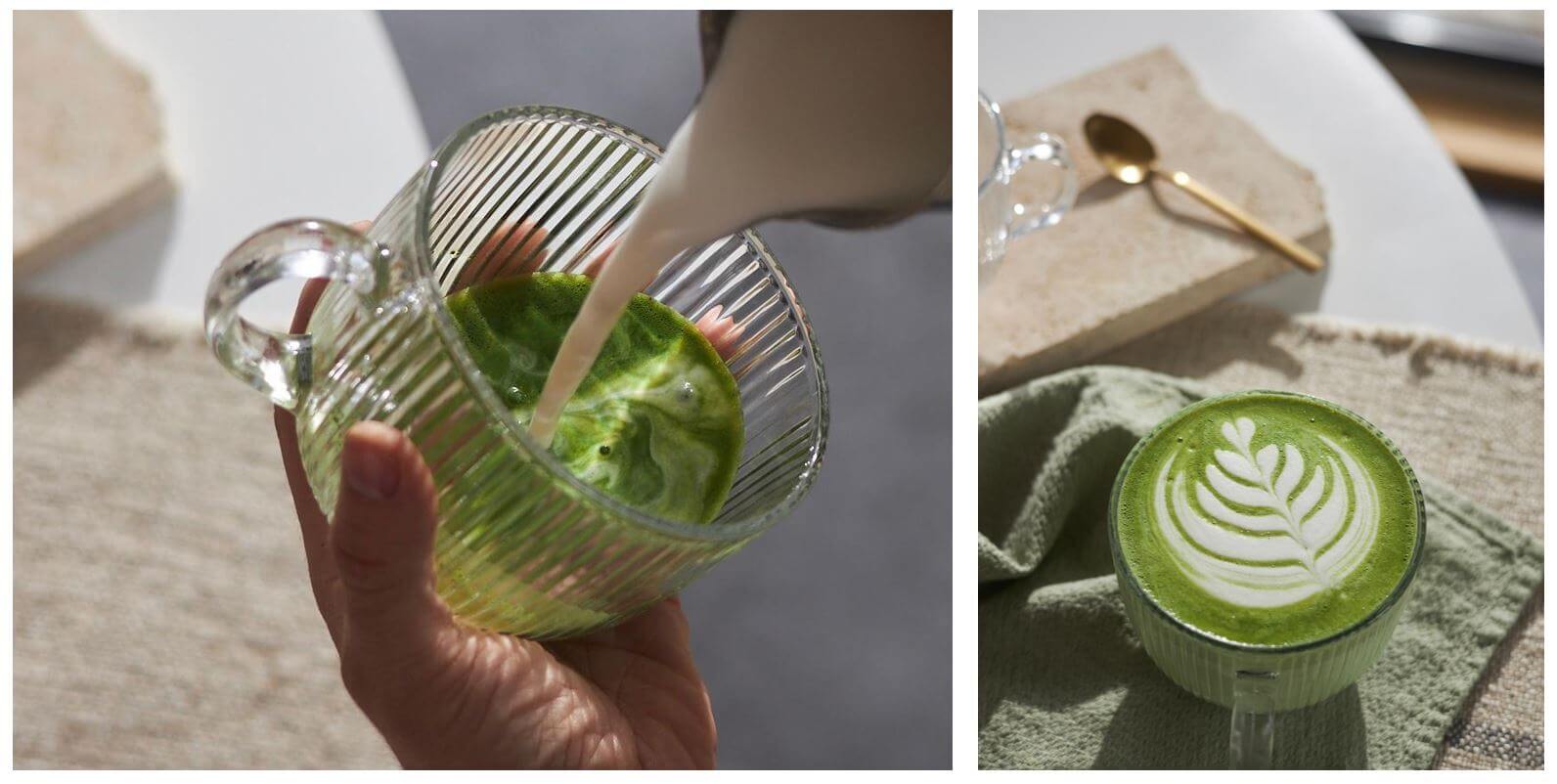
Pour the matcha into the glass first, then the frothed milk.
-
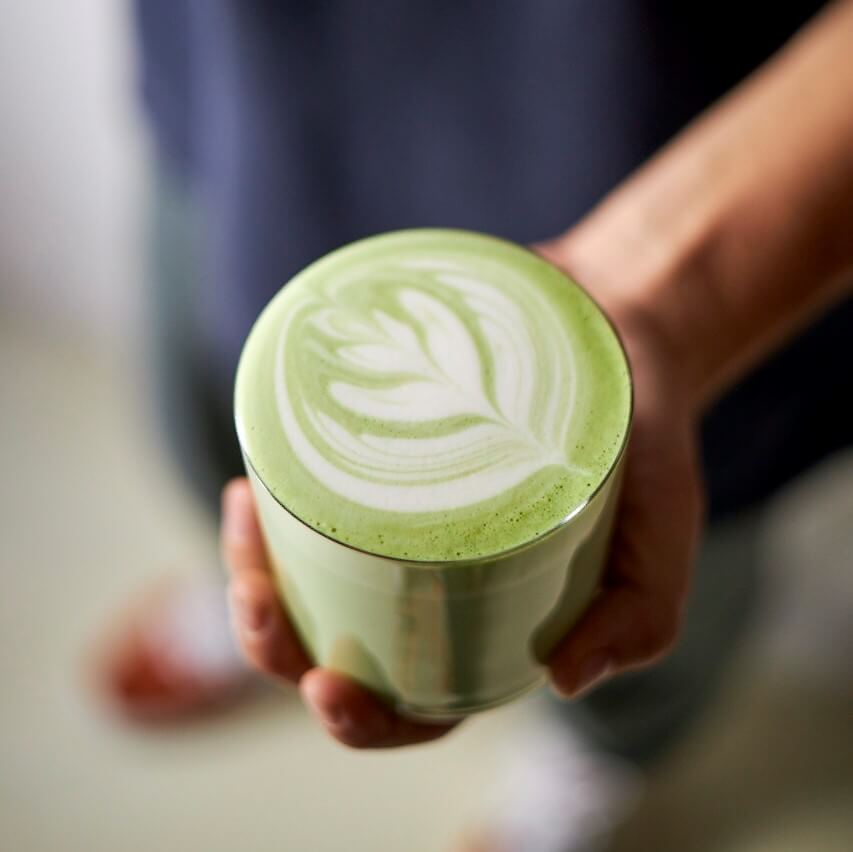
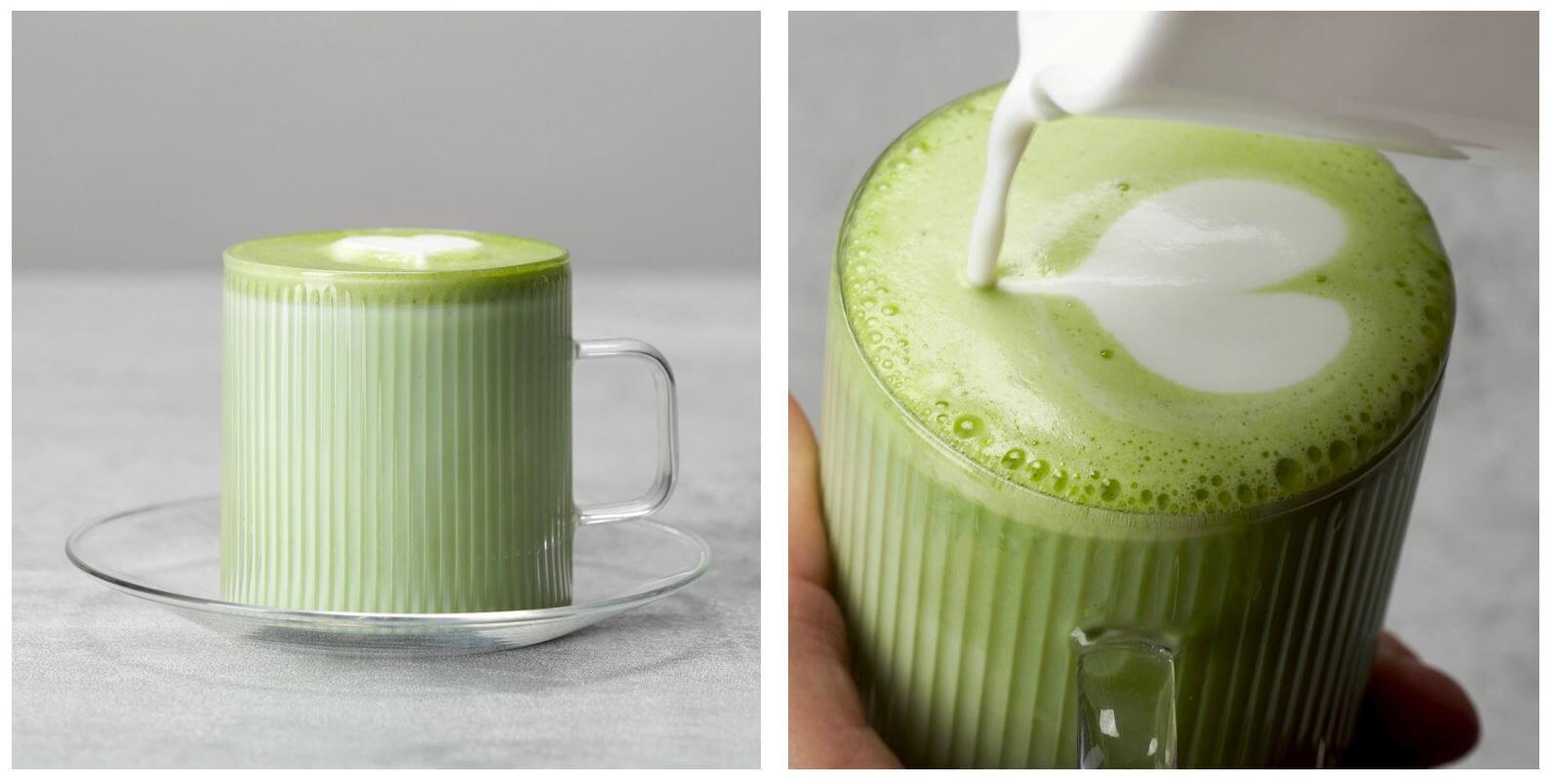
If you like, finish the foam with simple latte art: a leaf, a heart, a single dot.
You can also make it cold, as an iced matcha latte. Add a few ice cubes, cold milk and the matcha you have already whisked.
Matcha latte: pleasure and energy in one
A matcha latte is the everyday way of enjoying matcha, less formal than Chanoyu but no less worthwhile. It is a good way to bring a Japanese ritual into an ordinary day, even if it only lasts five minutes at the kitchen counter. Creamy, fresh-tasting, and with an effect you genuinely feel, it picks up new drinkers daily.
Try it and see.
Matcha latte: FAQ
If you want to go further into how to prepare matcha tea and what makes a good matcha latte recipe, here are the questions that come up most. Useful whether you are starting out or already well into the green stuff.
What is a matcha latte?
A matcha latte is powdered green tea combined with milk, dairy or plant-based. Unlike a classic latte, where the base is espresso, here matcha does the work, giving the drink its bright green colour and its distinctive, slightly vegetal, herbal taste.
Can I drink matcha every day?
Yes. Matcha is safe to drink daily, though it does contain caffeine, so watch how you react to it and avoid it late in the day. It lifts you more gently than coffee but for longer: three to five hours of energy without the drop.
Which milk works best with matcha?
The usual choices are dairy milk at 2-3% fat and plant-based drinks: oat, soya, almond or coconut. Look for the “barista” versions, which froth well and do not overpower the matcha.
Matcha latte hot or iced?
Both are good, and it comes down to preference and the time of year. In summer an iced matcha latte with plenty of ice is hard to beat, in winter the hot, creamy version with a thick foam.
Where can I buy matcha?
Choose Japanese matcha from a source you trust. We recommend Matcha Bros, particularly the traditional grade for everyday drinking. Making it at home is the best way to get to know the taste and adjust it to suit you.
What does a matcha latte taste like?
Smooth and creamy, vegetal, lightly sweet, with a gentle bitter edge. Nothing like coffee: more subtle, and just as satisfying.
What does matcha contain?
Antioxidants (EGCG), L-theanine and chlorophyll. It supports focus, lifts mood, has a detoxifying effect and supports the immune system. It is also a natural source of energy, gentler than coffee but longer lasting.
Is a matcha latte nice?
Very. It is a light, velvety drink, and the making of it is part of the pleasure. Three ingredients, and a proper alternative to coffee.
Is matcha healthy?
Yes, though as with anything, in moderation. Matcha supplies vitamins, minerals, antioxidants and energy, which is why so many people build it into their daily routine.
How much does a matcha latte cost?
In Polish cafés it usually runs between 15 and 20 zł a cup. Making it at home costs considerably less, especially if you buy matcha in larger tins.
Can I make a matcha latte without a frother?
Yes. Use a bamboo chasen, or even a kitchen whisk. A frother makes life easier but it is not essential. Well-whisked matcha and properly heated milk are enough for the ritual at home.
Which milk should I use for a matcha latte?
Whichever you like, dairy or plant-based. If you go plant-based, look for the versions made to be frothed, usually labelled “barista”. Oat and soya sit particularly well with the taste of matcha.
