

How coffee tastes and how strong it is depends on plenty of factors, including grind size. Even at the same grind setting you’ll get different results depending on how you brew. Here’s which grind works for an espresso machine, and which suits a filter coffee machine or other brewing methods better. To understand the process properly, it helps to look at how different techniques and grinder settings shape the final result in the cup.
Why do we use different grind settings?
The main reason for using different grind settings is matching the grind to the brewing process. The general rule is contact time: shorter contact means a finer grind, and vice versa. Different brewing methods need different amounts of contact between water and coffee, which in turn determines how fine or coarse the grind should be. Grind size determines the strength and quality of the brew, and getting the grind setting right also shapes the balance of flavour and aroma in the cup.
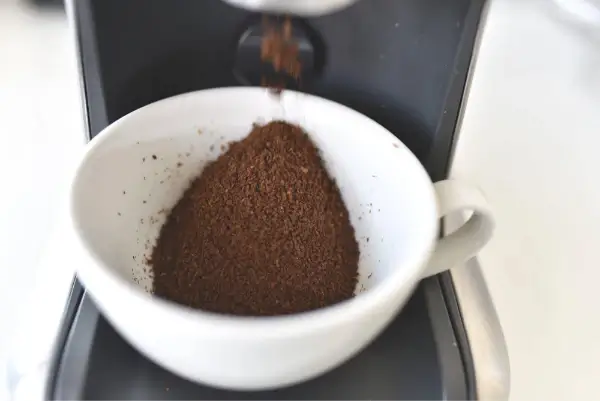
Espresso machine
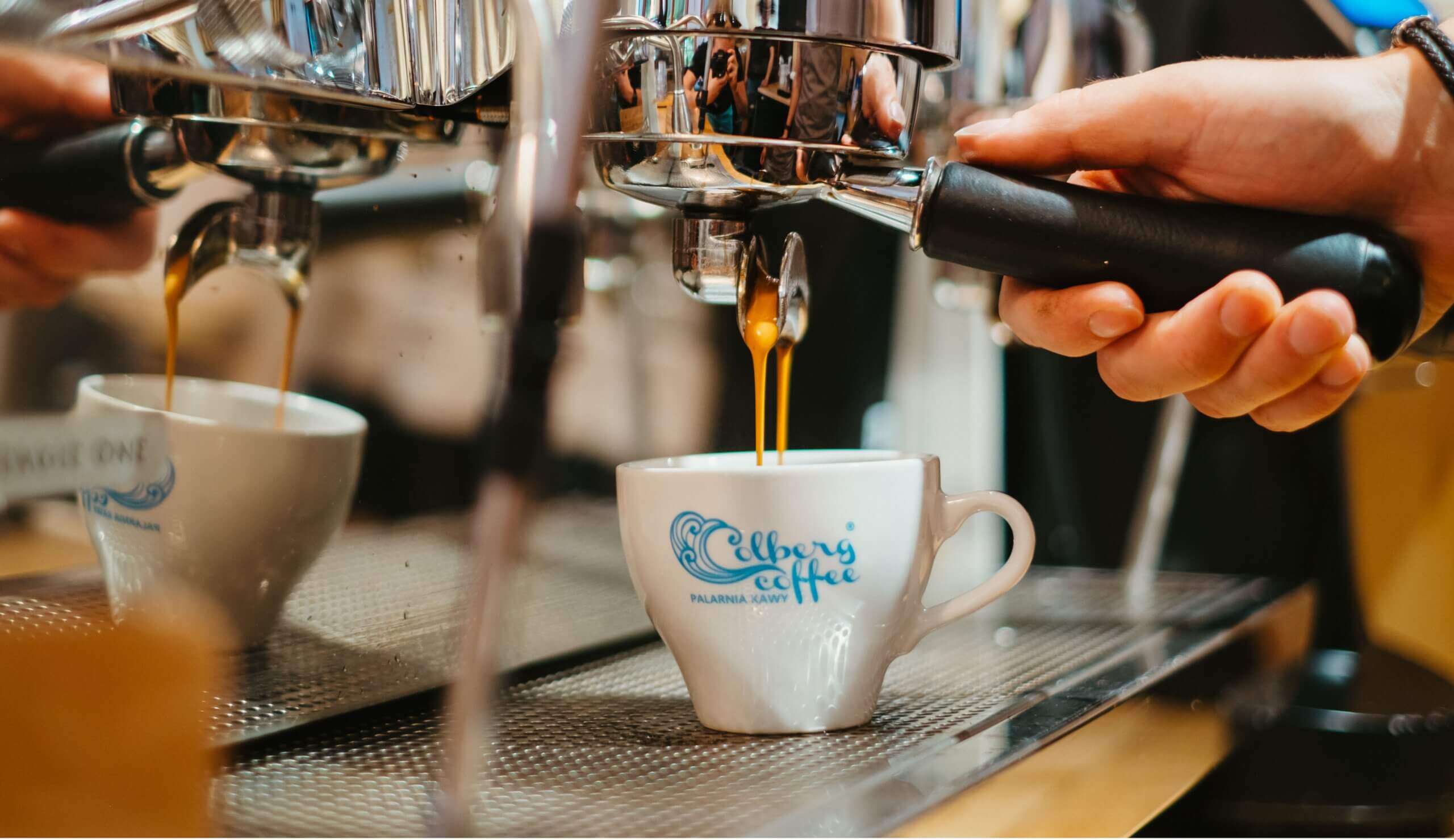
An espresso machine needs a very fine grind, because the brew time is short, just 22 to 28 seconds. A fine grind gives the particles more surface area and more resistance to the water, which lets the pressure push through the puck properly. Too coarse a grind gives a weak, sour shot, while too fine a grind causes excess bitterness and can block the flow of water altogether. With an espresso machine, the grind needs to be dialled in precisely.
French press
French press needs a much coarser grind, because the coffee steeps in water for around 4 minutes. Too fine a grind over-extracts the coffee and makes it overly bitter. A coarse grind gives a fuller flavour and keeps sediment out of the cup, which is why French press suits anyone who likes a rich, heavy profile.
Chemex
A medium-coarse grind, about the size of sea salt flakes, works best here and gives a slow, even extraction. Chemex highlights a coffee’s delicate notes and brings out its clarity. The grind needs to be consistent, or extraction ends up uneven.
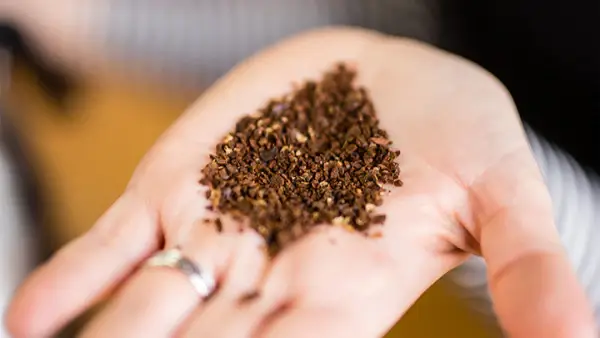
Pour-over
A medium grind, about the texture of sand, is optimal for a balanced flavour and aroma. Water flows through the coffee slowly in this method, so the grind needs to be even to avoid over or under-extraction. The same applies to a filter coffee machine, where getting the grinder setting right matters just as much.
AeroPress and moka pot
These methods work best with a medium-fine grind, which gives an intense flavour without over-extracting. AeroPress in particular lets you experiment with different grind settings and brew times, which makes it a great tool for anyone who enjoys tinkering.
The extraction rule
The basic rule is simple: grind too coarse for the method and the coffee will be under-extracted, giving a weak, sour cup. Grind too fine and it will be over-extracted, giving a bitter one. Finding the right balance between grind size and brewing method is the key to a great cup of coffee.
How does coffee extraction actually work?
As water passes through coffee grounds it extracts oils, aromatic compounds and other soluble material. Grind size determines the speed and efficiency of that process. Finely ground coffee has more surface area in contact with water, which speeds up extraction, while a coarser grind has less contact area and slows it down. The link between grind size and flavour is direct, especially for methods that need a precise grind.
Grind sizes and what they’re used for
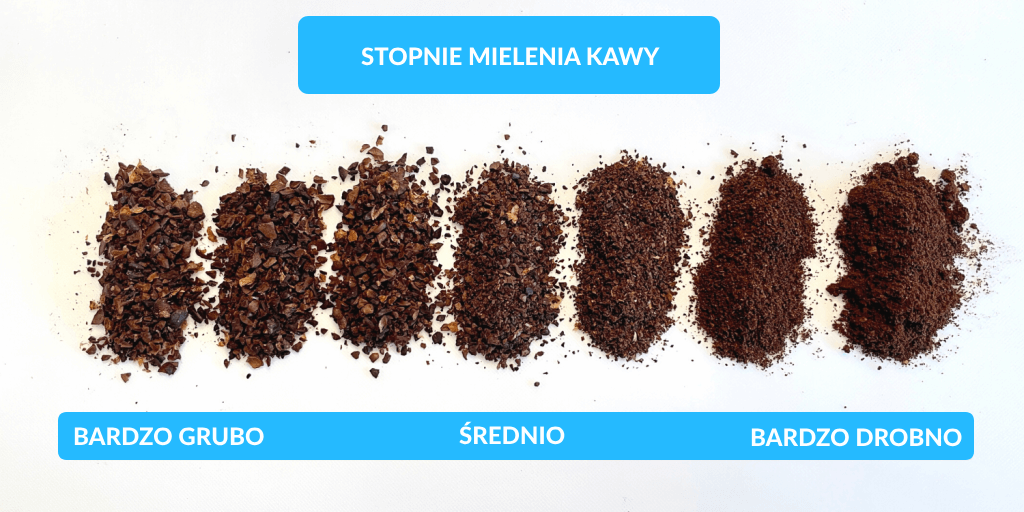
Extra fine
Extra fine, also called Turkish grind, has a texture close to powder, similar to wheat flour. It’s used for Turkish coffee, which needs a very intense extraction.
Fine
The fine grind used for espresso is finer than icing sugar but not as fine as flour, closer to baking powder. It allows for a fast extraction under pressure.
Medium-fine
Medium-fine sits close to icing sugar but slightly coarser, similar to table salt. It’s used for methods such as AeroPress or a moka pot.
Medium
Medium grind has mid-sized particles, similar to granulated sugar. It works well for pour-over methods such as a dripper or Chemex, and in filter coffee machines.
Medium-coarse
Medium-coarse particles are noticeably bigger than sugar, similar to coarse sea salt. It’s ideal for Chemex and other filter methods with a longer brew time.
Coarse
Coarse grind has large, distinct particles, similar to coarse semolina. It’s best for French press and other methods that need longer contact between coffee and water.
Extra coarse
Extra coarse produces large pieces, similar to breadcrumbs or rolled oats. It’s ideal for cold brew and other methods with a very long steep, anywhere from 12 to 24 hours.
Setting the grind on your home espresso machine
Customers often complain about the taste of coffee from their home espresso machine. Sometimes it’s a cleaning issue, because the group head needs regular washing or you end up with mould and a musty taste. Today, though, it’s about grind, and getting the setting right for your own taste matters a great deal.
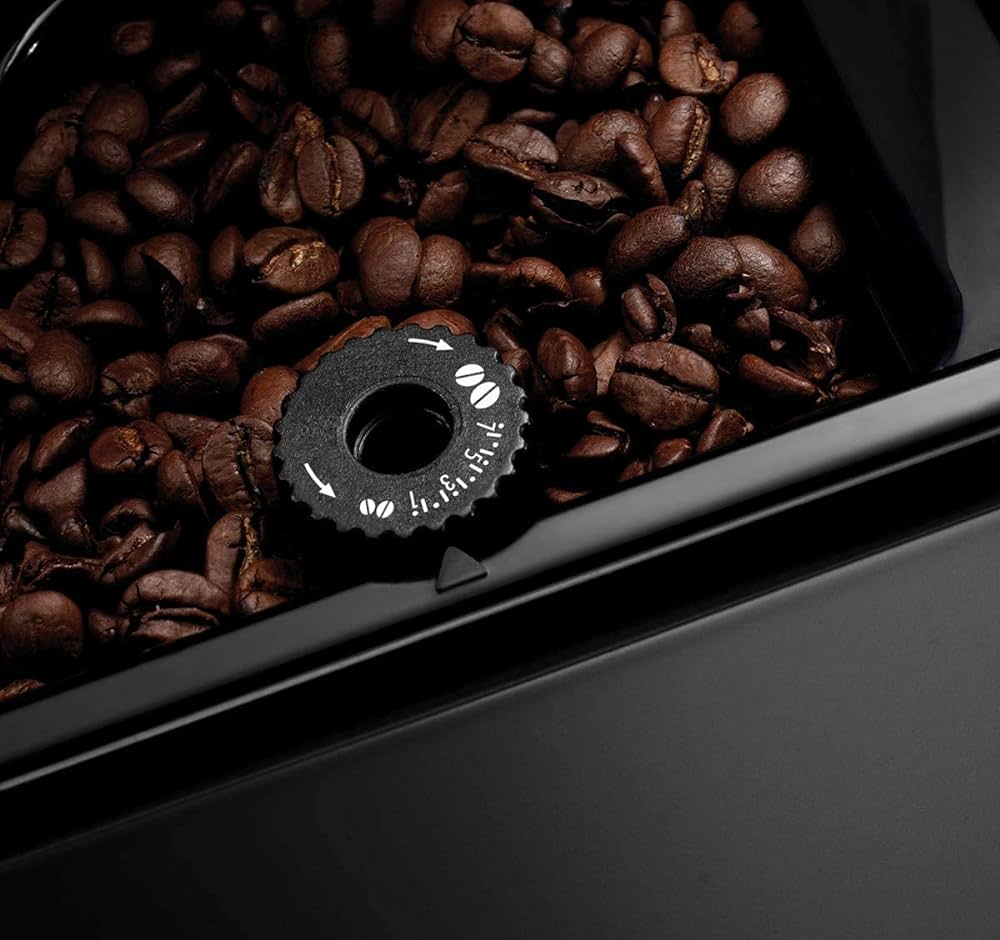
You can adjust it with a dial or a marker near the bean hopper. The smaller the dots, the finer the grind, and a finer grind means less acidity. Have a look at the photo below, and experiment with the settings.
Grind size is critical to how your coffee tastes
Research suggests grind size is one of the biggest factors in how coffee tastes. Choosing the right grind for your brewing method lets you control the strength, acidity and bitterness of the drink. The right grind releases the best aromas and flavours hidden in the beans, and an even grind matters just as much, because it keeps extraction consistent. Uneven grinding means fine particles get over-extracted while coarse ones barely extract at all. It’s worth knowing that a badly set grinder is the most common mistake in cafés. It usually shows up as under-extracted espresso, and since most drinks in a café are built on it, a bad base won’t do your flat white or cappuccino any favours either.
Tips for home barista perfectionists
A few more tips if you want to take your home brewing further:
-
Invest in a good burr grinder. A good grinder gives you an even grind, which is essential for consistent extraction. Avoid blade grinders, which chop the coffee unevenly rather than grinding it.
-
Experiment with brew time. Even with the perfect grind, brew time still has a huge effect on the final flavour.
-
Pay attention to the water. Water makes up around 98% of your coffee, so its quality and temperature matter enormously.
-
Adjust the grind to the dose. For smaller portions, going slightly finer can give a more pronounced flavour.
-
Use fresh beans. Coffee loses its flavour over time, so always reach for freshly roasted beans.
The key takeaways on coffee extraction
Grind size has a huge effect on how your coffee ends up tasting. Finding the right grind for your brewing method lets you control extraction and land on the ideal flavour profile. Experiment with different grinder settings to get the full potential out of your beans. Grind is only one of many factors that shape coffee’s flavour, but it’s the one you have full control over. So go ahead and experiment: if the coffee tastes flat, go finer; if it’s too bitter, go coarser. With a bit of knowledge about dialling in your grind, you can enjoy an outstanding cup of your favourite drink every day.
