Cake shops and bespoke cake studios keep running into the same problem. Customers want to drink their coffee in or take it away, but keeping a barista on the payroll and building a full coffee bar rarely adds up. That goes double in small towns and small studios, where the business lives on cakes, desserts and orders for birthdays and weddings. In Gruczno, a village in northern Poland, the problem was solved simply and pragmatically, and Marta Kuchciwróżka, the cake shop run by Marta Stamska, is a good example of how.
Why coffee in a cake shop matters now
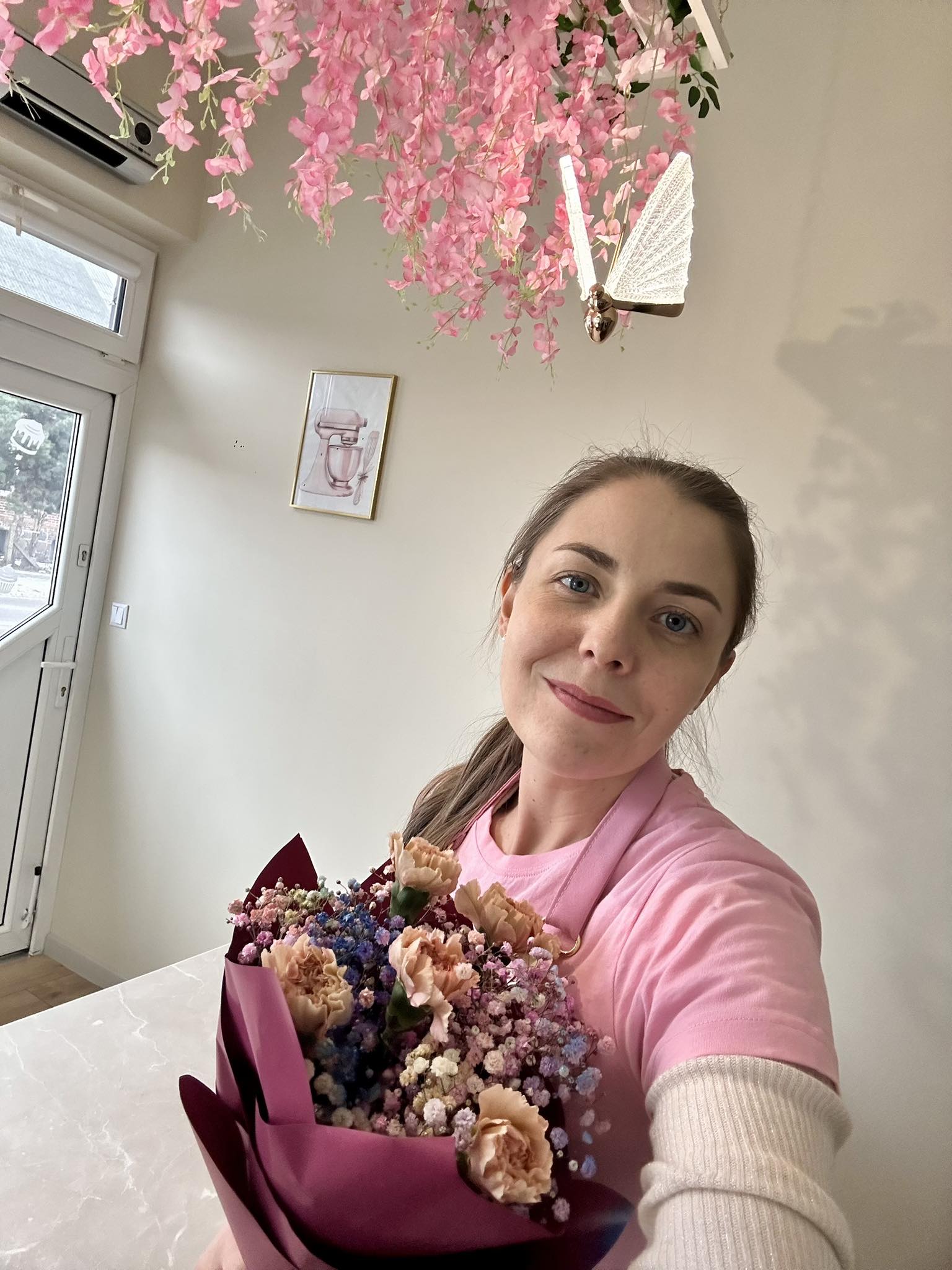
When Marta Kuchciwróżka opened at ul. Wojska Polskiego 12A in Gruczno, coffee was part of the offer from day one. Not as a separate café project, but as the obvious companion to the desserts and cakes. It is hard to picture a modern cake shop today where you cannot sit down with a coffee or take one away with you.
Coffee does several jobs at once in a place like this. Above all it keeps customers in the shop for longer. Instead of buying and leaving, they can sit down for a moment, take their time choosing a dessert from the counter, and come back next time. It is also the most natural complementary product to a sweet menu: pavlova, cakes and dessert pots more or less ask for a cup of coffee alongside them.
From the owner’s point of view, coffee was also a way to round out the offer without complicating the work of the kitchen. It raises the average spend, it answers something customers genuinely ask for, and it means neither more production nor more staff. In this model coffee does not compete with the desserts, it completes them, which is exactly what it should do in a well designed cake shop.
Read next: which coffee machine should a cake shop buy?
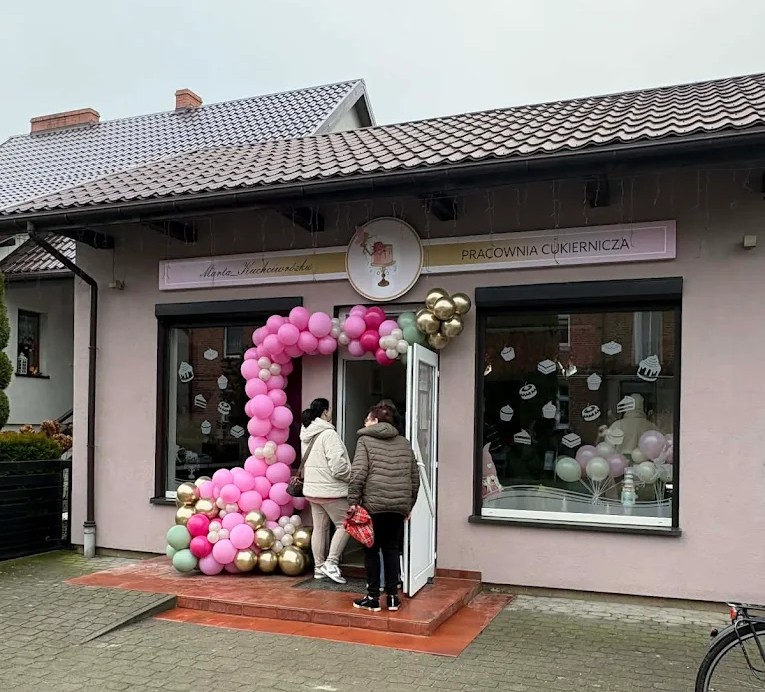
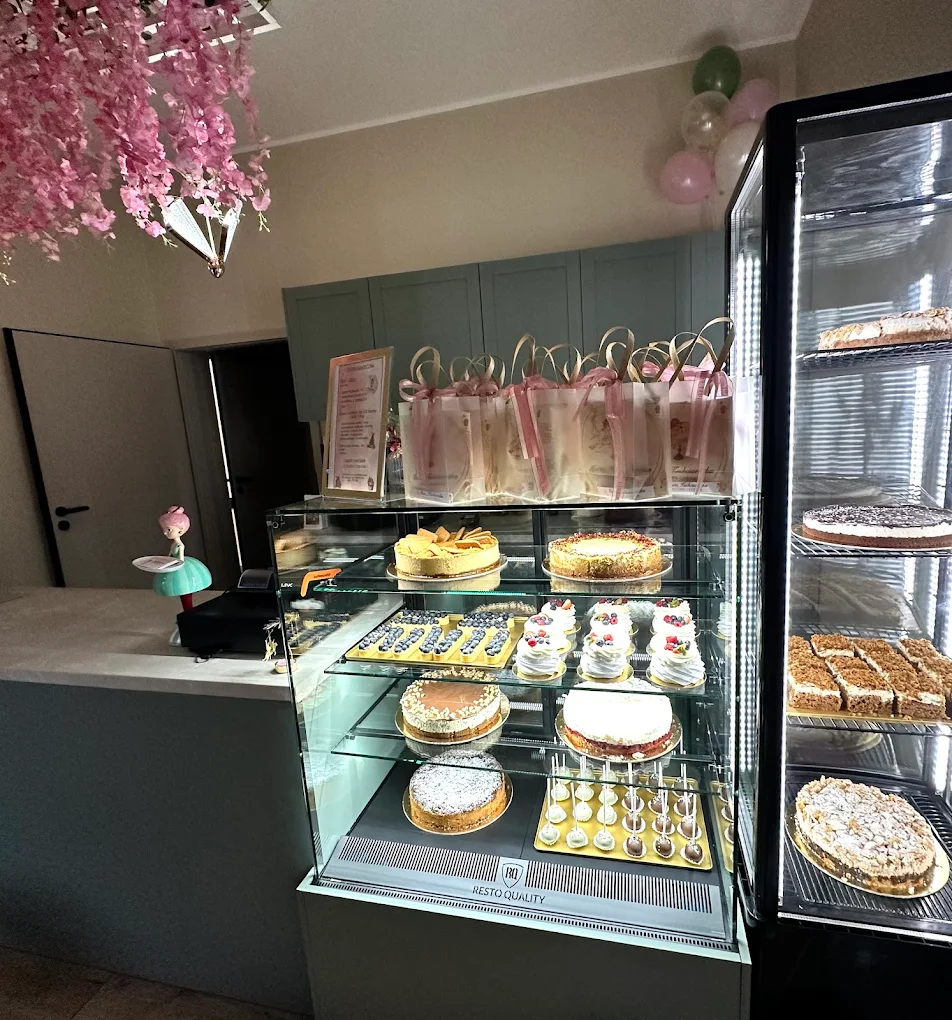
A small cake shop in Gruczno, with cakes and desserts front and centre
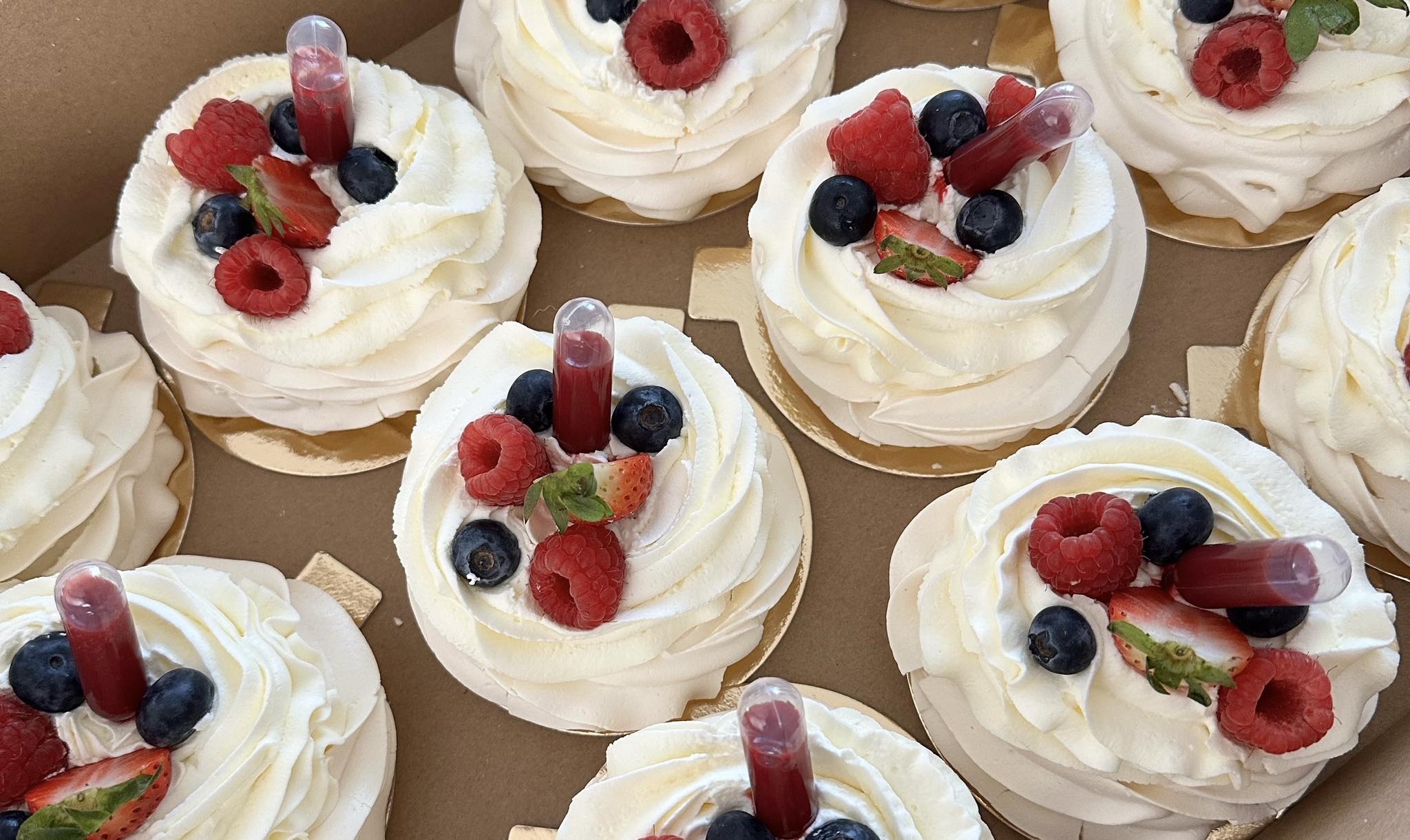
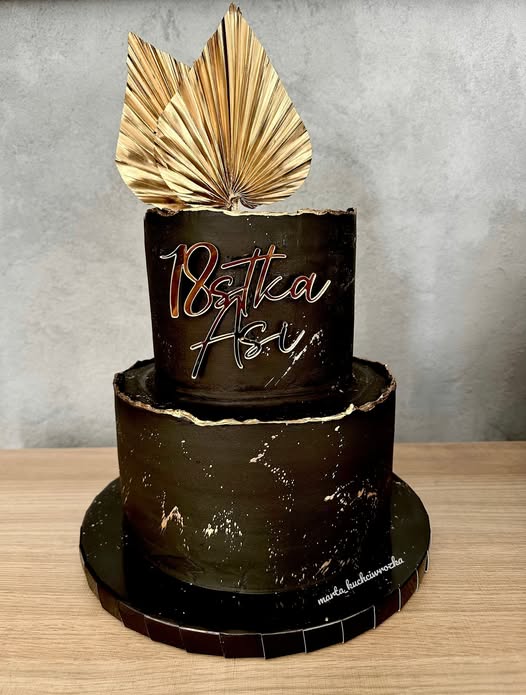
It was clear from the start that the shop in Gruczno was never meant to be a café. It is a craft cake studio. The core of the offer is cakes to order, for birthdays, celebrations and anything personalised, alongside desserts made in short runs.
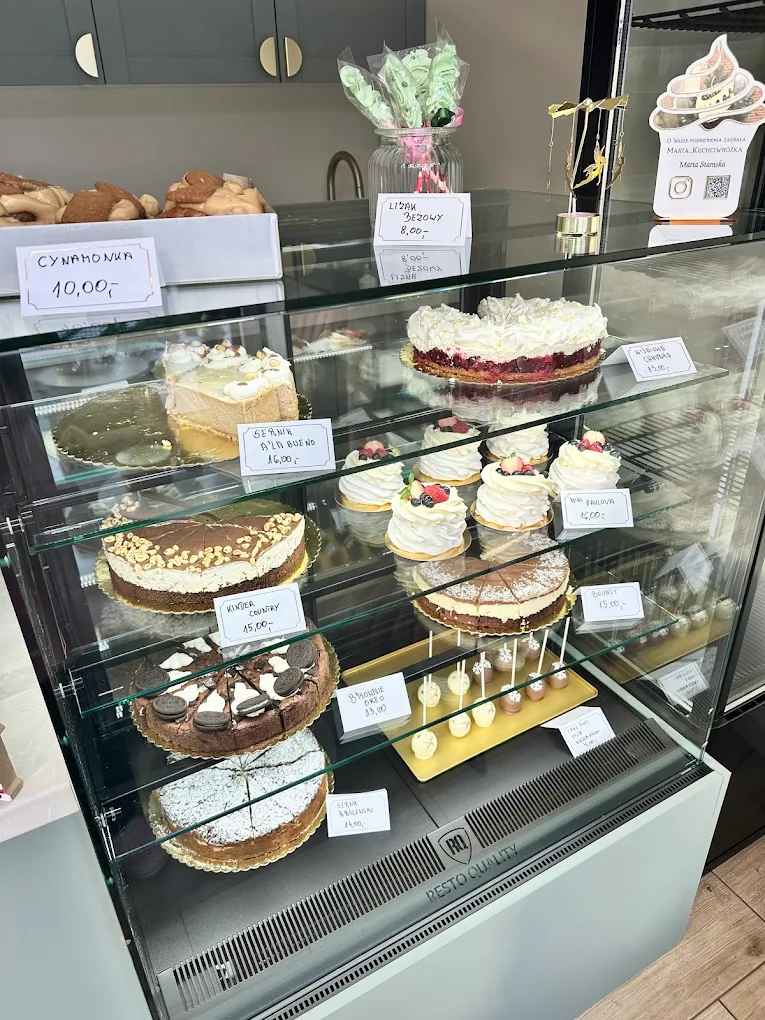
Production runs on a small scale, nothing mass produced, with real care for how things look and for the details. The dessert counter is restocked regularly and the offer shifts with the season and with whatever orders are in the book.
How to sort out coffee without hiring a barista
For Marta Stamska one thing mattered above all: coffee had to be available to customers, but it could not complicate the work of the studio. An espresso machine, a grinder, training for the team and constant quality control would all mean extra duties, and in a small place there is simply no room for them.
Customers, though, expect coffee straight away. No queue, no waiting, and no risk that it tastes good one day and completely different the next. So Gruczno went for a bean-to-cup machine, treating it as a tool for completing the offer rather than a compromise on quality. A bean-to-cup machine is no substitute for a specialty café, but it works very well where coffee is an addition to the desserts rather than a project in its own right.
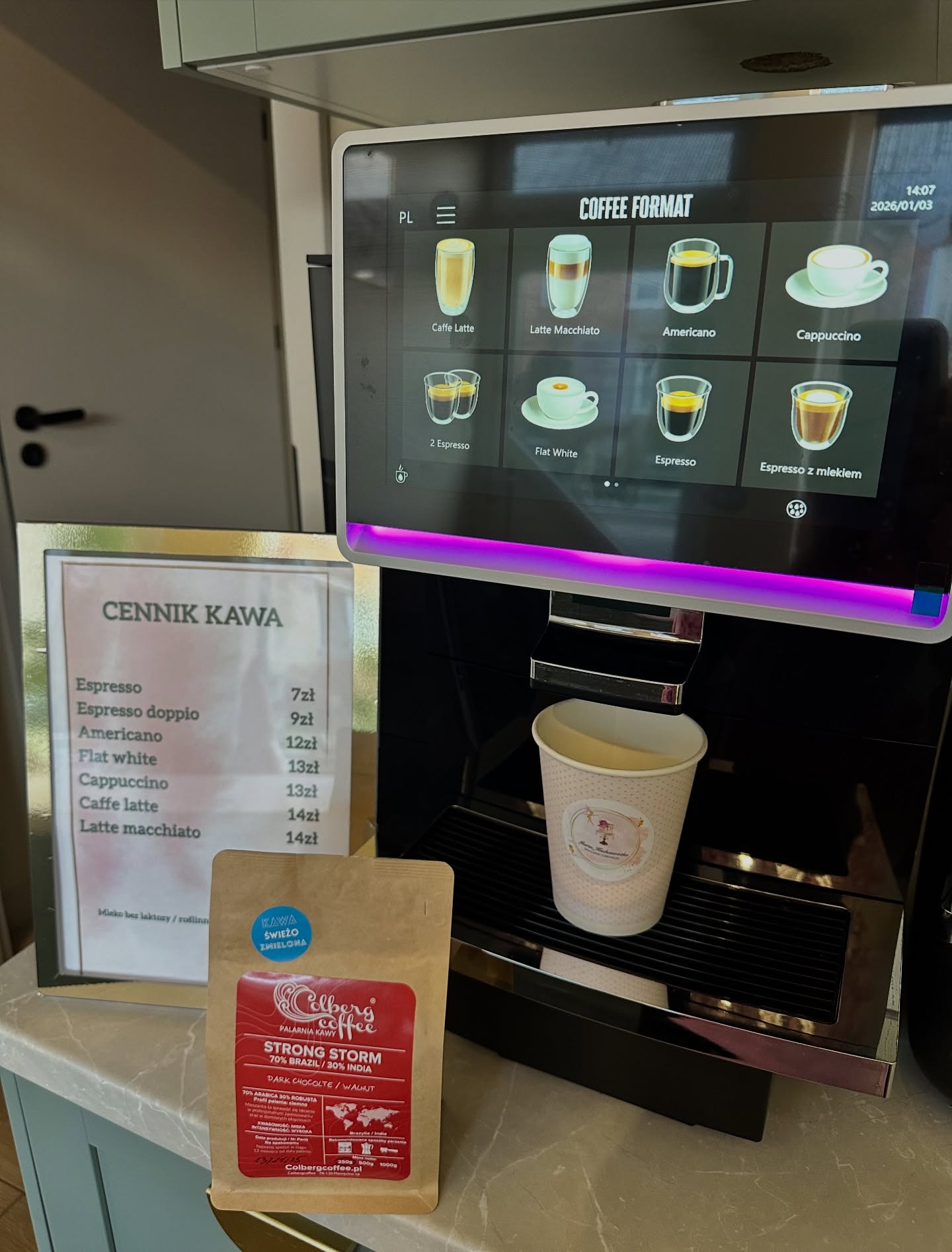
A Coffee Format bean-to-cup machine in a cake shop, and why it works
In practice, a bean-to-cup machine turned out to be the most sensible choice for this kind of place. Marta Kuchciwróżka put in a Coffee Format machine, which turns out the classic black and milk drinks quickly. The touchscreen is straightforward, the black coffee it brews is genuinely decent, and it textures milk well for the milk drinks.
Every coffee is made to the same parameters, whoever is standing at the machine. Operating it is simple and needs no barista experience, which counts for a great deal in a small team. A drink that takes tens of seconds to make earns its keep especially when several customers are collecting cakes they have ordered. And the coffee comes at a price the dessert customer accepts, because what they want is solid quality, not a barista show.
Coffee from a craft roastery, and why it makes the difference
The machine on its own is not enough if the coffee in it is whatever turned up. Gruczno went for freshly roasted coffee from the Colbergcoffee roastery from the start, chosen to suit a sweet menu. It is balanced and easy to read, and it suits the broad run of customers who come here for desserts and cakes first. The choice fell on the classic chocolate and nut flavours of the Strong Storm blend.
A coffee shelf in Gruczno, as an extension of the cake shop
Marta Kuchciwróżka has had a small coffee shelf since it opened. Customers drink a coffee in, ask what it is, and can buy a bag to take home on the spot. The range runs to whole bean coffee in 1 kg bags and 250 g from the Colbergcoffee roastery, the same coffee that is served in the shop. The shelf needs no extra staff and no extra space, and a bag of coffee often goes into the bag alongside a cake or a box of desserts. It is a simple, complementary idea that genuinely lifts basket value and fits the local character of the place. And when you are stuck for a present, good coffee is the timeless option.
What working with a coffee roastery looks like in practice
Gruczno is a good illustration of why the partnership model works best. Working with a roastery does not end with one delivery of coffee. It covers choosing beans to suit the dessert menu, help picking kit that matches the real footfall in the venue, and ongoing support.
That is what makes coffee a coherent part of the offer rather than a random extra. It is a model that other small cake shops and cake studios can copy easily, without big investment and without changing the character of the place.
Who this approach makes sense for
It works best wherever coffee is there to support the main offer rather than dominate it. In cake shops, cake studios, bakeries and small seasonal food businesses, good coffee can genuinely raise the average spend. And it can do that without adding fixed costs, without complicating the team’s work, and without having to build a full café.
Marta Kuchciwróżka cake shop
Facebook: visit the page and follow what the studio is up to
Address: Wojska Polskiego 12a, 86-111 Gruczno, Poland
Coffee in a cake shop: frequently asked questions
Do you need to hire a barista to sell good coffee in a cake shop?
No. In many cake shops coffee is there to complete the offer, so a well chosen bean-to-cup machine lets you serve consistent coffee without a barista on the payroll.
Which coffee machine works best in a cake shop?
Usually a bean-to-cup machine: fast, simple to operate, and it does not need constant barista supervision.
Does coffee in a cake shop really raise the average spend?
Yes. Coffee is a natural addition to desserts and cakes, so it lifts basket value without raising production costs.
Is it worth selling bags of coffee in a cake shop?
Yes. A small shelf of whole bean coffee, in 250 g bags for instance, is a simple way to sell on a premium product at minimal cost.
Which coffee should a cake shop choose?
A balanced coffee chosen to suit a sweet menu and sourced from a roastery that roasts fresh, rather than whatever beans happen to be available.
Can coffee work in a cake shop on a takeaway basis only?
Yes. Coffee to take away works well in cake shops and cake studios where there is neither the room nor the need for a full café.
