Decaf has a poor reputation in Poland, and much of it is deserved. For years the name covered the cheapest green coffee on the market, stripped of caffeine by the crudest method available. The result tasted like cardboard, and that is the taste most people still remember.
Good decaf is a different product altogether. Here is the detail: how much caffeine really stays in the bean, what the regulations actually say, how to recognise a well made decaf, and why the removal method decides what you get in the cup.
Decaf coffee beans: what you are actually buying
Decaf is ordinary coffee with the caffeine taken out before roasting. The bean is the same bean: same farm, same variety, same process. One molecule changes, and that is it.
Decaffeinated does not mean caffeine free. No method removes all of it. The US Food and Drug Administration requires at least 97 per cent of the caffeine to be removed before coffee can be sold as decaf, and the best processes go a good deal lower than that.
So the difference between good and bad decaf is not the caffeine, which is negligible either way. It is how much flavour survived the treatment.
How much caffeine is really left in decaf
Little enough that it makes no practical difference to how you feel. A cup of decaf is a few milligrams against roughly a hundred in regular coffee.
| Drink | Serving | Caffeine |
|---|---|---|
| Decaf, filter | about 240 ml | 2-15 mg |
| Regular filter coffee | about 240 ml | 95-135 mg |
| Double espresso | 36 g in the cup | 120-160 mg |
| Black tea | 200 ml | 40-70 mg |
To take in as much caffeine as one ordinary coffee delivers, you would have to drink a dozen or more cups of decaf back to back. Nobody gets near that in practice.
The legal side is worth knowing, because a lot of nonsense circulates about it. EU Directive 1999/4/EC sets a limit of 0.3 per cent caffeine on a dry basis, but it applies only to instant coffees and coffee extracts. There is no single EU limit for roasted beans. The 0.1 per cent figure repeated all over the internet works as a market standard and a buyer requirement, not as a rule that follows from that directive. In practice, good roasteries come in well below it anyway.
How caffeine is removed, and why you can taste the difference
The decaffeination method is the single most useful thing on the bag, and the thing most often left off it. If a producer does not name the method, there is usually a reason.
- Water process. The beans soak in water and the caffeine is captured by an activated carbon filter. No solvents. The best known versions are Swiss Water from Canada and Mountain Water from Mexico. This method protects flavour best, which is why it costs the most.
- Supercritical carbon dioxide. Efficient and selective, but it needs an expensive plant, so you mostly meet it at large volumes.
- Ethyl acetate. A compound that occurs naturally in fruit and is sometimes derived from sugar cane, in which case the process is called sugarcane. It gives decent results and often leaves the coffee noticeably sweet.
- Methylene chloride. The oldest and cheapest route. It is legal and safe for health at permitted residue levels, but it usually signals that nobody here was trying very hard on flavour.
I have covered each process in detail in a separate article on how decaf coffee is made.
Our decaf: Mexico El Tucan
We keep one decaf in the range, and that is deliberate. We would rather hold a single coffee that stands up in the cup than fill a shelf with whatever green we could get.
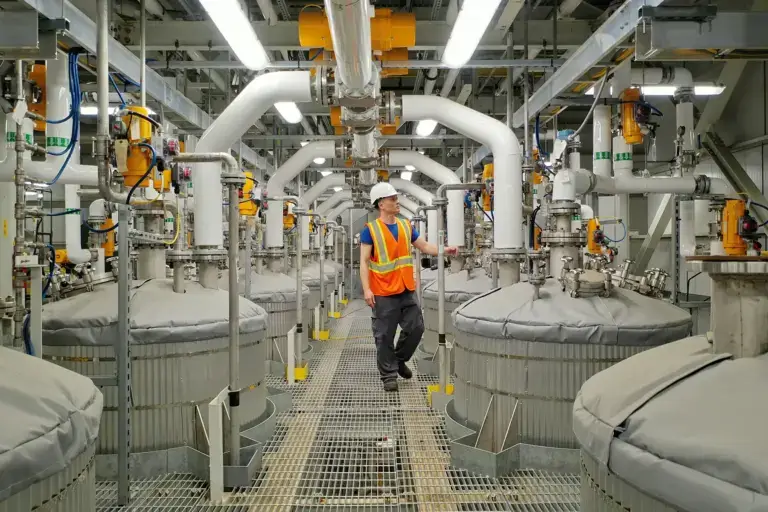
Mexico El Tucan goes through water decaffeination, the same family of processes as Swiss Water, with no solvents involved. In the cup you get full body, notes of white chocolate, sweetness and a light citrus lift at the end.
We roast it medium so it works in an espresso machine and in filter alike. If you want a coffee you can drink at ten in the evening and still sleep, this is the one.
Decaf in pregnancy: one customer’s story
Kasia wrote to us on Instagram when she found out she was pregnant. She had started every day with a cappuccino for years, and the afternoon coffee with her husband was their ritual. The question was simple: did she have to give it up?
She did not. We pointed her to our decaf, which at the time was a Colombian, while today that slot belongs to Mexico El Tucan. The ritual stayed. Only the beans in the grinder changed.
EFSA considers up to 200 mg of caffeine a day safe in pregnancy, against 400 mg for a healthy adult. A cup of decaf is a few milligrams, so it fits inside that with an enormous margin. This is not medical advice, though: if you are pregnant or taking medication, agree your limit with your doctor rather than with an article on the internet.
Which brewing kit suits decaf
All of it, with one adjustment that almost nobody warns you about.
Decaffeinated beans are more brittle, because the process disturbs their structure. They break down more easily in the grinder and give a finer grind at the same setting. On an espresso machine that usually means a slower shot, so the first thing to do is grind a touch coarser than usual.
In filter and in a moka pot the difference is far less noticeable. If you brew by filter methods, our guide to brewing methods will help, and if you pull espresso, read our piece on how to brew it properly.
Whole bean or instant
If the only decaf you know is the instant kind and you decided it was not for you, that is fair enough. You were judging an entirely different product.
Instant decaf goes through two stages that cost it aroma: first decaffeination, then drying the extract. Whole bean decaf goes through the first one only, and you handle the rest yourself by grinding it just before you brew.
You can hear the difference from the first sip, and that is probably the simplest test you can run. If decaf is going to win you over, it will be in this form.
How to store decaf coffee
The same way as regular coffee, only more carefully. Because the structure of the bean has been disturbed, decaf tends to lose freshness faster.
- Airtight, opaque packaging. Ideally the original bag with its valve. Do not tip the coffee into a glass jar on the windowsill.
- Away from heat and damp. A cupboard, not the worktop next to the machine, and definitely not the fridge.
- Grind just before brewing. With decaf this matters even more than with regular coffee.
- A roast date on the bag. Without one you do not know what you are buying. That goes for any coffee, but for decaf in particular.
In short
Good decaf is specialty green coffee, decaffeinated by a water process, roasted fresh and sold with a roast date. What caffeine remains is irrelevant to your sleep or your blood pressure.
Bad decaf is anonymous green coffee with no method and no date on the bag. You will taste the difference in the first cup, and it costs less than you would think.
Decaf coffee: frequently asked questions
How much caffeine does decaf coffee have?
A cup of roughly 240 ml holds somewhere between 2 and 15 mg of caffeine, while the same serving of regular filter coffee holds 95 to 135 mg. The US Food and Drug Administration requires at least 97 per cent of the caffeine to be removed before coffee can be called decaf. No method removes all of it, but what remains is small enough that it does not affect sleep for the vast majority of people.
Is decaf coffee healthy?
Taking the caffeine out does not strip the rest of the coffee. The beans keep their chlorogenic acids and other polyphenols, which are credited with most of the benefits attributed to coffee. For people who tolerate caffeine badly, or who live with high blood pressure, disturbed sleep or reflux, decaf can be a sensible answer, but specific health advice belongs with a doctor rather than with an article about coffee.
Can you drink decaf coffee during pregnancy?
EFSA considers an intake of up to 200 mg of caffeine a day safe in pregnancy. A cup of decaf is a few milligrams, so it sits well inside that limit. This does not replace a consultation: if you are pregnant or taking medication, set your limit with the doctor looking after you.
How is caffeine removed from coffee?
There are four main routes. The water process, including Swiss Water and Mountain Water, rinses the caffeine out with water and captures it on activated carbon, with no solvents. Supercritical carbon dioxide works selectively but needs an expensive plant. Ethyl acetate, also known as the sugarcane method, is derived from sugar cane. Methylene chloride is the oldest and cheapest option. The water process protects flavour best.
Does decaf coffee taste worse?
It does not have to, although bad decaf tastes distinctly worse, which is where the reputation comes from. Three things decide the outcome: the quality of the green coffee before treatment, the decaffeination method, and how fresh the roast is. Specialty green decaffeinated by a water process and roasted a few days ago can genuinely surprise someone who was certain decaf is worse by definition.
Who is decaf coffee for?
People sensitive to caffeine, people who drink coffee in the evening, pregnant and breastfeeding women, and anyone who drinks several coffees a day and wants to cut the total dose without giving up the ritual. It is also a good choice for people whose heart rate climbs or whose anxiety rises on caffeine.
