





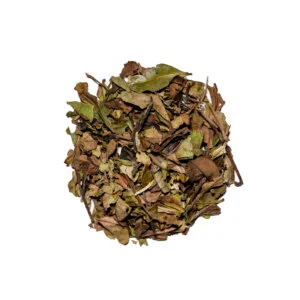







In 2013, a pound of Geisha coffee from Panama’s Hacienda La Esmeralda sold at auction for $350.25. Just a few years earlier, such a price would have seemed unbelievable. This variety, thought to have originated in western Ethiopia, became one of the biggest sensations in specialty coffee. Its intense floral aroma first brought it to prominence, followed by record-breaking auctions and growing interest from coffee producers worldwide.
James Hoffmann recounts the history of Geisha in his book “The World Atlas of Coffee”. In “How to Taste Coffee”, Jessica Easto explains why the variety is associated with jasmine and why identifying this aroma is not always easy. Both books offer insight into what makes Geisha so remarkable without reducing its appeal to its premium price.
I run the Colbergcoffee roastery near Kołobrzeg, and what interests me most is what actually ends up in the cup. The story of Geisha shows how the distinctive sensory profile of a single variety can reshape interest across an entire market. It also serves as a reminder that even the best-known variety name does not guarantee the same flavour in every lot.
In this article, you will learn:
- What Geisha (Gesha) is, where it comes from and why the same variety goes by two names.
- How Hacienda La Esmeralda and the Best of Panama competition brought Geisha to prominence.
- What Geisha coffee tastes like, why it commands such high prices and what its auction records mean.
- Where else Geisha is grown and how to find floral aromas in other coffees.
What is Geisha (Gesha) coffee and where does it come from?
Geisha is a variety of arabica coffee (Coffea arabica). It is believed to have originated in Ethiopia, and its name is linked to the town of Gesha in the west of the country. Both Geisha and Gesha are used in the coffee industry, and both spellings refer to the same variety. Geisha is the more common spelling, although there is ongoing debate about which name is correct. You may therefore encounter either spelling on coffee bags from different producers.
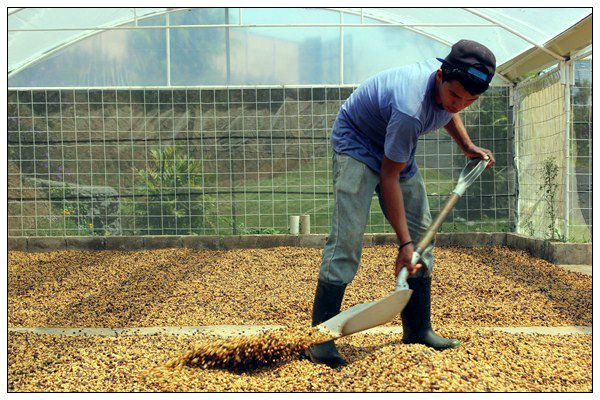
The variety’s journey to international recognition took it from Ethiopia to Panama via Costa Rica. It was in Panama that Geisha gained its greatest recognition. The breakthrough came in 2004, when Hacienda La Esmeralda entered its coffee in the Best of Panama competition. Its remarkable aroma caught the attention of cuppers and buyers, and the auction result marked the beginning of a series of record-breaking sales.
Geisha is among the varieties prized for producing particularly aromatic coffees with floral characteristics. Coffee varieties differ in their botanical characteristics and sensory potential, and Geisha owes much of its popularity to its aroma. Its distinctive profile attracted interest from producers in other Central and South American countries. Many began planting Geisha in the hope of securing higher prices as well.
The variety’s Ethiopian origins reflect the country’s rich diversity of arabica coffee. Ethiopia is renowned for its many native coffee varieties, but Geisha’s success in Panama made its name widely recognised among roasters, baristas and specialty coffee enthusiasts.
Panama Geisha and Hacienda La Esmeralda: a turning point
Hacienda La Esmeralda is a Panamanian coffee farm owned by the Peterson family. Geisha had been grown there for several years before gaining international recognition. The breakthrough came at Best of Panama, a competition organised by the Specialty Coffee Association of Panama. Coffee lots from different farms were evaluated and subsequently offered for sale at an online auction. Buyers could then compete for specific, highly rated lots.
In 2004, La Esmeralda presented a Geisha coffee with an exceptional aroma. It fetched $21 per pound, immediately drawing the market’s attention to both the farm and the variety. This success was no one-off. Hacienda La Esmeralda won Best of Panama four years in a row, from 2004 to 2007. It won again in 2009 and 2010, and in 2013 it won one of the competition’s categories.
Geisha rose to fame through exceptional quality demonstrated by repeated competition successes. Hoffmann identifies Hacienda La Esmeralda as one of the most influential farms in the Central American coffee industry. Its achievements encouraged other producers to plant the variety. New Geisha plantings appeared in Panama and other countries across the region, and the variety gradually became a symbol of high-end specialty coffee.
Each successive win strengthened the farm’s reputation and attracted more interest from buyers. La Esmeralda’s story demonstrated how the remarkable characteristics of a single variety could capture the attention of an entire industry. Both the farm and Geisha itself gained recognition, with the variety increasingly appearing in the coffee selections of producers from different countries.
How much does Geisha cost? Auction records
Geisha’s best-known prices come from auctions held after coffee competitions. In 2004, Hacienda La Esmeralda’s coffee fetched $21 per pound. Between 2006 and 2007, prices for record-breaking lots rose to $130 per pound, almost a hundred times the price of commodity coffee. In 2010, the price reached $170 per pound, and in 2013 a small lot of naturally processed Geisha sold for $350.25 per pound.
All these figures refer to specific lots sold at auction. They do not represent standard Geisha prices or the prices charged by every farm. These high prices reflected demand for exceptional coffee and competition among buyers. The particularly high price achieved in 2013 applied to a small lot, not the farm’s entire production.
| Year | Auction price | Significance |
|---|---|---|
| 2004 | USD 21/lb | Hacienda La Esmeralda’s breakthrough at Best of Panama, marking the beginning of Geisha’s worldwide recognition. |
| 2006-2007 | Up to USD 130/lb | Further record-breaking prices, almost a hundred times the price of commodity coffee. |
| 2010 | USD 170/lb | Another auction record for La Esmeralda, confirming continued interest in its coffee. |
| 2013 | USD 350.25/lb | Record-breaking sale of a small lot of naturally processed Geisha. |
The high prices reflected exceptional coffee quality that stood out during professional evaluations. Continued success attracted buyers, while the farm’s growing reputation increased demand. Marketing also played a role. The variety’s history, competition results and auction prices made Geisha one of the most sought-after coffees in the specialty coffee market. However, not every lot fetched record-breaking prices.
Hoffmann draws a distinction between La Esmeralda’s success and the high prices of certain other coffees. Among his examples are Kopi Luwak and some coffees sold as Jamaica Blue Mountain. In his view, the Panamanian farm achieved record prices through genuinely exceptional quality, although strong demand and effective marketing also played an important role. This comparison illustrates how similarly high prices can arise for very different reasons.
What does Geisha taste like? Floral notes, citrus and jasmine
Geisha is best known for its intense floral aroma. The famous coffee from Hacienda La Esmeralda also stood out for its citrus notes and light, tea-like body. This profile differs from that of many coffees with a heavier, more chocolatey flavour. In the cup, its aroma and delicate character are particularly noticeable. These qualities helped Geisha stand out in competitions and earned it recognition among cuppers.

Jessica Easto identifies jasmine as a particularly distinctive note in the Gesha made famous by the Peterson family. She encourages anyone interested in floral aromas to explore this variety, while pointing out that floral notes are not guaranteed. These notes can be subtle. Sometimes they are easier to detect in the coffee’s aroma than when drinking it.
The name Geisha alone does not guarantee a cup with jasmine notes. The final sensory profile also depends on where the coffee is grown, environmental conditions, farming practices and post-harvest processing. Two lots of the same variety can therefore differ in character. The renowned La Esmeralda profile is an important reference point, but it does not describe every coffee sold as Geisha.
Roast level also matters. Easto notes that delicate floral notes are more readily identifiable in light and medium roasts. Darker roasting can mask them with aromas that develop during the roasting process. When looking for floral notes, it is therefore worth considering the coffee’s origin, variety and how the beans have been roasted.
Where else is Geisha grown beyond Hacienda La Esmeralda?
The Panamanian farm’s success encouraged producers in Central and South America to plant Geisha. The prospect of higher prices was one reason for the growing interest in the variety. Its cultivation, however, is not confined to a single farm or country. Geisha is grown in several regions of Panama, and its presence has also been documented outside the Americas, including in Malawi.
In Panama, Geisha is listed among the coffee varieties grown in Boquete, Volcan-Candela and Renacimiento. Coffee-growing areas in Boquete lie at elevations of 400-1900 m above sea level. In Volcan-Candela, coffee is grown at 1200-1600 m, and in Renacimiento at 1100-1500 m. These elevation ranges apply to coffee-growing areas across each region, rather than to Geisha alone. Boquete is distinguished by its varied microclimates, cooler conditions and frequent mist, which can slow the ripening of coffee cherries.
Geisha is also grown in Malawi, where it can be found in several arabica-producing regions. The atlas lists Chitipa, Rumphi, North Viphya, Southeast Mzimba and the Nkhata Bay Highlands, among others. The variety’s presence in Africa demonstrates that its popularity extends well beyond Panama’s coffee farms. However, this does not mean that coffees from Malawi share the same sensory profile as the famous Geisha from La Esmeralda.
Flavour is also influenced by terroir, the local conditions in which coffee is grown. The environment, farming practices and subsequent processing of the beans all play a role. Each botanical variety has a particular sensory potential, but the resulting flavour profile depends on the individual lot. Geisha coffees from different farms can therefore taste different, even though they belong to the same arabica variety.
How to find coffee with floral notes without buying Geisha
If you enjoy floral aromas, there is no need to start with Geisha coffees that command record-breaking prices. Light roasts are a good place to start, particularly coffees whose tasting notes include delicate floral characteristics. Not every light roast will have floral notes, but lighter roasting generally makes it easier to identify subtle characteristics that darker roasting can mask.
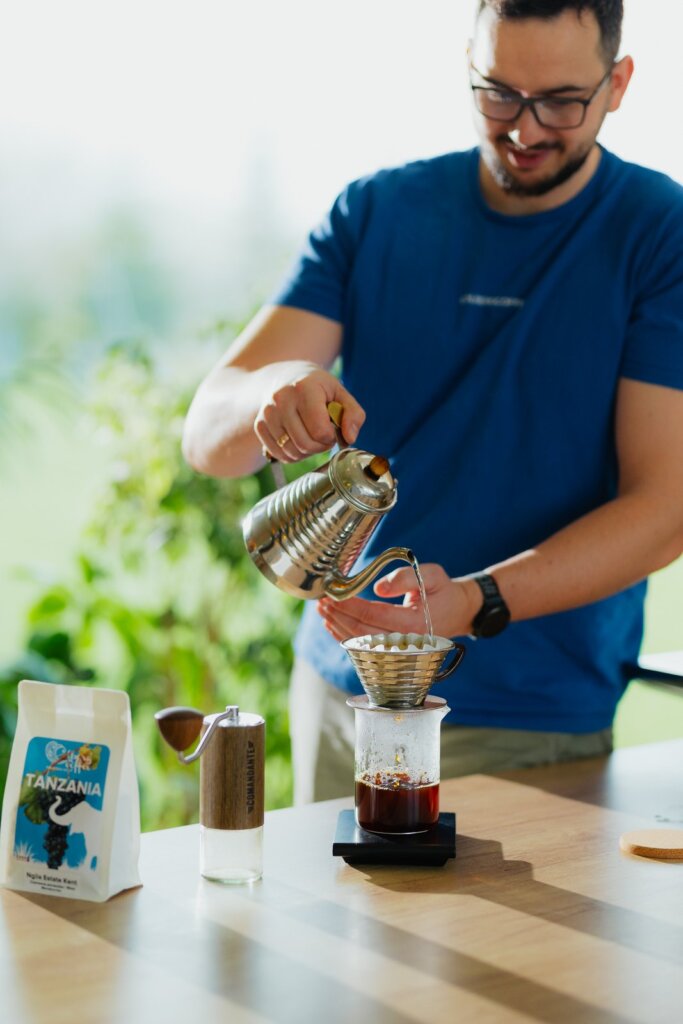
One option worth exploring is coffee from Ethiopia. Ethiopia is home to a wide range of native arabica varieties and is believed to be the birthplace of Geisha. Ethiopian coffees can be a good starting point for exploring more aromatic flavour profiles. However, not every Ethiopian coffee will have jasmine notes or resemble the coffee from La Esmeralda. The tasting notes of an individual lot are a better guide than the country of origin alone.
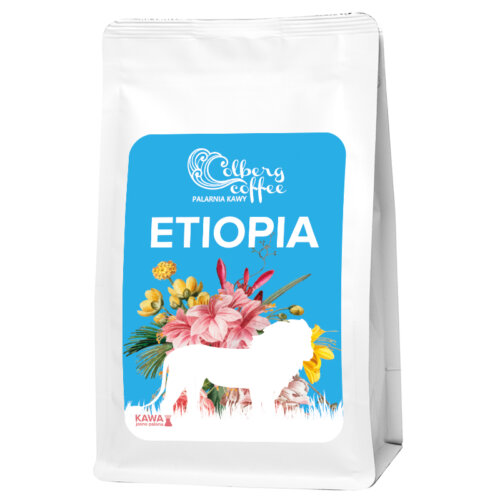
At Colbergcoffee, we offer light-roasted Ethiopian coffees that are a good starting point for exploring these flavours. We do not currently sell Geisha. If you would like to discover more coffees with delicate flavour profiles, you can also read our article on the best light roast coffee. It includes recommendations for beans with a range of flavour profiles to suit different preferences.
Floral notes are not always easy to identify when tasting a coffee for the first time. Sometimes they are more noticeable in the aroma, and their perception also depends on the brewing method and roast level. Comparing different coffees helps you become more familiar with these differences. It is a way to discover which aromas you enjoy most without having to buy the most expensive beans on the market.
Key takeaways
- Geisha, also known as Gesha, is an arabica variety thought to have originated in western Ethiopia. It reached Panama via Costa Rica.
- Hacienda La Esmeralda brought Geisha to prominence through its success at Best of Panama in 2004 and subsequent competition wins.
- Record auction prices reached USD 21/lb in 2004, up to USD 130/lb in 2006-2007, USD 170/lb in 2010 and USD 350.25/lb in 2013.
- Geisha is associated with pronounced floral characteristics, citrus notes, jasmine and a light, tea-like body. Individual lots may have different sensory profiles.
- Flavour is influenced by terroir, farming practices, processing and roasting. Floral aromas can also be found in other light-roasted coffees.
What is Geisha (Gesha) coffee?
Geisha is an arabica variety whose origins are linked to western Ethiopia. It is known for producing exceptionally aromatic coffees, often with floral characteristics. The names Geisha and Gesha refer to the same variety. Its rise to international recognition began with Hacienda La Esmeralda’s success in Panama in 2004.
Where does Geisha coffee come from?
Geisha is believed to have originated in Ethiopia, and its name is linked to the town of Gesha in the west of the country. The variety reached Panama from Costa Rica. It gained widespread recognition thanks to Hacienda La Esmeralda, whose Geisha coffee won the Best of Panama competition on multiple occasions.
What does Geisha coffee taste like?
Geisha is associated with intense floral aromas, citrus notes and a light, tea-like body. Jasmine is one of the notes most closely associated with the variety. However, the sensory profile depends on the individual lot, growing conditions and processing method. Not every Geisha coffee will display the same aromas.
How much does Geisha cost and why is it so expensive?
The price depends on the particular coffee and how it is sold. The best-known auction results come from Hacienda La Esmeralda, whose coffee fetched $21 per pound in 2004, while a small lot sold for $350.25 per pound in 2013. These records were driven by exceptional quality, strong interest from buyers and effective marketing.
Is Panamanian Geisha better than Geisha from other countries?
Coffee cannot be judged solely on its country of origin. Panama brought Geisha to worldwide attention through Hacienda La Esmeralda, but the variety is also grown elsewhere, including in Malawi. Flavour is influenced by terroir, farming practices and post-harvest processing. Each lot is best assessed on its own merits.
Can you find coffee with floral notes at a lower price than Geisha?
Yes. Floral aromas can also be found in other coffees, particularly light and medium roasts. Certain Ethiopian coffees are a good place to start, although not all of them will have jasmine notes. It is best to consider the tasting notes of each individual lot and compare the aromas and flavours of different coffees.
Przeczytaj też

Geisha (Gesha) Coffee: Flavour, Origin and Record Prices
Geisha coffee originates in Ethiopia but gained worldwide recognition thanks to Panama's Hacienda La Esmeralda.
Nov
Kopi Luwak: The Coffee from Droppings I Don’t Recommend
Kopi Luwak costs a fortune, yet its supposedly exceptional quality remains questionable. Behind this famous
Nov
Paper, Metal or Cloth Coffee Filters: Which to Choose?
Paper retains most coffee oils and fine particles, metal lets more of them through, and
Nov

Christmas Coffee Recipes: 5 Ideas from a Barista
Five Christmas coffee recipes you can make at home, including drinks from our café's winter
Nov

Cyber Monday 2026: When Is It and How to Stock Up on Coffee
Cyber Monday 2026 falls on 30 November. Find out how it started, what we have
Nov
Jamaica Blue Mountain Coffee: Is the Legend Worth the Price?
For years, Jamaica Blue Mountain was regarded as one of the world's finest coffees, and
Nov
How much water do coffee grounds retain? Where does it go?
From 350 g of water, you get around 302 g of brewed coffee. We explain
Nov
V60 Pouring Height: What Does Physics Say?
Does pouring from higher up always improve coffee agitation? Physics shows that there is a
Nov

This site is protected by reCAPTCHA. The Google Privacy Policy and Terms of Service apply.