













The same coffee, the same grinder and exactly the same amount of water. Simply changing the filter can make a noticeable difference in the cup. One brew will be clear, another slightly cloudy. One may seem more delicate, the other fuller and oilier. Where do these differences come from when the beans are exactly the same?
I work with coffee every day at the Colbergcoffee roastery near Kołobrzeg. This time, I looked at what James Hoffmann says about filters in “The World Atlas of Coffee”, Jonathan Gagné in “The Physics of Filter Coffee”, Scott Rao in “The Professional Barista’s Handbook” and Jessica Easto in “How to Taste Coffee”. I’m particularly interested in what changes during brewing and how this affects the flavour.
A filter separates the brewed coffee from the grounds, but it does more than that. It retains some fine particles and oils, creates resistance to water flow and affects brewing time. No single filter is best for every coffee. Paper, metal and cloth have different properties, and even two filters made from the same material can behave differently.
In this article, you’ll learn:
- What paper, metal and cotton filters retain and how they affect the body and clarity of coffee.
- How white and brown paper filters differ and why you should rinse them before brewing.
- How paper thickness, pore size and fine coffee particles affect water flow.
- How to clean reusable filters and which type suits each brewing method.
Paper coffee filters: a clean brew and lighter body
A paper coffee filter retains most of the insoluble particles and oils released during brewing. The resulting coffee contains very little sediment. However, paper does not remove all particles and oils. Some can still make their way into the cup. The amount depends, among other factors, on the properties of the particular filter.
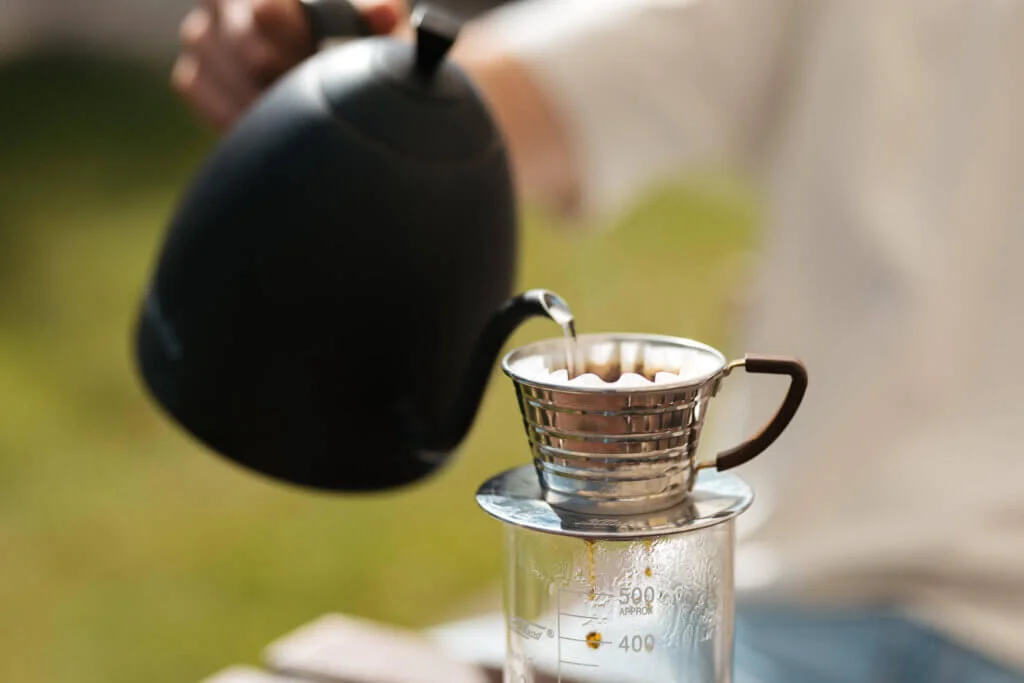
The difference is noticeable when you drink the coffee. Paper-filtered coffee typically has a lighter body, feels less oily and has a more delicate mouthfeel. Individual flavours may be easier to distinguish because the brew contains fewer suspended particles. This is what greater flavour clarity means. It should not be confused with intensity. Coffee can have a pronounced aroma and flavour while still having a light body.
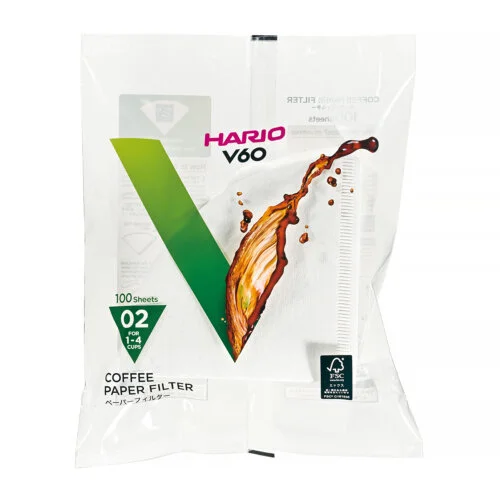
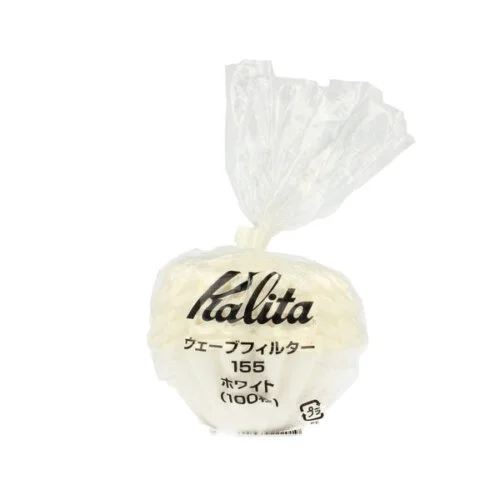
Paper works well for filter brewing. It is used in devices such as the Hario V60, Kalita Wave, Chemex, Melitta, Moccamaster and the AeroPress in its standard configuration. Each brewer requires a filter of the appropriate shape and size. Chemex uses a different type of paper from the V60, and the small, round AeroPress filter does not fit a conventional dripper. The paper itself can also vary in thickness and structure.
Metal coffee filters: more oils and a fuller body
A metal mesh filter retains larger coffee particles but allows more fines and oils to pass through than paper does. The brew can be slightly cloudy, with sediment collecting at the bottom of the cup. This is particularly noticeable with a French press. The metal mesh attached to the plunger separates most of the grounds from the brew but does not remove all the suspended particles.
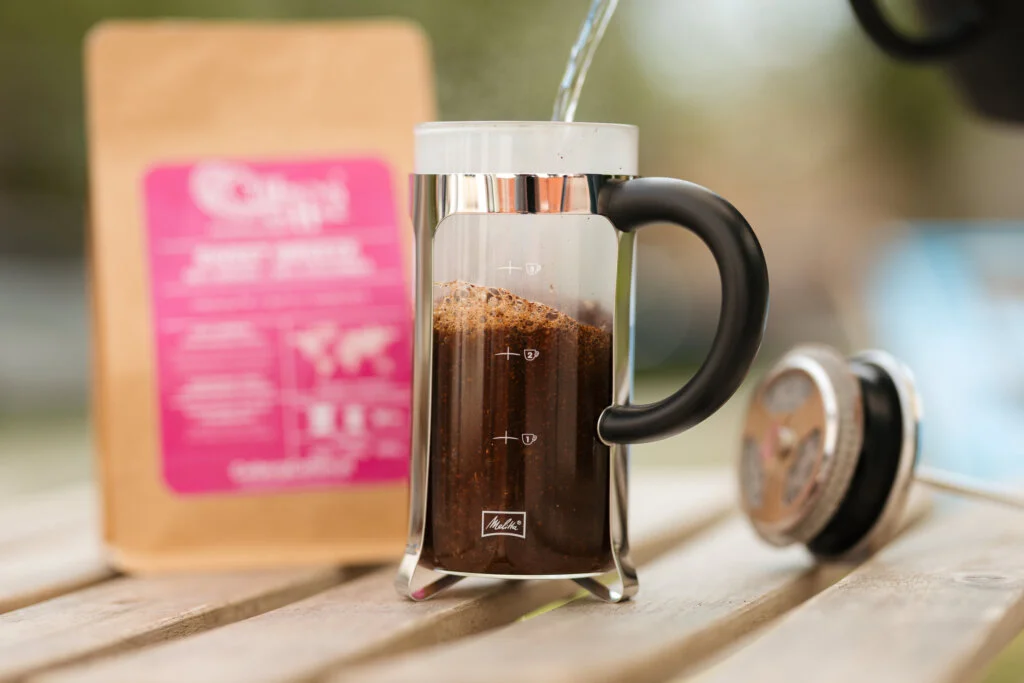
Oils and insoluble particles affect the mouthfeel of coffee. Scott Rao describes coffee brewed using a metal filter as having a heavy body and lower flavour clarity. It can feel fuller and oilier in the mouth. Suspended particles can also affect how acidity is perceived and make individual flavours harder to distinguish. This does not mean that coffee brewed with a metal filter will always taste better. A heavy body is a characteristic of the brew, not a measure of its quality.
The size of the mesh openings matters. Different filter designs allow different amounts of fines to pass through, so not all metal filters produce the same results. The amount of sediment also depends on the grind size and how the particles behave during brewing. The coffee bed itself retains some fines before the brew reaches the mesh. The filter material alone is therefore not enough to predict how much sediment will end up in the cup.
A metal coffee filter can be reused many times. However, grounds and oils need to be removed regularly, including from hard-to-reach areas of the mesh. Residual oils can become rancid over time and impart unpleasant flavours to subsequent brews. Thorough cleaning after each use helps prevent this.
Cloth coffee filters: cotton as a middle ground between paper and metal
A cloth filter retains larger coffee particles and some fines while allowing some oils to pass through. The resulting brew can have a fuller body than paper-filtered coffee while still containing relatively little sediment. These filters are used in cloth-based brewing methods and some siphon brewers, among other applications.
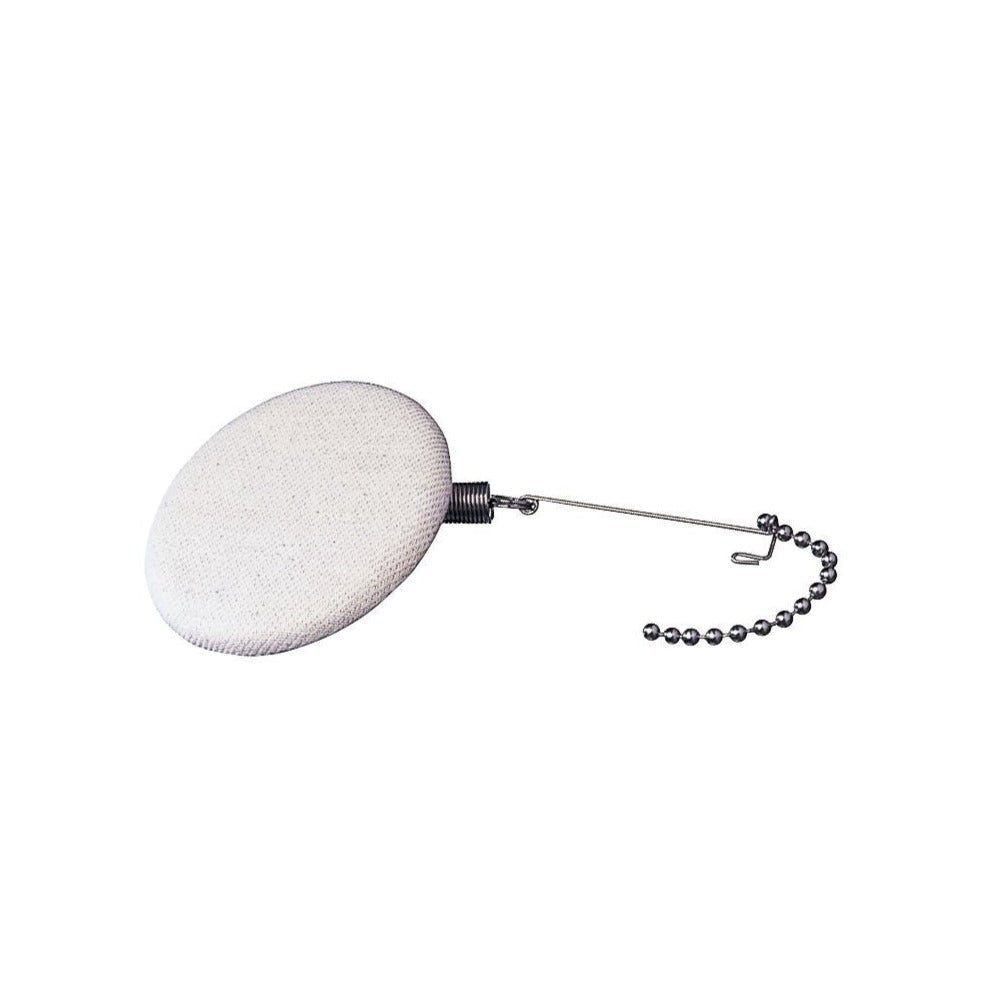
However, the authors describe different results from cloth filtration. James Hoffmann describes the resulting brew as clean but with a fuller mouthfeel than typical paper-filtered coffee. Jonathan Gagné notes that some cloth filters can produce fast flow rates and cloudy brews, much like metal filters. Rao describes cloth-filtered coffee as having a heavy body and moderate flavour clarity. We cannot therefore assume that all cotton filters have the same properties.
Both the properties of the fabric and how it is used matter. The fabric retains some oils within its fibres. If these oils remain after repeated brewing, they can eventually become rancid and affect the flavour of the coffee. Cotton therefore requires more thorough cleaning than metal. Simply discarding the grounds is not enough if residue remains in the fabric.
| Filter | What reaches the cup | Body and clarity |
|---|---|---|
| Paper | Small amounts of fines and oils, usually little sediment. | Lighter body, high brew and flavour clarity. |
| Metal | More oils and fine particles, with possible sediment. | Heavy body, lower clarity, fuller texture. |
| Cloth | Some oils and fines, with the amount of sediment depending on the fabric. | Usually a fuller body than paper-filtered coffee, with clarity depending on the filter. |
Why doesn’t thicker paper always slow down brewing?
A thicker filter offers greater resistance to water flow when comparing materials with identical structures and surface areas. In practice, however, several other factors vary between filters. One type of paper may have larger pores than another. The fibres may be arranged differently, and the surface may be smooth or textured. Two filters of similar thickness will therefore not necessarily allow water to pass through at the same rate.
Jonathan Gagné compares filters from Hario, Cafec, Chemex and other manufacturers. He shows that flow rate is influenced by paper thickness, porosity and the available filtration area. Creped paper, which has an uneven, wrinkled texture, can increase the surface area in contact with water. However, this does not guarantee a shorter brewing time. The water must still pass through the coffee bed, which also creates resistance to flow.
Switching to a different filter paper does not necessarily make a significant difference to brewing time. If the coffee bed accounts for most of the resistance, the effect of the filter itself may be minimal. Under other conditions, the properties of the paper will have a more noticeable effect. Flow rate is also influenced by the amount of coffee used and its grind size. Gagné describes the relationship between particle size distribution and the hydraulic resistance of the coffee bed. The smallest particles produced during grinding are particularly important.
These tiny particles, known as fines, can migrate towards the filter with the water. Some accumulate on the fibres, while others become lodged in the pores. Over time, the flow rate decreases. Water may then flow unevenly through the coffee bed, affecting extraction. Thicker paper can accommodate more fines before becoming clogged, although it also creates greater resistance to flow. If you experience flow problems, you can look at the grind size, coffee dose, filtration area and pouring technique. A longer brewing time does not automatically mean better extraction.
White or brown filter paper: what’s the difference and why rinse it?
Paper coffee filters are available in white (bleached) and brown (unbleached) versions. The difference goes beyond appearance. Natural compounds in the paper can pass into the water and impart a papery or cardboard-like taste. White filters generally reduce this problem, but colour alone does not guarantee the absence of unwanted flavours. Brown paper does not necessarily make coffee taste worse either. What matters is the properties of the individual product.
Gagné tested this in an experiment. He passed 200 g of distilled water through each dry filter and measured how much material was released into the water. Two white Hario filters, VCF-02-100W and VCF-02-40W, recorded 0 ppm. A white Cafec AC4-100W recorded 1 ppm, while a brown Hario VCF-02-100M recorded 5 ppm (parts per million). These results apply to the specific products and test conditions. They do not mean that every brown filter releases more substances into the water than every white filter.
The measurement alone does not fully capture the effect on taste. You can investigate this with a simple test. Pour hot water through the filter, allow it to cool and compare it with water that has not come into contact with the paper. If you notice a taste of cardboard or wet paper, this suggests that the filter may affect the flavour of the brew. Some types of paper require more thorough rinsing, particularly thicker and larger filters.
Rinse the paper filter with hot water before adding the ground coffee. This helps reduce any papery taste while warming the dripper and the vessel underneath. Rao also notes that paper can absorb odours during storage. Filters should therefore be kept away from external odours. Once you have rinsed the filter, discard the water from the server or cup before you start brewing.
How to clean and store reusable coffee filters
Metal and cotton filters require different care. Remove coffee grounds and oils from a metal filter after each use. Residue can accumulate in the mesh openings and around the fittings. Over time, it can affect the flavour of subsequent brews. Regular cleaning reduces the build-up of residue, which becomes increasingly difficult to remove over time.
Cotton filters require more attention. The fabric absorbs oils and can develop an unpleasant smell if left damp and dirty. Rinse it thoroughly after brewing. If you intend to dry the filter, make sure it dries quickly. Slow drying encourages the development of unwanted odours. Residual oils can eventually become rancid, so rinsing alone is not always enough to keep the filter in good condition.
Hoffmann describes storing a regularly used cloth filter submerged in water in a glass container in the fridge. If the filter will not be used for a longer period, he suggests placing it in a sealed bag while it is clean and wet, then freezing it. However, he notes that repeated freezing and thawing can accelerate wear on the fabric. Keeping the filter cold is no substitute for thorough washing.
From time to time, the fabric needs a deeper clean. The books describe the occasional use of a suitable cleaning agent dissolved in hot water, followed by very thorough rinsing. Another method involves boiling the filter in water containing an unscented cleaning agent, then boiling it again in clean water. No cleaning agent should remain in the fibres. If the filter still smells of old coffee oils, it may transfer that smell to the next brew.
Which filter suits each brewing method?
The Hario V60 uses a conical paper filter, the Kalita Wave uses paper filters shaped to fit its design, and the Chemex uses its own type of filter paper. Melitta and Moccamaster brewers also use paper filters. In its standard configuration, the AeroPress uses a small, round filter. Each of these brewers requires a paper filter of the correct size and shape. At Colbergcoffee, we sell coffee filters for a range of brewing methods, including filters for Hario, Kalita, Melitta, Moccamaster and AeroPress.
The French press is the most familiar example of metal filtration. Its mesh filter separates the larger coffee grounds from the brew, leaving more oils and fine particles than a typical paper filter would. Cotton filters are used in cloth-based pour-over methods and brewers such as the siphon. Siphon brewers can also use paper or metal filters. Each filter type offers different possibilities, but with cloth filters you also need to consider cleaning and storage.
I would start by considering what you want from the coffee in your cup. If you prefer a clear brew with little sediment, paper is a natural starting point. Metal can produce a fuller body, usually at the expense of clarity. Cotton can offer a middle ground, although much depends on the properties of the fabric. The final flavour also depends on the coffee itself and how extraction takes place.
Key takeaways
- Paper retains most fine particles and oils. It generally produces coffee with a light body, little sediment and high flavour clarity.
- Metal allows more oils and fine particles to pass through. The coffee can have a fuller body, feel oilier and be less clear.
- Cotton filters do not all produce the same results. Depending on the fabric, the brew may be relatively clear or contain more fines.
- Paper thickness alone is not enough to predict brewing time. Pore size, filtration area, coffee bed resistance and the potential for clogging all play a role.
- It is a good idea to rinse paper filters before brewing. Metal and cloth filters require regular cleaning, and cotton filters also need to be stored properly.
Does a paper filter make better coffee than a metal one?
There is no single answer. Paper generally produces coffee with greater flavour clarity and a lighter body. Metal allows more oils and fine particles to pass through, which can give the brew a fuller body. The choice depends on your preferred coffee texture.
Is a white paper filter better than a brown one?
White filters generally reduce the risk of a papery taste. In Gagné’s experiment, two white Hario filters recorded 0 ppm, a white Cafec recorded 1 ppm and a brown Hario recorded 5 ppm of dissolved substances. These results apply to specific products and do not mean that every brown filter is inferior.
Do you need to rinse a paper filter before brewing coffee?
Rinsing is recommended. Hot water helps reduce any papery taste and warms the dripper and the vessel beneath it. Once you have rinsed the filter, discard the water before brewing your coffee.
Why does coffee sometimes drain through a paper filter very slowly?
One possible cause is fine particles produced during grinding becoming lodged in the filter’s pores. Grind size, coffee dose, filter structure and pouring technique also play a role. A long drawdown time alone is not enough to identify the exact cause.
How should you store a cotton coffee filter?
Rinse it thoroughly after use. One of the methods described involves storing the clean filter submerged in water in a glass container in the fridge. If you will not be using it for a longer period, you can freeze the wet filter in a sealed bag. However, repeated freezing and thawing can accelerate wear on the fabric.
Can you use the same filter for an AeroPress, V60 and French press?
Not in the standard configurations described here. The AeroPress uses a small, round paper filter, the V60 uses a conical filter, and the French press has a metal mesh filter attached to its plunger. They differ both in the shape of their filters and in how they separate the brewed coffee from the grounds.
Przeczytaj też
Kopi Luwak: The Coffee from Droppings I Don’t Recommend
Kopi Luwak costs a fortune, yet its supposedly exceptional quality remains questionable. Behind this famous
Nov
Paper, Metal or Cloth Coffee Filters: Which to Choose?
Paper retains most coffee oils and fine particles, metal lets more of them through, and
Nov

Christmas Coffee Recipes: 5 Ideas from a Barista
Five Christmas coffee recipes you can make at home, including drinks from our café's winter
Nov

Cyber Monday 2026: When Is It and How to Stock Up on Coffee
Cyber Monday 2026 falls on 30 November. Find out how it started, what we have
Nov
Jamaica Blue Mountain Coffee: Is the Legend Worth the Price?
For years, Jamaica Blue Mountain was regarded as one of the world's finest coffees, and
Nov
How much water do coffee grounds retain? Where does it go?
From 350 g of water, you get around 302 g of brewed coffee. We explain
Nov
V60 Pouring Height: What Does Physics Say?
Does pouring from higher up always improve coffee agitation? Physics shows that there is a
Nov

Why Does Coffee Taste Different as It Cools?
Coffee left on your desk can taste completely different from how it tasted just after
Nov

This site is protected by reCAPTCHA. The Google Privacy Policy and Terms of Service apply.