













Mould in a coffee machine is a sign that you should stop using it for the time being and carefully check where the mould has developed. Sometimes, simply washing the removable drip tray or grounds container is enough. However, if mould is visible in hard-to-reach areas or inside the tubing, cleaning at home may not be sufficient.
Below is a safe approach to dealing with mould. Remember that coffee machine designs vary, so always follow the instructions for your specific model first.
Where can mould develop in a coffee machine?
Start by checking the areas where moisture and coffee residue can accumulate:
- the drip tray,
- the grounds container,
- the water tank,
- the removable brew unit,
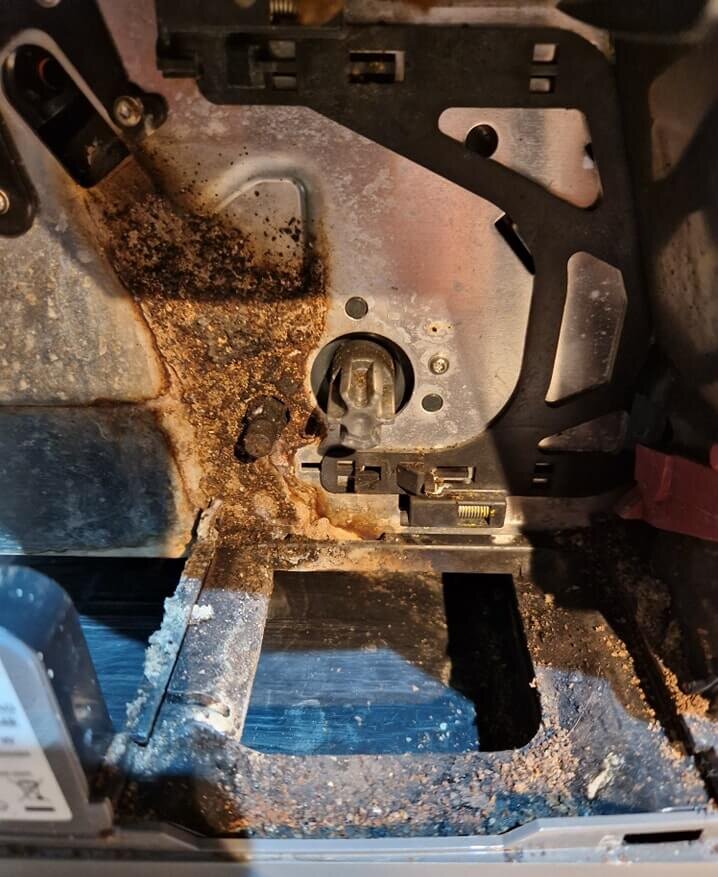
- accessible recesses beneath the brew unit or around the seals.
Not every dark deposit is mould. It could also be dried coffee, mineral deposits from water or coffee oil residue. If you notice fluffy growth, detect a musty smell or are unsure what you are dealing with, stop using the machine and check the manual carefully or consult a service centre.
How to remove mould from a coffee machine safely
1. Switch off the machine and prepare the removable parts
Switch off the machine, unplug it and wait for it to cool down. Empty the water tank, grounds container and drip tray. Only remove parts that the user manual identifies as removable.
2. Wash the drip tray and grounds container
Wash the removable parts according to the manufacturer’s instructions. Some can be washed under running water, others can also be washed with washing-up liquid, and only certain parts are dishwasher-safe. Check the manual for your specific model and dry the parts thoroughly after washing.
3. Clean the water tank
Empty the water tank and wash it according to the manufacturer’s instructions. For many models, manufacturers recommend rinsing the tank regularly under running water. Do not use unsuitable mould removers or any products that are not approved in the coffee machine’s manual.
4. Check the brew unit
If the brew unit is removable, clean it according to the user manual. Cleaning instructions vary between models: some brew units should be rinsed with water only and then left to dry. Do not put them in the dishwasher or use detergent unless the manufacturer recommends doing so.
5. Clean accessible surfaces and dry the parts
Wipe accessible internal surfaces with a slightly damp cloth, provided the user manual permits this. Do not pour water directly into the interior of the machine or immerse the machine in water. Allow the washed removable parts to dry completely before refitting them.

When should you take your coffee machine in for servicing?
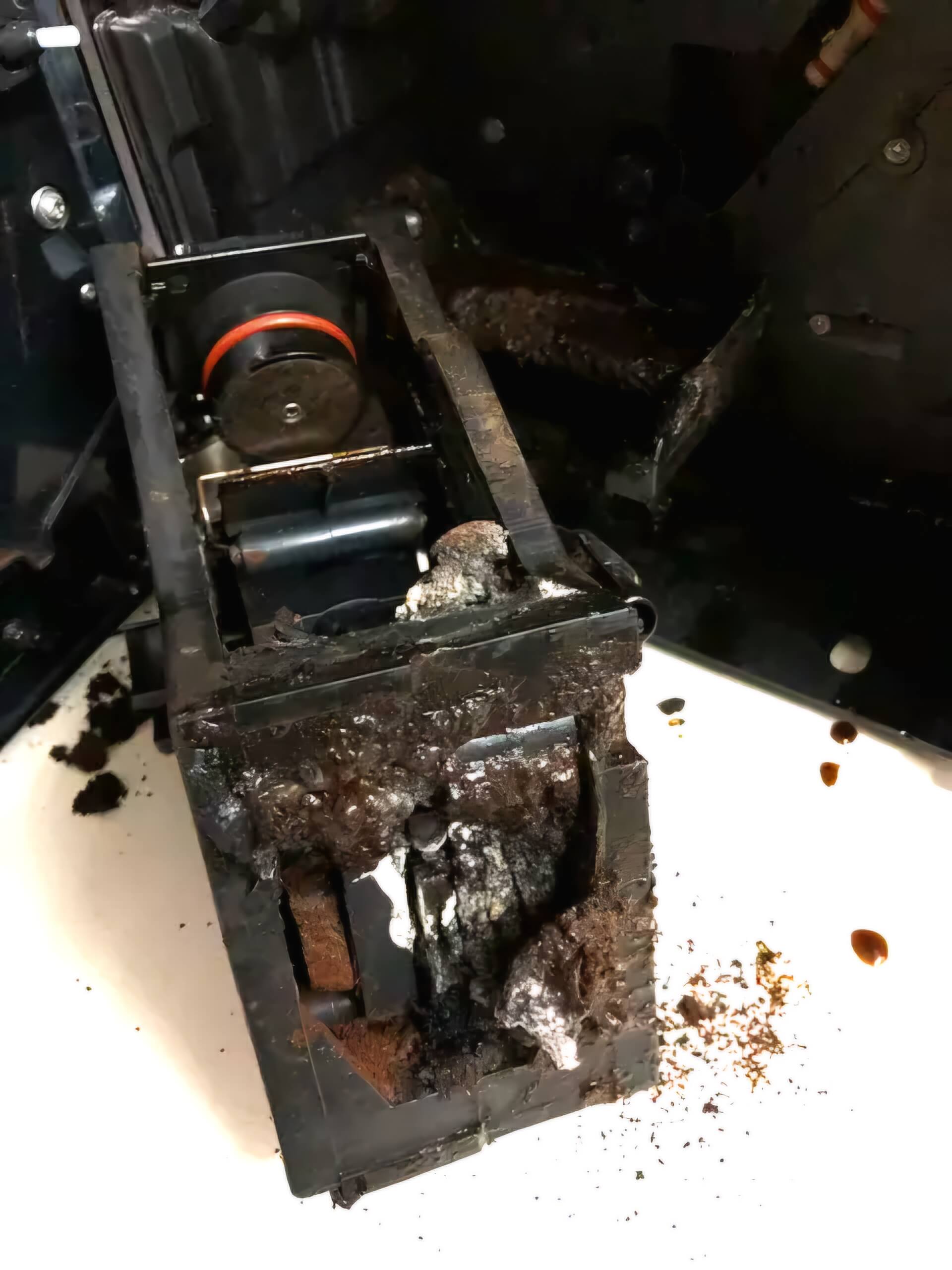
Stop cleaning the machine yourself and contact a service centre if mould is present in an inaccessible area, such as inside the machine or its internal tubing. Do the same if a musty smell or mould growth returns after washing the removable parts.
Do not use the machine to make coffee until it has been inspected. A service technician can assess whether the machine needs to be dismantled and cleaned internally.
What should you not pour into a coffee machine?
Do not run bleach, chlorine, household mould removers or any other products not approved by the manufacturer through the machine’s water circuit. Do not mix cleaning products.
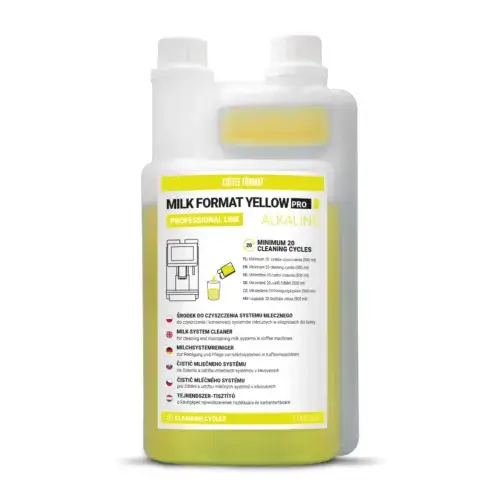
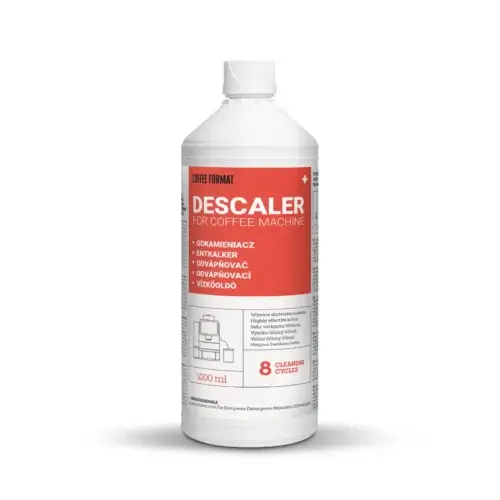
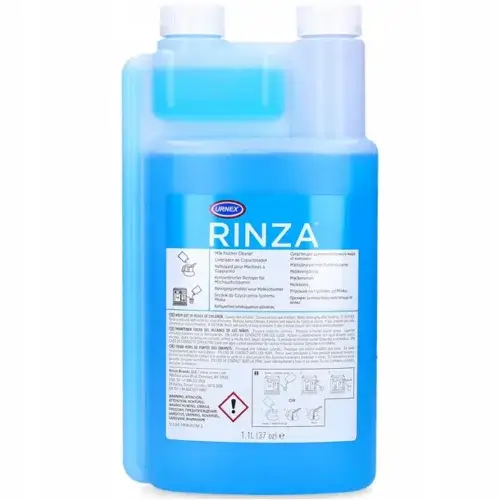
Do not rely on descaling to remove mould either. Descaling products are designed to remove limescale, while coffee machine cleaning tablets serve specific purposes, such as removing coffee residue. Only use the cleaning procedures and products specified in the user manual. Recommendations may vary between manufacturers. De’Longhi, for example, advises against using vinegar to descale its coffee machines.
- Empty the drip tray and grounds container regularly.
- Rinse the water tank according to the user manual.
- Do not leave wet coffee grounds in a closed container for extended periods.
- Clean the brew unit as often as recommended by the manufacturer.
- Allow removable parts to dry completely after washing.
- Run the cleaning programmes according to the user manual.
FAQ: Mould in a coffee machine
Can you drink coffee from a machine with mould in it?
Stop using the coffee machine until the accessible parts have been cleaned. If mould is present in an area you cannot safely clean yourself, contact a service centre.
Does vinegar remove mould from a coffee machine?
Do not use vinegar as an all-purpose coffee machine cleaner. Check the user manual and use only products approved by the manufacturer.
Can I pour bleach into the water tank?
No. Do not pour bleach or household mould removers into the water tank or water circuit. Use only the products and procedures specified in the user manual.
Does descaler remove mould?
Descaler is designed to remove limescale. Do not rely on descaling to remove mould from a coffee machine.
When should I take my coffee machine in for servicing?
Contact a service centre if mould is present in an inaccessible part of the machine, a musty smell persists after cleaning or mould growth quickly returns. Do not use the machine to brew coffee until it has been inspected.

Kopi Luwak: The Coffee from Droppings I Don’t Recommend
Kopi Luwak costs a fortune, yet its supposedly exceptional quality remains questionable. Behind this famous
Nov

Paper, Metal or Cloth Coffee Filters: Which to Choose?
Paper retains most coffee oils and fine particles, metal lets more of them through, and
Nov

Christmas Coffee Recipes: 5 Ideas from a Barista
Five Christmas coffee recipes you can make at home, including drinks from our café's winter
Nov

Cyber Monday 2026: When Is It and How to Stock Up on Coffee
Cyber Monday 2026 falls on 30 November. Find out how it started, what we have
Nov

Jamaica Blue Mountain Coffee: Is the Legend Worth the Price?
For years, Jamaica Blue Mountain was regarded as one of the world's finest coffees, and
Nov

How much water do coffee grounds retain? Where does it go?
From 350 g of water, you get around 302 g of brewed coffee. We explain
Nov

V60 Pouring Height: What Does Physics Say?
Does pouring from higher up always improve coffee agitation? Physics shows that there is a
Nov

Why Does Coffee Taste Different as It Cools?
Coffee left on your desk can taste completely different from how it tasted just after
Nov

This site is protected by reCAPTCHA. The Google Privacy Policy and Terms of Service apply.