









The coffee in the basket looks evenly distributed, yet espresso flows mostly from one side of a bottomless portafilter. The cause may be clumps formed during grinding. A tamper will not break them up, so it is worth distributing the entire dose evenly before tamping. This is where WDT comes in: stirring the grounds with a thin needle. In its simplest form, all you need is a straightened paper clip and a yoghurt pot with the bottom cut off. The technique is used in both home kitchens and specialty coffee shops. This article draws on Scott Rao’s 2008 book The Professional Barista’s Handbook. I explain how to perform WDT, when it helps with espresso preparation and when it can slow down work behind the bar.
In this article, you will learn:
- why clumps form in ground coffee and how they affect the flavour of espresso,
- how to perform WDT correctly, step by step,
- when WDT works well at home and when a café is better off using a suitable grinder or an automated device.
Why even coffee distribution in the basket matters
During espresso extraction, water flows through a bed of finely ground coffee. If the grounds are unevenly distributed, some areas offer more resistance to the flow of water than others. Water preferentially flows through the less compacted areas. Channels can then form, allowing considerably more water to pass through them than through the rest of the coffee bed. This phenomenon is known as channelling.
The effects of channelling can be tasted in the cup. Water flowing through a channel dilutes the espresso, while the coffee along the channel may become over-extracted. At the same time, too little water passes through the more compacted areas, resulting in under-extraction. The espresso may consequently taste overly bitter, less intense and underdeveloped. These problems can occur even when the coffee dose and extraction time appear to be correct.
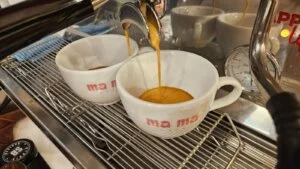
Channelling can sometimes be spotted when brewing espresso with a bottomless portafilter. If espresso flows faster from one part of the basket or turns yellowish sooner in that area, it may indicate uneven extraction. However, not all channelling is visible to the naked eye.
Properly prepared coffee should have a uniform density throughout the basket, a smooth surface and close contact with the basket walls. The dosing process itself is particularly important. If the grounds fall unevenly from the grinder, levelling the surface afterwards may not be enough. Proper distribution therefore begins the moment the grounds enter the basket.
Why clumps form in ground coffee
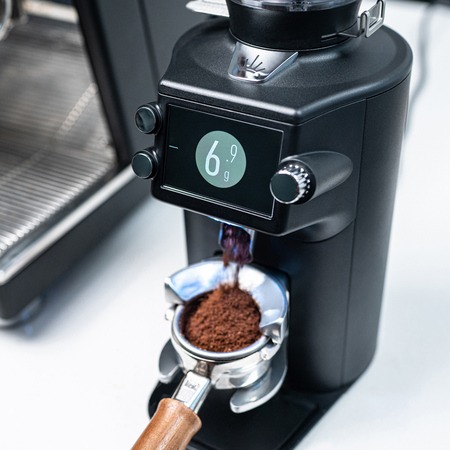
Clumps can form for several reasons. One is excessive heat generated in the coffee during grinding. Grinder design also plays a role, particularly if the grounds have to pass through an excessively narrow chute. Oils on the surface of the beans also encourage clumping, especially in older and dark-roasted coffees. Blunt burrs can make the problem worse by reducing grind quality.
Clumps make even extraction more difficult. Water can bypass compacted areas of coffee, leaving some of the grounds insufficiently saturated. Rao describes his own experience with a grinder fitted with small, blunt, flat burrs. He observed that 20-25% of each spent coffee puck remained completely dry. This was an isolated observation from practical experience, not the result of a representative study. However, it illustrates the extent of the extraction problems that poor grind quality can cause.
What is WDT and how does it work?
WDT stands for Weiss Distribution Technique, a coffee distribution method developed by John Weiss. It involves stirring the grounds in the basket with a thin, pointed tool. The needle breaks up clumps and helps distribute the entire dose evenly. Unlike simple surface levelling, WDT also redistributes the grounds deeper in the basket.
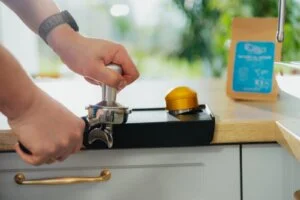
For manual WDT, all you need is a dosing funnel that fits onto the basket and a fine dissecting needle or a straightened paper clip. John Weiss even suggested using a small yoghurt pot with the bottom cut off. This makeshift funnel helps keep the grounds inside the basket while stirring.
How to perform WDT step by step
- Fit a dosing funnel onto the portafilter basket to prevent grounds from spilling out while stirring.
- Pour the ground coffee through the funnel until the basket is slightly overfilled.
- Stir the entire dose thoroughly with a thin needle, breaking up clumps and distributing the grounds.
- Carefully remove the funnel from the basket.
- Quickly level the surface of the grounds using the NSEW method or the Stockfleth technique.
- Tamp the coffee, ensuring that the surface is level.
WDT can also be performed outside the portafilter. The ground coffee is placed in a separate container, stirred thoroughly and then transferred to the basket. This reduces the time the portafilter spends away from the group head, minimising heat loss. This is particularly important when coffee preparation takes longer.
Even careful distribution will not produce consistent espresso if the dose varies from shot to shot. A difference of just 1 g of ground coffee can alter the flow time by several seconds. When preparing espresso, aim to maintain a consistent dose to within approximately 0.5 g. Consistent dosing makes it easier to assess the effect of WDT on extraction.
The book does not prescribe a specific stirring time, number of needles or needle diameter. These parameters can be adjusted to suit the tool and your approach to espresso preparation.
WDT and other coffee distribution methods
| Method | How it works | Rao’s assessment |
|---|---|---|
| WDT | stirring the entire dose of coffee with a thin needle | breaks up clumps but can be too time-consuming during busy periods |
| NSEW | moving the mound of coffee in four directions in turn before removing the excess | quick and easy, suitable for a busy café |
| Stockfleth | rotating the portafilter and the hand in opposite directions over the mound of coffee | probably the most difficult to master, but effective with practice |
| Layered dosing | adding small amounts of coffee while rotating the portafilter | quick enough for use in a café |
| Tapping the portafilter between tamps | dislodging grounds from the basket walls by tapping the portafilter | Rao advises against this method because tapping can create a channel along the basket wall |
With the NSEW method, the amount of coffee in the basket before levelling also matters. Two doses may look identical after the excess has been removed, yet differ in density. If one formed a larger mound above the rim of the basket before levelling, it may be more compacted after distribution. Consistent dosing is therefore essential even when using a simple surface levelling method.
Is WDT worth using at home and in a café?
At home, manual WDT can be a useful way to improve coffee distribution. Rao points out that a home barista who typically makes no more than 2-3 espressos per hour can devote more time to each dose. This allows the barista to break up clumps thoroughly and distribute the grounds evenly, even if the grinder does not distribute the coffee perfectly. At this pace, the extra step is rarely a significant inconvenience.
Things are different in a busy café. If manual WDT adds between 11 and 19 seconds to the preparation of each portafilter, it can slow down service during the morning rush. Greater importance is therefore placed on choosing a grinder that promotes even dosing and limits heat build-up during grinding. Features that help include vertical delivery of the grounds into the basket, a loose, fluffy grind texture and a mechanism that stirs the grounds before they leave the grinder.
Before reaching for a needle, check the condition of your grinder. Grind enough coffee for several espressos onto a sheet of paper and check for clumps. If you find any, clean the burrs and the chute leading to the dosing chamber. Replace worn burrs. Only try WDT if these steps fail to resolve the problem. I explain how to clean the grinder safely in my article on how to clean a coffee grinder.
Automated WDT in cafés
Stirring coffee grounds by hand takes time, so cafés can use automated WDT devices. Our range includes the PUQ Prep Navigator. The device is positioned above the portafilter basket. At the press of a button, a set of thin needles moves and rotates through the grounds. This allows the selected distribution cycle to be repeated regardless of which barista is operating the espresso machine.
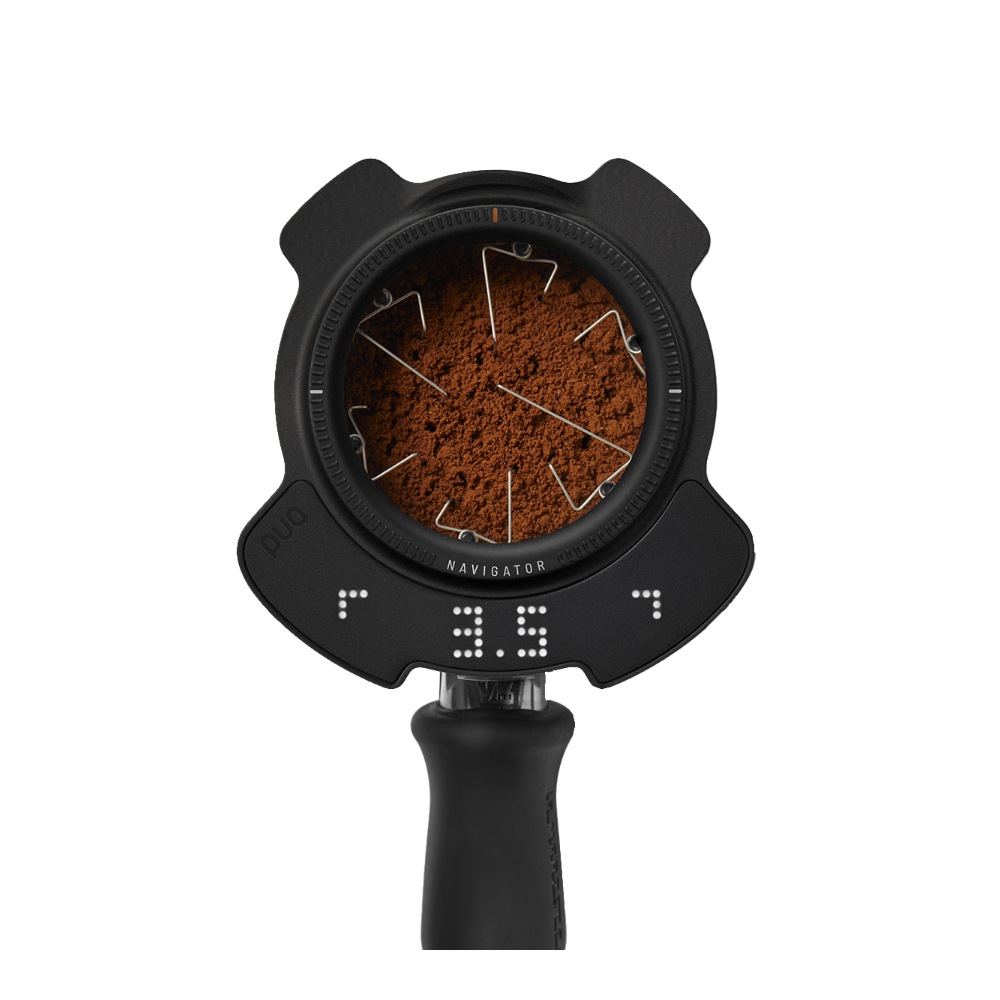
The Navigator offers three coffee distribution profiles: Standard, Speedy and Precision. Two needle rings are available. The short-needle ring is designed for doses of 18-20 g, while the long-needle ring is intended for doses of 20-22 g. The device does not replace a tamper, so the espresso preparation workflow remains simple: grind, distribute the grounds using the Navigator and tamp. If you are still choosing a grinder, read my article on burr grinders: flat or conical burrs.
WDT and tamping
After performing WDT and levelling the surface, the coffee still needs to be tamped. Tamping consolidates the distributed grounds in the basket, smooths the surface and eliminates larger gaps between the coffee particles. However, it does not correct differences in density caused by improper dosing. This is why careful distribution before tamping is so important.
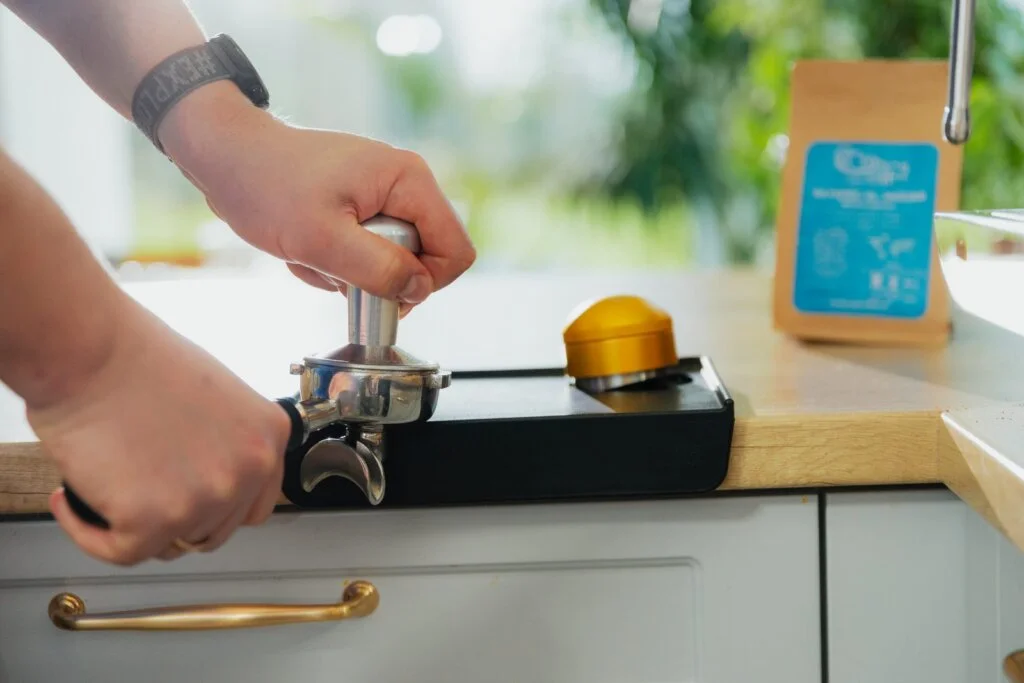
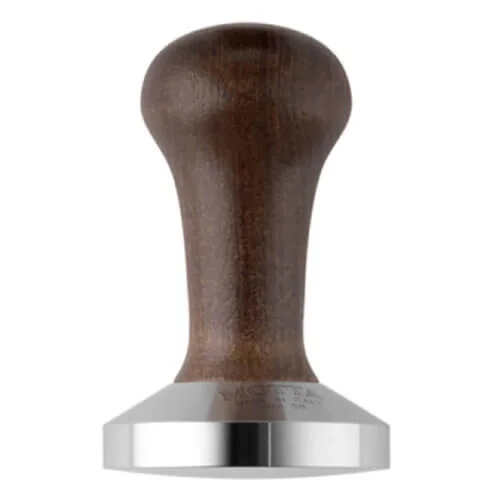
Tamping harder does not automatically produce better espresso. Rao compares the approximately 50 pounds of force applied during a firm tamp with the more than 500 pounds of force exerted on the coffee by water pressure during extraction. Once the grounds have been properly tamped, applying more force has little effect on flow. In practice, a single light, level tamp is sufficient, without twisting the tamper or tamping again. I explain this in more detail in my article on the coffee tamper. If your espresso still flows too quickly despite proper coffee preparation, read my guide on why espresso runs too fast.
Key takeaways
- WDT helps break up clumps and distribute the entire dose of ground coffee evenly throughout the basket, reducing the risk of channelling.
- Manual WDT works well at home when preparing a few espressos per hour. In a busy café, however, it can slow down service.
- WDT is no substitute for consistent dosing, surface levelling or proper tamping.
What is WDT?
WDT, the Weiss Distribution Technique, involves stirring ground coffee in the basket with a thin needle before tamping. It helps break up clumps and distribute the grounds evenly throughout the basket.
Who invented WDT?
The method was developed by John Weiss. The full name, Weiss Distribution Technique, is derived from his surname.
What tools do you need for WDT?
For manual WDT, all you need is a fine dissecting needle or a straightened paper clip and a dosing funnel that fits onto the basket. Automated WDT devices can also be used in cafés.
Does WDT replace tamping?
No. After stirring the grounds using WDT, you need to level the surface and then tamp the coffee.
Is WDT worth using in a café?
WDT can improve the uniformity of coffee distribution, but manual stirring can be too time-consuming during busy periods. A suitable grinder that promotes even dosing into the basket is therefore particularly important in a café.
Can WDT compensate for a poor-quality grinder?
WDT helps reduce problems with clumping and uneven coffee distribution in the basket. First, however, check the condition of the grinder, clean the burrs and the exit chute, and replace any worn burrs.
Przeczytaj też
Kopi Luwak: The Coffee from Droppings I Don’t Recommend
Kopi Luwak costs a fortune, yet its supposedly exceptional quality remains questionable. Behind this famous
Nov
Paper, Metal or Cloth Coffee Filters: Which to Choose?
Paper retains most coffee oils and fine particles, metal lets more of them through, and
Nov

Christmas Coffee Recipes: 5 Ideas from a Barista
Five Christmas coffee recipes you can make at home, including drinks from our café's winter
Nov

Cyber Monday 2026: When Is It and How to Stock Up on Coffee
Cyber Monday 2026 falls on 30 November. Find out how it started, what we have
Nov
Jamaica Blue Mountain Coffee: Is the Legend Worth the Price?
For years, Jamaica Blue Mountain was regarded as one of the world's finest coffees, and
Nov
How much water do coffee grounds retain? Where does it go?
From 350 g of water, you get around 302 g of brewed coffee. We explain
Nov
V60 Pouring Height: What Does Physics Say?
Does pouring from higher up always improve coffee agitation? Physics shows that there is a
Nov

Why Does Coffee Taste Different as It Cools?
Coffee left on your desk can taste completely different from how it tasted just after
Nov

This site is protected by reCAPTCHA. The Google Privacy Policy and Terms of Service apply.