






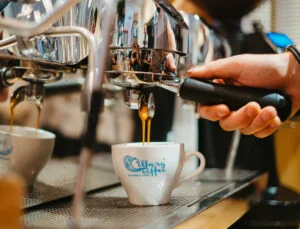



Espresso flows from the portafilter in an even stream, but a few shots later, with the grinder setting unchanged, the coffee flows noticeably faster. You adjust the grind, and the next extraction takes too long. To explain these variations, I draw on Scott Rao’s 2008 book The Professional Barista’s Handbook. I’ll show you what to check before adjusting the grinder and when a change in setting is actually worthwhile.
In this article, you’ll learn:
- Why even a 1 g difference in dose can change extraction time by several seconds.
- When a small grind adjustment makes sense and when it’s better to check your coffee preparation.
- How coffee left in the doser, a hot grinder, tamping and the espresso machine itself affect flow.
Why does the same espresso sometimes flow faster and sometimes slower?
The flow rate of espresso depends on the resistance the ground coffee offers to the water. A finer grind usually increases this resistance, as does a larger dose in the same basket. During normal café service, grind size and dose are the two main factors behind variations between shots.
That doesn’t mean every change in extraction time calls for a grinder adjustment. If slightly less coffee goes into the basket or the grounds are distributed unevenly, a single shot may differ from the previous ones. Adjusting the burrs in response to an isolated variation can make the next shot worse.
If you’re wondering why espresso runs too fast, first establish whether it happened only once or whether the flow has gradually increased over several shots. A consistent trend suggests that a grind adjustment is needed. An isolated variation is more likely to warrant a closer look at the dose and distribution.
Dose: 1 g Can Make Several Seconds’ Difference
Changing the dose by 1 g can alter the time needed to produce the same volume of espresso by several seconds. More coffee in the same basket offers greater resistance to the water and usually slows the flow. Comparing extraction times can be misleading if the weight of the grounds in the basket varies between shots.
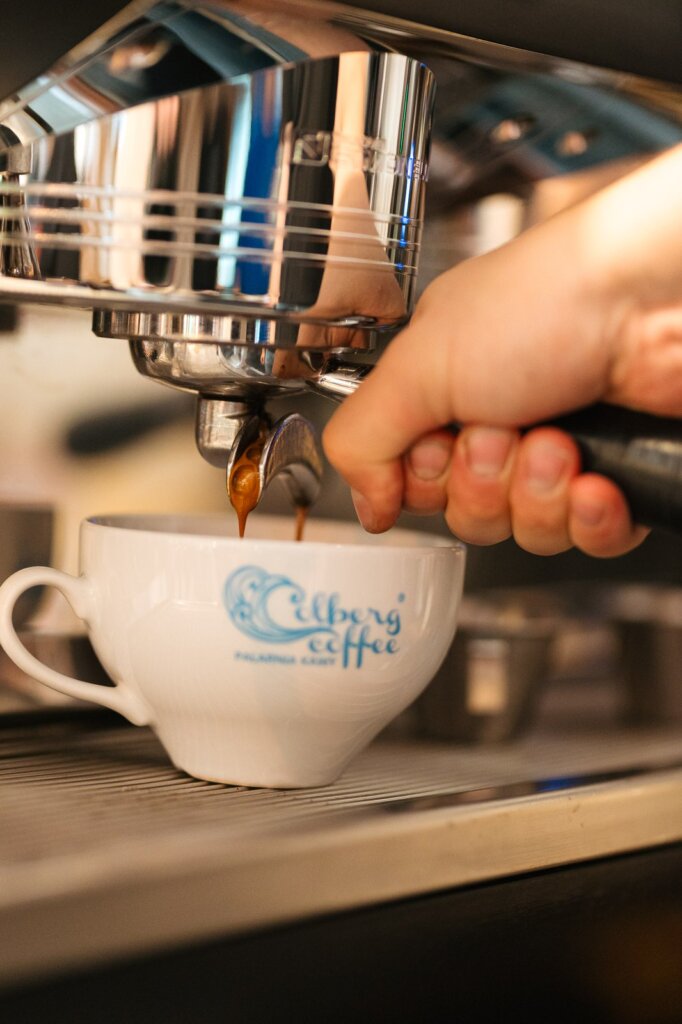
The rule is simple: the espresso dose should be as consistent as possible. The way you fill the basket, distribute the grounds and level them should also remain consistent. Grounds deposited mainly in one area remain more densely packed there, even after the surface has been levelled.
A good target is to keep the variation in dose weight to around 0.5 g. Periodically weighing a few doses during busy service helps, as this is when consistency is most easily lost. A few measurements will help establish whether variations in dose explain the differences in extraction time.
In a traditional doser grinder, the weight of each dose also depends on how much ground coffee is already in the chamber. Pulling the lever in much the same way does not guarantee an identical dose. Weigh a few doses before adjusting the burrs.
Coffee in the Doser: How Long Has It Been Sitting There?
Cafés have busy and quiet periods. Sometimes the grinder runs almost continuously, while at other times ground coffee sits in the doser until the next order. With a traditional doser, this means consecutive doses may contain different amounts of carbon dioxide.
CO2 is produced during roasting and gradually released from the beans. According to data cited in the book, freshly roasted arabica contains between 2 and 10 mg of CO2 per 1 g of coffee, usually closer to the lower end of that range. It takes several weeks for most of the gas to escape from whole beans, but grinding speeds up the process considerably. In one study, 45% of the CO2 escaped within the first 5 minutes after freshly roasted coffee was ground. The finer grind used for espresso should accelerate this process even further.
Contact with hot water causes CO2 to escape rapidly from the grounds. The gas interferes with contact between the water and coffee particles, increasing resistance and slowing the flow. A freshly ground dose may therefore behave differently from grounds that have been sitting in the doser chamber for a few minutes.
Grinding immediately before each shot helps maintain a similar CO2 content across consecutive doses. It also helps preserve volatile aromas. It’s easier to spare the extra time at home than during a rush in a café, but the convenience of filling the doser in advance comes at a cost: some doses sit for longer than others.
When Should You Adjust the Grinder and When Should You Leave It Alone?
If a single shot runs too fast or too slow, start by checking the dose. A grinder adjustment is justified when several consecutive shots show a clear trend towards faster or slower flow. Only when this change persists is there sufficient reason to adjust the grind.
Adjust the grinder in small increments, rarely moving more than one graduation on the adjustment scale at a time. Making too large an adjustment makes it difficult to judge whether the new setting has actually improved the flow. If you want to know how to dial in a coffee grinder in a café, start with a consistent dose and compare several extractions.
After adjusting a grinder with a small chute between the burrs and the doser, use or discard around 5 g of coffee. Grounds from the previous setting may remain in the chute and chamber, making the first dose misleading. This amount of 5 g applies to the grinder described and is not a universal figure for all grinders.
Baristas often talk about the weather and humidity. However, the book does not establish a relationship between ambient humidity and espresso extraction time or provide a basis for adjusting the grinder after rain. Nor does it suggest a schedule for changing grind settings at different times of day.
A Hot Grinder and Blunt Burrs
Some heat is generated during grinding, and contact with hot grinder components adds further heat. This accelerates the loss of aromas and can cause oils to migrate to the surface of the coffee particles. Clumped grounds are harder to wet evenly, resulting in uneven extraction.
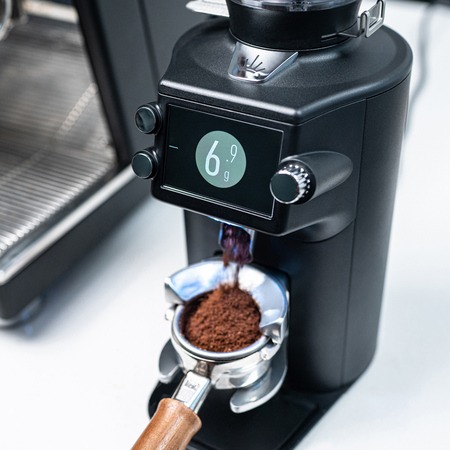
Clumps make it harder for water to reach the entire dose. Rao describes a grinder with small, blunt, flat burrs that left 20 to 25% of the spent puck dry. This observation concerns a specific grinder and does not apply to every grinder.
Sharp burrs put less strain on the motor, generate less heat, produce fewer fines and provide a better particle size distribution. Changing the grind setting will not solve problems caused by worn burrs, so their condition should also be checked if grinding problems persist.
To inspect the grounds, grind enough coffee for several shots onto a sheet of paper and look for clumps. If you find any, the recommendation is to clean the burrs and doser chute, and replace the burrs if they are worn. If clumping occurs, it’s worth knowing how to clean a coffee grinder, including the chute leading to the doser.
At home, when making two or three espressos an hour, differences between grinders may be less noticeable. Professional coffee grinders used in busy cafés should effectively limit overheating and clumping to ensure more consistent extraction.
Why Espresso Flow Varies at the Same Grind Setting
Water under pressure follows the path of least resistance. When coffee is distributed unevenly in the basket, channels can form, allowing more water to pass through them than through other areas. Some grounds are then extracted more heavily than others, affecting the flavour and strength of the espresso.
If most of the coffee falls on one side of the basket, it forms a denser layer that subsequent levelling may not correct. The WDT technique helps break up clumps by stirring the entire dose with a fine tool. However, this takes time, which matters during busy service behind the bar.
Moisture on the basket walls encourages channelling around the edge of the puck. During extraction, the finest particles can also migrate downwards with the water and form a compact layer that partially blocks the basket holes. Resistance then increases, the flow may slow, and the water starts seeking alternative paths through the coffee.
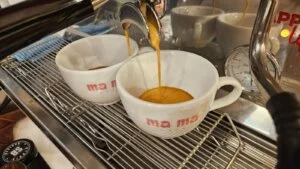
A bottomless portafilter makes uneven flow easier to spot. Faster flow or earlier blonding in one area may indicate channelling. Not all channels are visible from the outside, and the appearance of the flow alone cannot determine how the espresso will taste.
Does Tamping Harder Slow Espresso Down?
Once the coffee has been tamped sufficiently to eliminate large voids, additional pressure has very little effect on flow resistance. Rao compares approximately 50 pounds of force applied during a firm tamp with more than 500 pounds of force exerted on the coffee by pump pressure. This illustrates the difference in force and is not a recommendation for tamping pressure.
Tamping the coffee more firmly leaves more headspace above the puck. Water must first fill this space before the water flowing through the grounds reaches full pressure. A longer delay between starting the pump and the appearance of espresso may be mistaken for a slower flow rate.
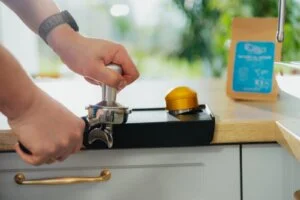
A well-fitting coffee tamper reduces the risk of channelling around the edges. Tapping the side of the portafilter after tamping can break the seal between the coffee and the basket, and tamping again may not restore it. It’s best to tamp lightly and evenly, then carefully lock the portafilter into the group head.
The Espresso Machine: Water Temperature and Pressure
Rao notes that higher water temperatures slow the flow. The range of 85-96°C cited in the book reflects the water temperatures used by professionals at the time and is not a universal standard for every coffee. In a heat exchanger machine, water temperature can also change during extraction, so both group flushing and the interval before brewing matter.
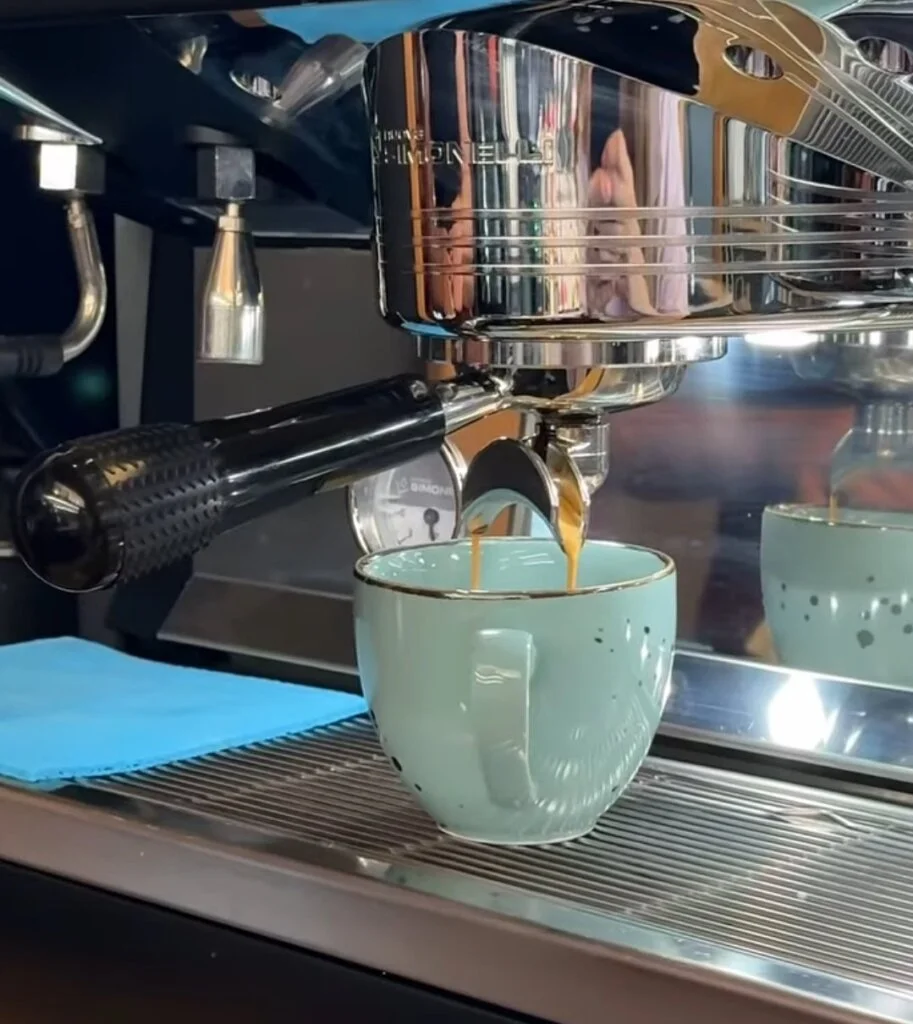
Increasing pressure may initially increase the flow rate, but beyond a certain point, the rate may level off or decrease. Rao gives the example of increasing pressure from 9 to 12 bar, which can slow espresso flow. Possible causes he identifies include compression and swelling of the coffee and the migration of fine particles.
Flushing another group head, extracting shots simultaneously and refilling the boiler can temporarily reduce pressure. Water drawn by other equipment can have a similar effect. Such fluctuations encourage channelling, so the behaviour of the espresso machine should also be considered before adjusting the grind.
Espresso pre-infusion also helps by initially wetting the coffee at low pressure. The grounds absorb water and rearrange before being subjected to full pressure. According to Rao, this reduces channelling, improves consistency and may reduce the need for frequent grinder adjustments. Introducing pre-infusion may, however, require a finer grind.
Espresso Running Fast, Then Slow: What to Check First
| Symptom | What to Check |
|---|---|
| A single shot runs too fast | Dose weight and distribution |
| Flow gradually increases over several shots | A small grind adjustment |
| No change after adjusting the grind setting | Retained grounds from the previous setting |
| Clumps in the ground coffee | Burrs and doser chute |
| Uneven espresso flow | Moisture, blocked basket holes and channelling |
Start with the dose and coffee preparation, as both can be checked without changing the grinder setting. Only if several consecutive shots show the same trend despite consistent dosing should you make a small grind adjustment.
Key Takeaways
- A single shot with a different extraction time does not necessarily indicate an incorrect burr setting, and a difference of just 1 g in dose can alter extraction time by several seconds.
- Consistent flow also depends on how you dose and distribute the coffee, how long the grounds sit after grinding, and the condition of the grinder, basket and espresso machine.
- It’s best to adjust the grind in small increments after observing a clear change over several consecutive shots, and only once the influence of any retained grounds has been eliminated.
Should I Adjust the Grinder After a Single Shot Runs Too Fast?
First, check the dose weight and how the coffee is distributed. One unsuccessful extraction is not enough to assess the grinder setting. An adjustment makes more sense when a similar change occurs over several consecutive shots.
Does a 1 g Difference in Dose Really Affect Espresso Extraction Time?
Yes. A difference of 1 g can alter the time needed to produce the same volume of espresso by several seconds. A larger dose usually increases resistance and slows the flow.
How Much Coffee Should I Discard After Adjusting the Grinder?
For the grinder described in the book, which has a short chute between the burrs and the doser, the amount is around 5 g. This quantity should be used or discarded before assessing the new setting. It is not a universal figure for all grinders.
Can a Hot Grinder Cause Uneven Flow?
Yes. Excessive heat can encourage the formation of sticky clumps in the grounds. These make it harder to wet the coffee evenly, resulting in less consistent extraction.
Will Tamping Harder Slow Espresso Down?
Once large voids in the grounds have been eliminated, additional pressure has little effect on resistance. However, a firmer tamp may increase the time before the first drops appear because it increases the headspace above the coffee.
Does Pre-infusion Help Produce Consistent Espresso?
Based on the experiences described in the book, low-pressure pre-infusion reduces channelling and helps achieve consistent extraction. After introducing pre-infusion, you may need to grind finer to achieve the desired flow rate.
Przeczytaj też
Kopi Luwak: The Coffee from Droppings I Don’t Recommend
Kopi Luwak costs a fortune, yet its supposedly exceptional quality remains questionable. Behind this famous
Nov
Paper, Metal or Cloth Coffee Filters: Which to Choose?
Paper retains most coffee oils and fine particles, metal lets more of them through, and
Nov

Christmas Coffee Recipes: 5 Ideas from a Barista
Five Christmas coffee recipes you can make at home, including drinks from our café's winter
Nov

Cyber Monday 2026: When Is It and How to Stock Up on Coffee
Cyber Monday 2026 falls on 30 November. Find out how it started, what we have
Nov
Jamaica Blue Mountain Coffee: Is the Legend Worth the Price?
For years, Jamaica Blue Mountain was regarded as one of the world's finest coffees, and
Nov
How much water do coffee grounds retain? Where does it go?
From 350 g of water, you get around 302 g of brewed coffee. We explain
Nov
V60 Pouring Height: What Does Physics Say?
Does pouring from higher up always improve coffee agitation? Physics shows that there is a
Nov

Why Does Coffee Taste Different as It Cools?
Coffee left on your desk can taste completely different from how it tasted just after
Nov

This site is protected by reCAPTCHA. The Google Privacy Policy and Terms of Service apply.