


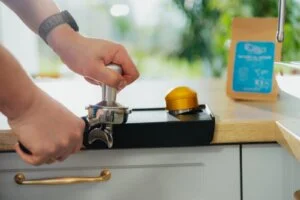
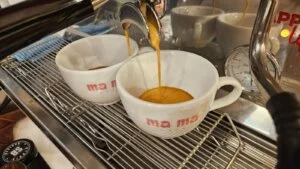




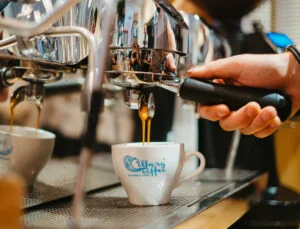
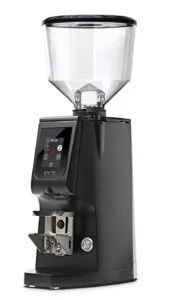




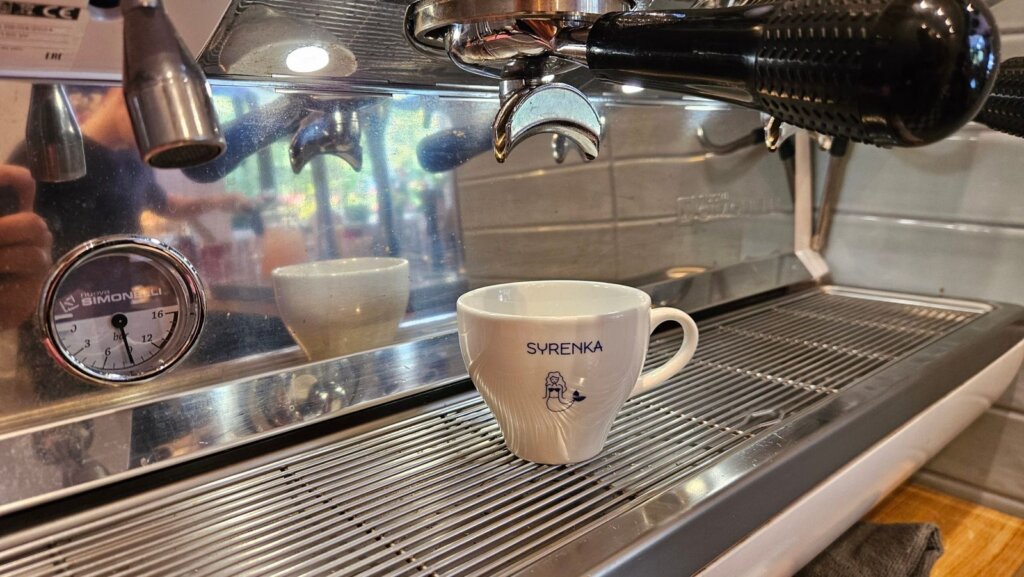
The same coffee, the same barista, but two different espresso machines. One makes it easier to pull consistent shots, while on the other, small differences in coffee preparation are more likely to affect extraction. One reason may be pre-infusion, the process of briefly wetting the ground coffee with low-pressure water before brewing at full pressure. Pre-infusion does not necessarily improve your best shots, but according to Scott Rao, it almost certainly increases the frequency of excellent extractions. Rao describes this in his 2008 book The Professional Barista’s Handbook, which forms the basis of this article.
In this article, you will learn:
- what happens to the coffee in the basket during the first few seconds of brewing,
- the differences between manual, progressive and electronic pre-infusion and flow restriction,
- which pressure and duration to use as a starting point for your own experiments.
What is espresso pre-infusion?
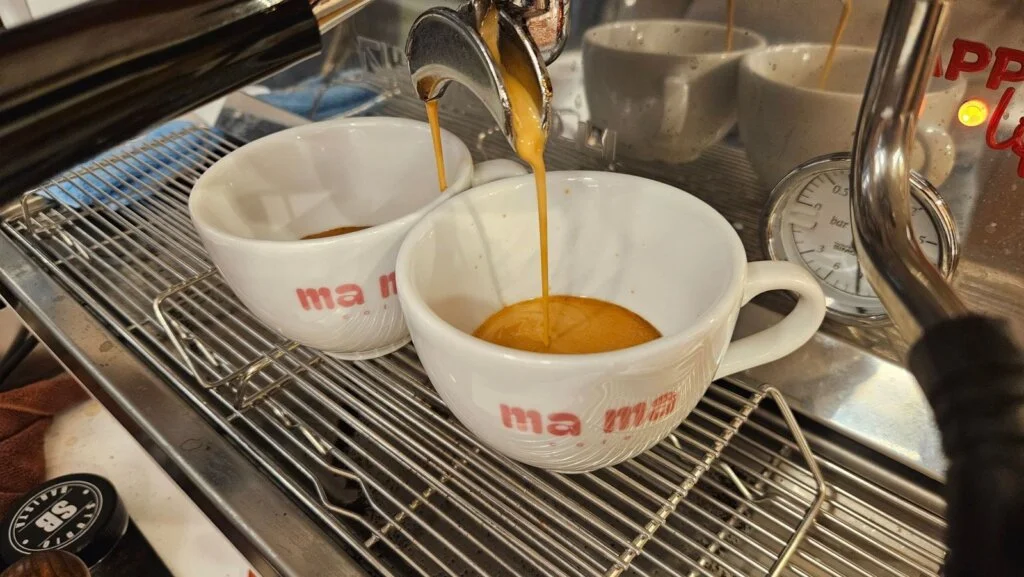
Espresso brewing can be divided into three phases: pre-infusion, pressure ramp-up and extraction itself. However, not every espresso machine features pre-infusion. In machines without this feature, pressure begins to rise as soon as brewing starts. With pre-infusion, water initially flows through the ground coffee more slowly and at lower pressure. A delay before the first drops of espresso appear does not necessarily mean that the machine is performing pre-infusion.
Why pre-infusion works
During pre-infusion, water slowly wets the ground coffee in the basket. The particles absorb water, swell and shift position. This allows them to pack more closely together, creating more uniform resistance to water flow before full brewing pressure is reached. Channelling is particularly likely during the initial wetting phase. Dry particles do not adhere well to one another, the coffee changes in volume and position, and in some machines, pressure rises abruptly. All these factors encourage the formation of uneven flow paths through the coffee bed.
Channelling occurs when water flows through one part of the coffee bed much faster than through the rest. Coffee along these channels becomes over-extracted, which can cause bitterness. Meanwhile, denser areas of the coffee bed release too few flavour compounds. Pre-infusion reduces the frequency of channelling, resulting in more even extraction. Rao observed this effect across many different espresso machines.
Pre-infusion may also limit the migration of the smallest ground coffee particles, known as fines. During extraction, water carries some of these particles towards the bottom of the basket, where they can form a compact layer that partially blocks the holes and restricts even water flow. Slower wetting allows more fines to become trapped between the swelling coffee particles. Rao considers low-pressure pre-infusion the most effective way to reduce fines migration. However, he notes that he is unaware of any direct measurements of this phenomenon in espresso. The proposed mechanism is plausible, but the book provides no measurements to quantify the reduction in fines migration.
What pre-infusion can and cannot do
| Benefits according to Rao | Limitations according to Rao |
|---|---|
| more frequent excellent extractions | no guarantee of improving your best espresso |
| less frequent channelling | does not eliminate channelling completely |
| greater tolerance of errors in distribution, tamping and grinding | does not remove the need for careful distribution, dosing and tamping |
| fewer grinder adjustments in a busy coffee shop | no single setting that suits every coffee |
In a coffee shop, the greatest benefit of pre-infusion is more consistent espresso. Even experienced baristas do not prepare every dose of ground coffee in exactly the same way. Pre-infusion helps reduce the impact of small differences in distribution, tamping and grinding on extraction. This is particularly important when several baristas with different levels of experience share the same machine. A good espresso machine without pre-infusion can also produce excellent espresso, but it requires greater care when preparing each dose.
Types of pre-infusion in espresso machines
With manual pre-infusion, the barista decides how long to wet the coffee at low pressure and when to apply full brewing pressure. Lever espresso machines and some semi-automatic machines offer this option. The duration and pressure of pre-infusion can be adjusted by experimenting with a particular coffee.
With progressive pre-infusion, pressure increases automatically. A spring-loaded chamber is located at the group head. When brewing begins, low-pressure water fills the available space within the group head and the pre-infusion chamber. The spring gradually extends, and the pressure applied to the ground coffee begins to rise.
A similar effect can be achieved by restricting water flow through a small jet known as a gicleur. The jet restricts water flow to the group head, extending the interval between the initial wetting of the coffee and reaching full brewing pressure. Not everyone considers this genuine pre-infusion, but Rao regards a gicleur as a reasonable alternative in machines without factory-fitted low-pressure pre-infusion. However, the small opening in the jet can become blocked by limescale. If water flow from the group head noticeably decreases, a blocked gicleur may be responsible. It is therefore worth inspecting these openings every few months.
Another approach is electronic pre-infusion, which involves switching the pump on and off once or several times during the first few seconds of brewing. This intermittent water supply does not adequately wet the entire coffee bed and, according to the author, offers no clear benefits. Better results can be achieved by starting at low pressure and gradually increasing it without interrupting water flow. This assessment applies specifically to the pump control method described here, rather than to all electronic pre-infusion systems.
Choosing the right pre-infusion pressure and duration
For manual pre-infusion, a good starting point is a water supply pressure of 3.5-4.5 bar and an initial wetting time of 3-10 seconds. This pressure refers to the water supply line feeding the espresso machine. Both ranges are intended as starting points for experimentation, as no single setting suits every coffee and machine. Try adjusting the parameters, comparing successive extractions and evaluating their flavour. Blind tasting is also helpful, as it allows you to assess each shot without knowing which settings were used.
Increasing pressure does not always increase the flow rate of water through the ground coffee. In studies of espresso extraction, the flow rate initially increased with pressure, reached a maximum and then either decreased or remained relatively stable. Raising the pump pressure from 9 to 12 bar will therefore not necessarily shorten extraction time. Under certain conditions, it may even reduce water flow through the coffee.
Enabling pre-infusion also changes the time it takes for the first drops of espresso to appear. With pre-infusion, they appear approximately 3-10 seconds after the pump starts, compared with typically 2-5 seconds without it. The flow of espresso itself, measured from the appearance of the first drops, should last 20-35 seconds, depending on the desired flavour and brew ratio. You can read more about the relationship between time and extraction in our article on coffee brewing time.
After enabling pre-infusion, you will also need to adjust your grinder if you want to maintain the same flow rate. In this case, grind the coffee finer. The extent of the adjustment is best determined by experimenting with your own espresso machine. If your espresso runs too quickly even without pre-infusion, explore the other possible causes described in our article on why espresso runs too fast.
What can undermine the benefits of pre-infusion?
Even correctly configured pre-infusion will not produce consistent results if pressure fluctuates during the remainder of the brewing process. These fluctuations encourage channelling and can make extraction less even. Possible causes include flushing another group head, pulling a shot on an adjacent group head, automatic boiler refilling or other equipment drawing water from the same supply. These points apply to pump-driven espresso machines rather than lever machines.
Some of these problems can be avoided by organising your workflow carefully. Do not flush one group head while a shot is being extracted on another. If you are preparing two espressos simultaneously, flush both group heads and prepare both portafilters before starting extraction on both groups. The water supply system also matters. The recommended sequence of components is water treatment, a diaphragm pressure tank, a pressure-reducing valve and the espresso machine. Pre-infusion is also affected by the design of the machine, including the group head construction, water distribution and the amount of headspace above the coffee bed. As a result, identical pre-infusion settings on two different machines can produce different results.
Is pre-infusion worth having on your espresso machine?
In my view, pre-infusion should primarily be seen as a way to achieve more consistent espresso. It does not mean that every successive cup will taste better. It can be particularly beneficial in a busy coffee shop, where several baristas share the same equipment and orders keep coming in. If you are choosing equipment for your coffee shop, browse our espresso machines category. I also cover the basics of brewing in my guide to what espresso is and how to brew it.
Key takeaways
- Pre-infusion does not necessarily improve your best espresso shots, but it increases the frequency of excellent extractions.
- Its main benefits are less frequent channelling and greater brewing consistency, particularly in coffee shops with several baristas.
- For manual pre-infusion, a good starting point is a water supply pressure of 3.5-4.5 bar and a wetting time of 3-10 seconds. The final settings are best determined through your own experiments.
What is espresso pre-infusion?
Espresso pre-infusion involves briefly wetting the ground coffee with water at low pressure before the machine reaches full brewing pressure.
What are the benefits of pre-infusion?
Pre-infusion improves brewing consistency and reduces channelling. It makes extraction less susceptible to minor errors in coffee preparation, resulting in more excellent espresso shots. However, this does not mean that your best shots will necessarily taste better.
How long should pre-infusion last?
For manual pre-infusion, 3-10 seconds is a good starting point for experimentation. The ideal duration depends on the coffee and the espresso machine. No single setting works under all conditions.
What pressure should you use for pre-infusion?
For manual pre-infusion, a good starting point is a water supply pressure of 3.5-4.5 bar. This range refers to the pressure in the water supply line feeding the espresso machine and is intended as a starting point for your own experiments.
Do you need to adjust the grind after enabling pre-infusion?
Yes. If you want to maintain the same espresso flow rate, grind the coffee finer after enabling pre-infusion. The extent of the adjustment needs to be determined by experimenting with your own espresso machine.
Can an espresso machine without pre-infusion make good espresso?
Yes. Scott Rao emphasises that a good espresso machine without pre-infusion can produce excellent espresso. However, it is more sensitive to variations in the barista’s technique, so achieving consistent results requires greater care.
Przeczytaj też
Kopi Luwak: The Coffee from Droppings I Don’t Recommend
Kopi Luwak costs a fortune, yet its supposedly exceptional quality remains questionable. Behind this famous
Nov
Paper, Metal or Cloth Coffee Filters: Which to Choose?
Paper retains most coffee oils and fine particles, metal lets more of them through, and
Nov

Christmas Coffee Recipes: 5 Ideas from a Barista
Five Christmas coffee recipes you can make at home, including drinks from our café's winter
Nov

Cyber Monday 2026: When Is It and How to Stock Up on Coffee
Cyber Monday 2026 falls on 30 November. Find out how it started, what we have
Nov
Jamaica Blue Mountain Coffee: Is the Legend Worth the Price?
For years, Jamaica Blue Mountain was regarded as one of the world's finest coffees, and
Nov
How much water do coffee grounds retain? Where does it go?
From 350 g of water, you get around 302 g of brewed coffee. We explain
Nov
V60 Pouring Height: What Does Physics Say?
Does pouring from higher up always improve coffee agitation? Physics shows that there is a
Nov
Why Does Coffee Taste Different as It Cools?
Coffee left on your desk can taste completely different from how it tasted just after
Nov

This site is protected by reCAPTCHA. The Google Privacy Policy and Terms of Service apply.