














You open a bag of Monsooned Malabar and find broken beans. With most coffees, this might raise concerns, but here it is usually a result of the processing method. Monsooned Malabar is an Indian coffee whose green beans absorb moisture from the monsoon air for several months. They turn pale and brittle and lose almost all their acidity. The flavour of this coffee divides opinion. Some people love it, while others consider it a defect. Drawing on James Hoffmann’s book The World Atlas of Coffee, I explain how monsooning originated, how it works and why it changes coffee so dramatically.
In this article, you will learn:
- how accidental exposure to moisture during the colonial era gave rise to a controlled coffee processing method,
- how several months of exposure to monsoon moisture change the beans and the flavour of the coffee,
- why you may find broken beans in a bag of Monsooned Malabar.
The origins of monsooned coffee
The history of monsooned coffee dates back to British colonial rule in India. Coffee was shipped to Europe in wooden crates. During the long sea voyage, the green beans were exposed to the humid conditions of the monsoon season.
The beans absorbed moisture, and the coffee brewed from them tasted noticeably different from how it had before the voyage. Shipping conditions improved over time, but European demand for coffee with this distinctive flavour remained. Producers in India therefore began deliberately recreating a process that had previously occurred by chance during shipping.
How coffee is monsooned today
Today, monsooning is a controlled process carried out at processing facilities on India’s west coast, taking advantage of the humid conditions during the monsoon season. The name Malabar comes from the Malabar Coast in the state of Kerala.erala.coffee processing methods.s.
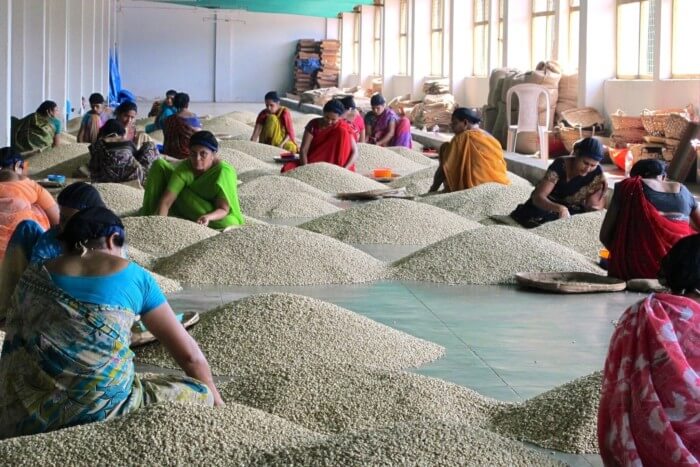
How monsooning changes coffee beans
Monsooned Malabar at a glance
| Location | processing facilities on India’s west coast |
| Monsooning duration | three or four months |
| Coffee used | naturally processed coffee only |
| Bean appearance | very pale and fairly brittle |
| Acidity | usually decreases considerably |
| Flavour | often intense, pungent and unusual notes |
| Roasting | difficult to achieve an even roast |
What does Monsooned Malabar taste like?
Monsooned coffee usually has much lower acidity. It also often develops intense, pungent and unusual flavour notes. Hoffmann describes these as “pungent, wild flavours”, which can be translated into Polish as “ostre, dzikie smaki”. These distinctive notes largely shape people’s perception of Monsooned Malabar.
Some people appreciate Monsooned Malabar for its rich, intense flavour. Others find the same notes unpleasant and associate them with faulty processing. Hoffmann presents both views without suggesting that either is correct. Monsooned Malabar’s distinctive flavour may therefore appeal to one coffee lover and be entirely unappealing to another.
Low acidity is not unique to monsooned coffee. The best Indian coffees typically have a heavy body, a creamy texture, low acidity and relatively little flavour complexity. This is a general characteristic of Indian coffee, not just Monsooned Malabar. You can read more about the origins and flavours of Indian coffees in my article on coffee from India. I have also written about acidity in coffee and how it affects flavour, if you would like to explore the subject further.
Monsooned Malabar compared with other Indian coffees
India is better known for its tea, although coffee also has a long history there and is produced on a large scale. Robusta accounts for most of the country’s coffee production. Arabica is grown in several states, including Karnataka, Tamil Nadu and Andhra Pradesh. Around 98% of India’s 250,000 coffee producers are smallholders. With production spread across so many small farms, it is often difficult to identify the exact farm where the beans were grown. Sometimes only the region or the location where the coffee was processed can be identified.
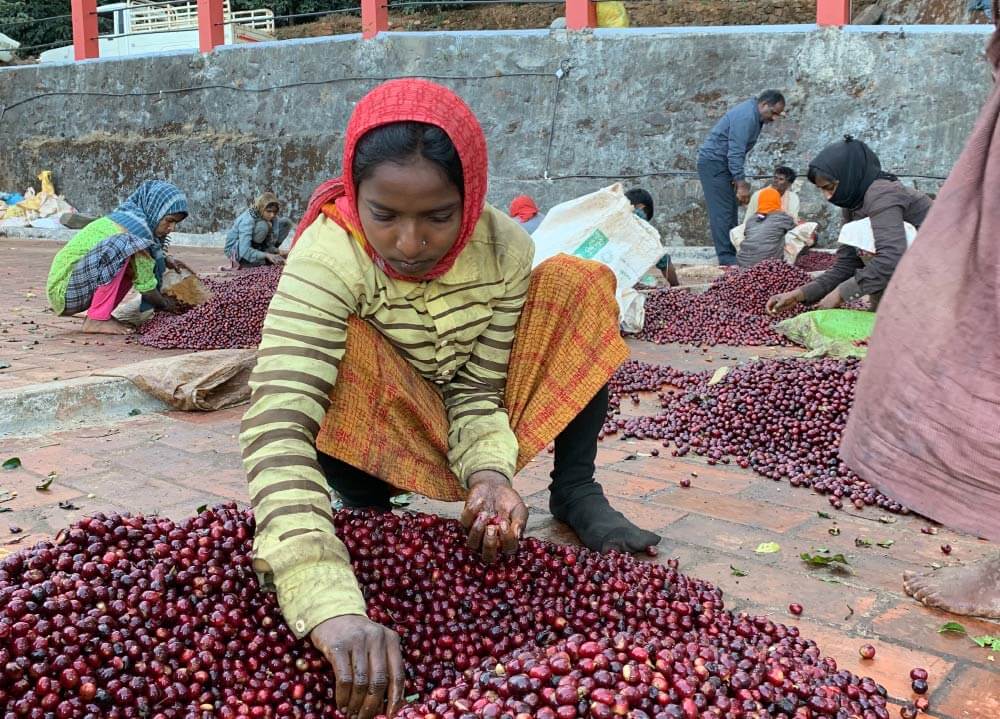
In the main coffee-growing regions, the harvest season runs from October to February. Coffee intended for monsooning first undergoes natural processing and drying. Only afterwards does monsooning begin, exposing the green beans to moisture for several months.
Monsooned Malabar at Colbergcoffee
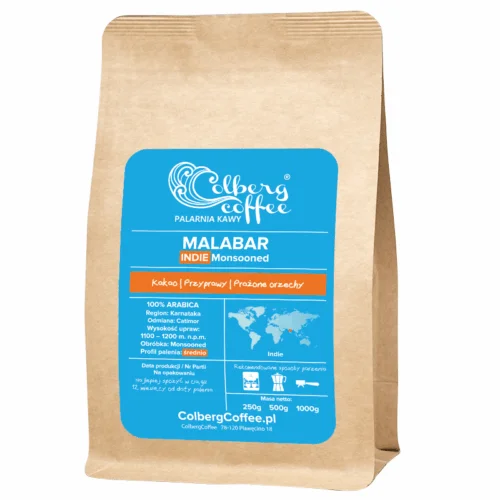
We first introduced India Monsooned Malabar as one of our Christmas coffees. It proved so popular with our customers that we kept it in our regular range. We give it a medium roast and recommend it for espresso, coffee machines and moka pots.
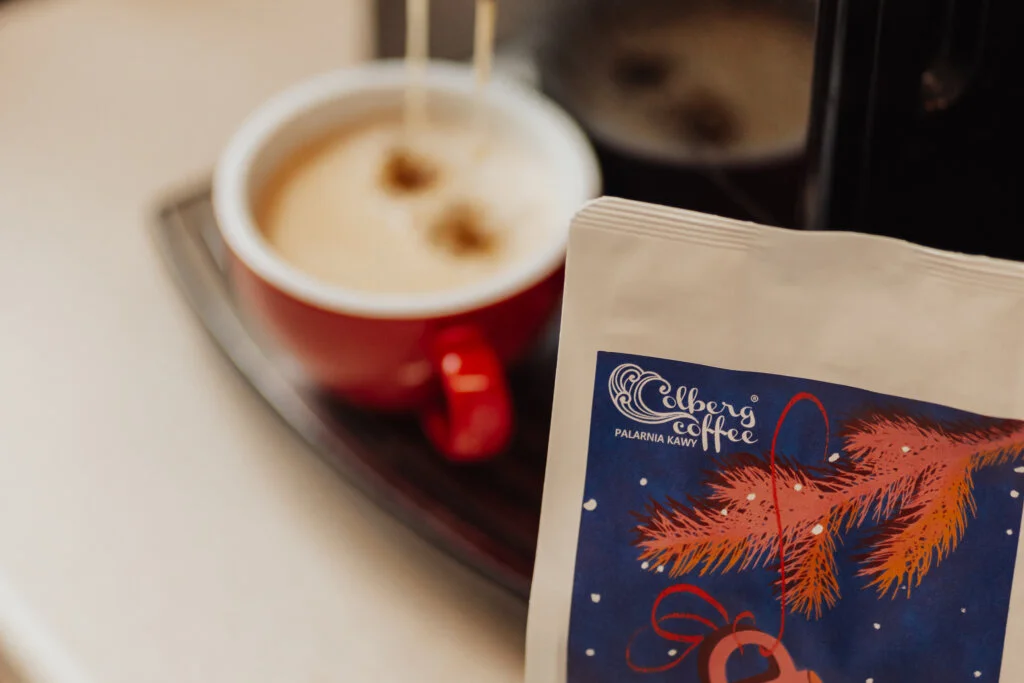
In our Monsooned Malabar, we pick up notes of cocoa, subtle spices and roasted nuts. These are our tasting impressions, not added flavourings. If you enjoy mellow coffees like this, explore our range of low-acidity coffees.
Key takeaways
- Monsooned Malabar is an Indian coffee whose green beans absorb moisture from the monsoon air for three or four months.
- Only naturally processed coffee is used for monsooning. The beans become very pale and brittle.
- Monsooning usually reduces the acidity of the coffee and gives it intense, unusual flavour notes that some people enjoy and others dislike.
What is Monsooned Malabar?
Monsooned Malabar is an Indian coffee that undergoes a process known as monsooning. Its green beans absorb moisture from the monsoon air for three or four months. The process takes place at processing facilities on India’s west coast.
Where does the name Monsooned Malabar come from?
The name comes from the monsooning process and the Malabar Coast in the state of Kerala, in south-western India.
How long does coffee monsooning take?
Monsooning takes three or four months. During this time, the green beans are exposed to the humidity associated with the monsoon rains.
Why does Monsooned Malabar have low acidity?
Coffee acidity usually decreases considerably during monsooning. At the same time, the coffee often develops intense, pungent and unusual flavour notes.
Why are there broken beans in a bag of Monsooned Malabar?
The beans become brittle during monsooning, so some may break when the roasted coffee is packed. This does not necessarily indicate poor-quality green coffee.
Which brewing methods is Monsooned Malabar suitable for?
Our India Monsooned Malabar is a medium roast. We recommend it for espresso, coffee machines and moka pots.
Przeczytaj też
Kopi Luwak: The Coffee from Droppings I Don’t Recommend
Kopi Luwak costs a fortune, yet its supposedly exceptional quality remains questionable. Behind this famous
Nov

Paper, Metal or Cloth Coffee Filters: Which to Choose?
Paper retains most coffee oils and fine particles, metal lets more of them through, and
Nov

Christmas Coffee Recipes: 5 Ideas from a Barista
Five Christmas coffee recipes you can make at home, including drinks from our café's winter
Nov

Cyber Monday 2026: When Is It and How to Stock Up on Coffee
Cyber Monday 2026 falls on 30 November. Find out how it started, what we have
Nov
Jamaica Blue Mountain Coffee: Is the Legend Worth the Price?
For years, Jamaica Blue Mountain was regarded as one of the world's finest coffees, and
Nov
How much water do coffee grounds retain? Where does it go?
From 350 g of water, you get around 302 g of brewed coffee. We explain
Nov
V60 Pouring Height: What Does Physics Say?
Does pouring from higher up always improve coffee agitation? Physics shows that there is a
Nov

Why Does Coffee Taste Different as It Cools?
Coffee left on your desk can taste completely different from how it tasted just after
Nov

This site is protected by reCAPTCHA. The Google Privacy Policy and Terms of Service apply.