







Kopi Luwak is one of the world’s most expensive coffees, yet its main attraction is the fact that it comes from animal droppings. The beans pass through a civet’s digestive tract before being recovered and sold as a luxury product. This unusual method has earned the coffee worldwide recognition. Behind the high price, however, lie counterfeit products, caged animals and serious doubts about quality.
In his book “The World Atlas of Coffee”, James Hoffmann strongly advises against buying Kopi Luwak. He describes fraud, the force-feeding of animals and a price that the quality of the product does not justify. As the owner of the Colbergcoffee roastery near Kołobrzeg, I share his view. We do not stock Kopi Luwak, and I have no intention of introducing it to our range.
Why does coffee made from animal droppings cost so much? Is it really exceptional? And why does Panamanian Geisha from Hacienda La Esmeralda, which also commands extraordinarily high prices, deserve a completely different assessment? The answers reveal just how far a coffee’s price can be removed from its true value.
In this article, you will learn:
- What Kopi Luwak is, which animal is involved in its production and how the beans are recovered.
- Why Kopi Luwak is so expensive and whether its price is justified.
- How counterfeit Kopi Luwak enters the market and why its production raises animal welfare concerns.
- How Kopi Luwak differs from Geisha from Hacienda La Esmeralda and which coffee to choose instead.
Kopi Luwak: what is it and which animal produces it?
Kopi Luwak originates from Indonesia. It is made from coffee recovered from the droppings of animals that have eaten coffee cherries. The animal associated with its production is the Asian palm civet, known in Indonesia as the luwak. Hoffmann uses the broader English term “civet cats”. This unusual method of obtaining the beans is what gave the coffee its distinctive reputation.
The civet eats coffee cherries. The coffee passes through its digestive tract before being excreted. The droppings are collected, and the partially digested coffee is separated, processed further and dried. This is how the product sold as Kopi Luwak is made. The beans therefore undergo an additional stage that distinguishes them from conventionally produced coffee.
The name Kopi Luwak describes how the coffee is obtained. It tells us nothing about the specific farm, botanical variety or quality of the beans. One bag may contain coffee from a completely different origin to the next. The involvement of an animal says little about the care taken during production, yet this has become the coffee’s main selling point.
An unusual production process easily attracts attention. Coffee that has passed through an animal’s digestive system sparks curiosity even among people who take little interest in how coffee is normally produced. It can be marketed as a rare delicacy or a unique gift. The question, however, is whether such a story is enough to justify a price far higher than that of other good coffees.
How is Kopi Luwak made and does it really taste exceptional?
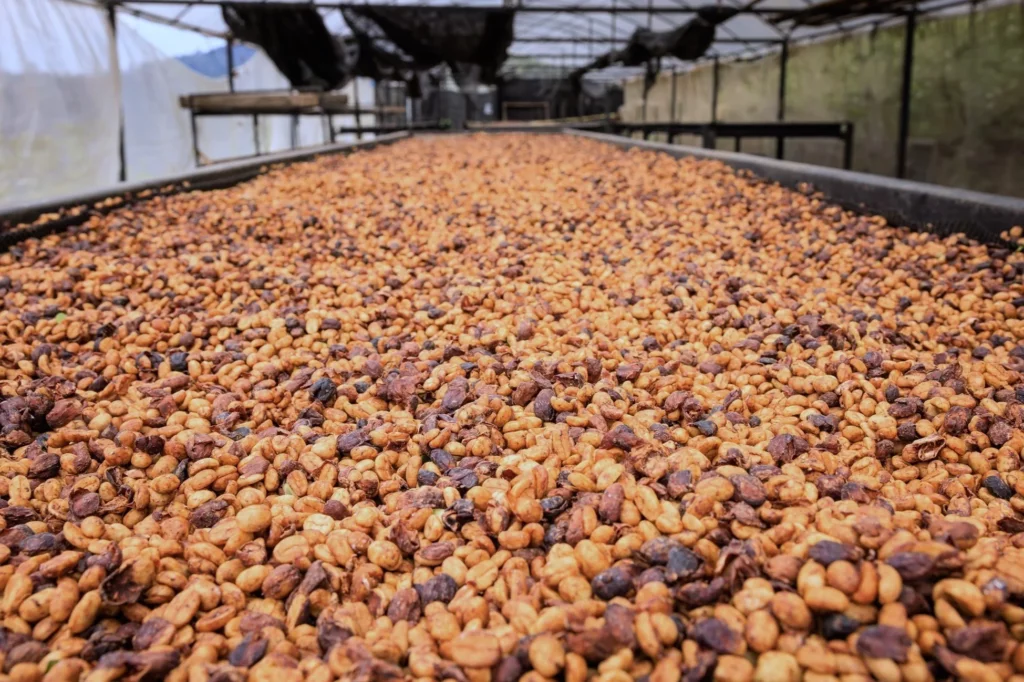
Kopi Luwak production begins with civets eating coffee cherries. After passing through their digestive tract, the coffee is recovered from the droppings, cleaned to remove faecal residue, processed further and dried. It is the animal’s involvement in this process that made the coffee popular. Conventional coffee production also involves removing the parts of the cherry surrounding the beans, but uses different processing methods without involving an animal’s digestive system.
Does this process actually improve the flavour? Hoffmann mentions claims about the exceptional qualities of Kopi Luwak but does not provide a specific sensory profile for the coffee. There is therefore no basis here for attributing particular flavour notes to it. His assessment is decidedly negative, primarily because of the price and production methods. However, he does not claim that every single cup necessarily tastes bad.
Kopi Luwak price: why is coffee from animal droppings so expensive?
Kopi Luwak sells for exceptionally high prices. Much of its popularity stems from the unusual way the beans are obtained. The coffee attracts attention, and the story of animals eating coffee cherries has become central to its luxury image. The more unusual the story, the easier it is to present the coffee as something rare and valuable. You do not even need to know much about coffee to take an interest in such a product.
There are many reasons why coffee can command a high price. In the specialty coffee world, some lots fetch record prices because of their quality, the producer’s reputation and strong buyer interest. Kopi Luwak owes its fame primarily to its novelty. Claims of exceptional flavour accompany the product, but they are not always supported by credible evidence. Buyers are therefore paying largely for the story behind the coffee.
According to Hoffmann, buying Kopi Luwak represents particularly poor value for anyone looking for exceptional coffee. He explains that for a quarter of the price of a bag of Kopi Luwak, you can buy superb beans from some of the world’s finest producers. That is a strong assessment, particularly coming from someone who evaluates and compares coffee quality professionally.
Is Kopi Luwak the most expensive coffee in the world? It is often described that way in discussions about luxury products, but there is no fixed ranking. Prices depend on the individual lot, the method of sale and when it is sold. Other coffees have also achieved record prices, including those from Hacienda La Esmeralda in Panama. Rather than automatically ranking Kopi Luwak first, it is more accurate to describe it as one of the world’s exceptionally expensive coffees.
Counterfeit Kopi Luwak and animals kept in cages
The high value of Kopi Luwak has created opportunities for fraud. According to the atlas, several times as much coffee is sold under this name as is actually produced. One example of fraud described in the book is the sale of cheap, low-quality robusta disguised as expensive Kopi Luwak. Buyers pay for an unusual production process, even though the coffee they purchase may never have passed through an animal’s digestive system.
This is a particularly significant problem for a coffee whose price is closely tied to its claimed production method. Buyers expect an authentic product, yet the name on the packaging offers no guarantee of its origin. Even paying a high price provides no protection against fraud. Counterfeiters exploit the reputation of Kopi Luwak and customers’ willingness to pay considerably more for something unusual.
The second problem is more serious. Growing interest in Kopi Luwak has encouraged unscrupulous producers to capture wild civets and keep them in cages. The animals are then force-fed coffee cherries. The atlas also describes the extremely poor conditions in which they are kept. Production shifts from collecting coffee naturally left behind by animals living in the wild to exploiting the animals themselves.
The more money producers can make from this coffee, the greater their incentive to increase production. Keeping animals in cages and controlling their diet allows producers to obtain the coffee without searching for droppings in the wild. The animals, however, pay the price. Caging, force-feeding and poor living conditions are difficult to reconcile with a responsible approach to food production.
Hoffmann regards these practices as animal exploitation and encourages people to avoid all coffees processed by animals. His position does not imply that every producer operates in the same way. However, it highlights the consequences of a market where exceptionally high prices create incentives for abuse. Kopi Luwak raises concerns about both authenticity and animal welfare. That alone is reason enough to give its purchase more serious consideration than buying an ordinary coffee novelty.
Kopi Luwak vs Geisha from Hacienda La Esmeralda: what drives record prices?
Hacienda La Esmeralda in Panama illustrates a completely different route to high coffee prices. The farm, owned by the Peterson family, became famous for the Geisha variety. The Best of Panama competition evaluated the finest lots from different farms, which were subsequently sold at an online auction. La Esmeralda won four consecutive years, from 2004 to 2007. It won again in 2009 and 2010, and in one of the competition categories in 2013.
In 2004, coffee from La Esmeralda fetched $21 per pound. By 2010, the price had reached $170 per pound. In 2013, a small lot of naturally processed coffee sold for $350.25 per pound. All these figures refer to the farm’s historical auction results. They demonstrate how much interest a coffee can attract when it stands out from the competition during professional evaluations.
The success of Geisha was not built on the farm’s name alone. The coffee stood out for its intense floral and citrus notes and light, tea-like body. These characteristics were associated with the Geisha variety. Hoffmann emphasises that exceptional quality was the foundation of La Esmeralda’s record prices, although strong demand and effective marketing also played an important role. The farm helped stimulate interest in the Geisha variety in Panama and other Central American countries.
Jamaica Blue Mountain also features in this comparison. Hoffmann considers some coffees sold under this name to be expensive products whose prices are not as strongly justified by exceptional quality as those of La Esmeralda. This is not a judgement on every coffee from Jamaica. It does, however, illustrate the different factors that can drive high prices: genuine sensory qualities, the prestige associated with a particular origin or the appeal of an unusual story.
| Coffee | What drives the price | What Hoffmann says |
|---|---|---|
| Kopi Luwak | An unusual method of obtaining the beans, popularity and marketing built around the coffee’s novelty. | Very poor value for money. Hoffmann strongly advises against buying it. |
| Geisha from Hacienda La Esmeralda | Exceptional coffee quality, competition success, buyer interest and effective marketing. | The high prices primarily reflect genuinely exceptional quality, although demand and marketing also play a role. |
| Jamaica Blue Mountain | High prices for some coffees sold under a well-known origin name. | The quality of some of these coffees does not justify their price to the same extent as the exceptional quality of La Esmeralda’s coffee. |
Indonesia: coffee history, the islands and giling basah processing
The history of Indonesian coffee dates back to the late 17th century. In 1696, the Dutch governor of Malabar in India sent coffee seedlings to Batavia, now Jakarta. The first planting was destroyed by flooding, but a second shipment in 1699 proved successful. Coffee exports began in 1711 under the control of the Dutch East India Company. Initially, arabica was cultivated. In 1876, coffee leaf rust destroyed much of the crop. Attempts were made to replace arabica with liberica, but this species also proved susceptible to the disease. Production shifted towards the more resistant robusta.
Coffee cultivation gradually spread to other islands. It reached Sulawesi in 1750, northern Sumatra in 1888 and the area around Lake Tawar in Gayo in 1924. Today, major coffee-growing areas are found on Sumatra, Java, Sulawesi, Flores and Bali. Sumatra is known for Aceh and the area around Lake Toba, Sulawesi for Tana Toraja and Kalosi coffees, Flores for the Bajawa region and Bali for the Kintamani highlands. Indonesian coffee therefore has a much richer history and greater diversity than the worldwide fame of Kopi Luwak might suggest.
A distinctive Indonesian processing method is giling basah, also known as wet hulling. It combines elements of washed and natural processing. It typically reduces perceived acidity, increases body and gives the coffee a milder, heavier character. Earthy, woody, herbal and spicy notes may also be present. The quality of these coffees varies, and some producers are experimenting with the fully washed process. The flavour profile of coffees processed using giling basah does not describe the taste of Kopi Luwak. It is a separate production method, although it is also associated with Indonesia.
What should you buy instead of Kopi Luwak? Origin and quality matter
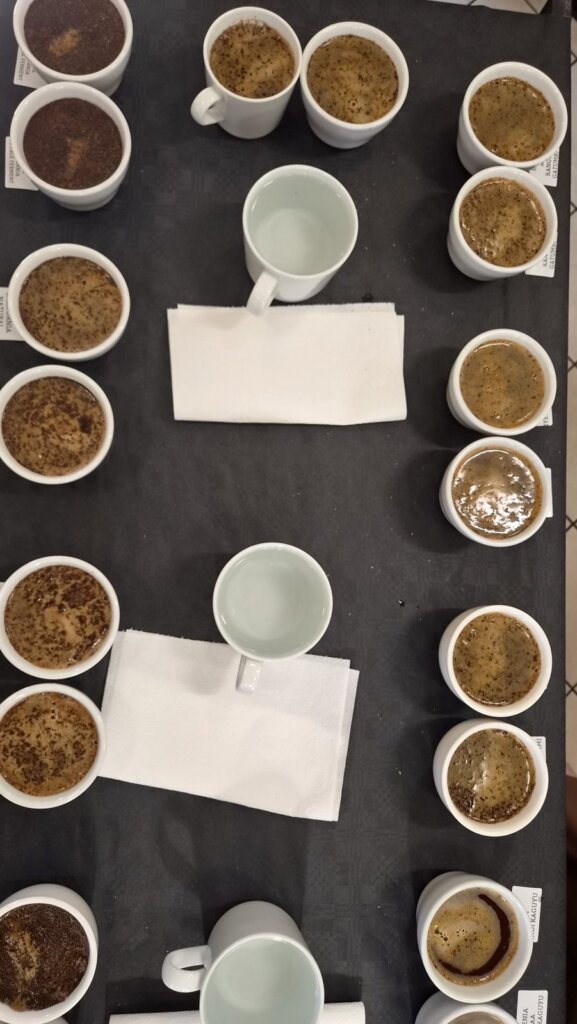
When I want to buy an exceptional coffee, I start by looking at its origin. I want to know who produced it, which region it comes from, which variety it is and how the beans were processed. Being able to compare individual lots is important. This is precisely the purpose of cupping, a tasting method that allows coffees to be evaluated under comparable conditions. At Colbergcoffee, we use these comparisons because they allow us to focus on what actually ends up in the cup.
Indonesia itself produces many interesting coffees. Lots with documented origins that come from specific farms and undergo fully washed processing are particularly interesting. They are not always easy to find. Many Indonesian farms cover just 1-2 hectares, so coffee can often only be traced back to a processing station or region. Even so, it is possible to find coffees whose origins are documented in considerably more detail than simply the country of production.
I would not restrict my choice to Indonesia, however. Hacienda La Esmeralda demonstrates how much recognition a coffee can earn through exceptional sensory qualities. Not every outstanding coffee needs to cost as much as record-breaking auction lots. Among reputable producers, you can find beans with different flavour profiles, origins and processing methods. It is better to choose a coffee that suits your own preferences than to base your decision solely on its unusual story.
According to the author of the atlas, you can buy superb coffee from leading producers for a quarter of the price of Kopi Luwak. This argument best sums up my position. At the Colbergcoffee roastery near Kołobrzeg, I prefer to work with beans of known origin whose quality can be assessed alongside other coffees. We do not sell Kopi Luwak, and we never will. I see no reason to support a market plagued by fraud and animal welfare concerns when so many good coffees are available.
Key takeaways
- Kopi Luwak is an Indonesian coffee made from coffee recovered from the droppings of civets, including the Asian palm civet.
- Its exceptionally high price is primarily linked to its popularity and the unusual method used to obtain the beans.
- The Kopi Luwak market is vulnerable to fraud. Low-quality robusta is sometimes passed off as this expensive coffee.
- Rising prices have encouraged unscrupulous producers to capture animals, keep them in cages and force-feed them.
- Rather than buying Kopi Luwak, it is more sensible to choose coffee with a documented origin that can be assessed on its actual quality.
What is Kopi Luwak coffee?
Kopi Luwak is an Indonesian coffee made from beans recovered from the droppings of civets that have eaten coffee cherries. The coffee is separated from the droppings, processed further and dried. The name refers to this distinctive method of obtaining coffee.
Which animal is involved in producing Kopi Luwak?
The animal associated with Kopi Luwak production is the Asian palm civet, known in Indonesia as the luwak. It eats coffee cherries, and the coffee passes through its digestive tract. Once excreted, the coffee is recovered and processed.
How much does Kopi Luwak cost and why is it so expensive?
There is no single fixed price for Kopi Luwak. It commands exceptionally high prices, mainly because of the unusual way it is obtained and its popularity. The author of the atlas considers it very poor value for money. He believes you can buy superb beans from the finest producers for considerably less.
Is Kopi Luwak the most expensive coffee in the world?
Kopi Luwak is an exceptionally expensive coffee, but it cannot categorically be described as the most expensive in the world. Other coffees have also achieved record prices. In 2013, a small lot of Geisha from Hacienda La Esmeralda sold at auction for $350.25 per pound.
Is counterfeit Kopi Luwak a problem?
Yes. Coffee fraud is a serious problem in the Kopi Luwak market. According to the atlas, several times as much coffee is sold under this name as is actually produced. One example of fraud is passing off cheap, low-quality robusta as authentic Kopi Luwak.
Why don’t I recommend Kopi Luwak?
My reasons are its questionable value for money, the problem of counterfeit coffee and reported cases of animals being captured, kept in cages and force-fed. A far more sensible choice is coffee with a reliably documented origin whose quality can be assessed and compared with that of other beans.
Przeczytaj też
Kopi Luwak: The Coffee from Droppings I Don’t Recommend
Kopi Luwak costs a fortune, yet its supposedly exceptional quality remains questionable. Behind this famous
Nov
Paper, Metal or Cloth Coffee Filters: Which to Choose?
Paper retains most coffee oils and fine particles, metal lets more of them through, and
Nov
Christmas Coffee Recipes: 5 Ideas from a Barista
Five Christmas coffee recipes you can make at home, including drinks from our café's winter
Nov

Cyber Monday 2026: When Is It and How to Stock Up on Coffee
Cyber Monday 2026 falls on 30 November. Find out how it started, what we have
Nov
Jamaica Blue Mountain Coffee: Is the Legend Worth the Price?
For years, Jamaica Blue Mountain was regarded as one of the world's finest coffees, and
Nov
How much water do coffee grounds retain? Where does it go?
From 350 g of water, you get around 302 g of brewed coffee. We explain
Nov
V60 Pouring Height: What Does Physics Say?
Does pouring from higher up always improve coffee agitation? Physics shows that there is a
Nov
Why Does Coffee Taste Different as It Cools?
Coffee left on your desk can taste completely different from how it tasted just after
Nov

This site is protected by reCAPTCHA. The Google Privacy Policy and Terms of Service apply.