

India is one of the less obvious coffee countries, and one of the more interesting. Coffees from here stand out for low acidity, full body and a character that often reads as earthy or spiced. In specialty circles India is still a niche, but it turns up more and more often as an alternative to the classic profiles of South America and Africa.
| Country | India |
| Regions | Karnataka, Kerala, Tamil Nadu |
| Altitude | 900-1,600 m a.s.l. |
| Process | Washed, monsooned |
| Profile | Spice, chocolate, earthiness |
What sets Indian coffees apart
Indian coffees have low acidity and a fuller body. Next to coffees from Kenya or Colombia they are far less fruity, more muted and heavier in the cup. Spice, cocoa, wood and a touch of earthiness come up again and again.
That profile works particularly well in espresso and in blends, and it is reaching the specialty segment too, as an alternative to the more familiar origins.
How growing conditions shape the flavour
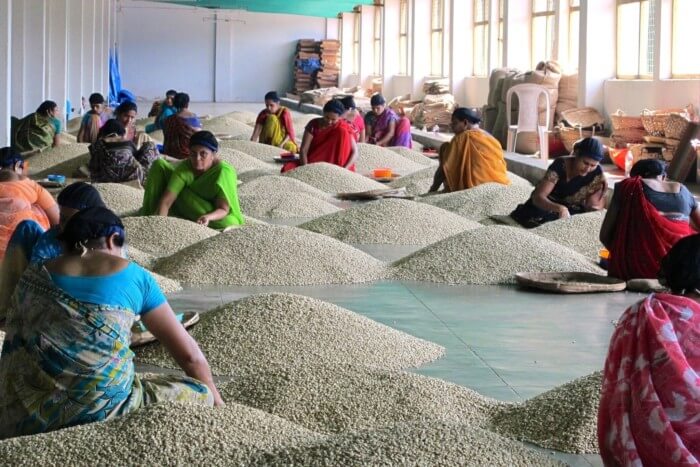
Coffee in India grows mostly in the shade of other trees, which is unusual compared with other producing countries. That way of growing slows down ripening and gives the flavour a more even development.
The monsoon climate matters just as much. High humidity and the seasonal swings in weather change the structure of the beans and the final profile, and nowhere more so than in Monsooned Malabar.
| Attribute | Character |
|---|---|
| Sweetness | Medium, more chocolate than sugar |
| Acidity | Low |
| Body | Full, heavy |
| Aftertaste | Long, spiced |
Arabica and robusta in India
India is one of the few countries growing both arabica and robusta at scale. Indian robusta is often of far higher quality than robusta from elsewhere in the world.
Indian arabica is more of a niche and less widely drunk than South American arabica, but it has a very interesting, calmer profile. Robusta brings more punch, more body and more caffeine, which is why it so often ends up in espresso blends.

One to try: India Malabar
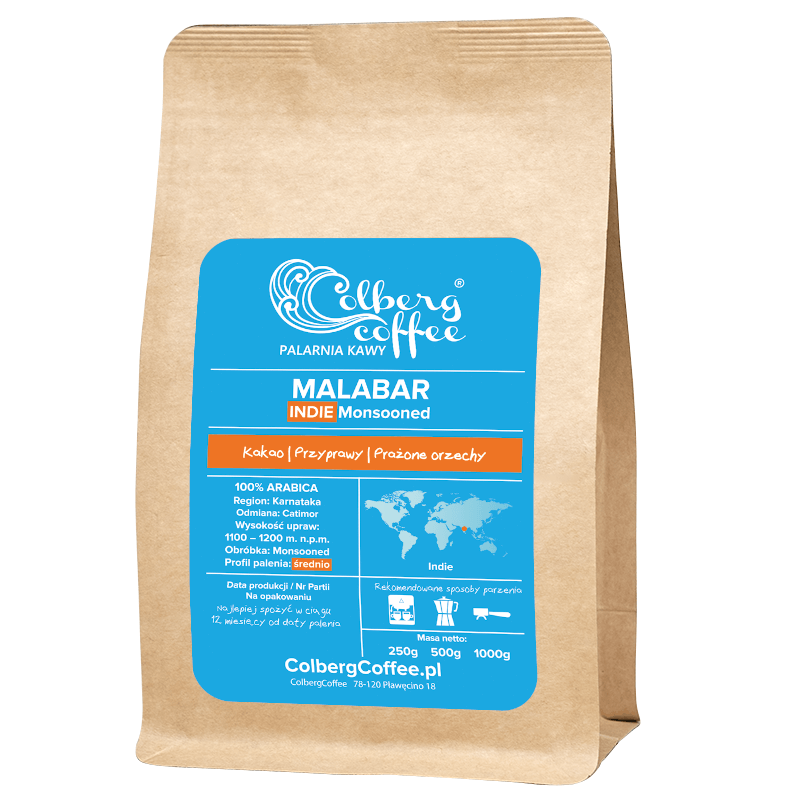
The most distinctive example of Indian coffee in our range is India Malabar. It goes through the monsooning process, which changes the structure of the bean and its flavour completely.
The beans are exposed to humid monsoon air, which makes them swell and drops their acidity. The coffee that comes out is very mild, heavier and unusually smooth.
In the cup you get chocolate, spice and a light earthiness. Acidity is very low, which makes it a strong choice for espresso and milk drinks. It is nothing like a classic specialty profile, and that is exactly the point.
Who should drink Indian coffee?
It is a good option if you do not like sour coffee and want something calmer, heavier and deeper. India is also a sensible direction if you drink mostly espresso and milk drinks.
| Region | Character | Flavour profile |
|---|---|---|
| Karnataka | The main production centre | Chocolate, spice |
| Kerala | Humid climate | Heavier body |
| Tamil Nadu | Higher farms | More balanced profiles |
In short
Indian coffees are among the most distinctive and most overlooked beans in the coffee world. Low acidity, full body and a spiced profile make them a real alternative to the classic origins. Indian beans also made our round-up of mild whole bean coffees.
FAQ: coffee from India
What does Indian coffee taste like?
Indian coffees are calmer and heavier in the cup. Chocolate, spice, wood and a gentle earthiness are the notes you meet most often.
Is coffee from India acidic?
Usually not. It is one of the least acidic origins there is, which makes it a good fit if fruity, sharp profiles are not for you.
What is Monsooned Malabar?
Coffee exposed to humid monsoon air, which changes the structure of the bean and gives it a very mild, low-acidity profile.
Does India grow only arabica?
No. India produces both arabica and robusta, and its robusta is often of higher quality than robusta from other countries.
Who will enjoy Indian coffee most?
Anyone after a low-acidity, more classic coffee that works in espresso and in milk drinks.
