













In 1926, 18 coffee plantations were established in Papua New Guinea using seeds from Jamaica’s Blue Mountain. Today, Papua New Guinea coffee comes mainly from smallholders, who often grow coffee trees around their homes. This shift reflects decades of production growth, falling prices and infrastructure problems. The story is as fascinating as the diversity of the country’s highlands.
In his book “The World Atlas of Coffee”, James Hoffmann dedicates an entire chapter to Papua New Guinea, distinguishing its coffees from those grown on the Indonesian side of the island. At Colbergcoffee, we roast coffee from Papua New Guinea and want to show you where it comes from and how it is produced. We’ll look at the history of coffee growing, the main producing regions and the markings on coffee bags. This article draws on information from the book and the details of our own coffee.
In this article, you’ll learn:
- How the first plantations were established and why small farms dominate production today.
- How Eastern Highlands, Western Highlands and Simbu differ, and when the coffee harvest takes place.
- What the AA, A, X, PSC and Y grades mean and how the flavour of good coffee lots is described.
From Jamaican seeds to the growth of coffee plantations
The first coffee trees were planted in Papua New Guinea in the 1890s. Initially, coffee was not grown as a commercial crop. That changed in 1926, when 18 plantations were established using seeds from Jamaica’s Blue Mountain. By 1928, production was under way on a larger scale.
The 1950s saw more organised development of the coffee industry. Infrastructure was built to make it easier to transport coffee across the island. Production rose again in the 1970s. Hoffmann suggests this may have been partly linked to a decline in Brazilian coffee production.
At the time, the government supported programmes encouraging small farms to form cooperatives. Large, managed plantations continued to play an important role. From the 1980s onwards, the sector began to decentralise. Falling coffee prices probably contributed to this shift, leaving many plantations in financial difficulty.
Smallholders were less vulnerable to market fluctuations and continued growing coffee. Their farms gradually became the backbone of the country’s coffee production. The large plantations of the past did not disappear entirely. Some are still operating and offer single-estate coffees.
Smallholders and coffee gardens around the home
According to figures cited in the book, around 95% of coffee producers in Papua New Guinea are smallholders. They account for around 90% of the country’s coffee production. Many are subsistence farmers who grow crops primarily for their own consumption. Coffee provides them with an additional source of income.
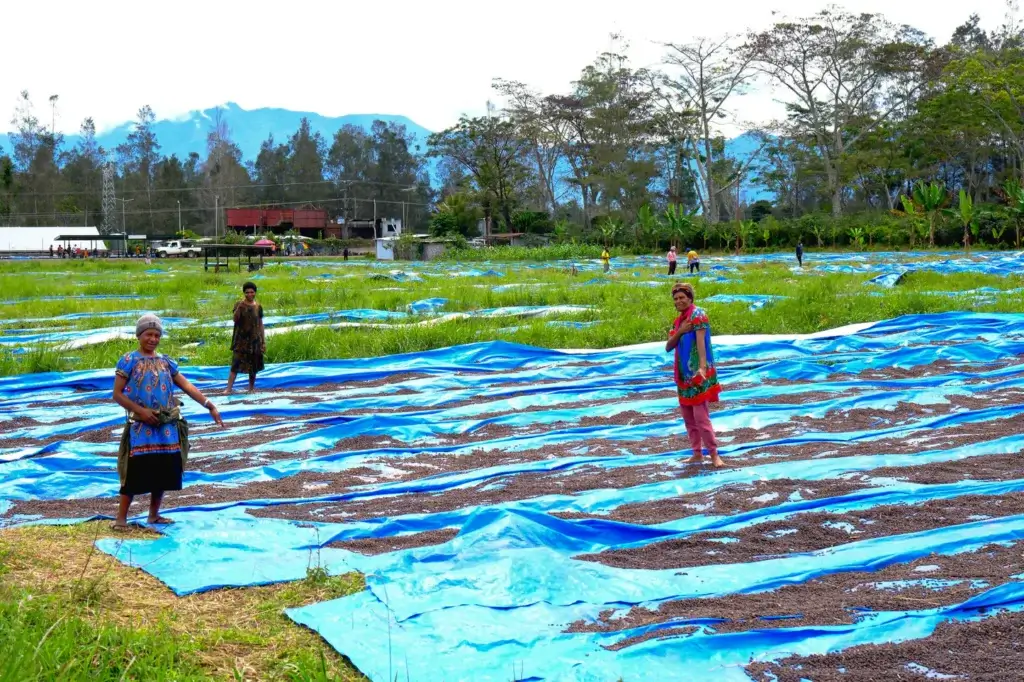
Coffee gardens around people’s homes are particularly common in Simbu. Farmers grow coffee trees on these small plots rather than running large plantations. Almost 90% of the province’s residents are involved in coffee production to some extent. For many families, coffee is their only cash crop.
With production spread across so many small farms, growers face considerable challenges. Many have limited access to post-harvest infrastructure, making it harder to produce larger volumes of high-quality coffee. Tracing a particular coffee back to the farm where it was grown also remains a challenge.
The vast majority of coffee produced is Arabica. It also dominates exports and is grown mainly in the highlands. In 2016, Papua New Guinea produced 1,171,000 60 kg bags of coffee. The book also gives a historical population figure of 7,060,000 without specifying the year. These figures do not reflect the situation in 2026.
Why does coffee traceability matter?
In the past, some estates bought coffee from other producers and sold it under their own names. Customers would see the name of an estate even though the beans had not necessarily been grown there. Selling coffee under regional names is also a relatively recent practice. This helps explain why tracing the origin of a particular lot can be difficult.
Papua New Guinea coffee can come from a single estate or a group of smallholders. Limited traceability makes it harder to reward producers for growing better-quality coffee. Hoffmann recommends looking for coffees that can be traced back to a specific estate or producer group. This information helps us better understand the journey from coffee cultivation to sale.
High altitudes and fertile soils provide excellent growing conditions for coffee in the highlands. However, many smallholders have limited access to post-harvest infrastructure, making it difficult to produce large volumes of high-quality coffee. Hoffmann also notes renewed interest in Papua New Guinea coffees in the specialty coffee market in the period leading up to the book’s publication.
Three coffee-growing regions: Eastern Highlands, Western Highlands and Simbu
Most coffee is grown in the mountainous Highlands regions. Eastern Highlands and Western Highlands are the two main producing regions, followed by Simbu. Coffee is also grown elsewhere in the country, although these areas account for only a small share of production. The Bourbon, Typica and Arusha varieties are grown in all three main regions.
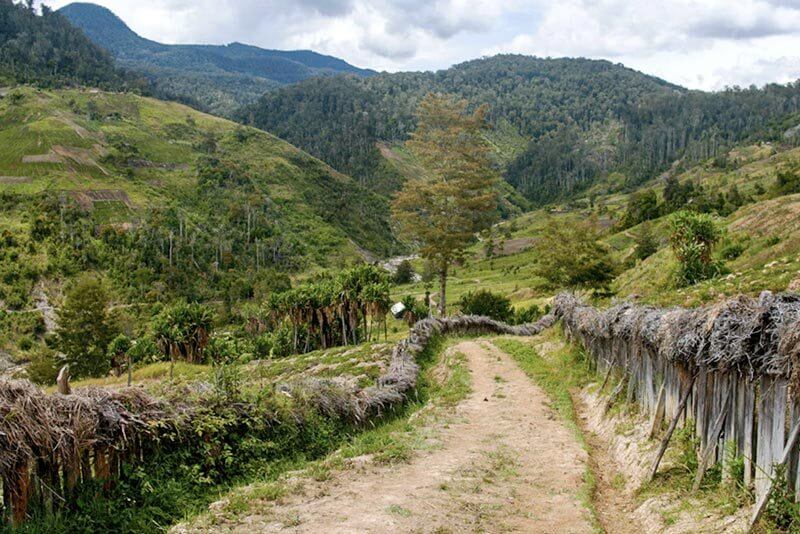
The table below shows the growing altitudes, harvest season and coffee varieties listed in the book. Eastern Highlands covers part of the mountain range running across the country. Western Highlands extends around Mount Hagen, while Simbu is notable for its high proportion of small farms. In all three regions, the harvest season runs from April to September.
| Region | Growing altitude | Harvest season season | Varieties |
|---|---|---|---|
| Eastern Highlands | 400-1,900 m a.s.l. | April-September | Bourbon, Typica, Arusha |
| Western Highlands | 1,000-1,800 m a.s.l. | April-September | Bourbon, Typica, Arusha |
| Simbu (Chimbu) | 1,300-1,900 m a.s.l. | April-September | Bourbon, Typica, Arusha |
Eastern Highlands has the widest range of growing altitudes of the three regions, from 400 to 1,900 m above sea level. Coffee plantations are found at various elevations across the mountainous terrain. Bourbon, Typica and Arusha are grown here. The harvest runs from April to September.
In Western Highlands, most coffee is grown around Mount Hagen, the regional capital. The city takes its name from an old, inactive volcano. Beans from this area are often processed at a dry mill in Goroka. As the mill handles coffee from another region, the milling location can make it harder to establish where the beans were actually grown. Hoffmann highlights the region’s considerable potential for producing high-quality coffee, thanks to its altitude and very fertile soils.
Simbu, officially known as Chimbu, produces considerably less coffee than the two main Highlands regions. Its name comes from the local word “Sipuuuu”, meaning “thank you”. Most coffee here comes from household coffee gardens. Coffee is grown at altitudes of 1,300 to 1,900 m above sea level.
What do the AA, A, X, PSC and Y coffee grades mean?
In Papua New Guinea, coffee for export is graded by quality in the following order: AA, A, X, PSC and Y. The first three grades apply to coffee from large plantations, known as estates. The last two apply to smallholder coffee. PSC stands for Premium Smallholder Coffee.
In this system, AA is the highest of the listed estate grades, while PSC ranks above Y in the smallholder category. These classifications indicate both the quality ranking and the type of farm the coffee comes from. The book does not specify detailed standards for bean size, defect counts or sensory scores for individual grades.
Coffee grades and origin information serve different purposes. A grade indicates where a coffee ranks within the grading system, while origin information identifies its source. When reading a coffee label, you can look for both the grade and the name of the estate or producer group. Together, these details help you understand more about the coffee beyond its country of origin.
What does Papua New Guinea coffee taste like?
Hoffmann describes good lots of Papua New Guinea coffee as distinctly sweet and complex, with a creamy, buttery character. He uses the phrase “buttery quality”. These characteristics are associated with high-quality coffees rather than the country’s entire coffee production.
The book does not give a single list of flavour notes that applies to all Papua New Guinea coffee. The high altitudes and fertile soils are presented as factors giving the country considerable potential for producing high-quality coffee. To understand how a particular lot tastes, however, we need to look at its individual tasting notes. This is why information about the region and producer is useful alongside the country of origin.
Key takeaways
- The first coffee trees were planted in the 1890s. In 1926, 18 plantations were established using Jamaican Blue Mountain seeds.
- According to figures in the book, smallholders make up around 95% of coffee producers and account for around 90% of production.
- The main coffee-growing regions are Eastern Highlands, Western Highlands and Simbu. The harvest season runs from April to September.
- Bourbon, Typica and Arusha are grown in all three regions, with growing altitudes across these regions ranging from 400 to 1,900 m above sea level.
- Grades AA, A and X apply to estate coffees, while PSC and Y apply to smallholder coffees. The best lots are characterised by sweetness, complexity and a creamy character.
Papua New Guinea Wahgi Valley at the Colbergcoffee roastery
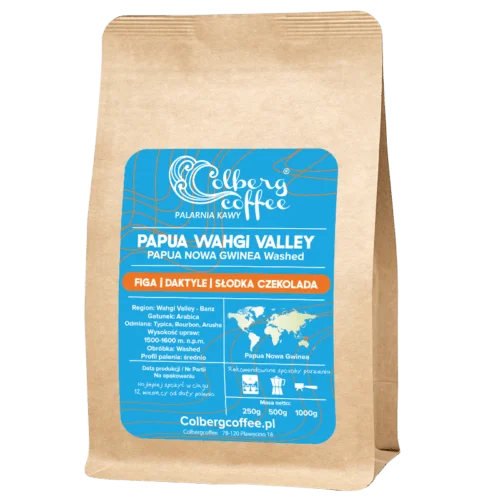
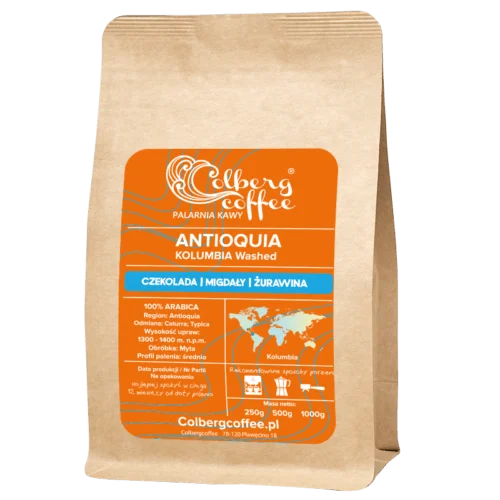
At Colbergcoffee, we offer Papua New Guinea Wahgi Valley from the area around Banz. This Arabica coffee features the Typica, Bourbon and Arusha varieties, grown at 1,500-1,600 m above sea level. The beans were processed using the washed method. Tasting notes for this lot include fig, dates and sweet chocolate.
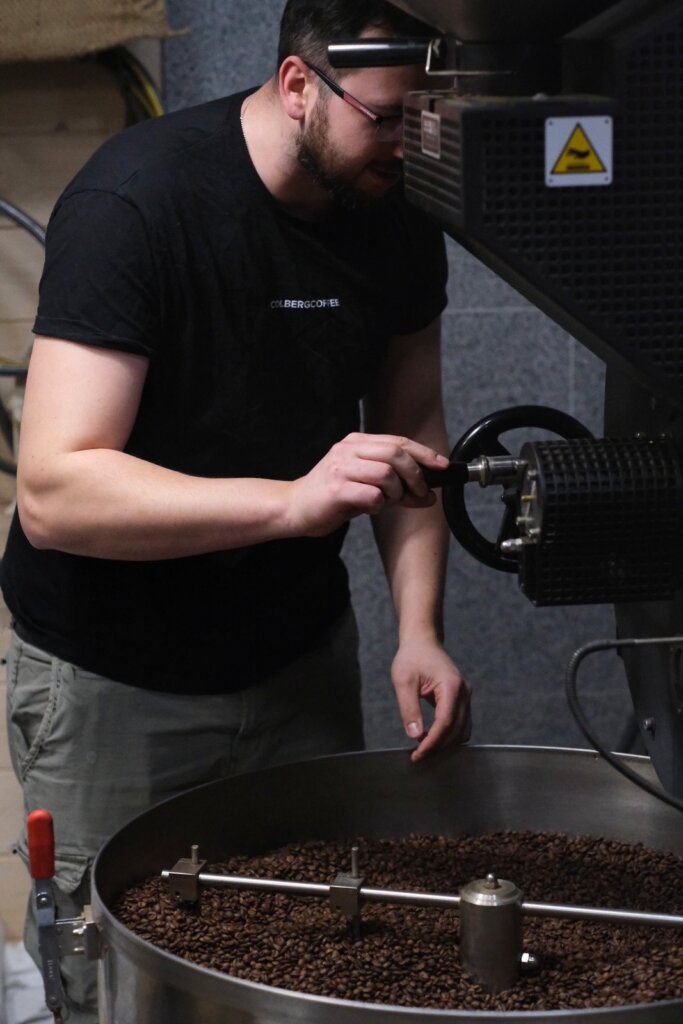
The growing altitude of 1,500-1,600 m above sea level falls within the ranges listed in the table for all three Highlands regions. The same coffee varieties are also found in all three regions. We give this coffee a medium roast for espresso. If you enjoy sweet espresso with notes of dried fruit, try Papua New Guinea Wahgi Valley.
When did coffee growing begin in Papua New Guinea?
The first coffee trees were planted in the 1890s. In 1926, 18 plantations were established using Jamaican Blue Mountain seeds. By 1928, coffee production was beginning to expand on a larger scale.
Does most coffee come from large plantations?
No. According to figures cited in the book, smallholders make up around 95% of coffee producers and account for around 90% of production. Large plantations are still operating as well.
What are the main coffee-growing regions in Papua New Guinea?
The main regions are Eastern Highlands, Western Highlands and Simbu, also known as Chimbu. Coffee is grown at altitudes of 400-1,900 m, 1,000-1,800 m and 1,300-1,900 m above sea level, respectively.
When is coffee harvested in the Highlands?
The book lists April to September as the harvest season for Eastern Highlands, Western Highlands and Simbu. Bourbon, Typica and Arusha are listed as coffee varieties grown in all three regions.
What is the difference between AA and PSC coffee grades?
AA is the highest of the listed grades for estate coffee, the other two being A and X. PSC stands for Premium Smallholder Coffee and is one of the grades for smallholder coffee, alongside Y.
What does good Papua New Guinea coffee taste like?
The best lots are described as sweet, complex and creamy, with a buttery character. Our Papua New Guinea Wahgi Valley coffee has tasting notes of fig, dates and sweet chocolate.
Przeczytaj też
Kopi Luwak: The Coffee from Droppings I Don’t Recommend
Kopi Luwak costs a fortune, yet its supposedly exceptional quality remains questionable. Behind this famous
Nov

Paper, Metal or Cloth Coffee Filters: Which to Choose?
Paper retains most coffee oils and fine particles, metal lets more of them through, and
Nov

Christmas Coffee Recipes: 5 Ideas from a Barista
Five Christmas coffee recipes you can make at home, including drinks from our café's winter
Nov

Cyber Monday 2026: When Is It and How to Stock Up on Coffee
Cyber Monday 2026 falls on 30 November. Find out how it started, what we have
Nov

Jamaica Blue Mountain Coffee: Is the Legend Worth the Price?
For years, Jamaica Blue Mountain was regarded as one of the world's finest coffees, and
Nov
How much water do coffee grounds retain? Where does it go?
From 350 g of water, you get around 302 g of brewed coffee. We explain
Nov
V60 Pouring Height: What Does Physics Say?
Does pouring from higher up always improve coffee agitation? Physics shows that there is a
Nov

Why Does Coffee Taste Different as It Cools?
Coffee left on your desk can taste completely different from how it tasted just after
Nov

This site is protected by reCAPTCHA. The Google Privacy Policy and Terms of Service apply.