










“Sour” alone is not enough to describe a light-roasted Kenyan coffee. Acids in coffee can taste quite different: a single cup can contain citric, malic and acetic acids. It is a bit like describing a basket of fruit as simply “fruity”.
In her book “How to Taste Coffee”, Jessica Easto dedicates an entire exercise to these three acids. The information in this article comes from her book, and you can try the exercise in your own kitchen.
How many acids are there in coffee?
Easto identifies three main groups of acids in coffee: chlorogenic acids, carboxylic acids and phosphoric acid. Citric, malic and acetic acids belong to the carboxylic group. Acids account for around 10% of a green coffee bean’s weight.
Coffee’s acid profile begins to develop on the farm. The plant absorbs some acids from the soil and produces others during photosynthesis. More acids form during fermentation as part of processing, and during roasting. Brewing determines how much of these acids ends up in the cup.
Not all acids taste sour. Chlorogenic acids and the compounds they break down into tend to contribute bitterness instead. Quinic and caffeic acids have a similarly bitter, dry character.
Acidity or sourness?
In coffee tasting, both terms refer to the same basic taste: sourness. The difference lies in how that taste is perceived. Acidity describes sourness that is balanced with the other qualities of the brew, while sourness describes a taste that is too intense for the drinker.
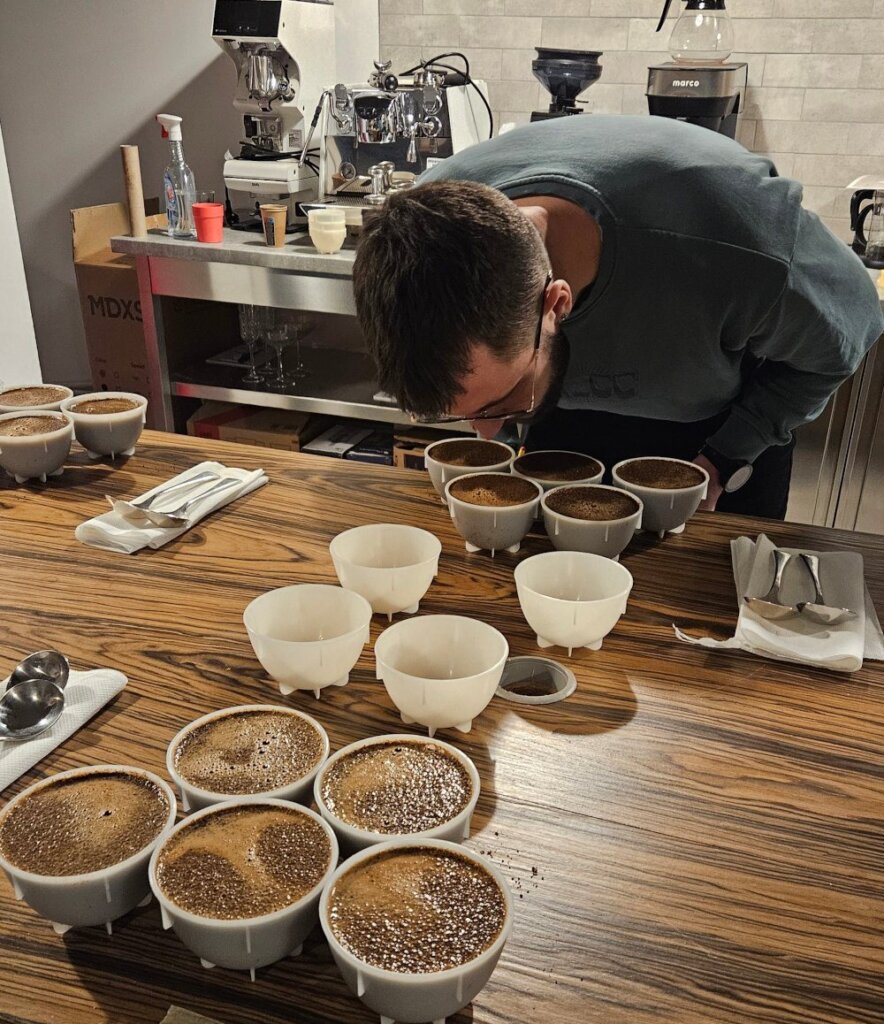
The same coffee can therefore taste bright and juicy to one person and simply sour to another. I explain when acidity is a positive quality and when it becomes a flaw in my article on acidity in coffee.
Citric acid gives coffee a citrus character
The sensory lexicon Easto draws on describes citric acid as having a mild, clean, sour aroma with a slight citrus note and an astringent sensation. It contributes to citrus tasting notes in coffee, such as lemon, grapefruit, orange and lime, although each of these has other qualities too. It often contributes to what baristas call brightness, in both washed coffees and naturally processed coffees.
Research cited in the book describes it as a pronounced burst of sourness. It hits you straight away rather than lingering in the background.
Citric acid is already present in green coffee beans. Roasting does not increase its concentration but gradually breaks it down. Medium-roasted coffee may contain roughly half as much citric acid as green coffee.
For roasters, concentration matters. Citric acid can contribute pleasant acidity, but at high concentrations it can overwhelm other flavours, as in coffee beans that are underdeveloped during roasting.
Malic acid is about more than just green apples
The lexicon describes malic acid as having a sour, sharp, slightly fruity taste, also accompanied by an astringent sensation. It is associated with apples, but it is also the main acid in many other fruits on the flavour wheel: blackberries, blueberries, cherries, grapes, peaches and pears.
Coffees that taste fruitier tend to contain more malic acid. Its sourness is described as smoother than that of citric acid. If you see green apple or grape tasting notes in a coffee description, this is the characteristic to look for.
In Easto’s exercise, you only taste the malic acid solution because it has no aroma component. You also smell the citric and acetic acid solutions.
When does acetic acid become a defect?
The lexicon describes it as having a sour, astringent, slightly pungent aroma associated with vinegar. Most of us have vinegar in our kitchens, but we rarely associate it with coffee. Some acetic acid forms during fermentation as part of processing, but most of it forms during roasting as carbohydrates break down. Its concentration can increase up to twenty-fivefold during roasting.
Beans with a higher sugar content tend to contain more acetic acid after roasting. Levels are highest in light and medium roasts, as acetic acid begins to break down again as roasting progresses.
Acetic acid is weaker than citric and malic acids, yet it strongly influences perceived acidity and aroma because the nose is particularly sensitive to it. At low concentrations, it gives coffee a clean, slightly sweet character. At high concentrations, it produces a fermented aroma that is usually considered a defect. Together with formic acid, it is also thought to contribute to coffee’s wine-like character.
Compare the characteristics of these three acids side by side.
| Acid | Associated with | Character | Detectable aroma? |
|---|---|---|---|
| citric | lemon, grapefruit, orange, lime | pronounced, sudden burst of sourness | yes |
| malic | apple, pear, grape, cherry, blackberry, blueberry | smooth sourness | no |
| acetic | vinegar, wine-like character | sharp sourness, fermented aroma at high concentrations | yes, the nose is highly sensitive to it |
Brewing also affects how sour coffee tastes
You might expect coffee to taste increasingly sour as the pH of the brew falls. However, Easto describes a study in which perceived acidity was associated with titratable acidity, a measure of the total acid concentration, rather than pH alone.
In this study, the brewing method had a greater influence on sourness than the roast level. Coffee with high TDS and a low extraction yield was perceived as the sourest, while coffee with low TDS and a high extraction yield was perceived as the least sour.
Before switching to a less acidic coffee, adjust your brewing technique, changing one variable at a time. A finer grind or longer contact time with water generally increases extraction. I explain this in more detail for espresso in my article on why coffee from an espresso machine tastes sour. You can read more about coffee extraction in a separate article.
Compare the three acids with a home tasting exercise
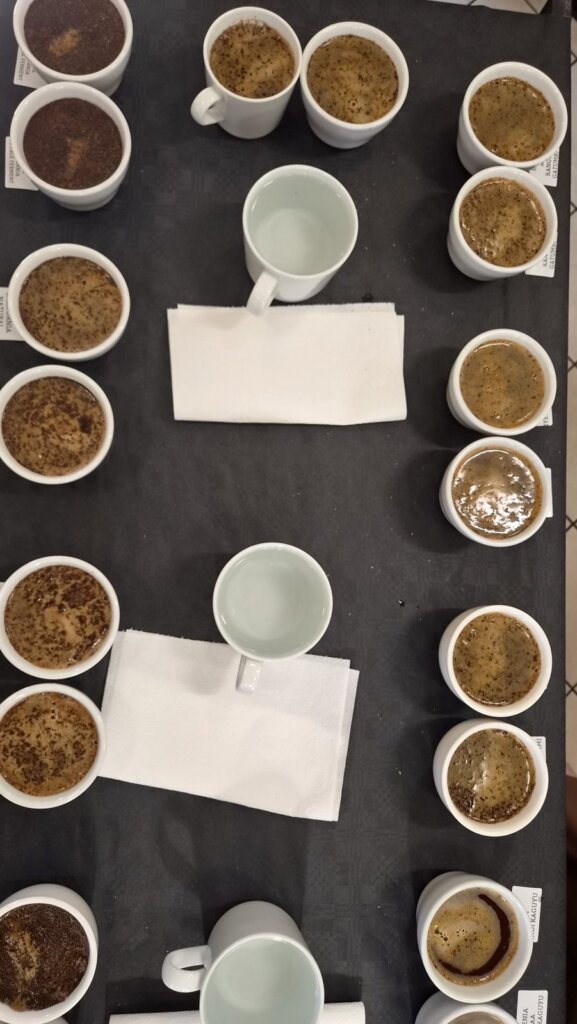
Easto suggests comparing three solutions of similar intensity. You will need scales accurate to 0.1 g, filtered water and three small cups with lids.
- Dissolve 0.5 g of food-grade citric acid in 1 litre of water. You can buy it at a supermarket.
- Dissolve 0.5 g of food-grade malic acid in 1 litre of water. Look for it online, at a pharmacy or in a supplement shop.
- Mix 20 g of white spirit vinegar (5% acidity) with 80 g of water. This gives you an approximately 1% acetic acid solution. If your vinegar has 10% acidity, use 10 g of vinegar and 90 g of water.
Cover the cups to retain the aromas and wait until the solutions reach room temperature. Smell the citric and acetic acid solutions, taste all three and note what each one reminds you of.
Don’t have the powdered acids? Use lemon juice diluted with water in a 1:4 ratio and apple purée instead. Lemon and apple have sensory qualities beyond their acidity, but you should still be able to recognise the differences between the acids. Keep the solutions in the fridge and use them within about two days.
Now for the coffee. Brew a light-roasted filter coffee and see which of these flavours you can pick out.
How to identify acidity in coffee descriptions
When choosing coffee, look for descriptions of lively, bright or sparkling acidity, as well as tasting notes associated with sour flavours, such as lemonade, sour sweets and fruit. Most light and medium roasts have some acidity, as many coffee cultures consider it an important part of flavour balance.
In our range, you will find citrus notes in Kenya Masai and lemon notes in Ethiopia Yirgacheffe Mamo Kacha. We list apple among the tasting notes of Costa Rica San Diego Anaerobic. All three are available in our light roast coffee category.
Cheese is another story. The lexicon also includes butyric and isovaleric acids, associated with Parmesan and Romano cheeses. Professional coffee tasters regard these as defects, and consumers are unlikely to encounter them.
Next time you describe a coffee as “sour”, ask yourself: is it more like lemon, apple or vinegar? Lemon and apple notes are a positive quality when balanced with the other characteristics of the brew. A hint of vinegar can be too.
What acids are found in coffee?
Acids account for around 10% of a green coffee bean’s weight. The three main groups are chlorogenic acids, carboxylic acids, including citric, malic and acetic acids, and phosphoric acid. Not all of them taste sour: chlorogenic acids and their breakdown products tend to contribute bitterness instead.
What is the difference between acidity and sourness in coffee?
Both describe the same basic taste: sourness. Acidity refers to sourness that is balanced with the other flavours, while sourness describes a taste that is too intense for the drinker.
Does roasting reduce coffee’s acidity?
It depends on the acid. Citric acid gradually breaks down during roasting, and medium-roasted coffee may retain around half the amount originally present in green coffee. Acetic acid levels rise during roasting, and the acid only begins to break down as the roast becomes darker.
Why does coffee taste like vinegar?
Acetic acid is responsible for this taste. At low concentrations, it gives coffee a clean, slightly sweet character. At high concentrations, it produces a fermented aroma that is usually considered a defect. Some of it forms during fermentation as part of processing, but most forms during roasting.
How can I make coffee less sour at home?
Start by adjusting your brewing technique, changing one variable at a time. In the study described in the book, coffee with high TDS and a low extraction yield was perceived as the sourest, while coffee with low TDS and a high extraction yield was perceived as the least sour.
How can I learn to recognise acids in coffee?
Prepare three solutions: 0.5 g of citric acid per litre of water, 0.5 g of malic acid per litre of water, and 20 g of vinegar with 5% acidity mixed with 80 g of water, producing an approximately 1% acetic acid solution. Compare them, then look for these flavours in light-roasted coffee.
Przeczytaj też
Kopi Luwak: The Coffee from Droppings I Don’t Recommend
Kopi Luwak costs a fortune, yet its supposedly exceptional quality remains questionable. Behind this famous
Nov
Paper, Metal or Cloth Coffee Filters: Which to Choose?
Paper retains most coffee oils and fine particles, metal lets more of them through, and
Nov

Christmas Coffee Recipes: 5 Ideas from a Barista
Five Christmas coffee recipes you can make at home, including drinks from our café's winter
Nov

Cyber Monday 2026: When Is It and How to Stock Up on Coffee
Cyber Monday 2026 falls on 30 November. Find out how it started, what we have
Nov
Jamaica Blue Mountain Coffee: Is the Legend Worth the Price?
For years, Jamaica Blue Mountain was regarded as one of the world's finest coffees, and
Nov
How much water do coffee grounds retain? Where does it go?
From 350 g of water, you get around 302 g of brewed coffee. We explain
Nov
V60 Pouring Height: What Does Physics Say?
Does pouring from higher up always improve coffee agitation? Physics shows that there is a
Nov

Why Does Coffee Taste Different as It Cools?
Coffee left on your desk can taste completely different from how it tasted just after
Nov

This site is protected by reCAPTCHA. The Google Privacy Policy and Terms of Service apply.