















For decades, you could buy excellent Costa Rican coffee without knowing who grew it. Coffee sacks bore the names of regions and large mills, but contained harvests from many different farms. That changed with the rise of micro mills, small processing facilities that allowed growers to process their own coffee. James Hoffmann dedicates a section of the Costa Rica chapter in his book “The World Atlas of Coffee” to this development.
At our Colbergcoffee roastery near Kołobrzeg, we are particularly interested in the diversity of coffee flavours. Costa Rica’s story shows how much remained to be discovered in a country with such a long tradition of producing good coffee. It was not about finding new land for growing coffee, but about changing how harvests from existing farms were processed.
In this article, you will learn:
- How small coffee mills differ from traditional beneficios.
- Why allowing growers to process their own harvests increased the diversity of coffees available.
- What the names of regions, farms and mills can tell us about the origin of coffee beans.
Costa Rica and nearly 200 years of wet processing
Coffee production in Costa Rica dates back to the 19th century. When the country declared independence from Spain in 1821, it had around 17,000 coffee trees. The authorities distributed seeds free of charge and encouraged people to establish coffee plantations. In 1825, coffee was exempted from certain taxes, and from 1831, people could claim ownership of unused land after growing coffee on it for five years.
The first small quantities of coffee were exported to Panama in 1820. Larger-scale exports began in 1832, initially via Chile. At the time, Costa Rican coffee reached England under the name “Café Chileno de Valparaíso”. Direct exports to England did not begin until 1843.
Between 1846 and 1890, coffee was Costa Rica’s only export. Revenue from coffee sales funded the construction of railways, hospitals and libraries, as well as the development of public institutions. The Anglo-Costa Rican Bank was founded in 1863 to provide financing for the growing coffee industry.
Coffee processing infrastructure developed alongside production. Wet processing was introduced in Costa Rica in 1830, and by 1905, 200 mills were already using this method. Washed coffees commanded higher prices because of their perceived quality. Costa Rica established its reputation for producing good coffee relatively early on.
The government also took steps to protect the interests of small-scale growers. In 1933, an institute was established, with one of its first responsibilities being to limit the profits of mills purchasing coffee cherries from farmers. In 1948, the institute became the Oficina del Café, which later evolved into the Instituto del Café de Costa Rica (ICAFE).
ICAFE’s activities include research into coffee cultivation and the promotion of Costa Rican coffee. According to the figures cited in the book, the institute was funded by a 1.5% tax on coffee exports. The history of Costa Rica’s coffee industry illustrates how closely the country’s development was tied to a single agricultural product.
What is a micro mill and how does it differ from a beneficio?
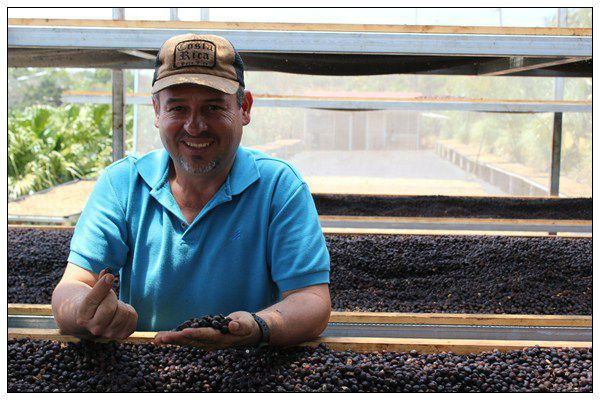
A micro mill is a small coffee processing facility with equipment that allows growers to carry out their own post-harvest processing. Under the traditional model, farmers delivered their harvested cherries to larger mills, known in Costa Rica as beneficios. At these facilities, harvests from different farms could be pooled and processed together.
At the turn of the 21st century, much of the coffee exported from Costa Rica was sold under the brands of large mills. Buyers knew the name of the mill, but not necessarily exactly where the coffee had been grown. It was also difficult to identify which farm was responsible for a particularly interesting flavour in a given lot.
Hoffmann notes that as the specialty coffee market grew, the limited traceability of Costa Rican coffee became an increasingly significant problem. The country had a good reputation, and its coffee commanded prices above standard market rates. However, opportunities to trace individual coffees to their precise origins and explore their terroir were limited.
The number of small mills grew rapidly in the second half of the 2000s. Growers began investing in their own processing equipment, gaining greater control over their harvests. Instead of handing over their cherries to be processed alongside those from other farms, they could keep their own coffee separate.
According to the figures presented in the book, 90% of Costa Rican coffee producers owned small or medium-sized farms. The development of grower-owned mills was therefore particularly significant in a country where smallholders accounted for such a large proportion of the industry.
How did micro mills change coffee flavour and traceability?
Costa Rican coffees are typically characterised by clean flavours, sweetness and often a very light body. Hoffmann notes that for many years, these coffees were pleasant but rarely particularly interesting or unusual. In the second half of the 20th century, growers began moving away from traditional coffee varieties in favour of higher-yielding ones. Many people in the specialty coffee industry believe this came at the expense of coffee quality and flavour appeal.
Pooling harvests was another problem. Coffee with an exceptional flavour profile could end up in the same lot as beans from neighbouring farms. Even if the resulting coffee was of good quality, its flavour no longer reflected the distinctive character of an individual farm.
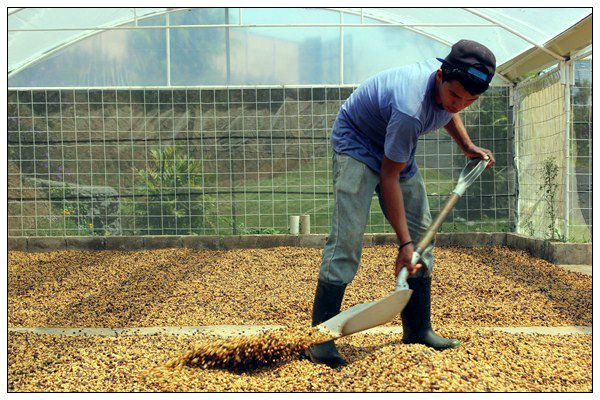
Processing their own coffee allowed growers to preserve these differences. Beans from a single farm could be sold as a separate lot rather than becoming part of a larger blend. Consumers could now compare coffees from different farms within the same region.
According to Hoffmann, these changes are what made exploring Costa Rican coffees so interesting. It is now easier than ever to taste several different coffees from the same area side by side. Comparing them helps us better understand how geography influences coffee flavour.
Honey processing and microlots
When exploring coffee processing methods used in Central America, you will often encounter the term honey. This method is used in countries including Costa Rica and El Salvador. It falls somewhere between washed and natural processing, with its defining feature being that the coffee is dried with some of the fruit material still attached.
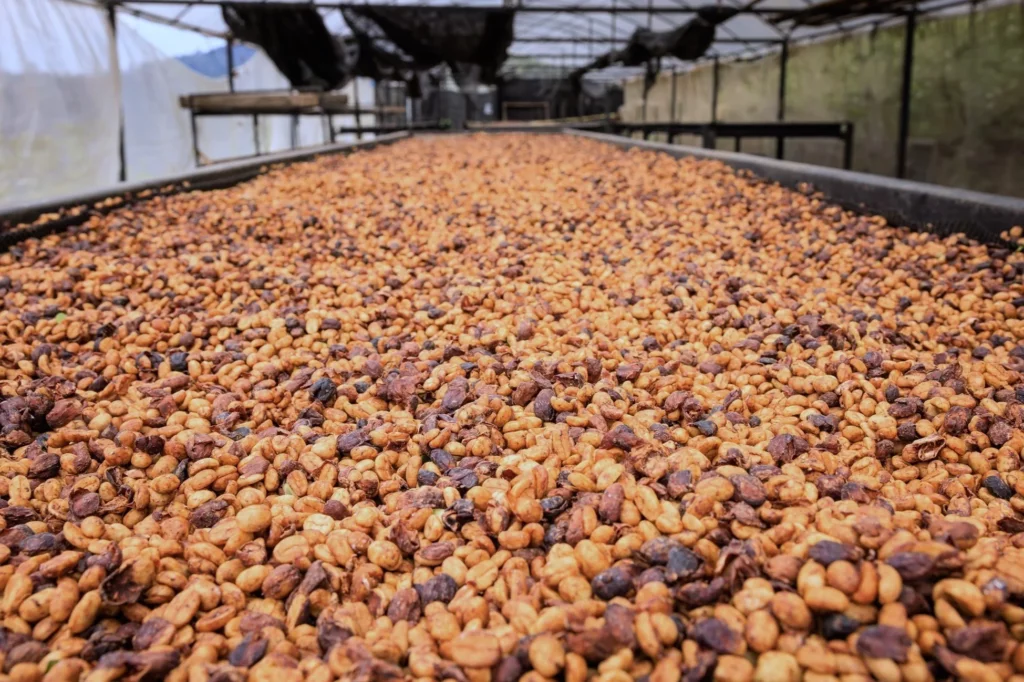
The Spanish word “miel” means honey and refers to the sticky layer surrounding the coffee beans. Processing equipment generally allows growers to adjust how much fruit material remains on the beans. This explains designations such as 100% honey or 20% honey. Honey processing is similar to pulped natural processing but requires even less water.
Leaving more fruit material on the beans, however, increases the risk of unwanted fermentation and defects developing during drying. In her book “How to Taste Coffee”, Jessica Easto identifies natural and honey-processed coffees as particularly good candidates for exploring fruity flavour notes.
Another term associated with the diversity of specialty coffee is the microlot. According to Hoffmann’s definition, a microlot typically consists of no more than 10 bags of carefully selected coffee from a single farm or a group of producers. Hoffmann refers to bags weighing 60 or 69 kg. However, this is not a fixed standard that applies to every lot.
The terms micro mill and microlot refer to two different things. The former is a facility where coffee is processed, while the latter is a distinct lot of coffee beans. A microlot can come from either a single farm or a group of producers.
Costa Rica’s coffee regions and the Tarrazú phenomenon
Costa Rica has successfully promoted the names of its coffee-growing regions on the international market. According to the figures presented in the book, the country produced 1,486,000 60 kg bags of coffee in 2016. The regions vary in growing altitude, weather conditions and harvest seasons.
| Region | Growing altitude | Harvest season season |
|---|---|---|
| Central Valley | 900-1600 m above sea level | November-March |
| West Valley | 700-1600 m above sea level | October-February |
| Tarrazú | 1200-1900 m above sea level | November-March |
| Tres Rios | 1200-1650 m above sea level | November-March |
| Orosi | 1000-1400 m above sea level | August-February |
| Brunca | 600-1700 m above sea level | August-February |
Central Valley is Costa Rica’s oldest coffee-growing region. Its geographical conditions are influenced by three volcanoes: Irazú, Barva and Poás. West Valley is home to the town of Sarchi, which gave its name to the Villa Sarchi coffee variety.
The history of Tarrazú is particularly interesting. For years, the region’s name was almost synonymous with high-quality Costa Rican coffee. According to Hoffmann, much of the coffee sold under this name probably came from different farms whose harvests were pooled at processing mills. The region had such a strong reputation that even coffees grown outside its boundaries were sold under its name.
Tarrazú is home to Costa Rica’s highest-altitude coffee farms. The region also benefits from a distinct dry season that coincides with the harvest. The development of small mills made it possible to explore coffees from individual farms rather than just large lots marketed under the region’s name.
Grower-owned coffee mills in Guatemala and El Salvador
Processing coffee on their own premises is not unique to Costa Rican growers. In Guatemala, many producers have their own wet mills. The country has a long tradition of producing high-quality coffees that can be traced back to individual farms, cooperatives or groups of growers.
Guatemalan coffees offer a wide range of flavours, from light, sweet, fruity and complex profiles to coffees with a heavier body and a distinctly chocolatey character. Knowing the country of origin alone is therefore not enough to determine how the brewed coffee will taste.
El Salvador is home to both large coffee estates and small farms. Its well-developed infrastructure allows high-quality coffee to be traced back to individual farms. Many farms are also able to produce separate microlots distinguished by their processing method or coffee variety.
What does Costa Rican coffee taste like today?
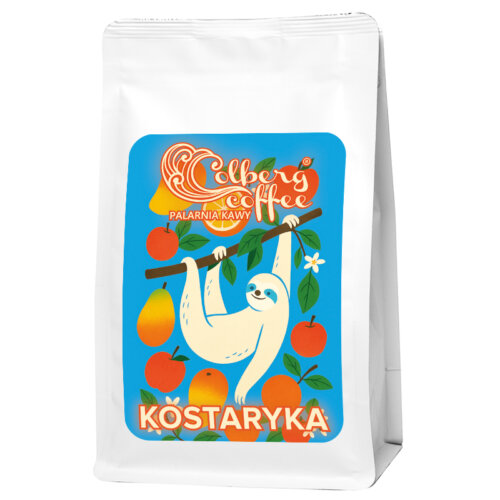
A good example of the diversity of Costa Rican coffee is Costa Rica San Diego Anaerobic, available from our roastery. It comes from the Tarrazú region, where the Caturra variety is grown at 1600-1750 m above sea level. The beans were processed at Beneficio San Diego using anaerobic fermentation, a method known as anaerobic processing. The coffee achieved an SCA score of 87 points.
Its flavour profile features notes of cinnamon, apple, pomegranate and hibiscus. This light-roasted coffee is intended for filter brewing methods. Its flavour profile illustrates the diversity of coffees available from the Tarrazú region today.
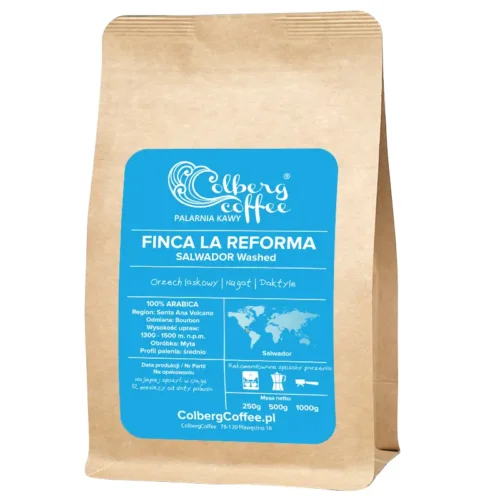
Our range also includes El Salvador Finca La Reforma, a single-farm coffee of the Bourbon variety, grown at 1300-1500 m above sea level in the area around the Santa Ana volcano and processed using the washed method.
Key takeaways
- Costa Rica has used wet processing since 1830, and by 1905, 200 mills were already using this method.
- Owning their own mills allowed growers to keep their harvests separate and gain greater control over processing.
- The name of a region or a large mill does not always reveal which farm the coffee was grown on.
- A microlot is a carefully selected lot of coffee that can come from a single farm or a group of producers.
- Comparing coffees from different farms within the same region helps us appreciate the diversity of flavours it offers.
What is a micro mill?
A micro mill is a small coffee processing facility that allows growers to process their own harvests. It enables individual lots to be kept separate rather than being pooled with harvests from other farms at large mills.
When did small coffee mills begin to emerge in Costa Rica?
Their numbers grew rapidly in the second half of the 2000s, when growers began investing in their own post-harvest processing equipment.
How does a microlot differ from a micro mill?
A microlot is a small, carefully selected lot of coffee beans, while a mill is a facility where coffee is processed. Microlots can come from either a single farm or a group of producers.
What is honey processing?
Honey processing involves drying coffee beans with some of the fruit material still attached. The amount of material remaining can be adjusted during mechanical pulping.
Why can coffees from the Tarrazú region differ in flavour?
Tarrazú is home to many coffee farms operating at different altitudes. Keeping their harvests separate allows us to discover the distinctive flavour characteristics of coffee from individual farms.
Does all Costa Rican coffee come from micro mills?
No. Costa Rica also retains the traditional model of processing coffee at large facilities known as beneficios. The name of a region or mill alone does not indicate the size of the facility or whether the coffee comes from a single farm.
Przeczytaj też
Kopi Luwak: The Coffee from Droppings I Don’t Recommend
Kopi Luwak costs a fortune, yet its supposedly exceptional quality remains questionable. Behind this famous
Nov

Paper, Metal or Cloth Coffee Filters: Which to Choose?
Paper retains most coffee oils and fine particles, metal lets more of them through, and
Nov

Christmas Coffee Recipes: 5 Ideas from a Barista
Five Christmas coffee recipes you can make at home, including drinks from our café's winter
Nov

Cyber Monday 2026: When Is It and How to Stock Up on Coffee
Cyber Monday 2026 falls on 30 November. Find out how it started, what we have
Nov

Jamaica Blue Mountain Coffee: Is the Legend Worth the Price?
For years, Jamaica Blue Mountain was regarded as one of the world's finest coffees, and
Nov

How much water do coffee grounds retain? Where does it go?
From 350 g of water, you get around 302 g of brewed coffee. We explain
Nov
V60 Pouring Height: What Does Physics Say?
Does pouring from higher up always improve coffee agitation? Physics shows that there is a
Nov

Why Does Coffee Taste Different as It Cools?
Coffee left on your desk can taste completely different from how it tasted just after
Nov

This site is protected by reCAPTCHA. The Google Privacy Policy and Terms of Service apply.