





If we were to sit down to a traditional Polish Christmas Eve dinner in centuries past, we might be surprised by how the meal ended. Today, many of us see a cup of coffee as the natural finishing touch to our Christmas Eve dinner. At our Colbergcoffee roastery near Kołobrzeg, we decided to explore the origins of this custom. Yet we found no mention of coffee being served after dinner in historical accounts of Christmas Eve rituals.
To understand how coffee found its way onto the festive table, we need to explore two things: the history of coffee drinking in Polish homes and how people traditionally spent their time after Christmas Eve dinner. Looking at these two histories together helps explain the modern custom of serving coffee with makowiec (poppy seed cake), gingerbread and other Christmas treats.
In this article, you’ll learn:
- How coffee reached Poland and became part of everyday life.
- How people traditionally spent Christmas Eve and how the custom of drinking coffee after dinner may have developed.
- Which coffees to pair with Christmas cakes and serve to your guests on Christmas Eve.
The history of coffee in Poland: from Turkish coffee to an everyday drink at home
According to historical accounts, coffee reached Poland from Turkey via Kamieniec Podolski and Lwów. In the 17th century, it was drunk Turkish-style, thick and cloudy. One account describes people filtering the coffee through a sugar cube held between their teeth as they drank.
Andrzej Morsztyn is said to have drunk coffee in Malta in 1643, although he was opposed to the drink. Coffee became widely popular in Poland during the Saxon era.
In the early 18th century, coffee began appearing in almanacs and medical treatises. Drinking it was recommended for various ailments, including stomach complaints. Such references can be found in publications from Zamość in 1703, Częstochowa in 1707 and Kraków in 1716.
Jędrzej Kitowicz provides a vivid account of coffee drinking habits in his “Opis obyczajów za panowania Augusta III” (A Description of Customs during the Reign of Augustus III). According to Kitowicz, coffee became a favourite drink among craftsmen and townspeople. Those who could afford less prepared drinks from roasted wheat or chicory and added milk. He also notes that women’s morning coffee was gradually replacing the beer soup they had previously eaten for breakfast.
Attitudes towards drinking coffee outside the home were also changing. Historical accounts indicate that Antoni Momber opened a coffee house in Gdańsk in the early 18th century. In 1724, the Frenchman Henri Duval attempted to open a similar establishment in Warsaw, but the venture ended in bankruptcy. Warsaw residents were still reluctant to drink coffee in public at the time.
A coffee house that opened in Warsaw’s Old Town Market Square in 1763 became popular. According to the reported figures, by the mid-19th century there were already around 180 coffee houses in the capital and more than 50 in Kraków. These developments form part of the wider history of coffee and its gradual integration into everyday life.
Historical accounts highlight the following milestones in the spread of coffee drinking across Poland:
| When | What happened |
|---|---|
| 1643 | Andrzej Morsztyn drinks coffee in Malta. |
| Early 18th century | Antoni Momber opens a coffee house in Gdańsk. |
| 1724 | Henri Duval opens a coffee house in Warsaw. |
| 1763 | A coffee house in Warsaw’s Old Town Market Square becomes popular. |
| 1771 | Klemens Branicki buys 356 kg of coffee, according to surviving account books. |
| Mid-19th century | Warsaw has around 180 coffee houses, while Kraków has more than 50. |
After-dinner coffee was already documented in the 18th century
References to after-dinner coffee appear in 18th-century accounts of social customs. According to one account, a guest who had had enough of the vodka or wine traditionally offered by the host would use a desire for coffee as an excuse to decline any more alcohol. Józef Epifani Minasowicz, Krusiński’s publisher, advocated drinking coffee in the pages of “Monitor” as a way of curbing drunkenness among the nobility and wealthy townspeople.
This account describes an ordinary evening meal and has no direct connection with Christmas Eve. It does, however, show that after-dinner coffee was already being mentioned in the 18th century.
In the mid-18th century, Krusiński, who is credited with writing the first Polish pamphlet devoted to coffee, warned against drinking it before bedtime.
Was drinking coffee on Christmas Eve an old Polish custom?
Historical accounts of Christmas Eve customs paint a very different picture of the festive evening from the one we know today. Ethnographic accounts indicate that people observed a strict fast until Christmas Eve dinner. During the day, people in Pomerania and Silesia ate herring and drank water, while those in Greater Poland ate żur, a sour rye soup.
After dinner, it was time for fortune-telling. People listened for the sound of a barking dog, threw a shoe and uncovered objects hidden beneath their plates. These included a bonnet, a wreath, bread and salt.
According to historical accounts, the hours after Christmas Eve dinner in the Lublin region were a time for playing pranks and visiting neighbours. Leftovers from the festive meal were collected for animals. Midnight held particular significance, as people believed that miracles would occur and animals would speak with human voices.
Accounts of historical customs drawing on the works of Ogrodowska, Gloger and Kolberg make no mention of coffee being served after Christmas Eve dinner. Of course, this does not mean that coffee was never drunk on such occasions in Polish homes. There is, however, insufficient evidence to regard coffee drinking as an old Polish Christmas Eve tradition.
How did coffee find its way onto the modern Christmas Eve table?
In a 2015 CBOS survey, 86% of respondents said that Christmas Eve dinner retained its traditional character as a meat-free meal associated with fasting. According to an analysis of the survey results, the only drink people associated with Christmas was kompot z suszu, a traditional dried fruit drink. It was mentioned by just one in a hundred respondents.
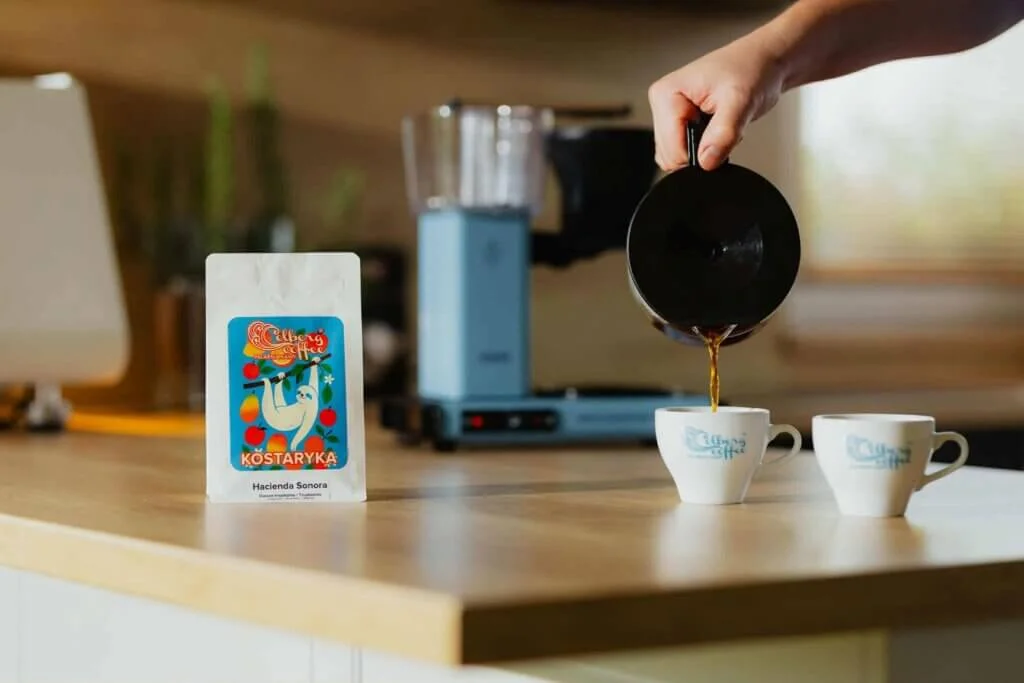
The custom of drinking coffee after Christmas Eve dinner may have developed as coffee became more widely consumed in Polish homes. Over time, this everyday habit may have extended to festive occasions. We do not know exactly when this happened.
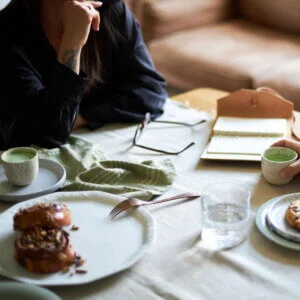
Today, poppy seed cakes, fruitcakes and gingerbread are served after Christmas Eve dinner. We enjoy coffee with these same treats throughout the year. It seems likely, therefore, that coffee found its place on the festive table as serving cakes after Christmas Eve dinner became customary.
Some families also drink coffee while waiting for pasterka, the traditional Midnight Mass held as Christmas Eve gives way to Christmas Day, on the night of 24 December.
Which coffee goes best with poppy seed cake and gingerbread?
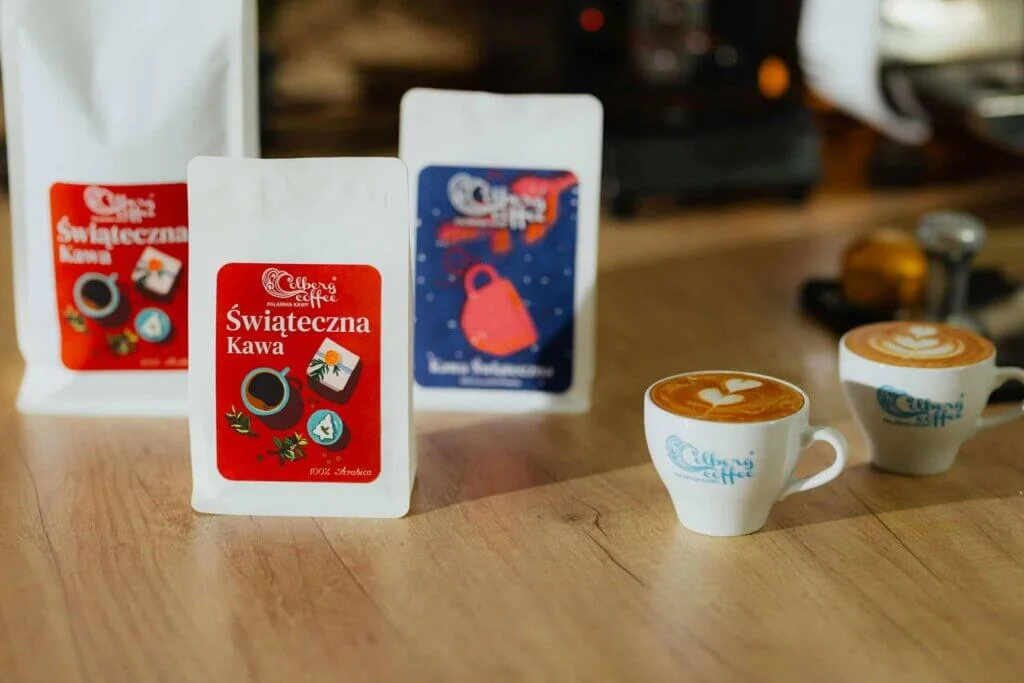
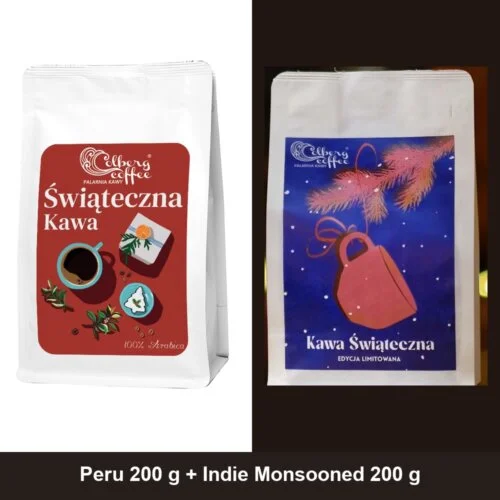
To accompany poppy seed cake, we recommend our Christmas coffee from Peru, with notes of sweet chocolate and almonds roasted in butter. For gingerbread, we would choose our Christmas coffee from India, with its notes of cocoa, mild spices and roasted nuts.
If you are expecting a larger group of guests, you can prepare filter coffee and serve it in a jug. If you are using a coffee machine, ask your guests beforehand whether they prefer their coffee black or with milk. Ideally, brew the coffee just before serving the Christmas treats.
If you plan to serve coffee late on Christmas Eve, it is worth keeping some coffee beans with most of their caffeine removed at home. For anyone looking to reduce their caffeine intake before bedtime, decaf coffee is a good choice. They can still enjoy a cup of coffee with their Christmas cake.
Key takeaways
- Coffee became widespread in Poland during the Saxon era and gradually became part of everyday life.
- After-dinner coffee was already mentioned in the 18th century, although these accounts do not refer to Christmas Eve dinner.
- Historical accounts of Christmas Eve rituals provide no evidence of an established tradition of drinking coffee after the festive meal.
- The modern custom of serving coffee at Christmas most likely developed from our everyday coffee drinking habits and the practice of serving cakes after Christmas Eve dinner.
Christmas coffees from the Colbergcoffee roastery
For this year’s Christmas celebrations, we recommend two coffees from our roastery. We have selected two distinct flavour profiles that we believe pair particularly well with traditional Christmas treats.
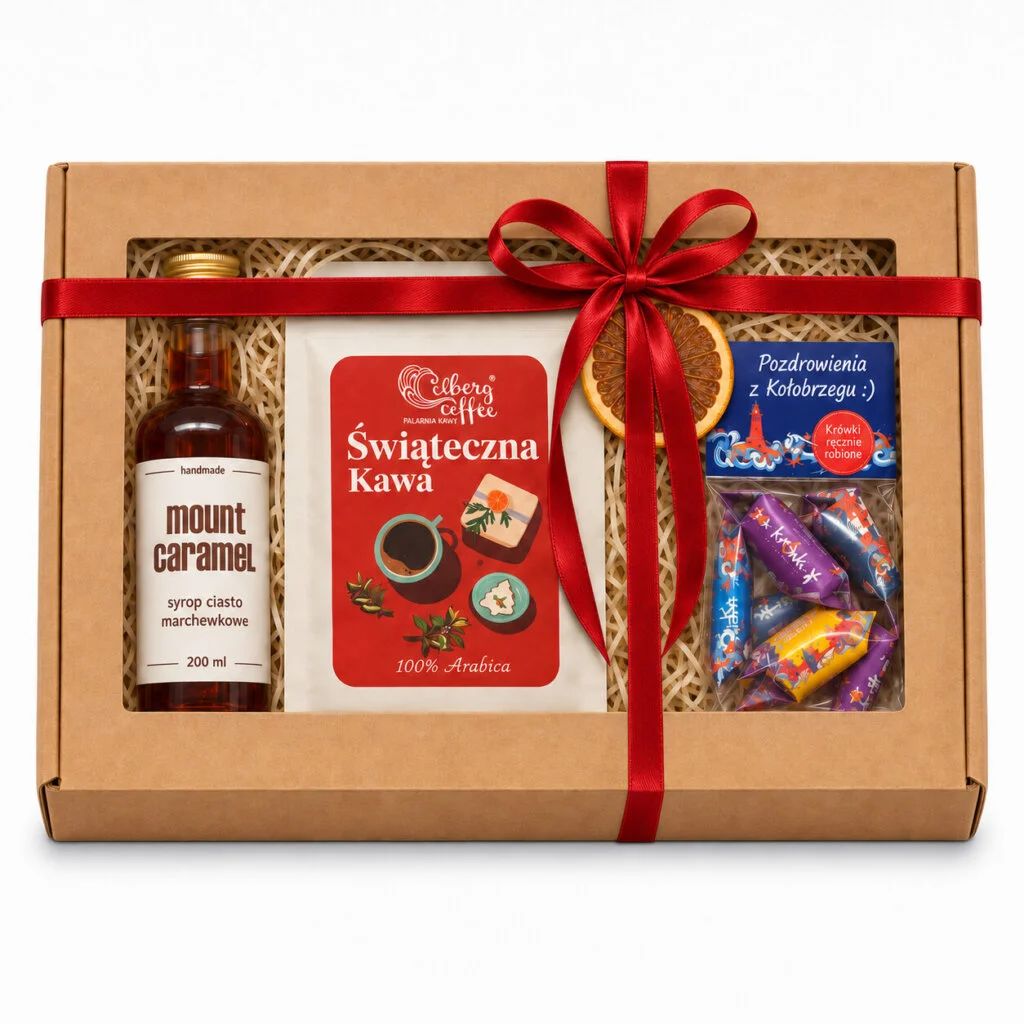
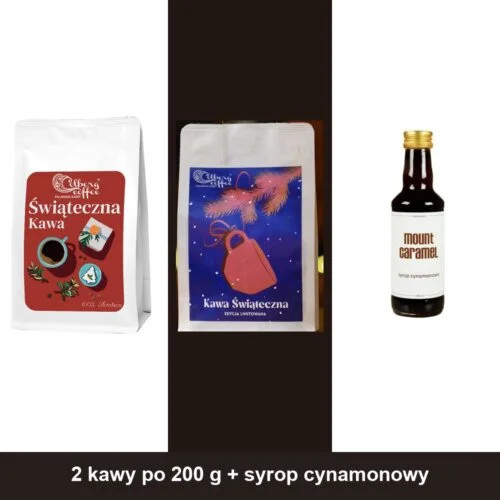
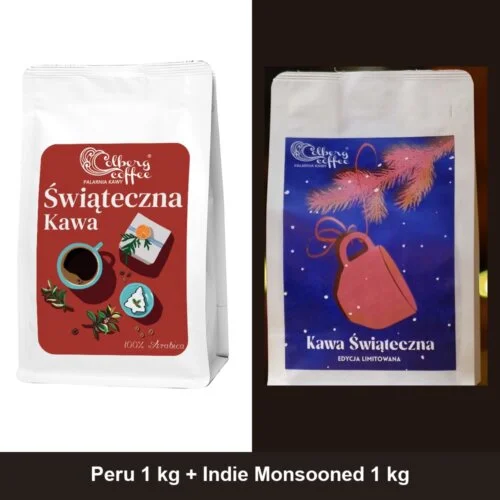
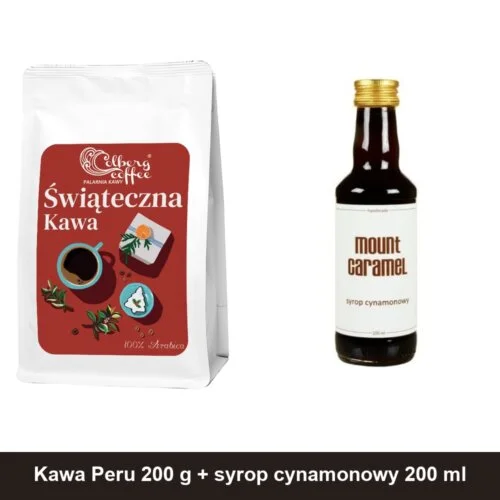
- Christmas Coffee Peru – washed Typica beans from the Chanchamayo region. Expect notes of sweet chocolate and almonds roasted in butter. Our recommended pairing for poppy seed cake.
- Christmas Coffee India Monsooned – a medium-roasted monsooned coffee from the Karnataka region, with low acidity. Expect notes of cocoa, mild spices and roasted nuts. We particularly recommend pairing it with gingerbread.
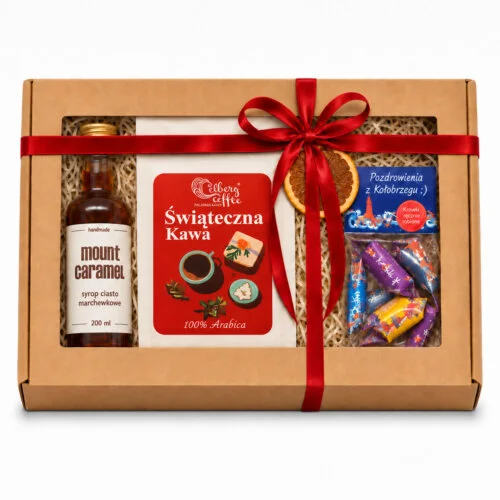
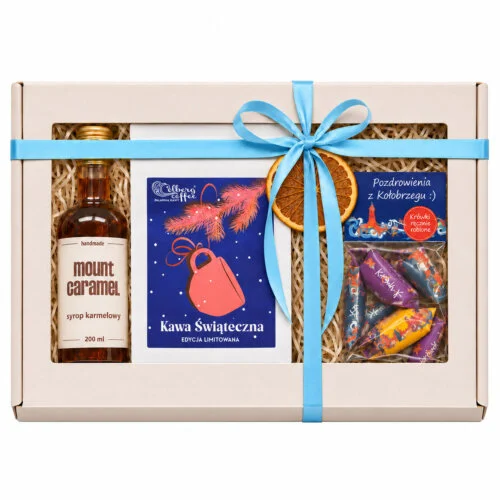
If you are looking for coffee as a gift, we have also put together a Christmas Gift Set. Inside the kraft box, you will find Christmas Coffee Peru (200 g), coffee syrup (200 ml) and krówki (Polish fudge, 150 g).
Is drinking coffee on Christmas Eve a traditional Polish custom?
Available historical accounts of Christmas Eve customs make no mention of drinking coffee after dinner. The custom most likely developed as coffee drinking became widespread in Polish homes and people began serving it with Christmas cakes.
How long have Polish people been drinking coffee?
References to Polish people drinking coffee date back to the 17th century. The drink became widespread during the Saxon era, gaining popularity among townspeople and craftsmen as well.
Are there historical references to after-dinner coffee?
One 18th-century account of social customs describes a guest using a desire for coffee as an excuse to decline further alcoholic drinks after dinner. The account concerns an ordinary evening meal and has no connection with Christmas Eve.
Which coffee pairs best with Christmas cakes?
For poppy seed cake, we recommend our Christmas Coffee Peru, with notes of sweet chocolate and almonds roasted in butter. For gingerbread, we recommend Christmas Coffee India Monsooned, with notes of cocoa, mild spices and roasted nuts.
Can you drink coffee before Midnight Mass?
In some households, people drink coffee while waiting for Midnight Mass. For anyone looking to reduce their caffeine intake at such a late hour, we recommend decaf coffee.
Przeczytaj też
Kopi Luwak: The Coffee from Droppings I Don’t Recommend
Kopi Luwak costs a fortune, yet its supposedly exceptional quality remains questionable. Behind this famous
Nov
Paper, Metal or Cloth Coffee Filters: Which to Choose?
Paper retains most coffee oils and fine particles, metal lets more of them through, and
Nov

Christmas Coffee Recipes: 5 Ideas from a Barista
Five Christmas coffee recipes you can make at home, including drinks from our café's winter
Nov
Cyber Monday 2026: When Is It and How to Stock Up on Coffee
Cyber Monday 2026 falls on 30 November. Find out how it started, what we have
Nov
Jamaica Blue Mountain Coffee: Is the Legend Worth the Price?
For years, Jamaica Blue Mountain was regarded as one of the world's finest coffees, and
Nov
How much water do coffee grounds retain? Where does it go?
From 350 g of water, you get around 302 g of brewed coffee. We explain
Nov
V60 Pouring Height: What Does Physics Say?
Does pouring from higher up always improve coffee agitation? Physics shows that there is a
Nov

Why Does Coffee Taste Different as It Cools?
Coffee left on your desk can taste completely different from how it tasted just after
Nov

This site is protected by reCAPTCHA. The Google Privacy Policy and Terms of Service apply.