

Americano is the simplest coffee you can make on an espresso machine: espresso and hot water. That’s exactly why it’s so easy to get wrong. Whether you end up with a rounded, aromatic black coffee or watery bitterness comes down to three things: ratio, order and water temperature.
Below you’ll find a recipe in grams, a ratio table for three cup sizes, and the differences between americano, lungo and long black. At the end, we get into the real story behind the name. The popular version about American soldiers doesn’t hold up in the historical record.
Americano coffee: the three-step recipe
The starting point is an espresso machine and a double shot, since that’s the most common version. Machine-free versions are further down.
- 1. Pull a double espresso. 18 g of coffee in the basket, 36 g of espresso in the cup, 25 to 30 seconds. That’s a 1:2 ratio, a practical starting point rather than a fixed rule. Dose and time depend on your basket, your coffee and your recipe.
- 2. Boil the water and let it sit for a moment. Aim for 90-95°C. Water straight from the kettle doesn’t change the extraction, since it never passes through the coffee, but it does speed up how fast the aromas fade, which makes the drink taste sharper.
- 3. Combine. Add 80 to 120 ml of water to the espresso, depending on how strong you like it. Altogether that’s roughly 115 to 155 ml of coffee.
That’s it. No stirring, and no sugar to start with. If you need to sweeten an americano made with good beans, something went wrong earlier, usually during the espresso extraction.
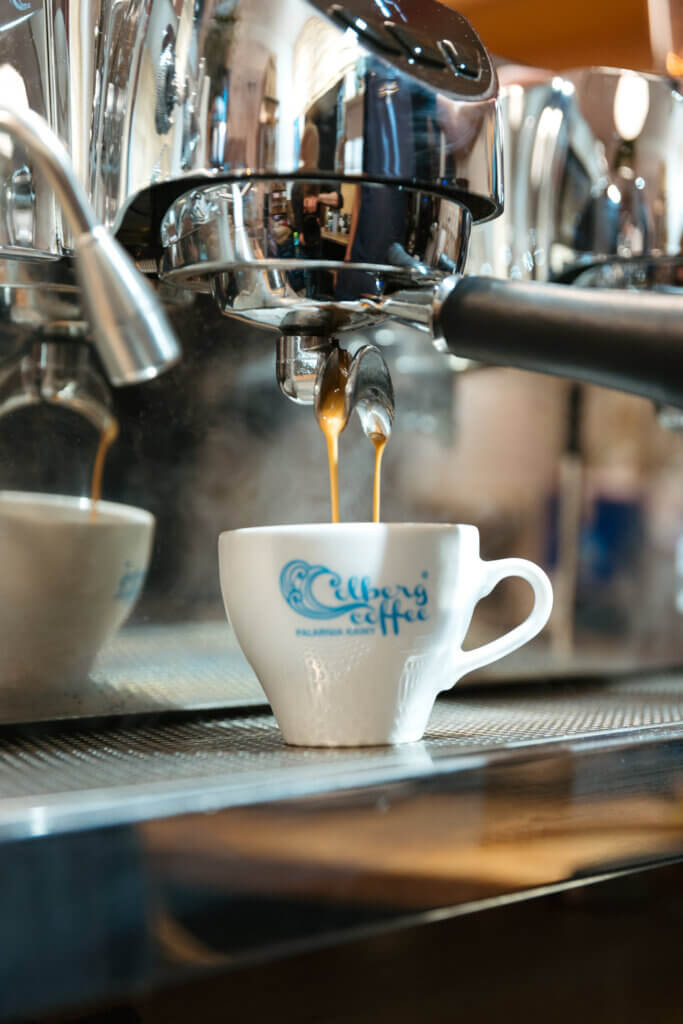
Americano is espresso and water. All the difficulty sits in the ratio and the temperature.
Americano ratios: how much espresso, how much water
There’s no single fixed standard. There’s a range most people settle on by taste: 1:2 to 1:4, counting espresso against the water you add. That boundary is a rule of thumb, not a cliff edge. Body fades gradually rather than disappearing the moment you cross it.
| Cup | Espresso | Water | Result |
|---|---|---|---|
| Small, about 120 ml | 36 g (double) | 70-80 ml | Strong, close to espresso, clear crema |
| Standard, about 150 ml | 36 g (double) | 100-120 ml | Classic americano, the most common choice |
| Large, about 200 ml | 27 g coffee, 54 g espresso | 140-160 ml | A long coffee without losing body |
Look at the last row. If you want to fill a large cup, don’t just add more water to the same shot. Pull a bigger dose instead. A triple espresso is roughly 27 g of coffee to 54 g of espresso, still at a 1:2 ratio. It’s the simplest way to keep a large americano from tasting watery.
Start with the middle row and change one variable at a time. Too strong? Add 20 ml of water. Too weak? Use 20 ml less next time. Two or three tries are usually enough to dial in the ratio for your cup.
Americano vs lungo: similar volume, completely different coffee
This is the question that comes up most, and the answer is concrete. Both drinks can end up a similar volume, but they’re made differently and taste different too.
In a lungo, the water passes through the coffee. You don’t stop the extraction at 36 g. You let the pump keep running and collect 54 to 72 g of espresso from the same 18 g of coffee. That’s a 1:3 or 1:4 ratio, and the time usually stretches to 35-50 seconds. With a lighter roast and a coarser grind, though, a lungo can run faster.
In an americano, water goes into a finished espresso. The extraction ends where it should. Only afterwards, once it’s out of the portafilter, does it get diluted.
That mechanics is where the flavour difference comes from. In the later stage of a pour, the compounds responsible for bitterness and astringency wash out of the coffee. A lungo collects them, since the pump keeps running. An americano doesn’t, since it gets its water after extraction. That’s not an absolute rule, though. A well-ground, light-roast coffee can produce a complex, balanced lungo.
| Coffee | Espresso | Time | Character | |
|---|---|---|---|---|
| Espresso | 18 g | 36 g | 25-30 s | Concentrated, the reference point |
| Lungo | 18 g | 54-72 g | 35-50 s | More bitterness and astringency |
| Americano | 18 g | 36 g plus 80-120 ml water | 25-30 s | Gentle, espresso flavour spread across more volume |
The practical takeaway: if you like a long coffee but your lungo keeps turning out bitter, make an americano instead. You get the same volume without the compounds from the later stage of extraction. If you still prefer a lungo, stop the pour at 54 g instead of 72 g.
Americano vs long black: an order of operations that changes the crema
A long black has the exact same ingredients, just added in the opposite order. Hot water goes into the cup first, then the espresso. There’s usually less water too, so a long black can end up stronger than a typical americano.
It sounds like a small detail, but the effect is visible. The crema stays on top instead of breaking apart in the stream of water. The drink looks better, the first sip is more aromatic, and the final temperature can end up slightly higher, since the espresso isn’t sitting around cooling while it waits for the water.
If your americano always looks flat with no crema, flip the order. That change costs nothing. How gently you pour affects the crema too: the gentler, the better.
The naming is a bit loose. Long black is standard in Australia and New Zealand, while americano is more common in Europe. In a lot of cafés, the two names mean the same thing in practice. If the order matters to you, just ask for it.
Americano vs filter coffee: why they’re not the same
Both drinks are black, have a similar volume, and get mixed up often. What sets them apart is the method, and through that, the whole flavour profile.
Americano is made under roughly 9 bars of pressure. You use finely ground coffee, and extraction takes a matter of seconds. Filter coffee or a pour-over means gravity, a coarser grind, and several minutes of contact between water and coffee.
Americano holds onto more oils and fine particles, so it usually has a fuller texture. Filter coffee brewed through paper comes out cleaner. The same beans can taste like two different coffees depending on the method. How clearly fruit notes come through also depends on the beans themselves and the roast.
That’s why filter and espresso usually call for different coffees. If you brew with pour-over methods, take a look at our guide on how to make cold brew, or our guide to brewing espresso.
Which coffee for americano
Americano exposes the beans more than a milk coffee does. There’s no milk to round off sharp edges, no sugar to hide flaws. Just coffee and water.
What works:
- Medium to medium-dark roasts. They give sweetness and body that survive dilution. It’s a safe choice, though not the only one: very light roasts can work well too, if the espresso is extracted correctly.
- Fresh, but not straight off the roaster. Coffee needs a few days to degas. Darker roasts are often ready after a few days; very light espresso roasts sometimes need longer, and can still taste good a month on.
- Beans ground right before brewing. That changes more than swapping in a pricier machine would.
- Blends with a touch of robusta, if you like a stronger, more full-bodied americano with more visible crema.
Avoid coffee that was ground months ago at a factory, or beans with no roast date on the bag. You’ll hear it straight away in an americano. The drink turns flat and papery.

A double espresso is the base of an americano. Anything you get wrong at this stage stays in the cup.
How to make americano without an espresso machine
You don’t need a portafilter to make a decent black coffee in this style. You just need to know what you’re not replicating.
- Bean-to-cup machine. Many models have a dedicated americano button. If yours doesn’t, check what the large-coffee programme actually does: some machines run all the water through the coffee, which gives you a lungo, others add the water separately. If in doubt, choose espresso and add the water by hand.
- Moka pot. A moka pot’s brew is stronger than filter coffee, and once diluted gives a drink with a similar structure. Start with 60 ml of brew to 100 ml of water. It won’t taste identical, since a moka pot runs at a much lower pressure.
- AeroPress. Brew strong, at around a 1:6 ratio, then dilute. Of the home methods, this gets closest to a true americano, though the AeroPress also builds a small amount of pressure.
One thing you can’t get around: instant coffee topped up with water isn’t an americano, even if it’s the same colour. Without pressure extraction, or at least a strong brew, there’s nothing to dilute.
Iced americano: the cold version
In summer, the same coffee works well over ice. It’s one of the few cold drinks that doesn’t need sweetening.
The order matters here for a practical reason. Add the ice and cold water first, then the espresso. The cold water absorbs some of the heat before the espresso reaches the ice cubes. The ice melts more slowly, and the drink holds its intended ratio for longer.
A starting ratio: 36 g of espresso, 100 ml of cold water and a full glass of ice. If the drink comes out too strong, add more water. Don’t add more ice.
Iced americano isn’t cold brew. Cold brew is made by steeping coffee in cold water for many hours. It usually has lower perceived acidity and more noticeable sweetness, though the result depends on the coffee and the recipe. You’ll find the details in our post on cold brew.
Does americano come with milk
By definition, no. Americano is espresso and water. That’s the entire ingredient list. Add milk and you get a different drink with its own name.
That doesn’t mean you can’t add it. A splash of milk in an americano gets ordered in cafés every day, and nobody makes a fuss about it. You just need to know what you’re actually getting:
- Americano plus a splash of milk is still black coffee with an addition, sometimes called a white americano.
- Espresso plus plenty of milk is a caffè latte, and with a thicker layer of foam, a cappuccino. We’ve covered the differences in our post on caffè latte versus latte macchiato.
- Espresso plus milk with no water is a different drink altogether, and there’s no americano in it.
There’s also the question of how americano differs from regular black coffee. If “regular coffee” means loose-leaf brewed or filter coffee, the difference is about method and body, as covered above. If you mean instant coffee, it differs in every way.
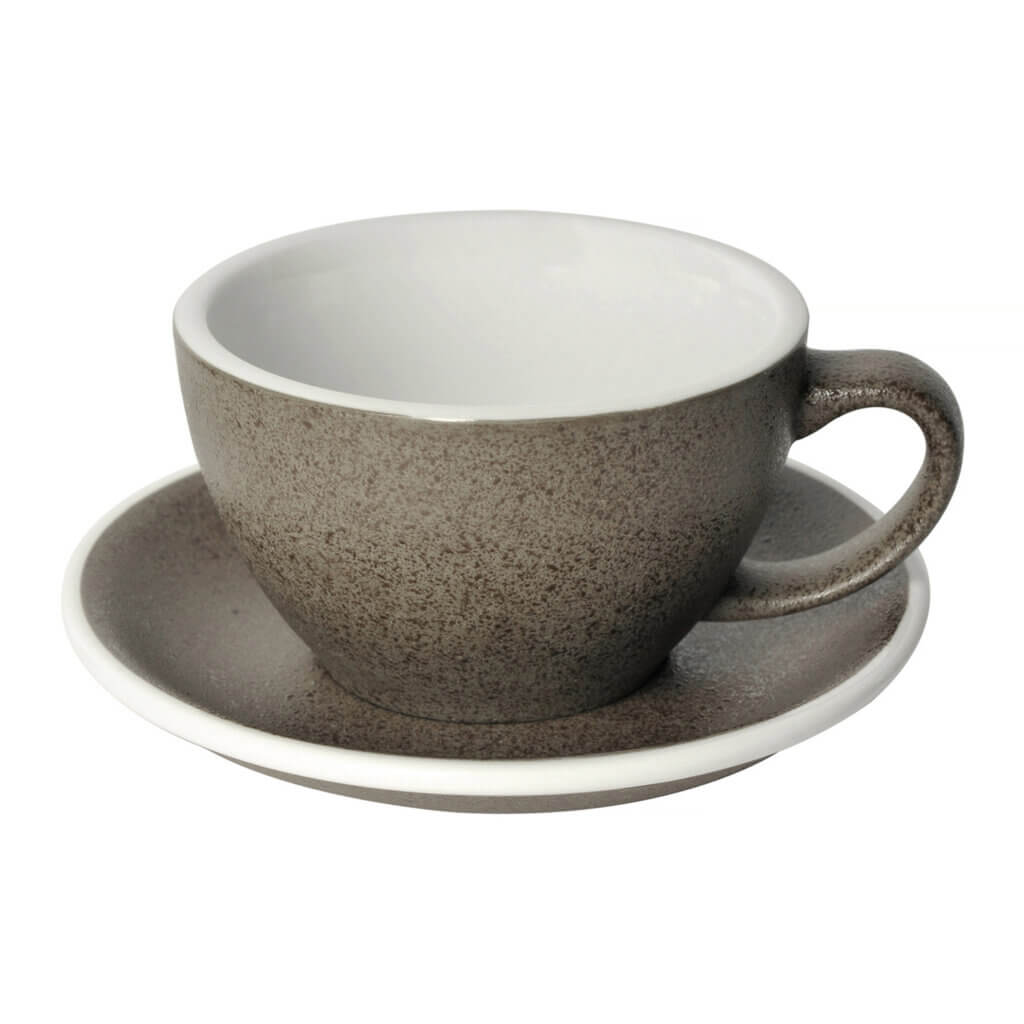
Americano is served without milk. Milk isn’t off limits, it just makes it a different drink.
Where the name americano comes from
The version repeated across half the internet goes like this: during the Second World War, American soldiers in Italy found espresso too strong and started diluting it with water. Italians supposedly named the drink caffè americano.
It’s a tidy story. There’s no solid evidence for it, though. Nobody points to a document, an account or a contemporary record that backs it up.
A counterargument sometimes comes up too: the word americano appears in literature as early as the 1920s, in Somerset Maugham’s writing, for instance. That’s a red herring, though. At the time, americano was mainly the name of a cocktail, not a coffee. A quote like that settles nothing.
The honest answer is that we don’t know for certain. The soldiers’ version is plausible, and fits the way coffee habits tend to spread. It remains an anecdote all the same. Coffee has plenty of stories like this, and most carry about the same weight of evidence.
Five mistakes that ruin an americano
All of these happen more often than you’d think. Every one is free to fix.
- Boiling water straight from the kettle. It doesn’t change the extraction, but it speeds up how fast the aromas fade and makes the drink taste sharper. Wait a minute, and aim for 90-95°C.
- Too much water for a single espresso. A large cup needs a bigger dose of coffee, not more water. Above a 1:4 ratio, the drink loses body.
- Espresso sitting around waiting for the water. Freshly pulled espresso cools fast and loses its volatile aromas. Have the water ready before you start the machine.
- A cold cup. A 150 ml drink loses several degrees in one straight away. Rinse the cup with hot water first.
- Coffee ground days earlier. It gets away with it in milk coffees. In an americano, it has nowhere to hide.
If the coffee still doesn’t taste right after fixing these five things, the problem is in the espresso extraction, not the americano itself. Go back to basics. Check your shot time and grind size.
How much caffeine is in an americano
The same as the espresso it’s made from. Water adds volume, not caffeine.
A double espresso contains roughly 120 to 160 mg of caffeine. You’ll find the same amount in an americano made from it, whether you add 80 or 150 ml of water. A single espresso contains roughly 60 to 80 mg. EFSA cites around 80 mg for a 60 ml espresso, as an example. The exact figure depends on the dose, the bean variety and how much robusta is in the mix.
That can be misleading. Americano is sipped over a longer time and feels gentler, but a gentler taste doesn’t mean less caffeine. If you want to cut back on the buzz, reduce the coffee dose or choose decaf beans. A bigger cup won’t help.
For comparison, a 200 ml cup of filter coffee usually contains around 80 to 120 mg of caffeine. That’s less than an americano made from a double espresso.
Summary: americano in one paragraph
Pull a double espresso, 18 g of coffee to 36 g of espresso, in 25 to 30 seconds. Boil the water, let it sit for a minute, and add 100 ml. If you want to fill a bigger cup, increase the coffee dose, not the amount of water. If you care about the crema, pour the water first, then the espresso.
The rest comes down to the beans. An americano has nowhere to hide a weak coffee. It’s a good test for any new bag you buy.
Frequently asked questions about americano
What exactly is an americano?
It’s espresso diluted with hot water. The drink has a bigger volume and a gentler taste than espresso, but keeps its character, since the extraction happens exactly the same way. A typical serving is a double espresso, 36 g, plus 80 to 120 ml of water, roughly 115 to 155 ml altogether.
What’s the correct ratio for an americano?
A range of 1:2 to 1:4, counting espresso against the water you add. There’s no single fixed standard, since it’s a matter of taste. Start with 36 g of espresso and 100 ml of water, then adjust by 20 ml either way. The further past 1:4 you go, the less body is left in the drink.
What’s the difference between americano and lungo?
The method. In a lungo, water passes through the coffee, since you extend the extraction and collect 54 to 72 g of espresso from 18 g of coffee. In an americano, extraction stops at 36 g, and the water goes into a finished espresso. That’s why a lungo usually has more bitterness and astringency: a longer pour washes out compounds from the later stage of extraction. With light coffee and a well-matched grind, though, a lungo can still turn out balanced.
What’s the difference between americano and long black?
Mainly the order. In an americano, espresso comes first, then water. In a long black, water comes first and the espresso is poured on top, which helps the crema hold together better. A long black also tends to be stronger, since less water usually goes in. The ingredients are the same.
Is americano the same thing as filter coffee?
No. Americano is made from espresso, brewed under roughly 9 bars of pressure from finely ground coffee in 20 to 35 seconds. Filter coffee relies on gravity, a coarser grind and several minutes of brewing. Americano holds onto more oils and fine particles, so it usually has a fuller texture, while coffee brewed through paper comes out cleaner.
How much caffeine is in an americano?
The same as the espresso it’s made from, since water adds volume, not caffeine. An americano from a double espresso has roughly 120 to 160 mg of caffeine, from a single espresso around 60 to 80 mg. The exact amount depends on the dose and the bean variety. A gentler taste doesn’t mean a smaller dose.
