

In the coffee world, some brands are simply “good,” and others set the standard. Nuova Simonelli espresso machines belong firmly in the second group. For years they’ve turned up in cafés, restaurants, hotels, and anywhere that consistent espresso, reliable operation and ergonomics behind the bar actually matter. A major strength is low failure rates and easy servicing, which brings running costs down.
These are machines designed for intensive, everyday use. So where does that popularity come from, and what’s actually behind the brand’s reputation?
The history and approach behind Nuova Simonelli
Nuova Simonelli was founded in Italy, in the Marche region. From the start, the company focused on developing the technology, not just how the machines looked. As early as the mid-20th century, Simonelli was introducing features we now take for granted in professional espresso machines.
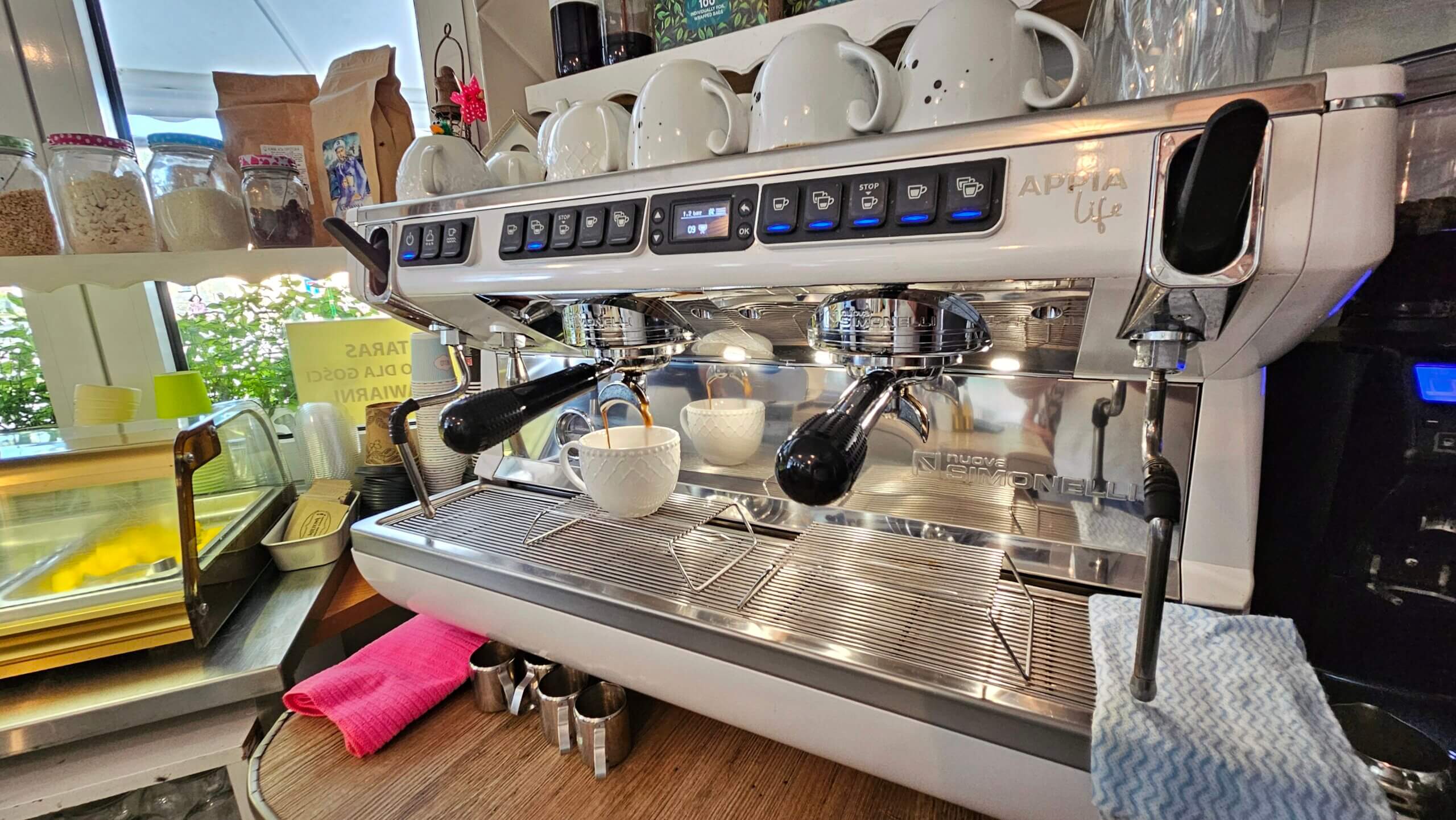
Over the years, the brand has built a very distinctive approach:
-
a focus on temperature stability
-
solutions that genuinely make baristas’ work easier
-
machines designed for long hours of continuous use
-
close collaboration with baristas and the specialty coffee community
It’s no accident that machines from this brand have been, and still are, chosen as the official equipment for barista competitions. That’s about as tough a test of consistency and precision as it gets.
What sets Nuova Simonelli machines apart in daily use
In practice, the difference between an average machine and a good one doesn’t show up after one espresso. It shows up after hundreds of coffees in a single day. Nuova Simonelli machines are built exactly for that scenario.
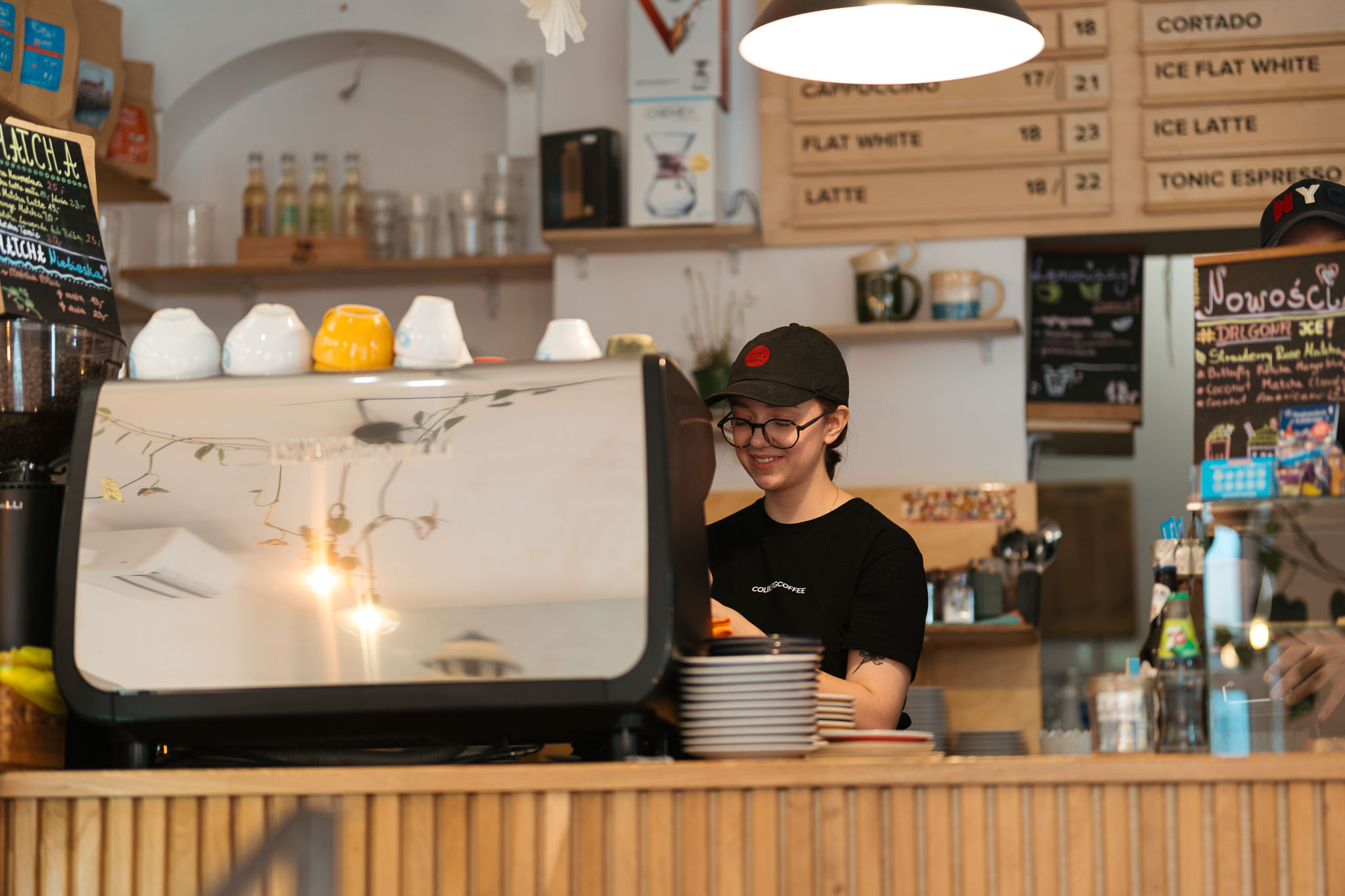
The features professionals value most:
-
very good thermal stability in the brew groups
-
consistent extraction even when it’s busy
-
ergonomic bar layout with a logical arrangement of controls
-
solid construction built to withstand heavy use
-
energy and water-saving features
In practice, that means fewer adjustments, less stress during rush hours and a more predictable taste in the cup. For a café, patisserie or restaurant, that’s a real difference you feel in day-to-day work.
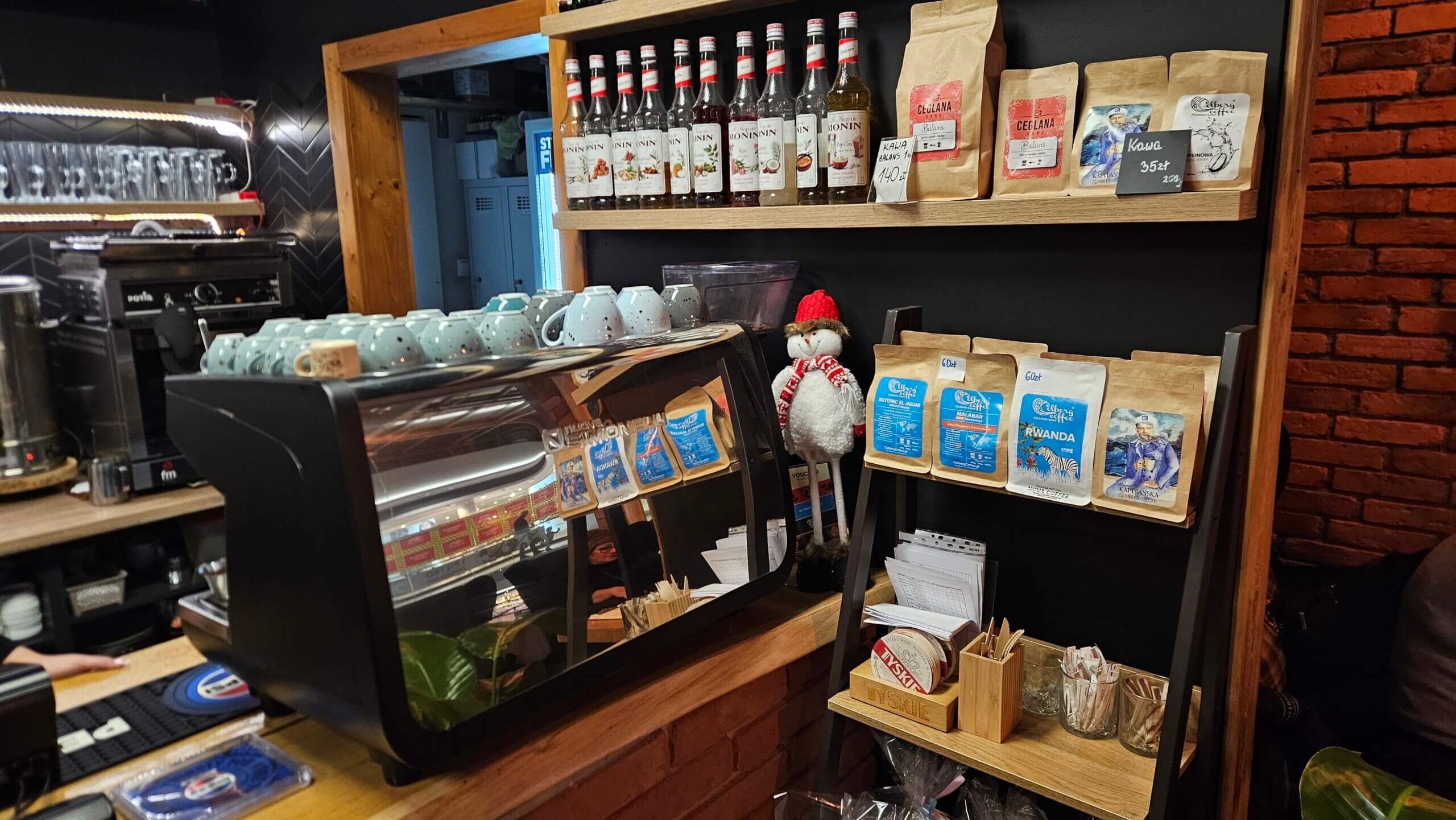
Which models work well in small cafés and patisseries?
Smaller venues have different needs than large cafés. What matters is a compact footprint, stable operation and simple use, especially when coffee is an important part of the offer but not the only one. Patisseries, bakeries and small cafés often work in a tight space, and there isn’t always an experienced barista behind the bar.
This is exactly where the Appia range tends to show up. It’s a line built for intensive daily use, without the excess of advanced settings that small venues don’t always need. Structurally, it’s an HX machine, meaning a heat exchanger design. Thanks to that simple construction, they break down less often and servicing costs are much lower.
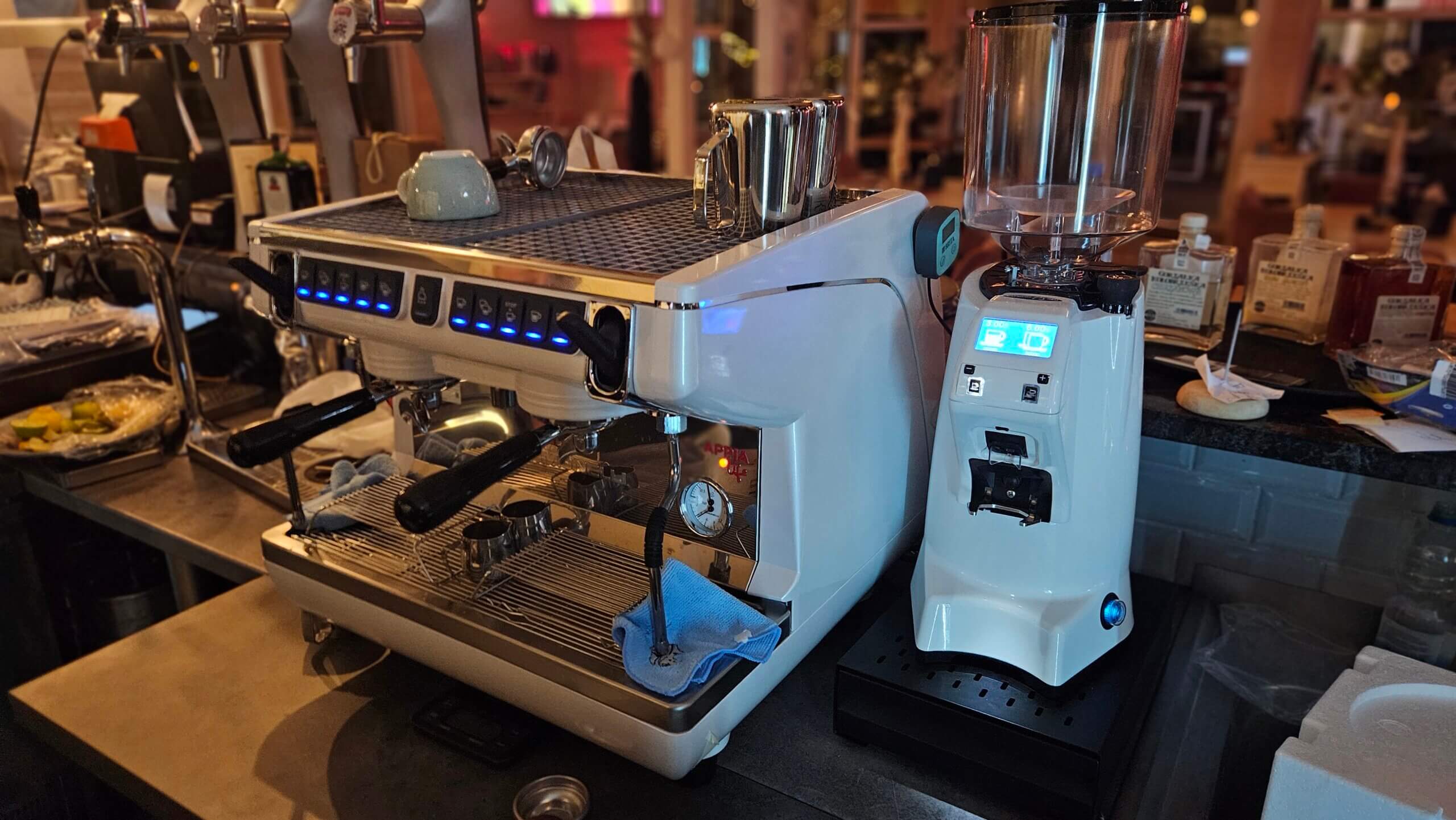
Appia Life Compact: the most common choice in 2025
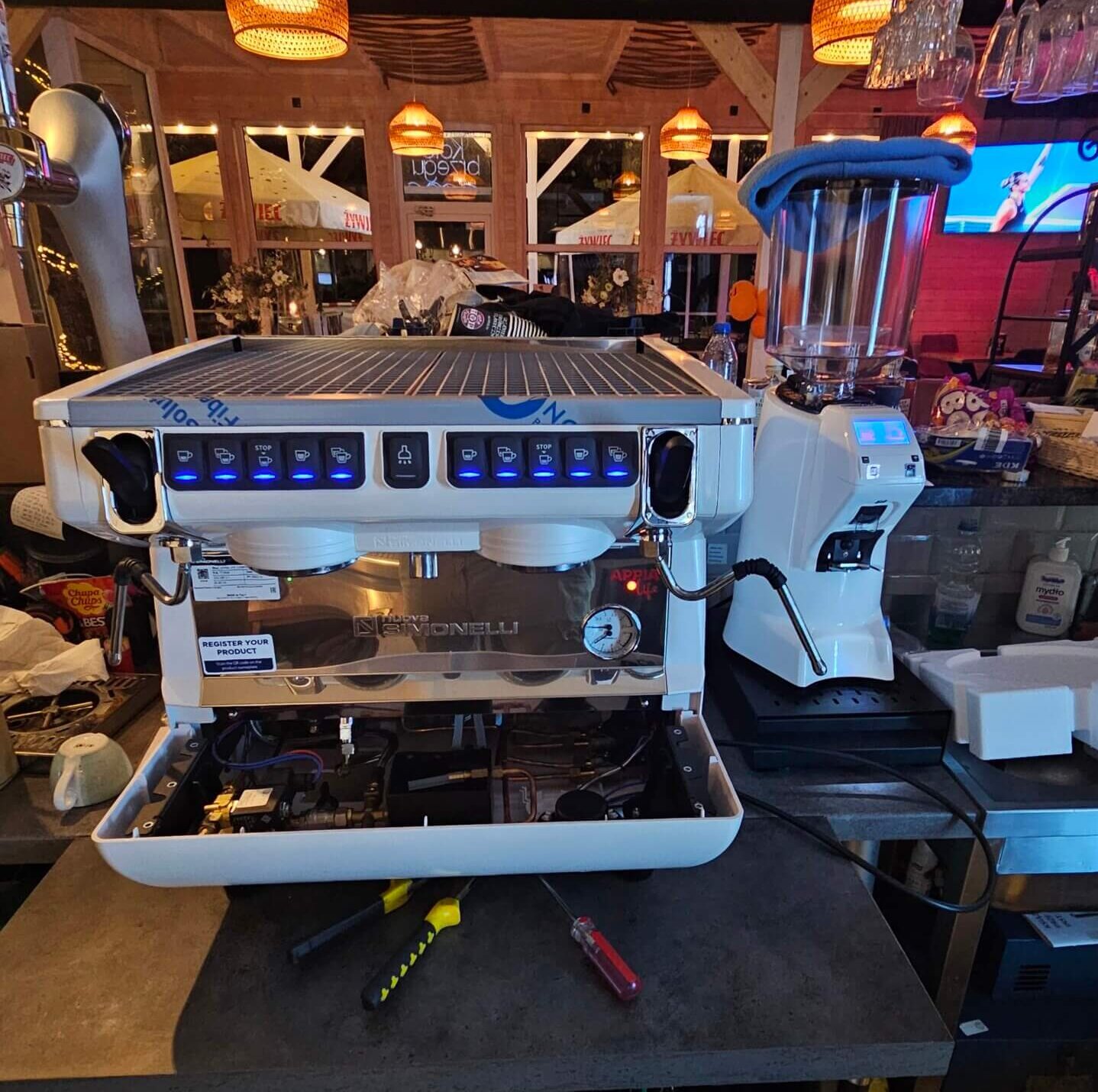
In 2025, one of the best-selling machines for small hospitality venues is still the Appia Life Compact. It keeps turning up in new cafés, patisseries and small coffee spots.
A few factors drive that. First, its compact dimensions mean a two-group machine fits even on a small counter. At the same time, it keeps the performance you’d expect from larger machines: stable temperature, good steam output and consistent extraction.
For a lot of venue owners, it also matters that the Appia Life Compact doesn’t need complicated operation. It copes well both during rush hour and in the quieter parts of the day. The steam wand switches, for example, are simple up-down toggles rather than a dial you have to turn, which is exactly the kind of thing that gets fiddly. A turning dial can stick, or a barista won’t know which way to turn it. I’ve seen that happen more than once during training sessions at cafés.
Nuova Simonelli for large, high-traffic venues too
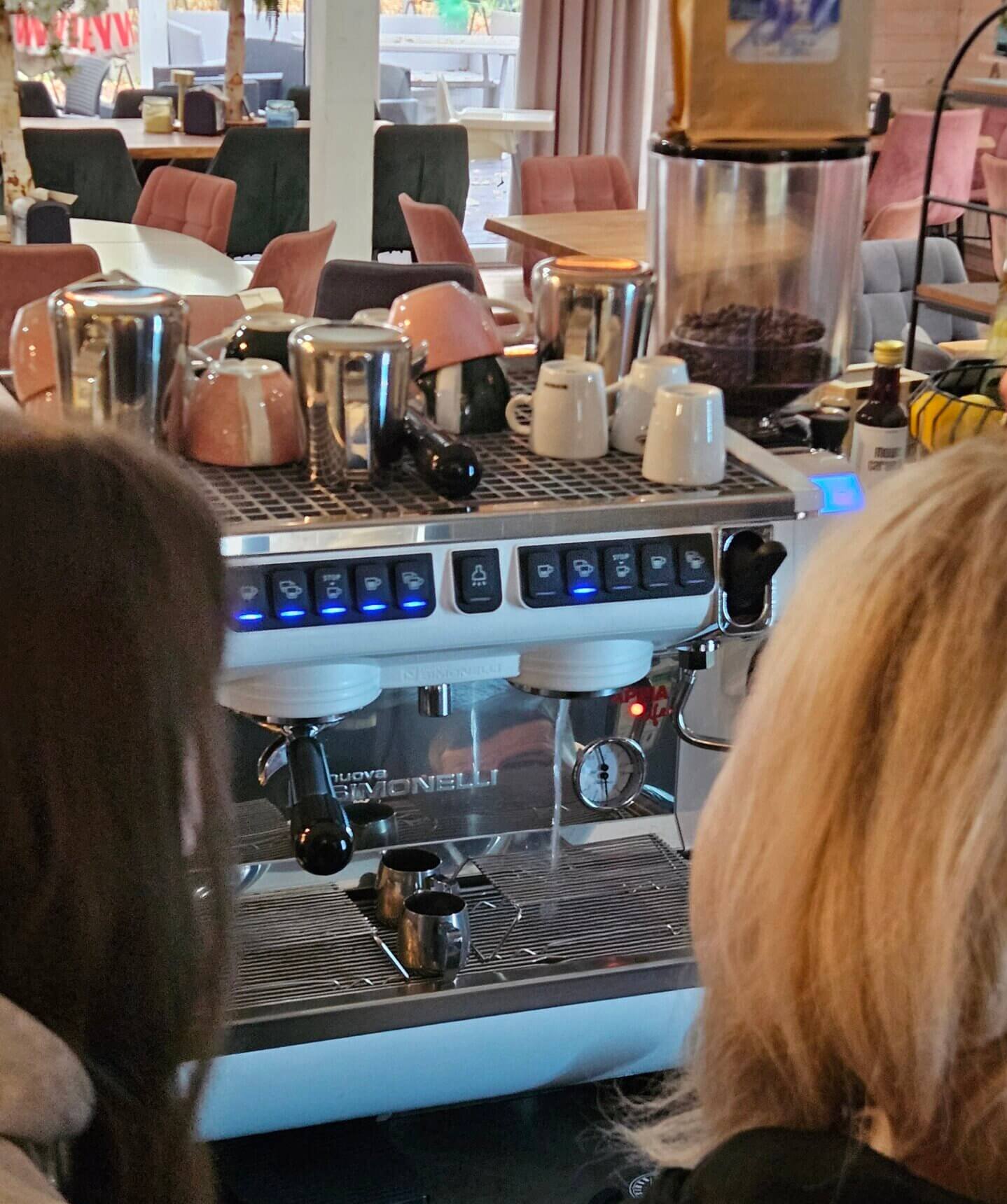
Higher-end machines, such as the Nuova Simonelli Aurelia Wave, very often end up in venues with extremely high footfall. Airports, cafés in shopping centres, coffee-to-go kiosks and specialty cafés in city centres all need equipment that can turn out a large number of drinks, including milk-based ones, in a short space of time. Two and three-group configurations let several baristas work at once without any drop in quality or pace. That’s exactly why this type of machine regularly turns up at Polish airports and in some of the busiest, most recognisable venues in the country, where reliability and throughput aren’t a bonus. They’re a requirement.
FAQ: Nuova Simonelli espresso machines
Why are Nuova Simonelli machines chosen so often for cafés?
Because they’re designed for intensive, everyday use. Temperature stability, consistent espresso and ergonomics behind the bar are the key strengths. This is equipment that holds its quality not just for a few coffees, but through hundreds of shots a day.
Are Nuova Simonelli machines suitable for small cafés and patisseries?
Yes. The Appia series was built with small and medium-sized hospitality venues in mind. The machines are compact, simple to use, and don’t require advanced barista knowledge, while still delivering consistent coffee quality.
How does the Appia Life Compact differ from larger machines?
It keeps the key features of professional machines, such as stable temperature and strong steam output, but in a smaller footprint. Without a lot of complicated settings, it’s simpler to operate, breaks down less often and costs less to service.
Where are Nuova Simonelli’s top-end models most commonly found?
In venues with very high footfall: airports, shopping centres, city-centre cafés and busy specialty venues. The two and three-group versions let several baristas work at once without losing quality or pace.
