

Peaberry coffee is a real gem in the world of specialty coffee. It comes from a natural mutation of the coffee cherry and makes up just 5-7% of the entire harvest. It is round, denser and has interesting flavour potential. Read on to find out how it differs from regular beans, how it affects the taste of coffee and why it often costs more.
Where do peaberry beans come from?
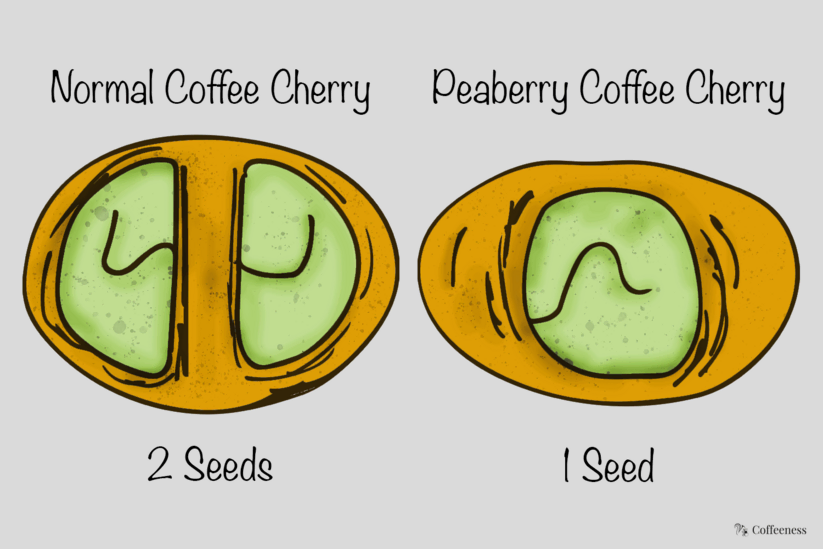
Most coffee cherries hold two flattened seeds. Every now and then one of them does not develop at all or disappears at an early stage of growth. The single remaining bean then takes up the whole space inside the cherry, and that is what we call a peaberry. It is not a separate variety but a natural mutation caused by pollination problems or by the second embryo stopping its development.
Researchers estimate that peaberries make up only 5-7% of the entire coffee crop, and some publications give a range of 5-10%. With such a small share, farms tend to treat them as a curiosity rather than a mass commodity.
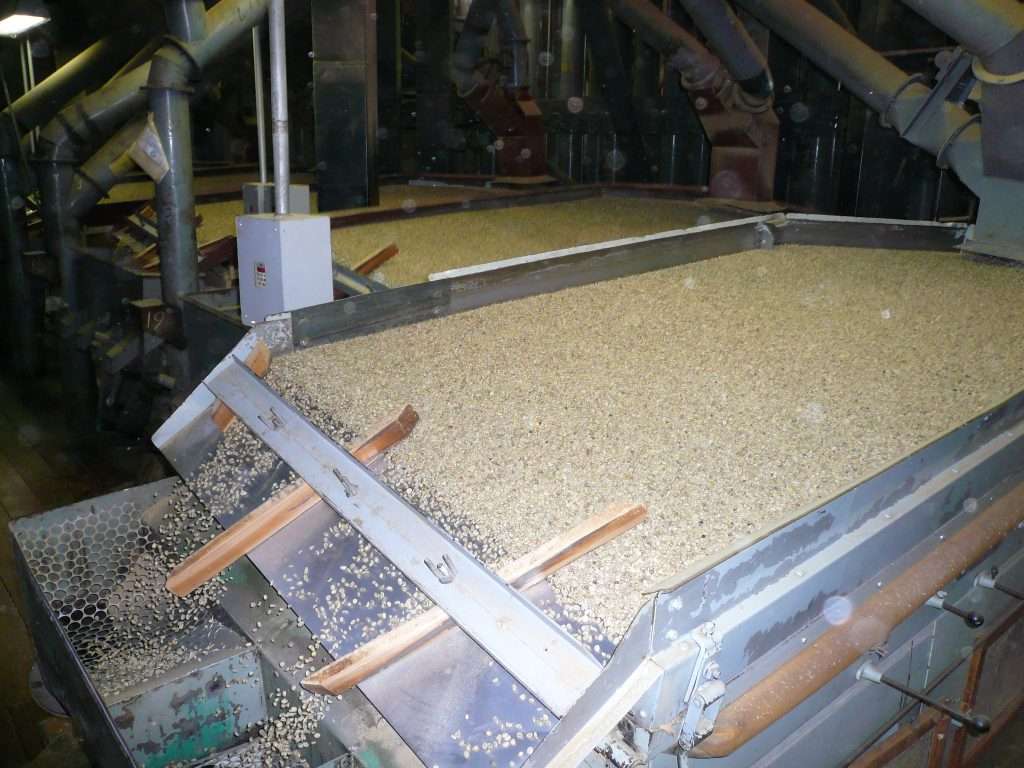
From the outside, cherries with a peaberry look the same as the “normal” ones. The difference only shows after drying and hulling: a peaberry is rounder, smaller and denser than the typical half-moon bean. Farmers cannot separate them at harvest, so sorting happens at the farm or mill with sieves and sorting machines. That extra work partly explains the higher price of the coffee.
Why do peaberries form?
A peaberry forms when one of the ovules is not fertilised or the growth of the endosperm stops. It is not caused by a particular variety or specific genes, so you cannot “breed” a plantation that produces only peaberries. Weather, pollination and small differences in cultivation can raise or lower how often it happens, but it remains a random process.
It occurs all over the world. Although marketing usually links peaberry with Tanzania, Kenya or Hawaii, the mutation turns up on every plantation from Ethiopia to Costa Rica.
Does peaberry coffee taste better?
Many shops and blogs claim that the single bean “gets more juice from the mother plant” and therefore has a more intense flavour. You will indeed come across descriptions saying peaberry has brighter acidity, more sweetness and a concentrated aroma. Scientific studies do not clearly confirm these opinions.
In the study discussed further down, researchers measured, among other things, the caffeine and antioxidant content of brews made from peaberry and regular beans. They found a slightly higher caffeine concentration in peaberry, but the differences in antioxidant capacity were small. In practice, flavour is decided by variety, altitude, processing and roast freshness.
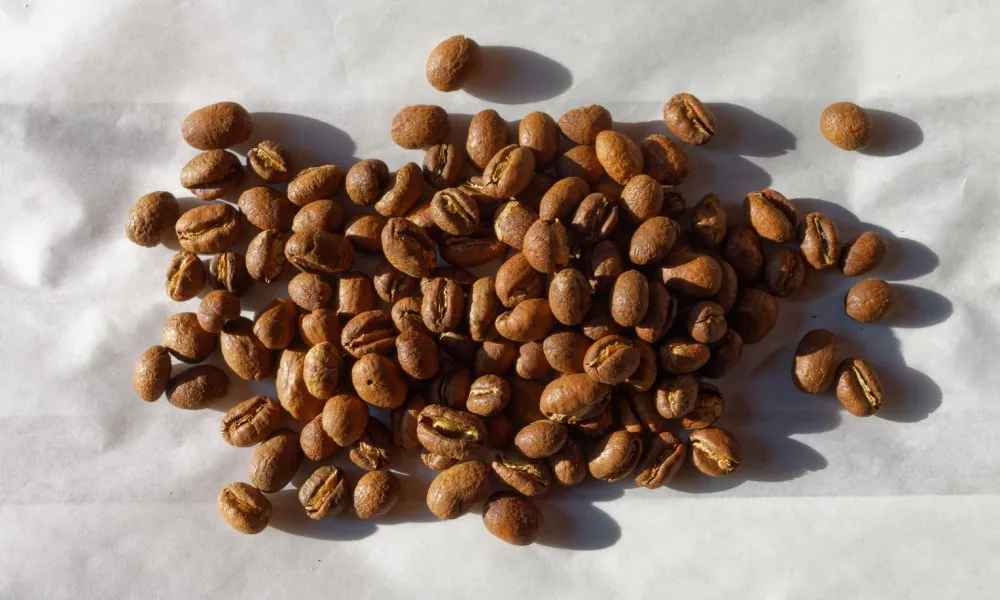
Roasters who roast peaberry separately say it is more uniform and dense, which is why some roast profiles need adjusting. The round shape helps the beans tumble in the drum and can shorten the time to first crack, but the density means heat reaches the centre more slowly. Roasters often start with a slightly higher charge temperature to avoid underdevelopment and manage airflow differently than with regular beans. In other words, it is not the mutation that makes the flavour special but the skill in handling it.
Sorting and the price of peaberry coffee beans
Peaberry coffee beans are rare, and separating them from the rest takes extra work. Historically farmers simply threw away the “abnormal” beans because they made even roasting harder. Today the situation has reversed: premium shops and roasteries treat peaberry as a curiosity for connoisseurs, and trade in beans marked PB (“peaberry grade”) has developed especially in Tanzania and Kenya.
Differences in bean size and density mean that separate screens are used when grading green coffee, usually screen 10/11 or 12/13, depending on the country.
Because a hectare yields only a few per cent of peaberries, wholesale lots are small. Add sorting and transport, and it is no surprise that a bag labelled “peaberry” often costs more than standard coffee from the same farm. Keep in mind, though, that the price is driven mainly by marketing and rarity, not by spectacular quality.
Who looks for and drinks peaberry coffee
The best-known examples come from Tanzania, where the PB grade is part of the official classification. Kenyan AA / AB / PB grades are also popular, except that there “PB” refers only to shape, not to a quality level. In Hawaii, especially in Kona, peaberry makes up as much as 3-4% of the harvest and is considered a rarity.
In practice every region has its own “gems”: from Ethiopian Yirgacheffe through Brazilian coffees to Colombian micro-lots, where single beans are sometimes separated for special orders.
Research: what the numbers say
There are few scientific publications on peaberry, because it is only a few per cent of the crop and a suitable sample is hard to collect. The best-known study, from 2022, analysed brews made from peaberries from different regions. The researchers compared the content of caffeine, chlorogenic acid and total antioxidant capacity.
It turned out that peaberry coffee had on average a higher caffeine concentration and a slightly lower pH than coffee from two-seed cherries, but the differences in antioxidants were marginal. The authors stress that the results were influenced more by growing conditions than by the mutation itself.
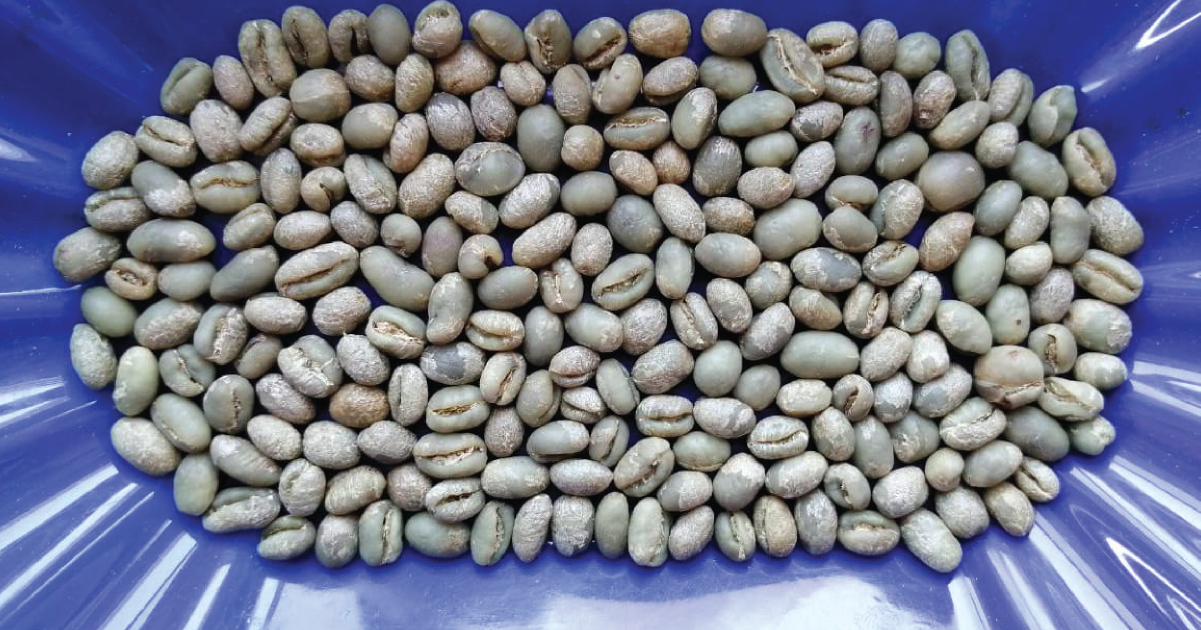
Shape, density and roasting peaberry beans
One of the noticeable differences is shape. When a bean grows alone, it has room to grow into a small ball. The round cross-section means heat spreads differently in the drum: the beans roll more freely and heat more evenly. In drum roasters this can shorten the time to first crack, but in fluid bed roasters the density can make airflow harder. Every good coffee roastery knows how to handle these beans, but you do have to be careful.
An experienced coffee roastery roaster will adjust the profile to avoid scorching the surface while developing the sugars inside. Some use a slightly higher temperature in the early phase, others slow the rate of rise after first crack.
Peaberry and regular beans compared
| Feature | Regular bean | Peaberry |
|---|---|---|
| Shape | flat, half-moon | round, like a pea |
| Frequency | ~95% of the harvest | 5-7% (rarely up to 10%) |
| Density | standard | higher; the bean is more compact |
| Caffeine | depends on the variety | slightly higher average content in lab studies |
| Flavour | depends on terroir, processing and roasting | no scientific consensus; anecdotally brighter acidity and sweetness |
| Roasting | standard profile | needs adjusting: faster heating, airflow control |
Is it worth looking for peaberries?
If you love coffee and differences in the cup fascinate you, trying peaberry is an interesting experiment. Just do not expect a miracle: even the best-marketed bag of PB will not fix poor processing or roasting mistakes. In practice peaberry is simply a different fraction from the same shrub.

What makes it special is mainly rarity and marketing. If you are buying coffee from a particular farm or region, pay more attention to the roast date, processing quality and flavour description than to whether the label says “peaberry”.
On the other hand, it is fun to know that every so often a coffee cherry grows a little ball that stirs up so much excitement. I have tried several different peaberry coffees myself: once I felt the flavour was more citrusy, another time I could not taste any difference.
Peaberry is a natural curiosity of the coffee world
Peaberry is a natural curiosity of the coffee world: a single bean developing in the cherry takes up the whole space, so it is round, denser and makes up only a few per cent of the harvest.
Although some attribute unusual flavour qualities to it, research suggests the differences are small and depend more on growing conditions than on the mutation itself. Peaberry needs a different approach in roasting, which can make for interesting experiences for roasteries and baristas.
So if you are looking for something new to try, pick up a bag of our Rwanda Nova Red Bourbon Peaberry Natural and judge for yourself whether it really is a gem.
FAQ: peaberry coffee
What is peaberry coffee?
Peaberry is a natural mutation of the coffee bean. Instead of two seeds, only one develops in the cherry, which makes it rounder and denser, and it is often considered a rarity in the coffee world.
Why is peaberry coffee so rare?
Only about 5-7% of the entire harvest is peaberry. It is a random process: it cannot be planned or deliberately bred. It results from natural differences in pollination and in how the coffee cherry develops.
Does peaberry coffee taste better?
Peaberry is often described as having a more concentrated flavour, more sweetness and brighter acidity. Studies show it has slightly more caffeine, but variety, altitude and roasting have a bigger influence on the flavour profile.
Where does the best peaberry coffee come from?
The best-known peaberries come from Tanzania, Kenya and Hawaii (the Kona region). But the mutation occurs all over the world: from Ethiopia and Colombia, through Costa Rica, to Brazil.
Why is peaberry coffee more expensive?
It costs more because peaberries are only a small percentage of the harvest and sorting them takes extra work. The price also rises because of marketing and perceived rarity, not always because of higher quality.
How should you brew peaberry coffee?
Thanks to its density and even shape, peaberry works well in espresso, pour-over, Chemex or AeroPress. What matters is grinding fresh, the right water temperature and matching the extraction to the specific roast.
