Coffee has you hooked and you are wondering how to become a barista? Good timing, because this can be a great deal more than a job. For plenty of people it turns into a way of living: new flavours to chase, and people around you who care about the same thing. Here is where to start, which skills are worth building, and what the learning and the daily work behind the bar actually look like.
How to become a barista: the first steps
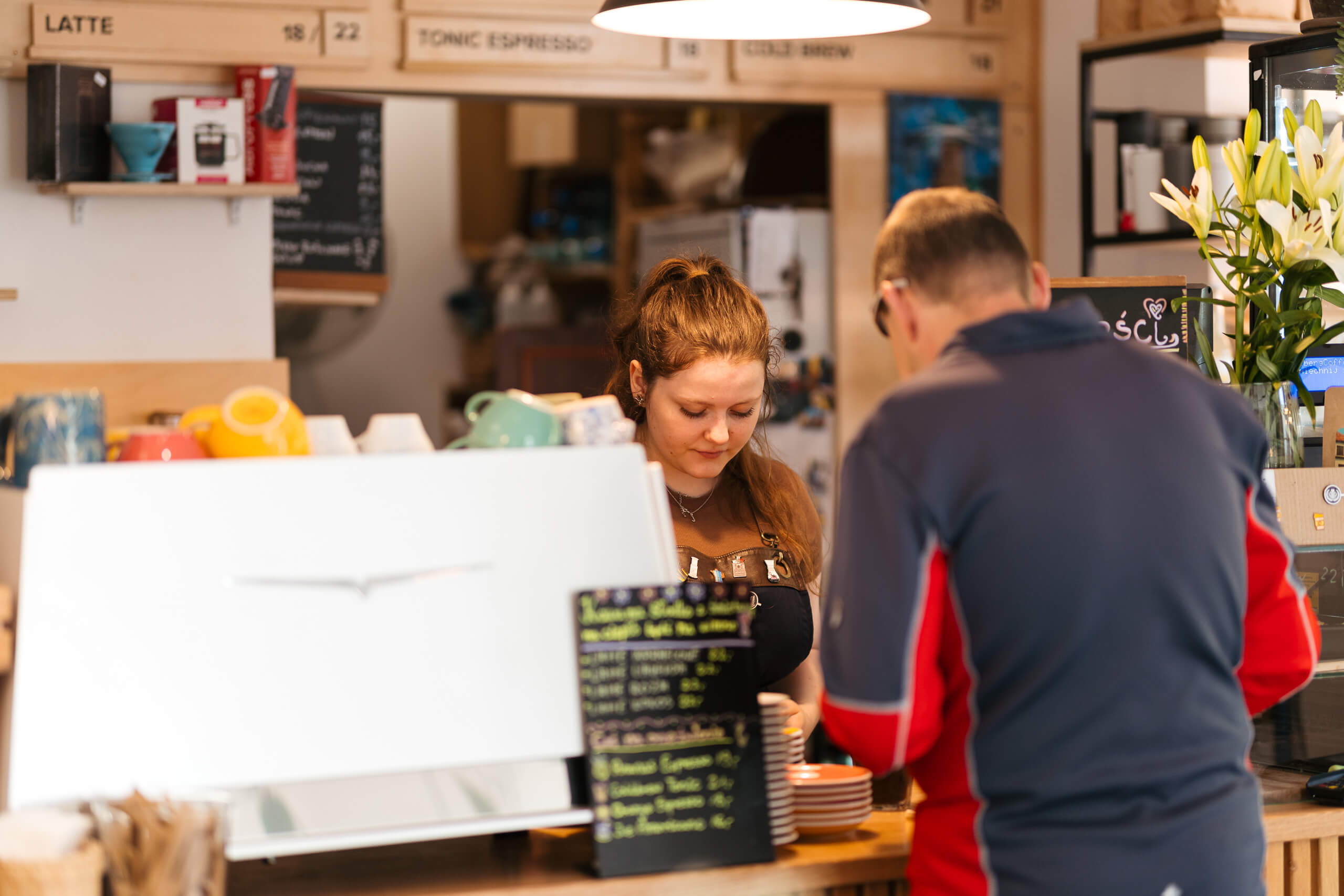
Before you sign up for a course costing a few hundred zloty, work out whether the atmosphere suits you at all. Getting started asks for less than you might think: some enthusiasm, a willingness to learn and a bit of patience. Plenty of people learn alongside more experienced colleagues. You take a job in a café, you watch how they work, and the practice builds up. At the start you cover the basics: pulling espresso, steaming milk, cleaning the machine and short conversations with guests. Over time the subject pulls you in, you start practising at home, experimenting with beans and testing different brewing methods.
What makes a good barista: the qualities and skills that count
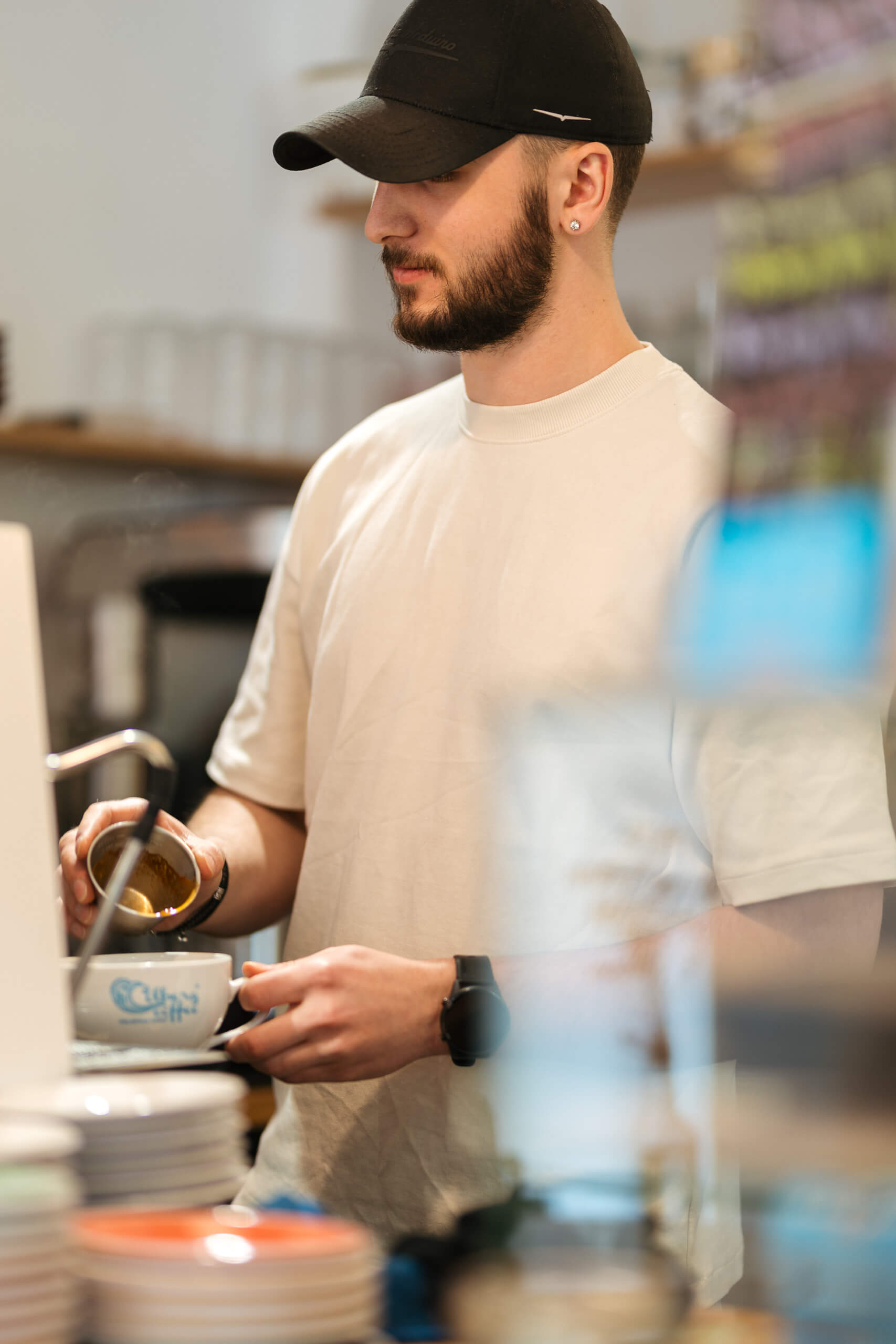
A barista is not just someone who presses a button on the machine. How you are with people matters in this trade: you have to like talking, daily contact with customers and working in a team. Good manners, patience and steady hands genuinely help. A good barista should also know the basic coffee species, know how arabica differs from robusta, recognise beans by aroma and flavour and match them to the right brewing method.
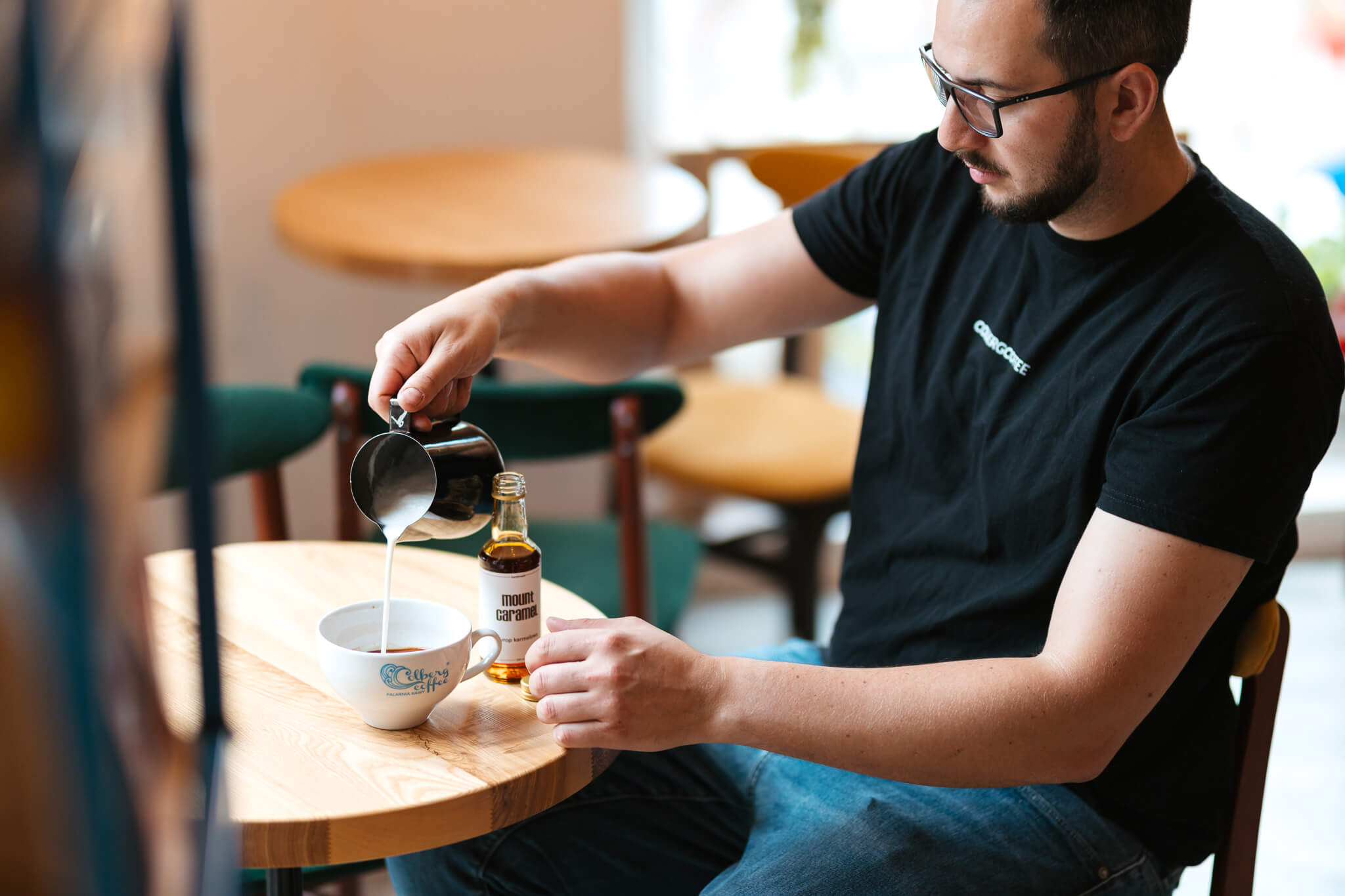
Then there is the milk: precise steaming, temperature control and the ability to produce a smooth, even microfoam. Plenty of people train latte art, but what matters most is that the drink tastes good and comes out the same every time. The technical side is part of the job too: cleaning the machine every day, checking the grinder, looking after bean freshness and keeping the bar in order. Together, that is the base you build experience on.
A barista’s tools and the 4M rule
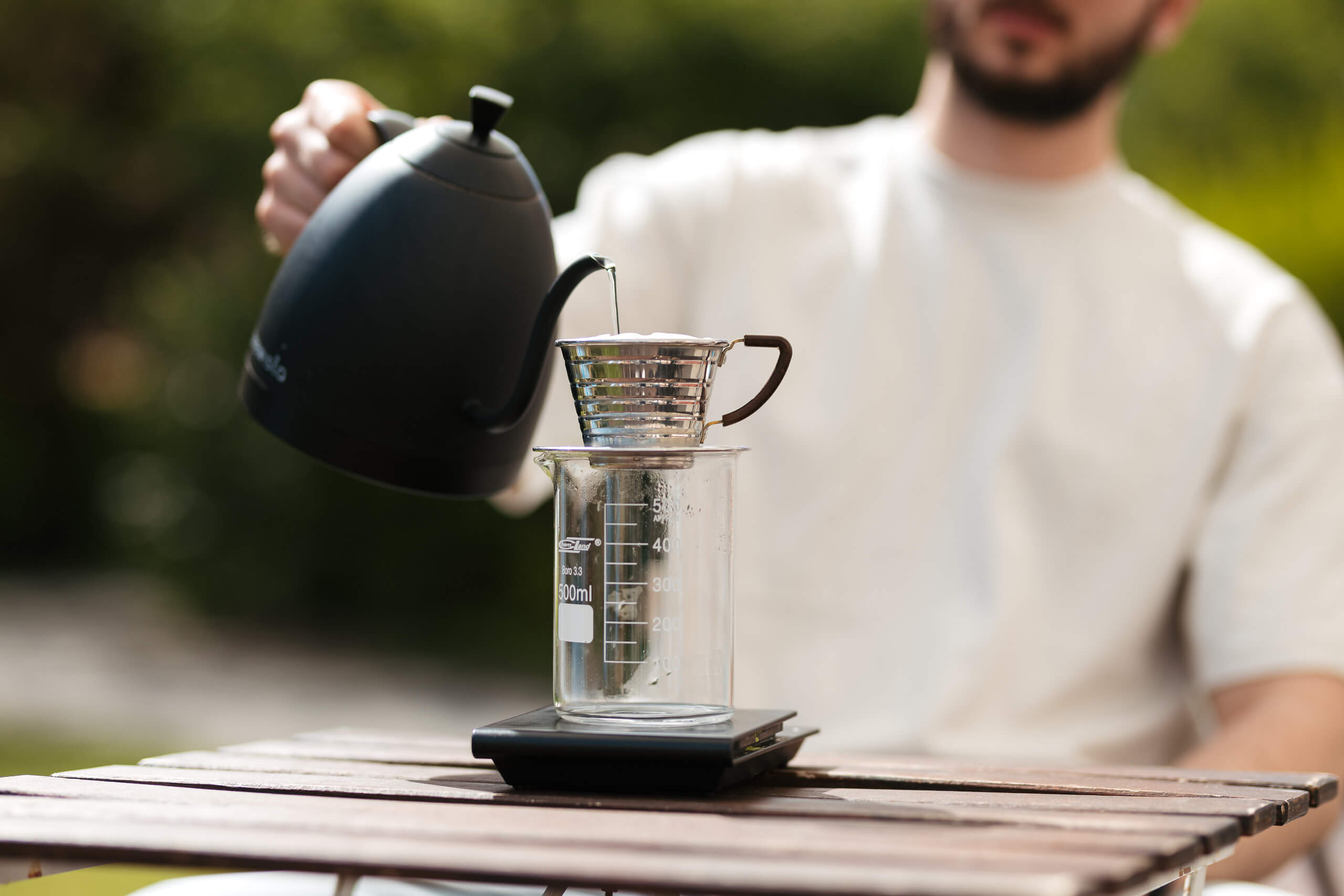
Enthusiasm is not the only thing that counts behind the bar. The right kit matters as well. To begin with you want a solid grinder with adjustable grind size, a scale for weighing your dose, a tamper and a milk jug. A thermometer is worth having to keep an eye on milk temperature, along with a knock box, and if you want to practise latte art, an etching pen and jugs with a narrow spout will earn their place. With those basics you can train at home and build your skills step by step.
Then there is the famous 4M rule. The Italians came up with a shorthand for what to watch when you make espresso: Miscela (the blend), Macchina (the machine), Macinadosatore (the grinder) and Mano (the barista’s hand). In other words: the coffee has to be fresh and well chosen, the equipment properly set, the grinder precisely calibrated, and the barista’s technique confident and repeatable. Even the best machine and expensive beans will not save you if you tamp unevenly, set the wrong grind size or push the extraction too far. It is equipment, knowledge and a feel for the work together that give you the espresso you are after.
Courses and training: where to learn and what it costs
Practice matters most, but if you are serious about working behind the bar, professional training is worth considering. Barista courses are run by coffee roasteries and barista schools, and some of them carry Specialty Coffee Association (SCA) accreditation. On a course you learn how to work with customers, how to prepare espresso by various methods, how to tell coffees and milks apart, how to build milk drinks and how to look after the equipment. It is practical knowledge that pays off from your first shift.
Most courses run at three levels. The basic one usually takes a day and covers the absolute fundamentals: beans, pulling espresso and steaming milk. The advanced level is for people with some experience behind them; it runs for one to two days and often ends with an exam. The professional level is a different order of thing: an intensive two or three days where the details get polished and the standard is genuinely high.
On price, basic workshops in Poland usually cost 300-500 zł, while advanced courses start at around 1,000 zł and run to several thousand, depending on the school, the number of modules and the reputation of the trainers. The investment pays for itself, because an SCA certificate is recognised worldwide and can open doors to work in top cafés.
How to become a barista: the first steps in the job
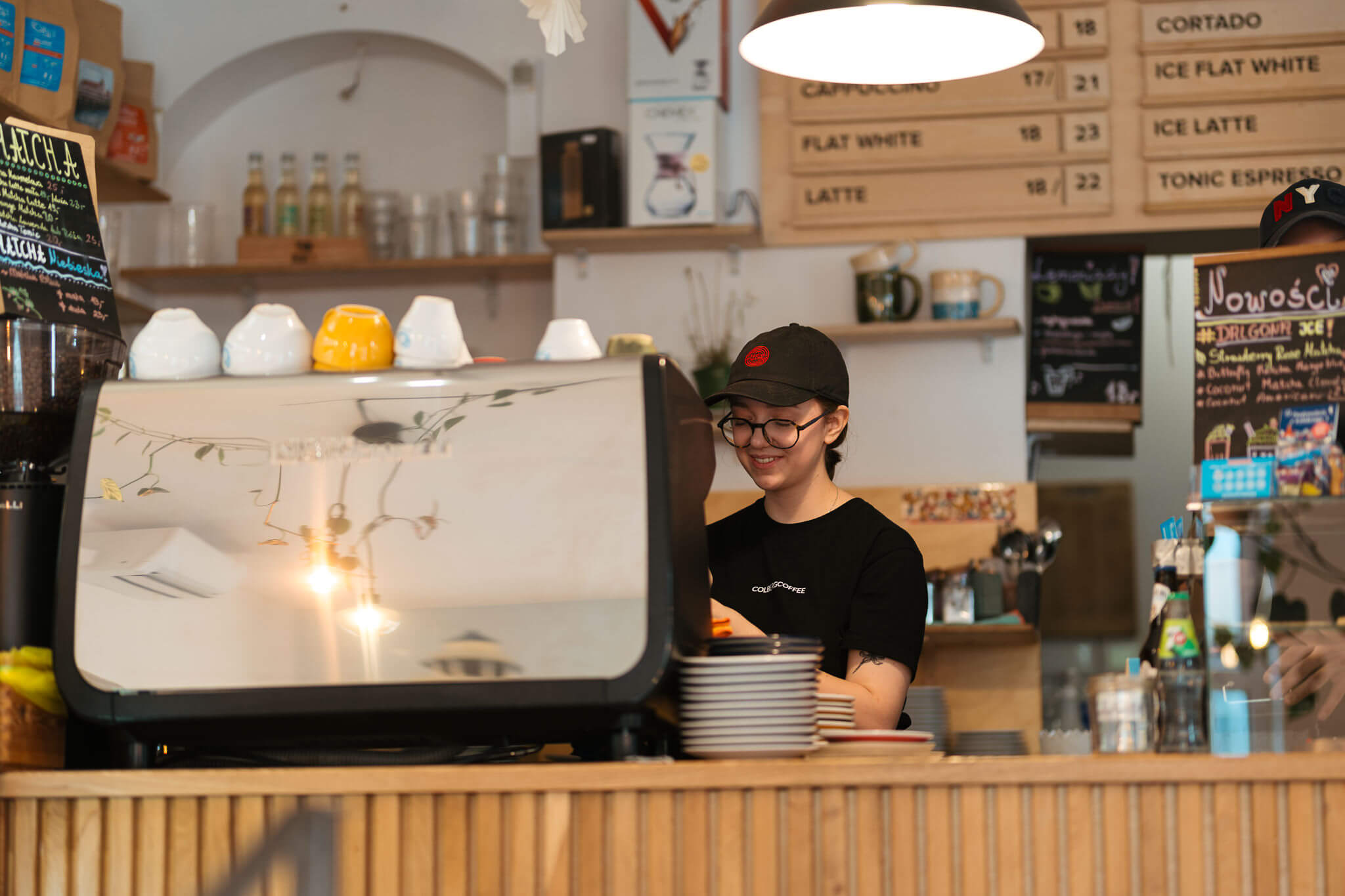
After a course, look for work in a café, a restaurant or a hotel, or try your hand at events. The trade leaves plenty of room to grow. You start behind the bar, but in time you can enter the Polish Barista Championship and even represent the country at the World Barista Championship. That is the path Agnieszka Rojewska took, among others. She won the world title and remains an inspiration for a lot of people in the industry.
Beginners usually learn from more experienced colleagues, and after a while they start training others and developing a style of their own. The job branches in several directions: you can specialise behind the bar, run training, put on latte art demonstrations at events, or work in a roastery and have a real hand in how the coffee is made. The coffee world moves quickly, so if you want to keep learning, you will genuinely never be bored.
What does a barista earn? Pay and prospects
So what about the money? Average barista pay in Poland is around 5,000 zł gross a month, which is roughly 3,900 zł in hand, though a lot depends on where you work, your experience and what the job covers. Beginners usually start lower, but the rate climbs with skill and practice. In good specialty cafés, hotels and restaurants you can comfortably go past 4,500 zł gross, and on top of that come tips, which in busy venues can make a real difference to what you take home.
Add extra work to that, say latte art demonstrations at weddings, training, or working corporate events, and you can earn considerably more. For plenty of baristas the bar is not the end of it but a route to development and a second income. How much the trade gives back depends on how much you put in and how creative you are.
FAQ: how to become a barista
How do you become a barista with no experience?
Start with a job in a café as a barista’s assistant. You will learn the machine, the grinder and milk steaming. Practise at home as well: repetition is what moves you forward.
What does a barista course cost?
Basic courses in Poland usually cost around 300-500 zł. If you want an SCA certificate or advanced training, expect 1,000 zł and upwards.
What skills does a barista need?
A good barista knows the different coffees, can work the machine and the grinder, steam milk and pour latte art. Communication with customers and accuracy count just as much.
What does a barista earn in Poland?
Average pay is around 5,000 zł gross. In well regarded specialty cafés and hotels you can earn more, particularly with tips and extra event work.
