

Big, shiny beans, or small, unassuming ones? The size of coffee beans has been a talking point among baristas and coffee lovers for years. Some say bigger is always better, others insist that only origin and processing matter. The truth, as usual, sits somewhere in between. In this article we break the topic down: how coffee gets sorted, what mysterious labels like Supremo, Excelso, AA, PB, SHG actually mean, and whether size really affects the flavour of your espresso.
Does bean size actually matter?
If you’ve ever tipped coffee into a grinder and noticed some beans are bigger than others, that’s not an accident. Bean size says a fair bit about origin, variety, growing altitude and sometimes flavour too. There’s a common belief in the coffee world that bigger beans are better, because they usually come from higher plantations, where the coffee ripens more slowly and has more time to develop aroma. But that’s not an absolute rule. Small beans from the right micro-region can taste brilliant, and some varieties are simply smaller by nature.
That’s why coffee is sorted and classified, and producers build grading systems that make it easier to predict what to expect from a given batch. It’s a fascinating process: sometimes one tiny bean carries more aroma than a whole handful of giants.
How coffee is sorted by size
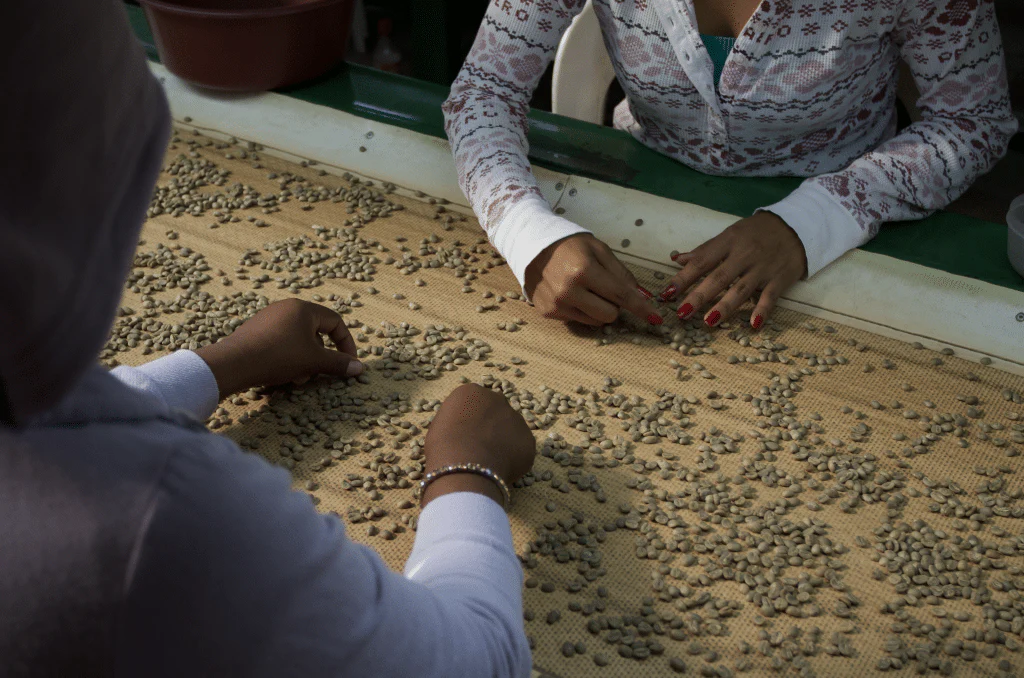
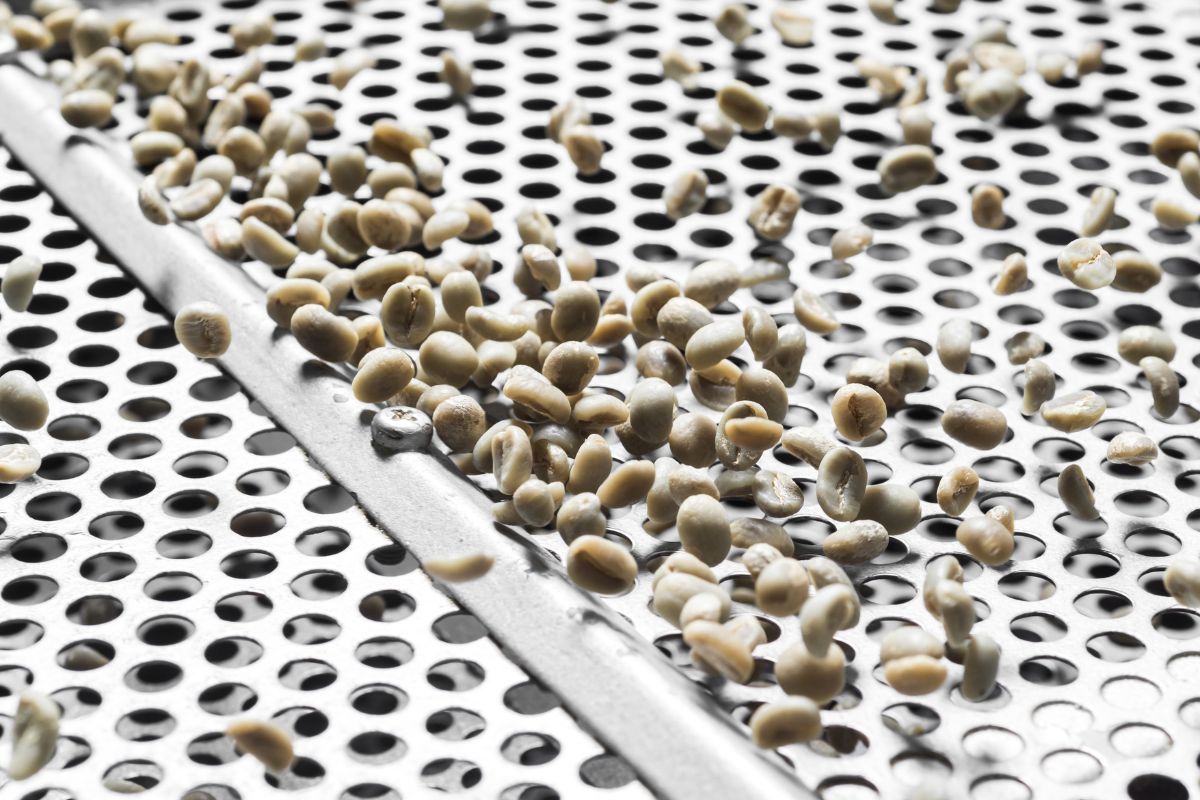
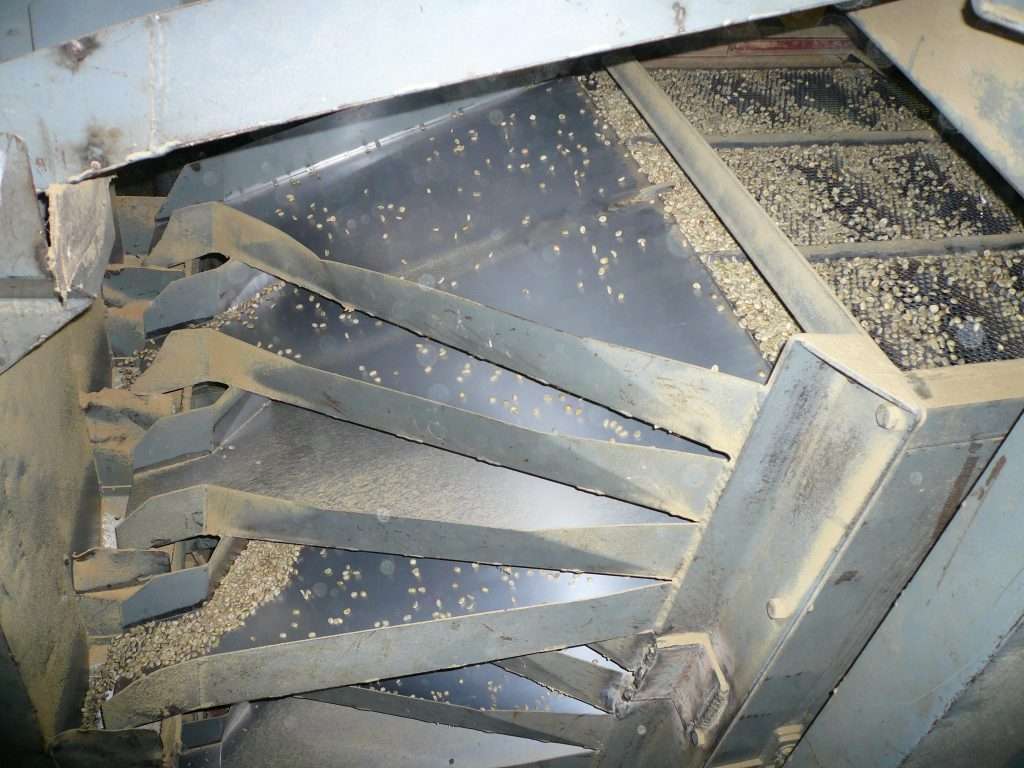
Before coffee ends up in a bag, it passes through a dry mill in the country of origin. That’s where bean selection starts, and it matters enormously both for the roastery and for the final flavour in the cup. The mill uses special screens calibrated in fractions of an inch, which sort beans by diameter. That way, beans of a similar size end up in the same batch, which helps with even roasting and a consistent flavour.
For example:
- screen 18: lets through beans around 7.1 mm in diameter,
- screen 16: around 6.5 mm,
- screen 14: just 5.5 mm.
The higher the screen number, the bigger the beans. This matters a lot in specialty coffee, where a difference of even 0.2 mm can affect extraction. Thanks to this sorting, importers, roasters and baristas know exactly what they’re working with, and you, as the customer, can expect a consistent flavour from bag to bag.
It’s a bit like selecting grapes for wine. Press fruit of mixed size and ripeness and the flavour ends up random. Coffee works the same way: even size means more stable extraction, a predictable flavour and control over the aromatic profile. There’s a saying in the coffee world that well-sorted beans are half the roastery’s job done.
The most common coffee classification systems in the world
Colombia: Supremo vs Excelso
You’ve probably come across these names, since they turn up often on Polish shop shelves and online stores. They’re some of the most common labels you’ll see on Colombian coffee.
- Supremo: larger beans, usually sorted on screen 18 and above.
- Excelso: somewhat smaller, typically around screen 15-17.
At first glance it might look like Supremo is the “better” grade, and that’s exactly how the Federación Nacional de Cafeteros, the Colombian growers’ organisation, wanted to sell it. The terms were coined partly for marketing, to suggest that bigger beans are more prestigious.
In practice, though, it varies. You might come across a high-grown Excelso that tastes far better than an average Supremo. The difference between the two grades is mostly about size, but flavour is also shaped by growing altitude, the coffee variety and processing method. So it’s not worth judging by the name alone: it’s better to check the region and the tasting notes the roastery gives you.
Worth knowing: in Poland, Excelso most often turns up in blends, since smaller beans combine well with other coffees, while Supremo tends to go into single origins, where the full flavour profile matters more.
Kenya: AA, AB and the mysterious PB
Kenya is one of the most recognisable coffee regions in the world. Its grading system is one of the most precise anywhere, covering both bean size and quality. Kenyan coffee is known for intense fruitiness, juicy acidity and notes of blackcurrant, blueberry or citrus, and bean size plays a real part in that.
AA: the largest, most sought-after beans (over 7.2 mm in diameter). AA-graded coffees fetch the highest prices at auction and are considered among the best in the world. Their size allows for a slower roast, which brings out their characteristic, complex sweetness and acidity.
AB: the mid-size grade, but still very high quality. It makes up around 30% of Kenyan production and is often the best compromise between price and flavour. For many roasteries, it’s the go-to choice for filter and espresso.
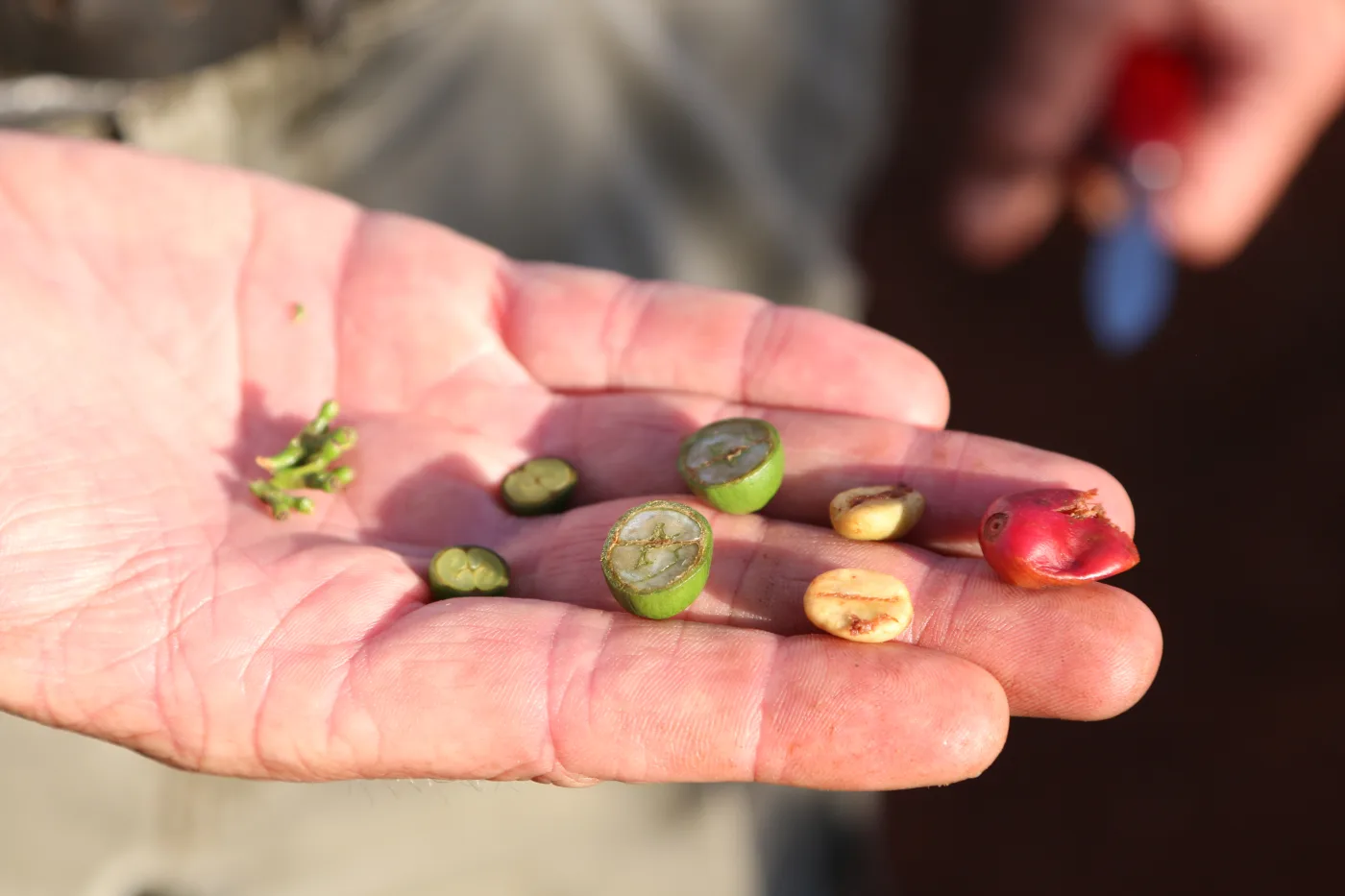
PB (Peaberry): literally the “little pearls”. Most coffee cherries contain two beans, but occasionally only one forms, rounder than usual. All the ripening energy then goes into that single bean, giving a more concentrated flavour. It’s a bit like coffee’s answer to the white truffle: rare, expensive and highly prized by connoisseurs.
PB beans make up only around 5-7% of the Kenyan harvest. Many roasteries turn them into limited editions, since their flavour profile is quite different from AA or AB: creamier, sweeter and more intensely fruity.
Central America: SHG, HG and EP
In Guatemala, El Salvador, Honduras and Costa Rica, classification isn’t based on size at all, but on growing altitude. Why? Because altitude affects how quickly the coffee cherries ripen, which in turn shapes the flavour.
SHG (Strictly High Grown): coffee from plantations above 1,200 m a.s.l. Higher altitudes bring cooler nights, which slows down ripening. That gives the beans more time to develop sugars, aromatics and complexity. SHG coffees are usually roasted lighter and often end up in the specialty segment.
HG (High Grown): coffee grown at 900-1,200 m a.s.l. The profile is a little simpler, but still very clean. HG often ends up in blends, where it provides a stable flavour base.
EP (European Preparation): a label used mainly for coffees exported to Europe. It means the beans have gone through an extra round of hand-sorting to remove defects, stones and damaged pieces.
Why does altitude matter so much? The higher coffee grows, the more slowly it ripens, and a slower process means more sugars, a stronger aroma and a more complex flavour. That’s why SHG coffees from El Salvador or Guatemala can impress with floral, chocolatey and fruity notes, while coffee from lower plantations tends to be heavier, earthier and more bitter.
Ethiopia: grading G1 to G5
Ethiopia is the birthplace of coffee, and one of the most interesting countries when it comes to grading. Its system is based on the number of defects and the quality of selection, not just bean size.
G1 (Grade 1) and G2: the highest quality, with practically no defects. The beans are carefully sorted by hand and machine, and the flavour profile is usually an explosion of flowers, fruit and sweetness. G1 coffees are often the flagship lots at specialty roasteries.
G3, G4, G5: lower quality grades, though that doesn’t mean bad. They simply get less selection, have more defects and a simpler flavour profile. They work well in blends and commercial espresso.
Worth knowing: Ethiopia has one of the greatest ranges of botanical coffee varieties in the world, many of them growing wild, without human intervention. That’s why even within the same G1 grade you can find completely different flavour profiles, from jasmine and bergamot to chocolate and blueberry.
For coffee lovers, Ethiopian G1 and G2 are the holy grail: they can reveal flavour notes you won’t find in any other coffee.
Coffee bean size and classification by region
| Screen size (1/64″) | Bean diameter (mm) | Classification | Mexico / Central America | Colombia | Africa / India |
|---|---|---|---|---|---|
| 20 | 8.00 | Very large | Superior | Supremo | AA |
| 19.5 | 7.75 | Very large | – | – | – |
| 19 | 7.50 | Very large | – | – | – |
| 18.5 | 7.25 | Large | – | – | – |
| 18 | 7.00 | Large | A | – | – |
| 17 | 6.75 | Large | – | Excelso | – |
| 16 | 6.50 | Medium | Segundas | – | B |
| 15 | 6.00 | Medium | – | – | – |
| 14 | 5.50 | Small | Terceras | – | C |
| 13 | 5.25 | “Shells” | Caracol | – | – |
| 12 | 5.00 | Small | – | – | – |
| 11 | 4.50 | Pearl | Caracolli | – | – |
| 10 | 4.00 | Very small | – | – | – |
| 9 | 3.50 | Very small | Caracolillo | – | – |
| 8 | 3.00 | Very small | – | – | – |
Source: coffeeresearch.org
Are bigger coffee beans always better?
This is one of the biggest myths in coffee. Plenty of people assume big beans equal better quality, but the truth is more complicated. Yes, larger beans from higher-altitude farms often carry more aroma, acidity and sweetness. But flavour is shaped by a lot of other factors too:
- terrain: volcanic soil versus sandy soil,
- altitude: slower ripening gives sweeter notes,
- processing method: natural, washed, honey,
- freshness: even the best Supremo or AA tastes flat once it’s old.
Some coffee varieties also have naturally smaller beans, such as Ethiopian heirlooms or peaberries, and that doesn’t make them worse. In specialty coffee, what counts is the flavour profile, not the size.
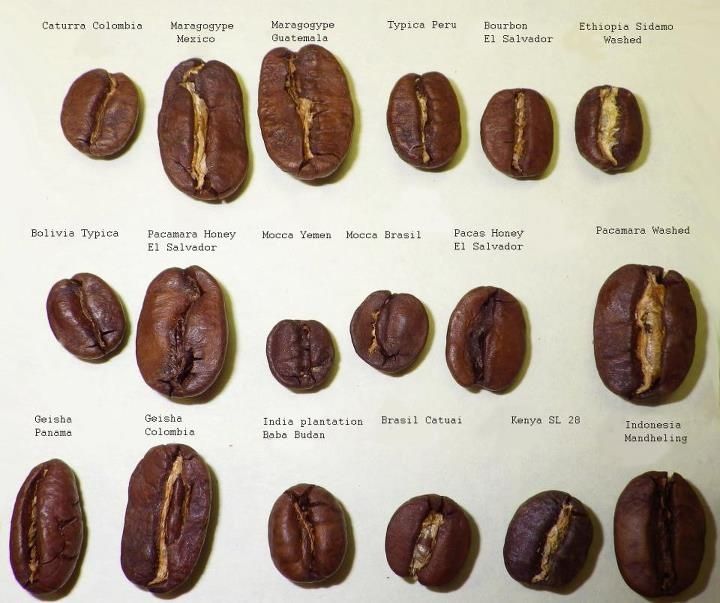
Why bean size matters when roasting
Sorting beans isn’t just about looks or marketing. In roasting, it’s about having full control over the process and keeping the flavour balanced. If you load the roaster with beans from screen 18 (large) alongside 16 (smaller), each will heat up at a different rate.
- Smaller beans pick up heat faster, so they’re easier to over-roast, which strips out sweetness and leaves them bitter.
- Larger beans heat up more slowly, so they can end up under-roasted in the centre, leaving the flavour flat and underdeveloped.
The result? The coffee loses clarity and balance. Part of the cup tastes over-roasted, while part stays “green”, with a raw edge. That’s not acceptable in specialty coffee, which is why professional roasteries, Colbergcoffee included, don’t mix beans of wildly different sizes in a single batch.
Ideally the difference should be no more than half a screen size (say, screen 17 and 18). That way every bean goes through the same stages of development at a similar pace: drying, first crack and aroma development. It’s this consistency that keeps the flavour profile clean, predictable and repeatable.
How to spot quality coffee at home
If you want to check whether you’ve got a genuinely good coffee on your hands, there are a few simple tricks:
- Even bean size: if the bag looks like a jumble of big and small beans mixed together, the coffee was probably poorly sorted.
- Aroma: fresh beans smell intense, sometimes almost fruity. Old ones smell like… paper. Though very fresh coffee doesn’t smell intense straight away either, it needs to start degassing first before the full aroma comes through.
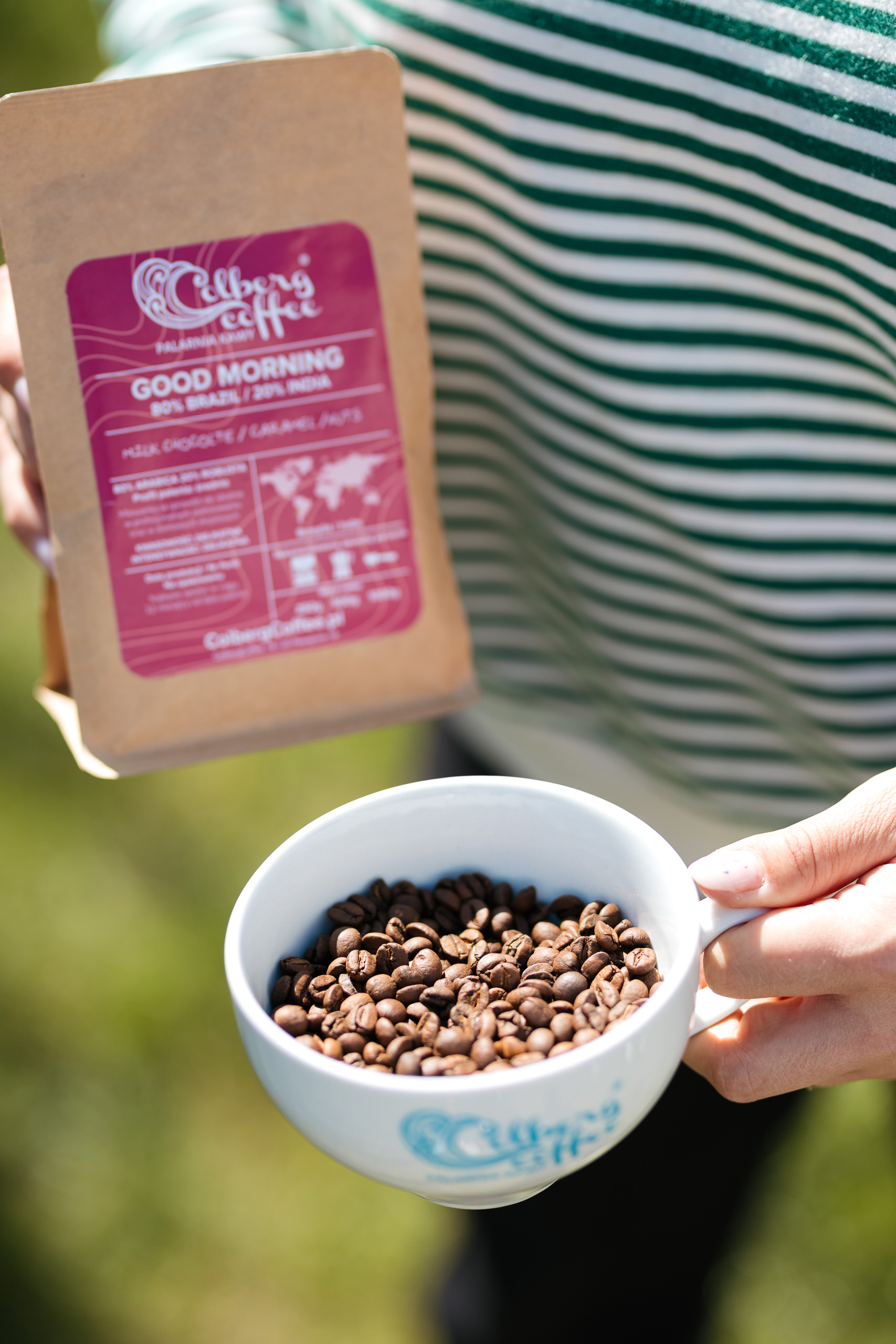
- Packaging: good coffee roasteries, like Colbergcoffee, put the country, region, altitude, variety and processing method on the label. If that information is missing, there’s a good chance you’re holding commercial coffee, not specialty.
- Roast date: ideally the coffee should be fresh, but not straight out of the roaster. For light roasts, 5-14 days after roasting is optimal; medium and dark roasts are best after three weeks or more.
- Price: it’s not proof of quality on its own, but if someone is selling “Ethiopia G1” at 69 zł per kg (a Polish price point), something doesn’t add up.
FAQ: coffee bean size and classification
Are bigger coffee beans always better?
Not always. Bigger beans often come from higher-altitude farms and can carry more sweetness and complexity, but it’s not a hard rule. Quality is also shaped by growing altitude, variety, processing method and how fresh the roast is.
What do Supremo and Excelso mean in Colombian coffee?
They’re a classification system based on bean size. Supremo means larger beans (screen 18 and above), while Excelso is mid-size (screen 15-17). Supremo is often pricier, but Excelso can taste just as good, especially when it comes from higher-altitude farms.
What do AA, AB and PB mean in Kenyan coffee?
AA is the largest, most highly prized grade. AB is mid-size but still very high quality, and a common choice for roasteries. PB (Peaberry) is the “little pearl”: a single bean develops inside the cherry instead of two, giving a more concentrated, sweeter flavour.
Why does growing altitude affect the flavour of coffee?
At higher altitudes, coffee ripens more slowly, which makes the beans denser and more aromatic. That’s why SHG (Strictly High Grown) coffees or Kenyan AA tend to have a more complex flavour profile, full of fruity, floral and chocolatey notes.
Does mixing large and small beans in the roaster affect the flavour?
Yes, significantly. Smaller beans heat up faster and can be over-roasted, while larger ones need more time and can end up under-roasted. That’s why specialty roasteries like Colbergcoffee make sure each batch contains beans of a similar size, which keeps the flavour profile cleaner and more consistent.
How can you judge coffee quality just by looking at the beans?
Good-quality beans are even, whole and consistent in colour. Top-tier specialty coffees have evenly sized beans, which allows for a stable roast and better flavour. If a bag looks like a mix of different sizes, that’s a sign the coffee wasn’t sorted properly.
