Rwanda is one of the fastest-growing countries in the specialty coffee world. Coffee from this region is known for a very clean cup, elegant fruit character and a genuinely pleasant sweetness. A decade or so ago Rwanda was far less recognised than Ethiopia or Kenya. Today it’s increasingly seen as one of the most interesting sources of African specialty coffee.
| Country | Rwanda |
| Regions | Nyamasheke, Huye, Ngoma |
| Altitude | 1,400-2,200 m a.s.l. |
| Process | Washed, natural |
| Profile | Forest fruit, citrus, sweetness |
What makes coffee from Rwanda stand out?
Rwandan coffees are very clean, elegant and balanced. Compared with the more assertive profiles from Kenya, they’re quieter, but still clearly fruity and expressive. Red fruit, citrus, tea-like notes and caramel sweetness tend to show up often.
It’s exactly this balance between fruitiness and clarity that makes Rwanda so well regarded in the specialty world.
How growing conditions shape the flavour of Rwandan coffee
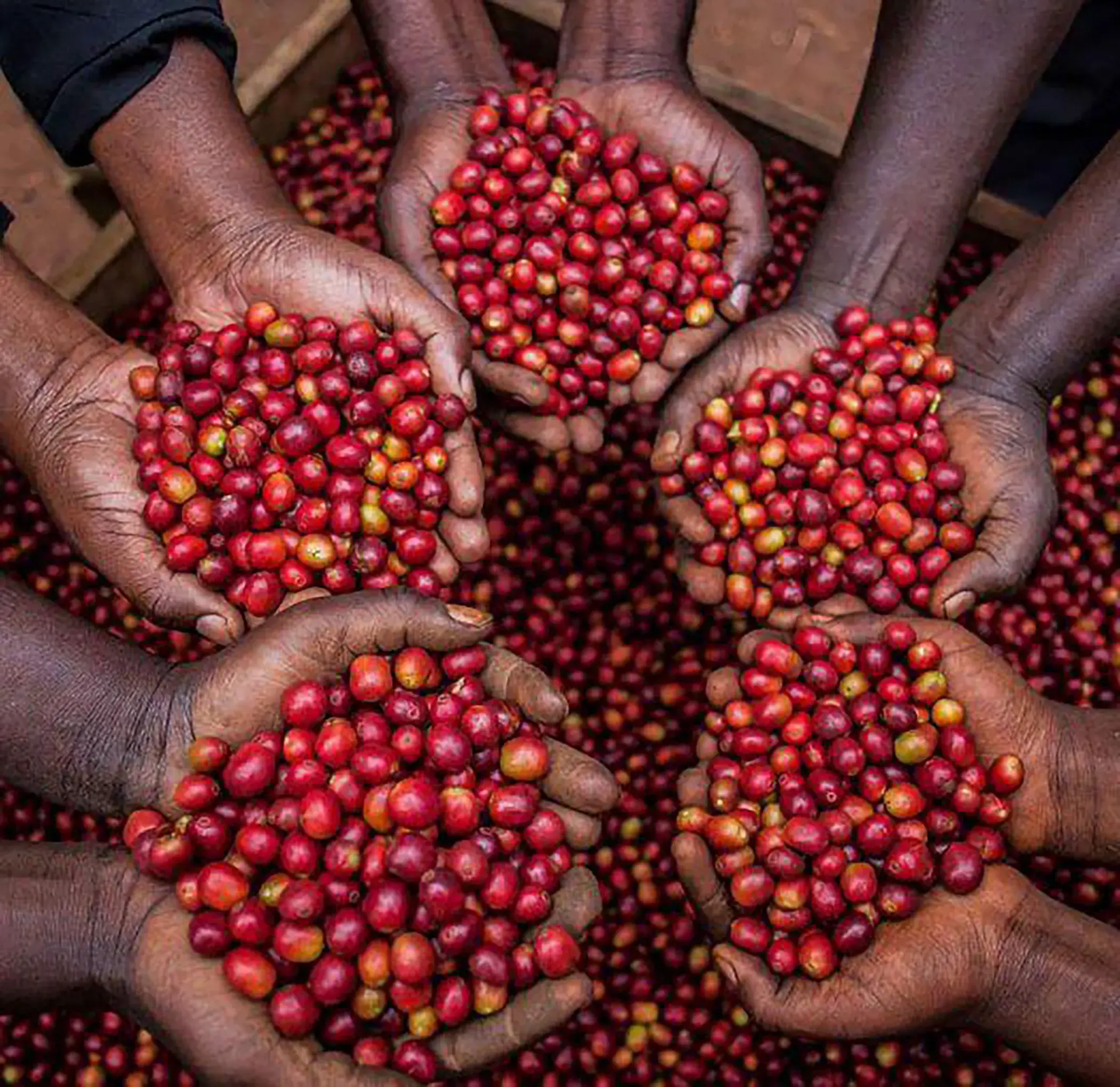
Rwanda is often called the “land of a thousand hills”, which sums up the character of its coffee farms rather well. High-altitude plots, fertile soil and a stable climate let the cherries ripen more slowly, which gives the coffee more complexity and sweetness.
Hand-sorting the cherries plays a big part too, along with the growth of local washing stations, which have lifted the quality of Rwandan specialty coffee considerably in recent years.
| Trait | Character |
|---|---|
| Sweetness | High, fruity |
| Acidity | Medium to bright |
| Body | Medium, clean |
| Aftertaste | Long, fruity |
An example: Rwanda Sake Farm
A good example of a modern Rwandan coffee is Rwanda Sake Farm, part of our range. It’s a light-roast specialty coffee from the Ngoma region, which keeps coming up more and more among the continent’s most interesting coffee-growing areas.
In the cup you’ll find notes of blueberry, milk chocolate and orange peel, with very good clarity throughout. The light roast draws out more of the aromatics and shows a juicier side of this coffee.
Rwanda Sake Farm is a good illustration of why Rwandan coffee is so highly regarded in specialty circles today: expressive, yet elegant and well put together.

Who is Rwandan coffee a good match for?
It’s a great choice if you enjoy fruity, modern flavour profiles but don’t want the sharper acidity found in some Kenyan coffees. Rwanda works well both for filter brewing and for anyone after a more complex espresso.
| Region | Character | Flavour profile |
|---|---|---|
| Nyamasheke | Near Lake Kivu | Citrus, fruit |
| Huye | More elegant profiles | Tea, floral |
| Ngoma | Modern specialty farms | Forest fruit, sweetness |
Coffee from Rwanda
Rwandan coffee is among the most elegant African specialty beans around. Its clarity, fruit character and strong balance are exactly why Rwanda keeps becoming one of the favourite origins in modern coffee.
FAQ
What does coffee from Rwanda taste like?
Rwandan coffee is fruity, clean and very balanced. Red fruit and citrus notes show up often.
Is coffee from Rwanda acidic?
It has a pleasant, elegant acidity typical of African specialty coffees.
Why is Rwanda so well regarded in the specialty world?
Thanks to its high-altitude farms, careful processing and very clean flavour profiles.
Does Rwandan coffee suit a light roast?
Yes. A light roast brings out the fruit character and clarity of these coffees very well.
Who is Rwandan coffee best suited to?
Anyone who enjoys modern, fruity and more elegant specialty coffee profiles.
