

You want to work comfortably behind the bar and your guests want coffee at its best, with no grounds in it, literally or otherwise. That starts with ergonomics and with kit that is laid out properly. A few practical points to begin with.
Ergonomics behind the bar
Every barista dreams of a station that does not wreck their back or their legs. Set the height and the depth of the bar so that nobody has to hunch over or crawl to reach anything. Around the espresso machine, for example, the counter wants to be about 80 cm deep instead of the usual 60 cm. That leaves room for cups, jugs and everything else. Height matters too: a bar counter is normally around 90-100 cm.
-
A deep counter: about 80 cm under the machine instead of the standard 60 cm, so there is space for everything (cups, jugs, scoops, the shots you have just pulled).
-
Bar height: around 90-100 cm.
-
Order and tidiness: the ice machine and the milk fridge belong right next to the espresso machine, ideally within arm’s reach of the barista. Same goes for the bin and the sink. Think that layout through twice.
- Where to put the machine: the espresso machine facing the guests or away from them? I would say back to the guests, with the barista facing them. That way you can watch the room while you pull shots and react to what is happening in the queue. (Talk to whoever is selling you the machine about what has to be within reach for it to stand there, a waste water drain for instance.)
Kit and accessories within reach
A barista’s shift is a small piece of choreography and every movement counts. Keep the important things close together and arranged in a way that makes sense. A few examples.
-
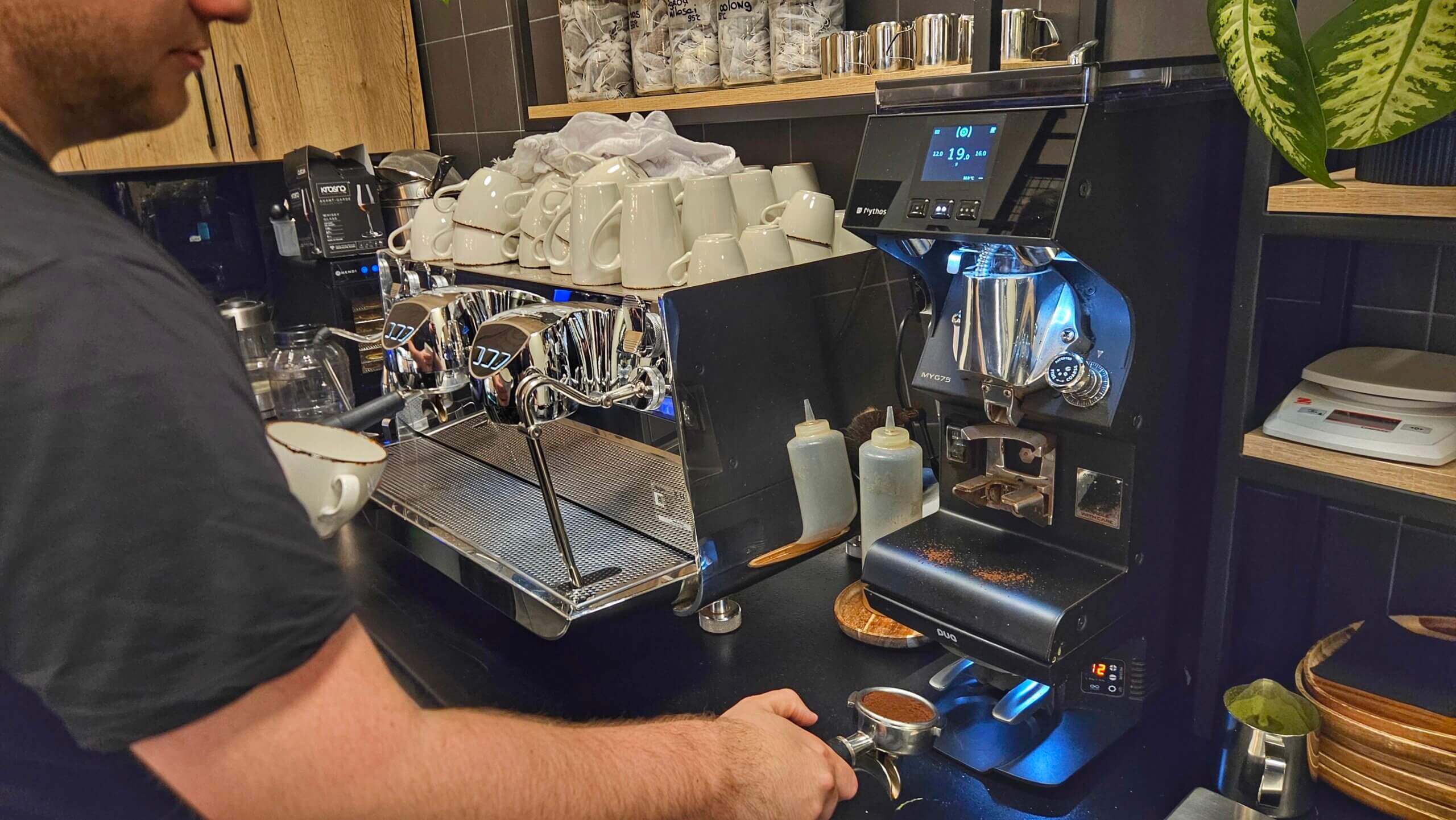
Tamper and grinders: the tamper always sits next to the grinder. Grind, tamp, no walking involved. The knock box goes next to them, also within reach, so the puck goes straight in.
-
Milk jugs: if the grinder is on the left of the machine, put the jugs on the right, and keep the clean ones on a shelf rather than on the counter. One station for grinding, one for steaming.
-
Cloths: the steam wand cloth should always be to hand, ideally lying under the wand on the drip tray or on a small plate on the counter below the machine. You grab it faster that way and wipe the wand down after every jug.
-
Cups and takeaway cups: keep a stock of both at the machine or on a shelf within reach. Nothing slows a shift down like fetching one more cup from the far end of the bar.
-
Kit that earns its place: anything that speeds the work up is worth its weight in gold.
A machine that flushes the groups automatically. An automatic or semi-automatic tamper, programmed buttons that pour exactly the right volume for espresso, a rinser for washing and cooling jugs after steaming, a cold milk dispenser that froths, an on-demand grinder that holds the portafilter while it grinds so the barista can get on with something else. That is the sort of thing that turns a bar into a well oiled machine.
Hygiene and safety behind the bar
Hygiene comes first, from how you look to the sanitary procedures you follow. A well organised café is a safe café, for you and for your guests. The essentials:
-
Health and safety: every barista needs a current medical certificate (in Poland that means the sanitary and epidemiological booklet) and health and safety training. It keeps steam burns and food poisoning out of your week, and your boss sleeps better too.
-
Colour coded cloths: split your cloths by colour and by station. Agree with the team that the blue one is only for the steam wand and the brown one only for the portafilter, for example. Everybody should know which cloth does what, so the wand cloth never ends up wiping the counter.
-
Mind the hot parts: an espresso machine has plenty of them: steam wand, hot water tap, top cover, group head. Make sure everyone knows which parts are in the red zone so nobody gets burnt. And watch your feet: hot water and hot milk on the floor are how accidents happen.
-
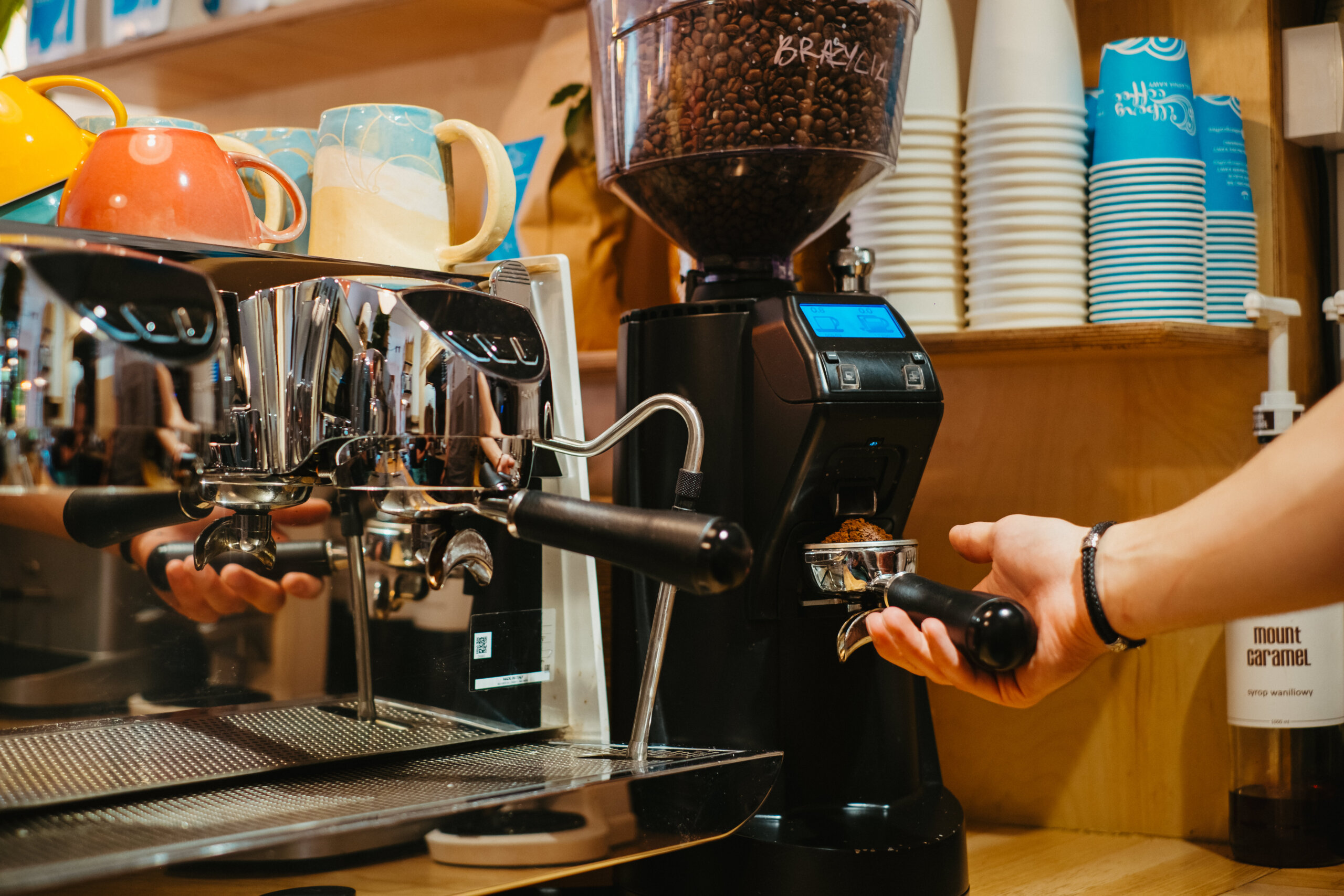
Clean hands, clean crockery: keep your hands and your kit clean at all times. Pick cups up by the handle or the base only, never by the rim. That way the coffee does not pick up an accidental extra note. Clean the portafilter and flush the group after every drink, and keep a clean cloth by the grinder, because the remains of the last shot have no business in the next one.
- Clean the groups and the portafilters with cleaning products made for the job, the ones that dissolve coffee oils and residue.
What that means for your café
Working behind the bar is a bit like dancing: the kit, the accessories and the rules all have to move together. In short:
-
Get the dimensions right: a deep counter (around 80 cm) and a sensible height (around 90-100 cm), so you can work comfortably and keep your rhythm.
-
Lay the kit out logically: tamper and knock box by the grinder, jugs by the steam wand, plenty of cups next to the machine, and the useful extras like automatic tampers and milk dispensers within reach, along with the milk fridge and the ice machine.
-
Keep it clean: yourself and your station. Current certificates, colour coded cloths for specific jobs, the machine cleaned as you go, and the rules followed properly.
Right, off you go. Follow all that and your coffee bar will run like a dream, and the coffee will taste the way it should.
Check what you remember: quick questions
-
Why is 80 cm of counter depth under the machine better than the standard 60 cm?
-
Where do you put the tamper and the milk jugs?
-
Why do we split cloths by colour?
-
Which part of the cup do you hold while you pour a heart, to keep it hygienic?
Have a go at answering them.
FAQ: bar layout and hygiene behind the bar
Should the machine face the guest or away from them?
Best is the barista facing the guest with the machine turned away. That keeps you in contact with the customer, able to react to the queue and in control of what is going on in the room. It makes talking easier and the bar feels more open.
How often should you clean the groups on an espresso machine?
Daily, ideally at the end of service, with proper cleaning products. During the day, flush them with clean water every few hours, especially when you are busy. Regular cleaning stops residue building up and the coffee going off.
Why use cloths in different colours?
Colour coding keeps things tidy and hygienic. Each colour has its own job: one cloth for the steam wand, another for the counters, another for crockery. That way you are not moving dirt around and you keep to sanitary standards.
What slows a bar down most?
Poor organisation is the usual cause of chaos behind the bar. Hunting for a jug, a tamper or the milk does not just cost time, it shows in the service. Everything should have a fixed place within the barista’s reach. That is what keeps a shift flowing.
